Aluminum mesh for outdoor furniture and patio enclosures
Outdoor living is central to the Australian way of life, from compact Sydney terraces to Melbourne courtyards, Brisbane verandas and Perth gardens. Aluminum mesh can add privacy, visual character and airflow without making these spaces feel enclosed. It also works well around outdoor furniture, barbecue areas and patio screens where a conventional wall would feel heavy.
Aluminium offers a useful balance of low weight, corrosion resistance and design flexibility. The right alloy, finish, mesh pattern and fixing method depend on exposure to sunlight, salt, wind and bushfire risk. This guide explains how to specify aluminium mesh for furniture and patio enclosures while accounting for Australian conditions, building requirements and local project expectations.
Why aluminium works outdoors
Aluminium naturally forms a protective oxide layer, so it does not rust like ordinary steel. Its density is also roughly one-third that of steel, making large decorative panels easier to install and reducing the structural load on posts or frames. These qualities make aluminium suitable for screens, gates, privacy panels and decorative furniture elements.
The environment still matters. Standard aluminium performs well in many inland and urban applications, but salt spray around Sydney, the Gold Coast and Perth can accelerate corrosion. Coastal projects may require a deliberately specified marine-exposure system, stainless-steel components or additional isolation. Aluminium should also be separated from copper and carbon steel where moisture could create galvanic corrosion.
Anodising, powder coating or a protective conversion finish can improve appearance and longevity. Anthracite, silver, bronze and muted grey tones suit contemporary Australian courtyards, while perforated and laser-cut patterns can coordinate with brick, timber, stone and rendered walls. The finish should be selected for the site rather than chosen only from a sample under showroom lighting.
Furniture and patio applications
Decorative mesh can be incorporated into outdoor furniture as a backrest, privacy insert, table base surround or room divider. It helps visually connect seating with a pergola, barbecue station or courtyard wall. Decorative panels should never be treated as structural supports unless a qualified engineer has designed them for that function.
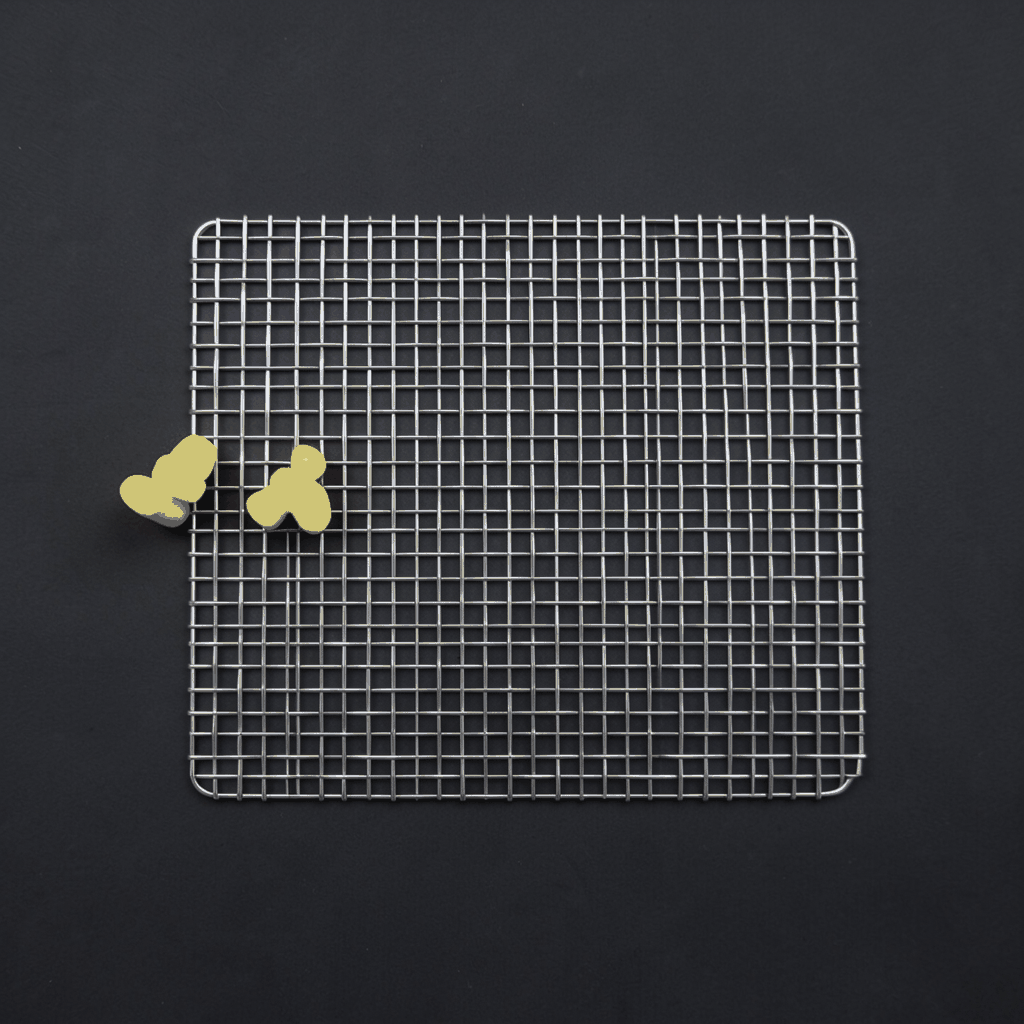
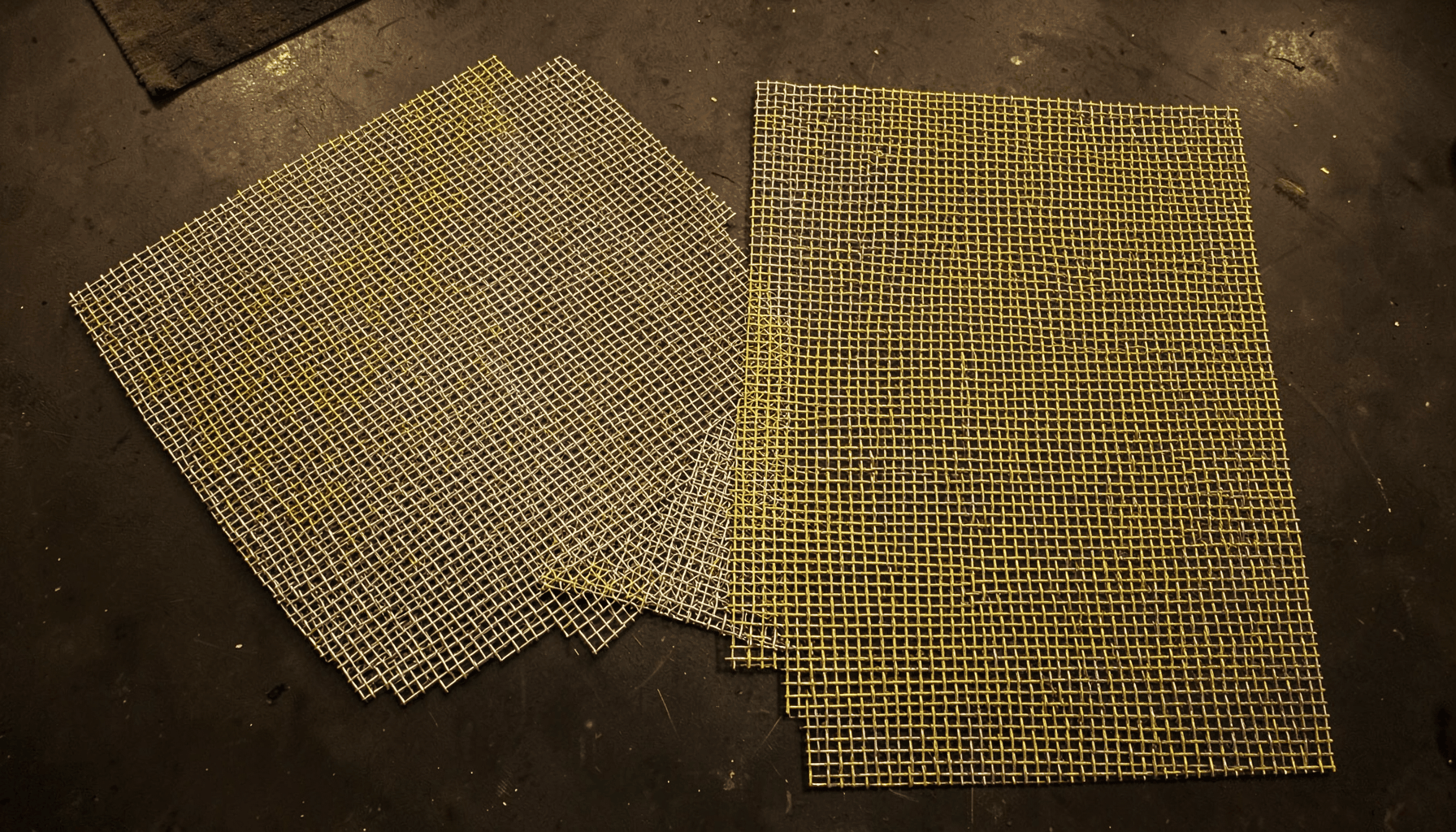
For patio enclosures, perforated sheet offers controlled airflow and privacy, while laser-cut screens create stronger architectural features. Woven mesh provides a finer, more textile-like appearance, and expanded aluminium mesh works well for ventilation screens and service areas. Aperture size affects visibility, airflow, insect exclusion and the ability for children or pets to pass through the screen.
Residential and commercial projects can also use aluminium mesh for gates, balustrade infill, balcony dividers and barbecue surrounds. Australian barbecue culture makes a durable mesh screen practical as well as decorative, particularly where the enclosure must withstand heat, grease and frequent cleaning. Commercial kitchens and public entertainment areas require tighter hygiene and corrosion-resistant materials, while residential installations prioritise appearance and ease of maintenance.
Australian conditions and compliance
Strong ultraviolet exposure is a defining feature of Australian summers, particularly in Brisbane, Darwin and inland areas. Repeated UV, heat and dust can degrade inferior coatings, causing chalking or colour loss. Specify a documented coating system, check its warranty against the intended exposure, and avoid making assumptions based only on the base metal.
Coastal humidity and salt require particular attention. In locations such as the Gold Coast, Sydney, Newcastle and Perth, fasteners, frames and mesh must be compatible with one another. Isolating washers and dissimilar-metal separation can prevent concentrated corrosion. A material sample should be reviewed for the exact colour and finish before large panels are produced.
Tropical and northern regions also need to account for cyclones and intense wind. A broad mesh panel can act as a sail, so frame stiffness, post spacing, fixings and drainage must be engineered for the site. Wind actions should be assessed under the applicable Australian wind-loading framework, including AS/NZS 1170, where the screen forms part of a building or substantial outdoor structure.
Bushfire-prone areas in Victoria, South Australia, Western Australia and parts of New South Wales require an assessment of the complete assembly. Aluminium is non-combustible, but nearby timber, combustible coatings or gaps can still affect performance. Screens used near homes may need to be considered under the relevant AS 1905 bushfire provisions and local declared bushfire area requirements. Pool-adjacent enclosures must separately satisfy AS 1927.1 and council rules; decorative mesh alone should not be assumed to provide compliant pool fencing.
Select mesh for performance and appearance
A successful specification begins with the screen’s purpose. A patio divider needs airflow and moderate privacy, whereas a street-facing enclosure may require a closer aperture and lower light transmission. A gate needs stronger framing and hardware than a fixed decorative panel. Establish the required viewing angle, shadow effect, wind exposure and maintenance access before selecting a pattern.
Custom production can provide project-specific sizes, apertures and edge details. Buyers comparing standard products with made-to-measure options can review custom metal mesh options to understand the available manufacturing scope.
- Define the site exposure first, including UV, salt, cyclonic wind, bushfire risk and cleaning frequency.
- Select the alloy and finish as a system, with documentation for the material, coating and expected service environment.
- Match the pattern to privacy and airflow needs by comparing actual sightlines rather than relying on catalogue photographs.
- Engineer panel spans and fixings for local wind loads, with allowances for thermal movement and edge support.
- Detail drainage, ventilation, accessible fasteners and isolation from dissimilar metals before fabrication.
- Approve a representative sample and reviewed drawings before production, including tolerances, colours and coating requirements.
Samples are particularly valuable because colour can change under direct sun, and a visually open mesh may perform very differently from a densely perforated panel. Test samples should ideally be exposed on-site or compared under comparable lighting. Reviewing fabrication drawings also helps identify unnecessary welds, sharp edges, inaccessible fixings or panel dimensions that are awkward to transport and install.
For direct purchasing from overseas manufacturers, Australian buyers should clarify Incoterms, customs documentation, duties, GST treatment, shipping responsibilities and delivery tolerances. The Australian architectural market commonly expects clear drawings, documented finishes and practical responses to site conditions. Local installers and building consultants can help bridge those expectations between overseas production and Australian installation requirements.
Prepare the project for fabrication
Start with a concise project brief containing site photographs, approximate dimensions, intended uses, privacy requirements and any existing frame details. Identify the city or installation location, prevailing exposure and applicable council or building constraints. This information allows a manufacturer to recommend an appropriate mesh type, alloy, finish and fixing strategy rather than producing a generic panel.
Review the proposed system before releasing production. Technical drawings should show panel layouts, frame sections, fixing points, tolerances and installation sequence. Material certificates, coating specifications and inspection records provide useful assurance, particularly for commercial, municipal and multi-stage projects. Where a screen is close to public traffic or pool areas, obtain the appropriate engineering and compliance advice.
Contact Shuo Ke Wire Mesh with the project brief and request material samples, a coating comparison and a fabrication proposal. A sample-first approval process helps confirm appearance, corrosion protection and fit before production, while clear inspection and shipping terms support reliable procurement for the Australian market.