Custom Copper Mesh Solutions for RFI Shielding in Test Chambers
Australia's electronics testing sector keeps expanding, driven by telecommunications rollouts, defence procurement, and a steady stream of consumer devices that must clear local compliance hurdles before reaching shelves. Inside any accredited facility, radio frequency interference can throw off sensitive measurements by injecting unwanted signals into receivers, antennas, and probe stations. That is why copper mesh shielding has become a go-to material for laboratories trying to control their electromagnetic environment. The conductivity, formability, and proven track record of copper make it ideal for blocking unwanted RF energy across a wide spectrum.
In the major capitals, NATA-accredited chambers handle everything from AS/NZS compliance work for kitchen appliances to full military EMC qualification runs at facilities near Adelaide and Canberra. Engineers in Brisbane often deal with the extra challenge of high humidity and salt-laden air drifting in from the coast, which means any shielding material has to cope with corrosion over the long haul. Copper, when properly treated, holds up well in those conditions. Local technicians talk about "getting it right first go" because reworking a chamber wall after installation is a nightmare nobody wants to deal with on a tight project timeline.
The mining and resources industry also feeds demand for robust RF shielding. Companies testing autonomous haulage systems and remote sensing equipment in places like the Pilbara need chambers that can validate hardware against intense ambient RF noise. Australian engineers tend to favour solutions that can be tailored to odd-shaped rooms, non-standard penetrations, and existing structural quirks. Off-the-shelf mesh rarely cuts it, which is where specialist fabrication comes in.
That growing appetite for tailored shielding has opened the door for international manufacturers offering custom copper mesh solutions with precision weaving, laser-cut panels, and welded frame assemblies. Suppliers with decades of experience in architectural and industrial mesh can translate a chamber's electrical requirements into a physical product ready for installation. Working with an overseas partner also allows Australian buyers to specify uncommon aperture sizes, hybrid weaves, or integrated mounting features that local stockists simply cannot produce.
How RFI disrupts sensitive measurements in test chambers
Radio frequency interference describes any unwanted electromagnetic energy that finds its way into a measurement chain. In a shielded chamber, the goal is to create a controlled volume where external signals are blocked and internal sources are contained. Without proper shielding, a mobile phone left on a bench can swamp a low-level receiver test, while a nearby commercial radio tower can leak into an antenna pattern measurement. Even something as ordinary as a Wi-Fi access point in the building next door can raise the noise floor enough to invalidate results.
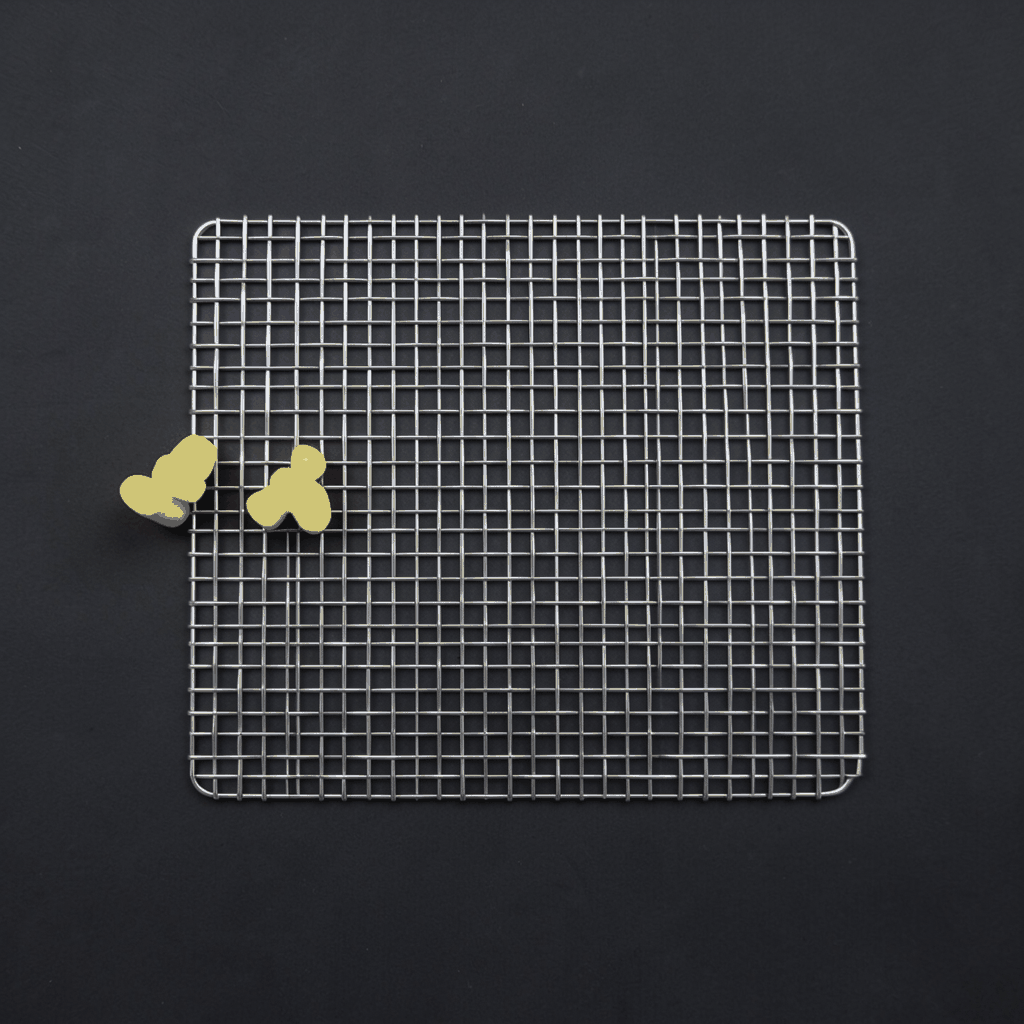
Test chambers come in two main varieties. Anechoic chambers use absorptive material to simulate free-space conditions for antenna and radiation tests, while reverberant chambers rely on reflective boundaries to create a statistically uniform field for immunity testing. Both rely on a continuous, well-grounded shield to function. Copper mesh plays a starring role in that shield because it offers high conductivity while remaining flexible enough to wrap around corners, cutouts, and structural transitions without leaving gaps.
Material properties that make copper a top choice
Copper's combination of electrical and mechanical properties is hard to beat. Its low resistivity allows RF currents to flow freely along the surface, where the skin effect concentrates high-frequency energy. At 1 MHz, the skin depth in copper sits around 66 microns, meaning a mesh with even modest wire thickness provides substantial attenuation. At higher frequencies, the skin depth shrinks further, so even fine weaves block signals effectively.
Compared with aluminium, copper offers better conductivity and superior resistance to galvanic corrosion when in contact with dissimilar metals inside chamber frames. Stainless steel is stronger but less conductive, requiring finer weaves to achieve the same shielding effectiveness. Copper also has a long history in architectural and decorative mesh work, meaning manufacturers have refined welding, finishing, and forming techniques that translate directly into high-precision chamber components. When sourcing materials, specifying C110 or C122 copper grades ensures consistent conductivity and mechanical behaviour from batch to batch.
Weave patterns, apertures, and custom geometry
Shielding effectiveness depends on the relationship between aperture size and the wavelength of the interfering signal. A general rule is that apertures should be smaller than one-twentieth of the wavelength of the highest frequency of concern. For a chamber rated to 18 GHz, that means openings well under one millimetre. Plain dutch weaves and twilled weaves can deliver the tight apertures needed for higher-frequency work, while standard plain weaves suffice for many lower-frequency immunity tests.
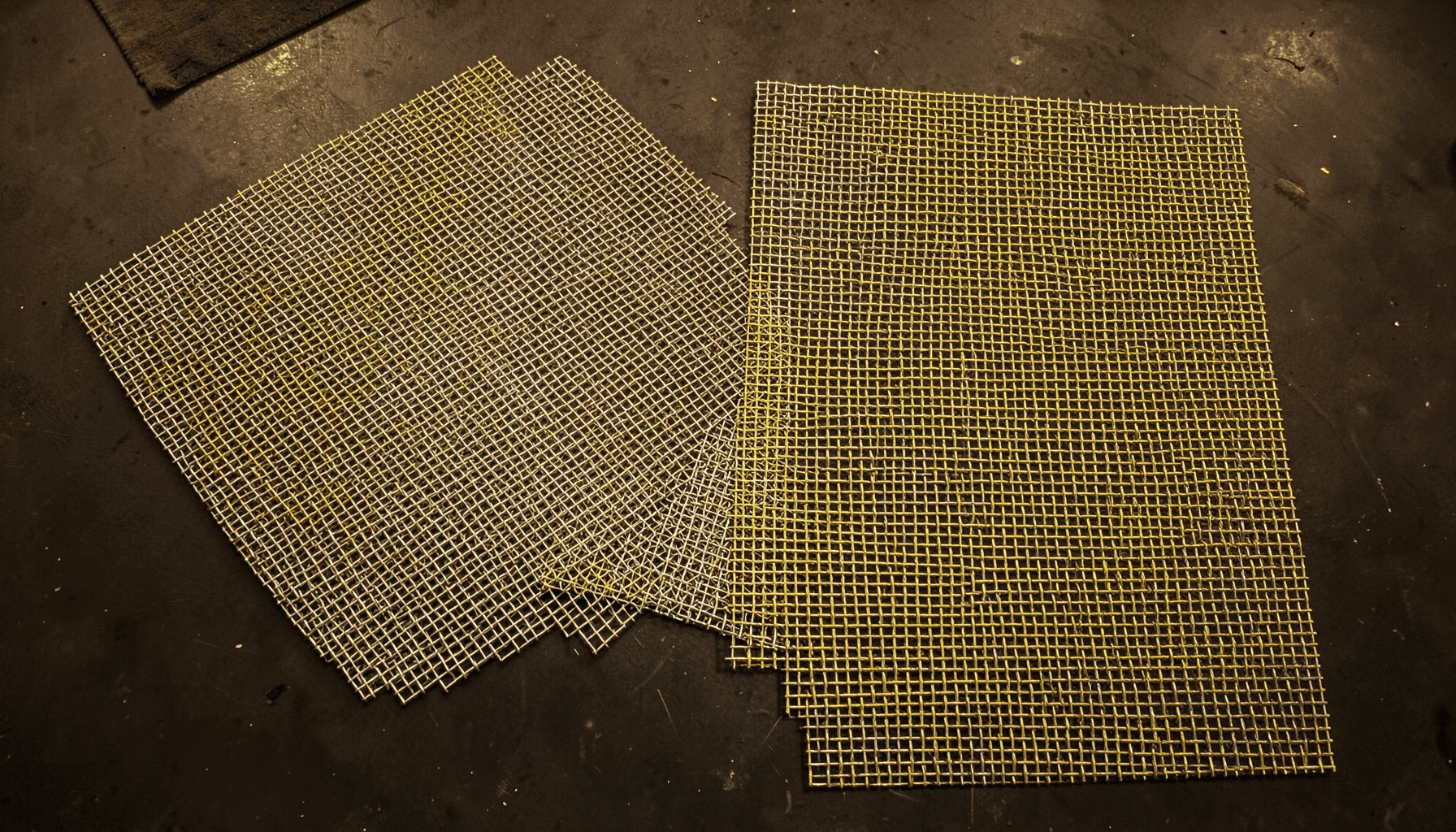
Custom fabricators can produce mesh with wire counts ranging from very coarse for ventilation panels down to hundreds of wires per inch for the most demanding applications. Aperture uniformity matters because inconsistent openings create leak paths that show up as resonances or spikes in shielding effectiveness measurements. Panel sizes are also flexible, with manufacturers able to produce wide rolls or pre-cut sheets sized to fit specific wall sections, ceiling panels, or door faces.
Australian EMC standards and local compliance realities
Australian labs operate under a framework of standards that map closely to international IEC and CISPR documents, with local variations published through Standards Australia. AS/NZS CISPR 11, AS/NZS CISPR 22, and the AS/NZS 61000 series address most testing scenarios. Facilities seeking NATA accreditation must demonstrate traceable calibration, documented procedures, and verified shielding performance for their chambers. That verification typically includes a site attenuation test or a shielded enclosure test method run, which quantifies how well the chamber blocks external signals.
Defence and aerospace work adds another layer. The DST Group in Edinburgh, South Australia, runs extensive EMC qualification programs for military hardware, often requiring chambers that meet specific NATO or US MIL-STD criteria. Suppliers providing copper mesh for those projects need to understand the documentation chain, material traceability, and welding standards that come with defence procurement. Local buyers value clear paperwork, fast turnaround, and a willingness to iterate on prototypes before committing to a full production run.
Design integration for anechoic and reverberant spaces
Integrating copper mesh into a chamber involves more than just sticking panels on the walls. Mesh must be continuous across seams, with overlaps or welded joints that maintain electrical contact. Ground straps connect the mesh to the chamber's main grounding system, typically a heavy copper busbar bonded to the building ground. Without that connection, the shield acts like an antenna rather than a barrier.
Access panels, ventilation ducts, and waveguide penetrations all need careful treatment. Honeycomb vents maintain airflow while preserving shielding, and door seals use beryllium copper finger stock to ensure a tight RF gasket around the entire closure. Mesh panels can also be combined with absorptive foam or ferrite tiles in anechoic chambers, allowing the conductive layer to sit behind the pyramidal absorbers without compromising performance.
Fabrication techniques and installation methods
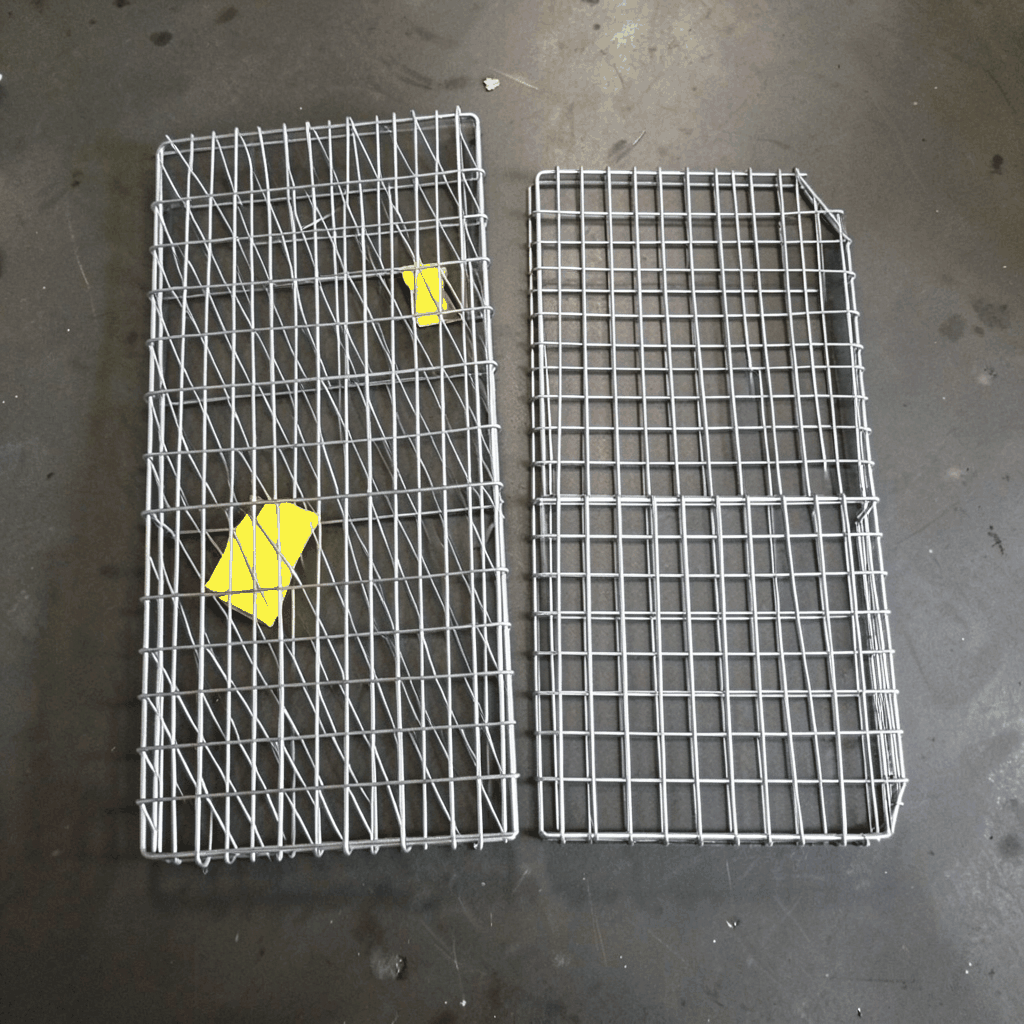
Manufacturing copper mesh panels for chambers involves precision weaving followed by careful cutting, forming, and joining. Wire is drawn to tight diameter tolerances, sometimes down to fractions of a millimetre, then heat-treated to relieve stress and stabilise the weave. Panels are often framed in aluminium or steel channels, with the mesh welded or mechanically clamped to provide a robust mounting surface. Edge preparation, deburring, and surface cleaning all matter because any contamination or roughness can compromise contact at panel joints.
On the installation side, fitters use professional cutting equipment to trim panels to length, then secure them using mechanical fixings, conductive adhesive, or welded attachments depending on the substrate. Good installation practice includes verifying continuity across joints with a multimeter, checking ground resistance, and running a preliminary shielding effectiveness sweep before closing up the walls. Australian installers appreciate suppliers who provide clear drawings, accurate dimensions, and pre-labelled components that speed up site work.
Sourcing custom copper mesh from overseas suppliers
Working with an overseas fabricator offers Australian buyers access to production capabilities that local job shops cannot match. Established Chinese manufacturers run large weaving facilities, laser-cutting centres, and welding bays under one roof. Connections to quality systems like ISO 9001 give buyers confidence that specifications will be met batch after batch. Communication usually runs through email or video conference, with technical drawings exchanged in CAD or PDF format.
Logistics matter too. Sea freight from major Chinese ports to Australian destinations typically takes a few weeks, so planning ahead avoids project delays. Customs clearance, duties, and quarantine inspections are standard steps, and experienced suppliers help with commercial invoices, certificates of conformance, and any other documentation brokers request. Carriers are usually chosen based on cost, transit time, and tracking visibility. For smaller or urgent orders, air freight is a viable backup or supplement.
For Australian engineers and procurement managers weighing their options, the path forward is straightforward: pull together the technical specification, sketch the panel layout, and reach out to a fabricator with a track record in custom mesh work. Request samples, review welding qualifications, and confirm the supplier can hit the required tolerances and documentation standards. With the right partner, even a complex chamber retrofit becomes a manageable project, and the testing facility ends up with a reliable shielded environment that supports accurate measurements for years to come.