Custom Mesh Baskets Engineered for Industrial Ultrasonic Cleaning
When a maintenance crew pulls apart a hydraulic valve or a gearbox from a haul truck, every part heads to the same place — an ultrasonic bath. The cleaner itself is only half the story. The wire basket that carries the load decides whether the cycle does its job or wastes chemicals. Off-the-shelf trays bend under heat, trap bubbles against components, and corrode within months. A purpose-built mesh basket changes that equation from the first shift.
Australian workshops run on tight shutdown windows, and FIFO rosters mean the right gear has to be on site from day one. Whether the operation is a precision instrument shop in Melbourne's south-eastern corridor or a heavy-mine maintenance facility near Port Hedland, the basket dropped into the tank is a tool that gets used hundreds of times a year. Treating it as a consumable is an expensive habit; treating it as engineered hardware is where the savings sit.
What an ultrasonic cleaning basket actually has to do
Ultrasonic tanks rely on cavitation — tiny imploding bubbles that scrub soil, oxide, swarf, and coolant residue from a component's surface. The basket is the vehicle that carries parts through that field of energy, and its role is more demanding than it looks. It must hold the workpiece securely so it cannot rattle against the tank wall, hold it at a uniform distance from the transducer so cavitation reaches every face, and let cleaning fluid drain freely so no dirty film re-deposits as the part lifts out. A solid tray defeats all three objectives. A well-specified mesh basket delivers them.
Customisation matters because no two parts lists are the same. A shop overhauling fuel injectors for a Pilbara fleet needs shallow trays with fine partitions. A medical-device sterilisation room in Brisbane requires deeper carriers sized to stainless instrument trays. A defence maintenance facility in Adelaide servicing avionics modules wants anti-static handling and pin-locating lids. The basket is engineered around the workload, not the other way around.
Material selection is the first design call. Stainless steel grades such as 304 and 316 are the standard picks because they tolerate alkaline and acidic detergent chemistries without pitting. For harsher chemistries, including acidic descaling baths used in mining-component work, a higher-nickel grade or a titanium option extends service life considerably. Aluminium mesh is lighter and cheaper but reacts badly with caustic solutions, so it suits only neutral-pH baths in light-duty applications.
Mesh specification, weave patterns, and what they change at the tank
A basket is more than a folded sheet of weld mesh. The aperture size, wire diameter, and weave pattern determine how fluid moves through the load. Fine apertures below 0.5 mm capture small components like bearings and screws but restrict circulation, lengthening cycle times. Coarse apertures above 4 mm let cavitation flow freely but allow small parts to escape or float against each other.
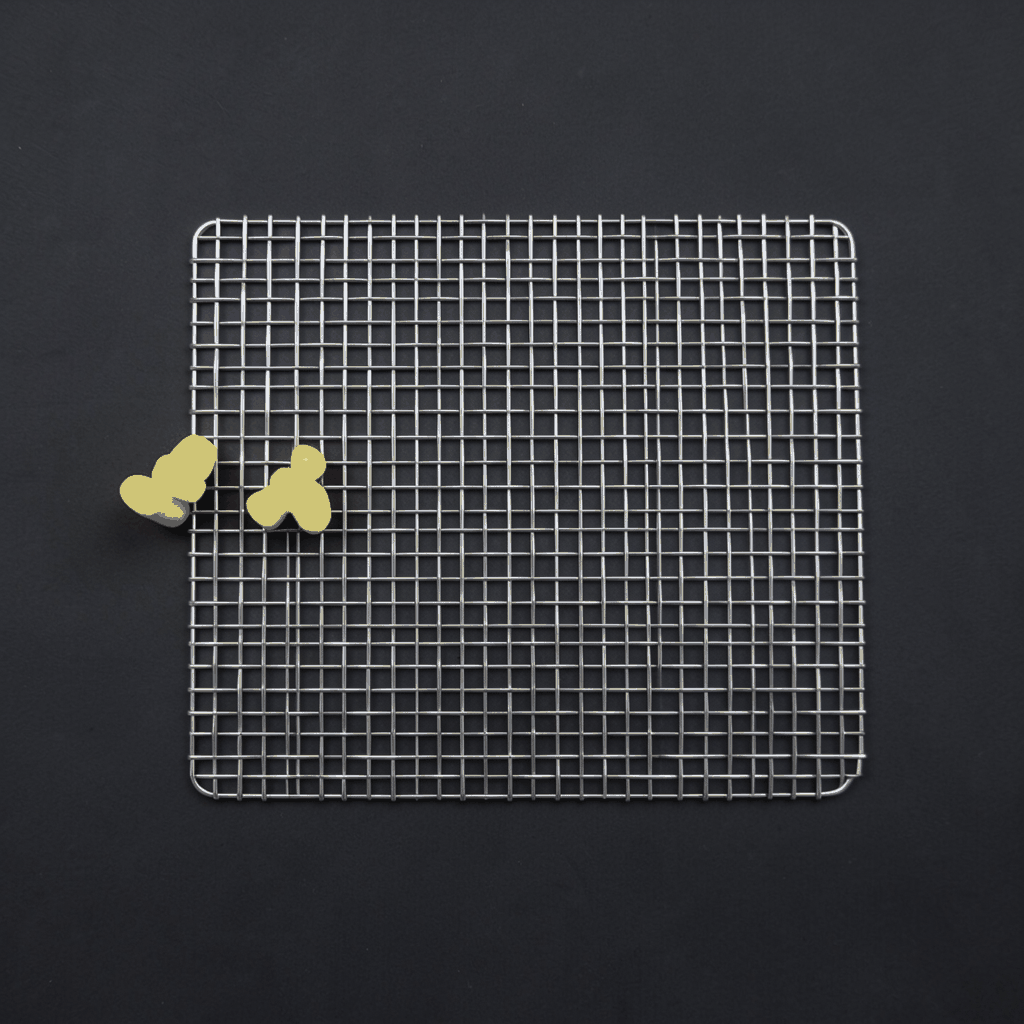
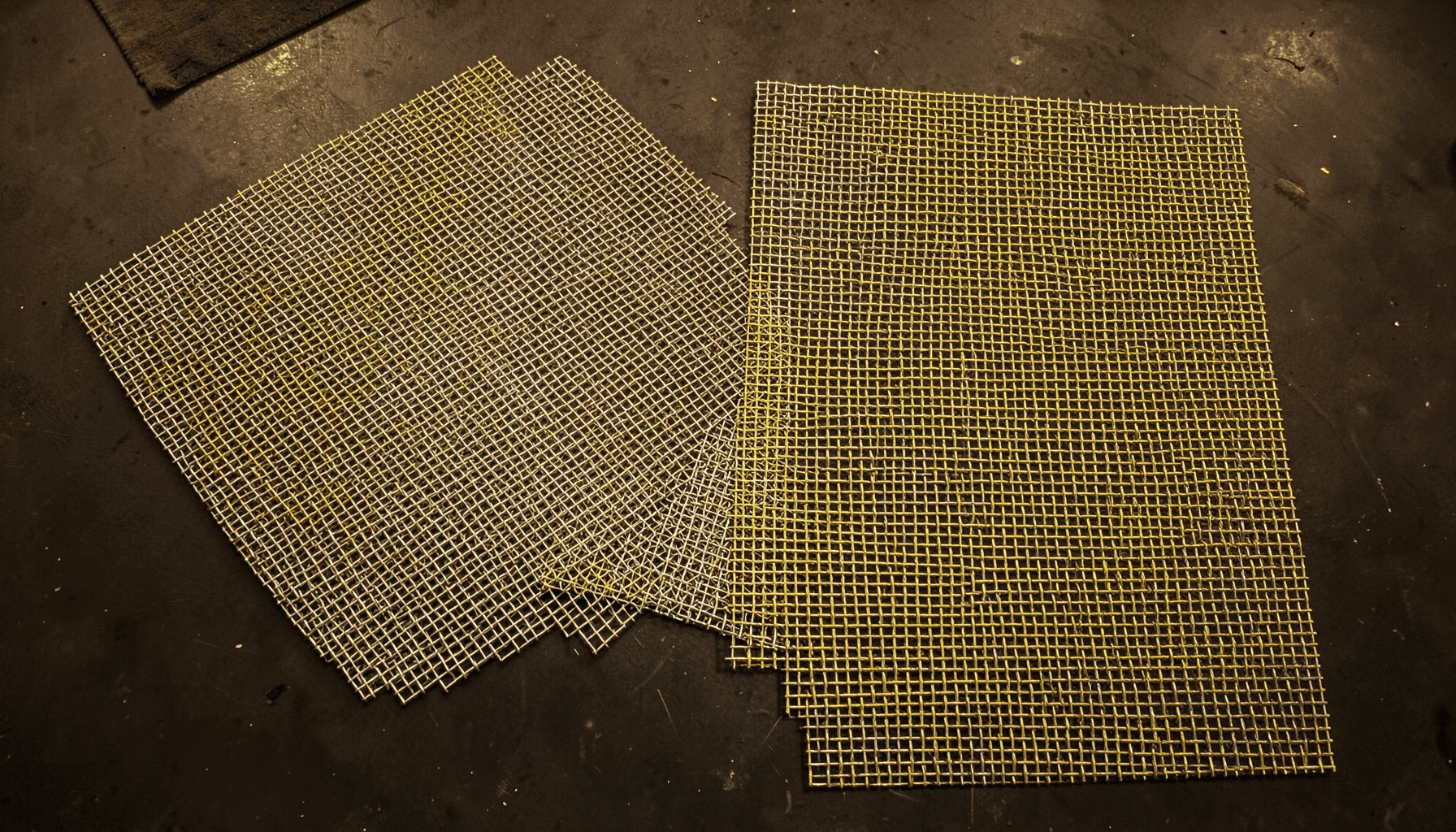
For most industrial ultrasonic work, apertures in the 2 mm to 6 mm range hit a useful balance, with welded wire mesh as the default because the joints stay rigid under thermal cycling. Woven cloth mesh delivers finer apertures for tiny components but can fatigue at fold lines. Expanded metal offers excellent drainage and rigidity for heavier loads, though its edges require deburring to avoid scratching precision surfaces.
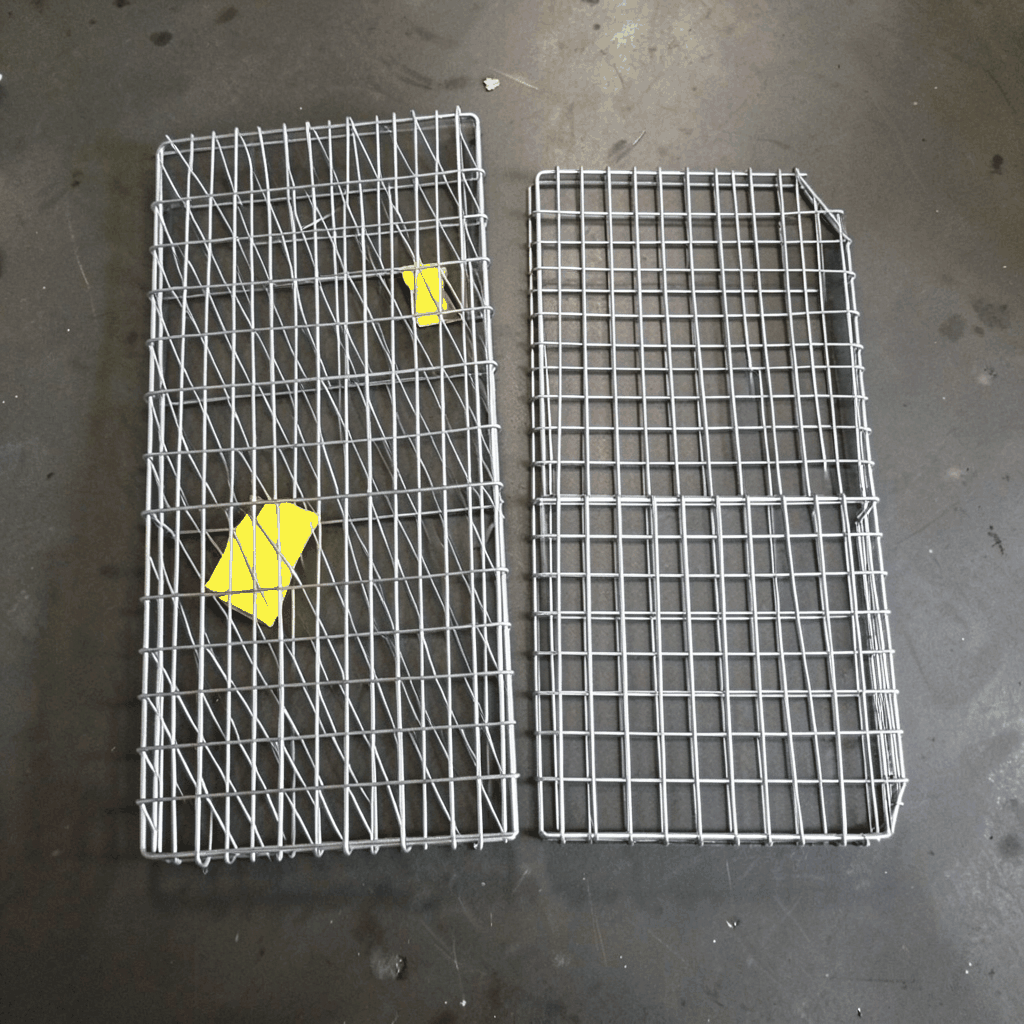
Wall thickness, basket depth, and base reinforcement are the next engineering choices. A base plate of folded mesh or a solid stainless sheet stiffens the basket so it does not flex when loaded with dense steel components. Reinforced rims keep the basket true during repeated lifting in and out of the tank, which matters for ergonomic cycles on a busy production floor. A lift-out handle welded along the centreline balances the load and reduces splashing, and a hinged or removable mesh lid holds parts in place during transport from the tank to the rinse station.
Drainage holes in the base, sometimes supplemented by raised feet or a stand-off frame, ensure the basket clears the tank floor. That gap is critical: if the basket sits flush against the transducer plate, cavitation is deadened directly beneath it, leaving a shadow zone where soil stays put.
Sizing, lids, and the realities of a workshop floor
The Australian shop floor is rarely a clean, climate-controlled environment. A maintenance bay in Dandenong during a winter shift is cold in the morning and warm after lunch. A mine workshop near Kalgoorlie runs hot and dusty. A food-grade cleaning line in a Queensland abattoir is washed down daily. A basket has to survive all of these conditions while still being light enough to handle safely when full.
Sizing drives that balance. Custom dimensions let the basket match the tank exactly, eliminating dead space and improving the workload per cycle. If a tank is 600 mm wide by 500 mm deep, a basket sized at 580 mm by 480 mm slots in without scraping the walls. That extra efficiency compounds quickly: ten per cent more parts per cycle, over a hundred cycles a week, quickly turns into days of recovered throughput across a year.
Lids and stacking frames are an underrated piece of the design. A workshop running multiple part numbers through the same tank often needs to submerge components in stages — heavy pieces on the base, lighter inserts on a raised shelf. A stacking system of interlocking mesh trays converts a single tank into a multi-level cleaning station, with each tier draining cleanly into the one below. Locking pins or clip-down lids also protect operators from splash-back when lifting saturated loads.
For facilities pursuing recognised quality frameworks, including AS/NZS ISO 9001 for quality systems and AS/NZS 2317 for aerospace machining and cleaning, the basket itself becomes a documented piece of process equipment. Traceable materials, recorded batch numbers on the stainless feedstock, and reproducible dimensions all feed into an audit trail. A custom basket manufacturer that documents these inputs makes that paperwork far easier.
Compliance, chemistry, and Australian industry demands
Australian regulators take cleaning standards seriously across several sectors. Food and beverage processors work to FSANZ requirements, where stainless contact surfaces must resist corrosion from chlorinated detergents and hot caustic wash. Pharmaceutical manufacturers operate under TGA expectations, with cleaning validation central to GMP audits. Aerospace and defence work under DASR and AS/NZS aerospace standards, where any residue left on a part after cleaning is a defect. In each case, the basket is part of the validated cleaning process, not just a handling accessory.
Chemistry drives the material choice. Alkaline detergents at pH 11 or above will attack aluminium and some lower-grade stainless. Acidic descaling baths at pH 2 or below demand 316 stainless at minimum, often with electropolished surfaces that resist pitting. Solvent-based cleaners used in some electronics and aerospace facilities call for baskets with welded seams rather than soldered joints, since solder contaminates the bath.
Food-grade operations add another constraint: baskets must drain fully so cleaning fluid does not pool and become a contamination source. Smooth, electropolished welds and rounded internal radii make wash-down faster, and they reduce the bacterial harborage that auditors look for. A mesh basket built for this environment typically carries a finer surface finish than one built for a mine workshop.
Working with Australian industrial buyers, the practical conversation often turns to two questions: how fast can a custom design move from drawing to delivery, and what happens when a basket is damaged in service? The right partner answers both with a clear engineering process and a realistic lead-time window, not vague promises.
Working with a custom mesh manufacturer
The path from a rough sketch to a finished basket usually follows a tight sequence. A buyer sends a parts list, sample components, or a sketch showing the desired loading pattern. The engineering team reviews the load weight, the tank dimensions, the chemistry, and any compliance constraints. A drawing is returned for sign-off, materials are confirmed, and production begins on a prototype or pilot run. For Australian buyers shipping sample parts or measurements across to a Chinese workshop, clear photos with a scale reference and a written brief save weeks of back-and-forth.
Lead times vary with complexity. A simple flat basket in standard 304 stainless may move from order to dispatch in three to four weeks. A complex multi-tier carrier with electropolished finish, hinged lid, and custom partitioning typically runs six to eight weeks, plus sea freight to Sydney, Melbourne, or Fremantle. Air freight is available for urgent shutdowns, though the cost premium is worth weighing against the cost of a stalled production line.
Logistics from China to Australia is well served by established sea routes into major commercial ports, with road transport onward to most industrial precincts. Buyers in Western Australia should expect longer transit times from east-coast Chinese ports; sourcing through Singapore or direct shipments into Fremantle often trims a week off the schedule. A reliable supplier will quote Incoterms clearly, handle export documentation, and either arrange freight on their side or coordinate with a buyer's nominated forwarder.
After-sales support is the real test. A basket that bends, welds that crack, or a finish that pits inside a year is a sign the supplier cut corners. A manufacturer confident in its work will publish material certificates, offer a workmanship warranty, and stand behind replacement or repair when something fails. That accountability matters more than a slightly lower headline price, because a failed basket in the middle of a scheduled shutdown is a costly problem.
Get in touch with the engineering team to scope a basket built around your tank, your chemistry, and your parts list — a short brief today is often a delivered solution within two months.