Custom Mesh Baskets for Quenching Oil and Water Baths
Heat treatment operations depend on controlled movement, reliable drainage, and repeatable cooling. A basket that carries parts into a quenching tank must withstand thermal shock, chemical exposure, mechanical loading, and repeated handling without distorting or shedding debris into the bath. Its mesh opening, frame, lifting points, and finish all influence the quality of the process.
Custom mesh baskets for quenching oil and water baths can be designed around the actual workpiece, tank dimensions, hoist arrangement, and production cycle. For Australian engineering workshops, foundries, automotive suppliers, mining operations, and maintenance facilities, a well-made basket can improve operator safety while supporting consistent hardening, cooling, washing, and transfer procedures.
Designing Around the Heat Treatment Process
The first design decision is the basket’s role in the production sequence. Some baskets carry loose fasteners, pins, gears, or small castings. Others hold long shafts, irregular forgings, fabricated components, or batches that must remain separated during immersion. A basket intended for water quenching may need rapid drainage and open circulation, while an oil-quench basket may require carefully controlled movement to reduce oil retention and mess during lifting.
The internal dimensions should allow parts to sit securely without becoming tightly packed. Crowded components can block the flow of oil or water, creating uneven cooling and variable hardness. Excessive empty space, however, increases basket size and may reduce the number of parts processed per cycle. A useful design balances load density, liquid circulation, access for loading, and sufficient clearance from the tank walls and base.
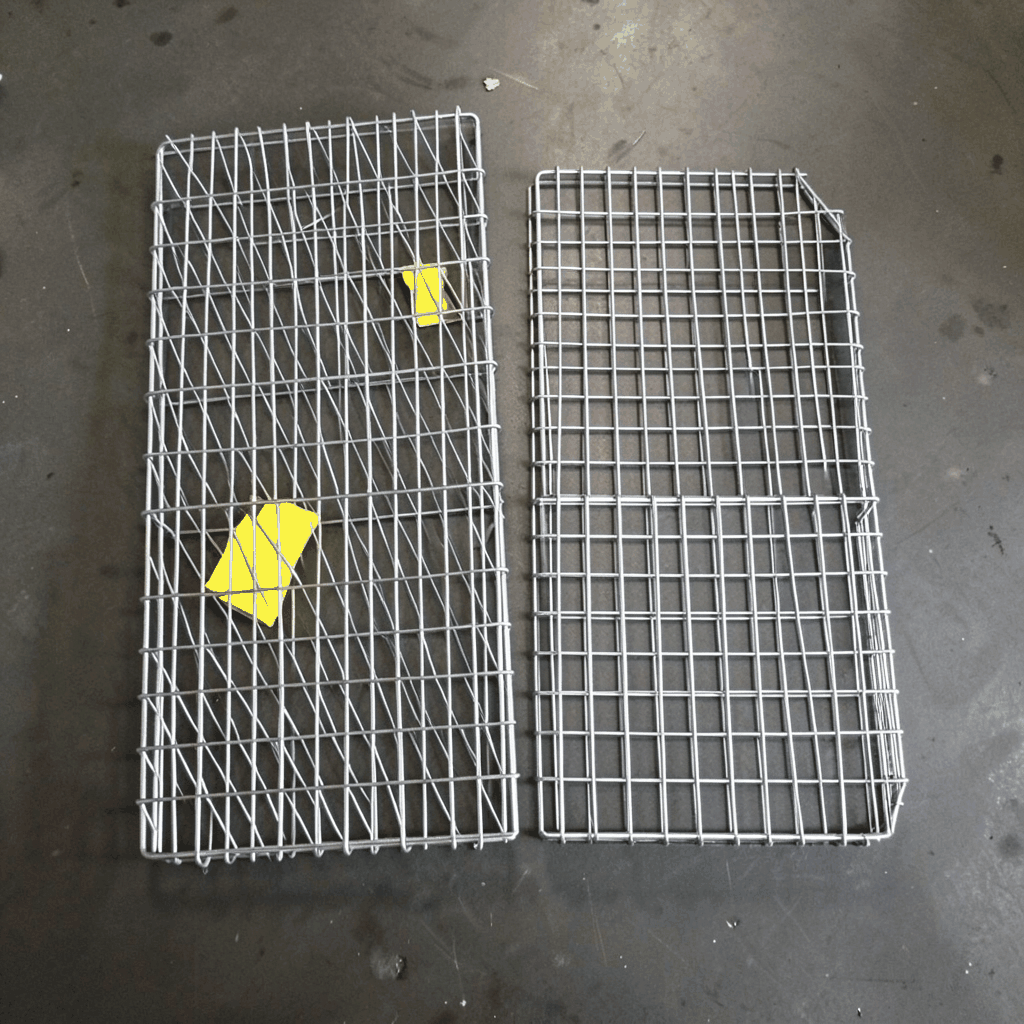
Mesh baskets can also be configured with dividers, sloped bottoms, removable trays, retaining bars, or hinged lids. These features help prevent small parts from shifting during lifting and reduce the risk of components falling through the mesh. For delicate or polished surfaces, the basket can incorporate rounded edges, smooth welds, and contact points that minimise marking.
Selecting Materials For Oil, Water, And Heat
Stainless steel is often selected for quenching baskets because it offers strong corrosion resistance and maintains useful mechanical performance through repeated heating and cooling cycles. Grades such as 304 and 316 may suit different environments, although the correct choice depends on bath chemistry, operating temperatures, cleaning products, and exposure to salts or chlorides. Stainless steel is particularly practical where the basket is washed frequently or used around water-based solutions.
Carbon steel can provide a cost-effective option for heavy-duty handling, especially where the basket is used in an oil bath and protected by a suitable surface treatment. Its service life depends on the coating, bath conditions, drying practices, and maintenance routine. Galvanised finishes should be assessed carefully for high-temperature applications, as zinc coatings are not appropriate for every heat treatment environment.
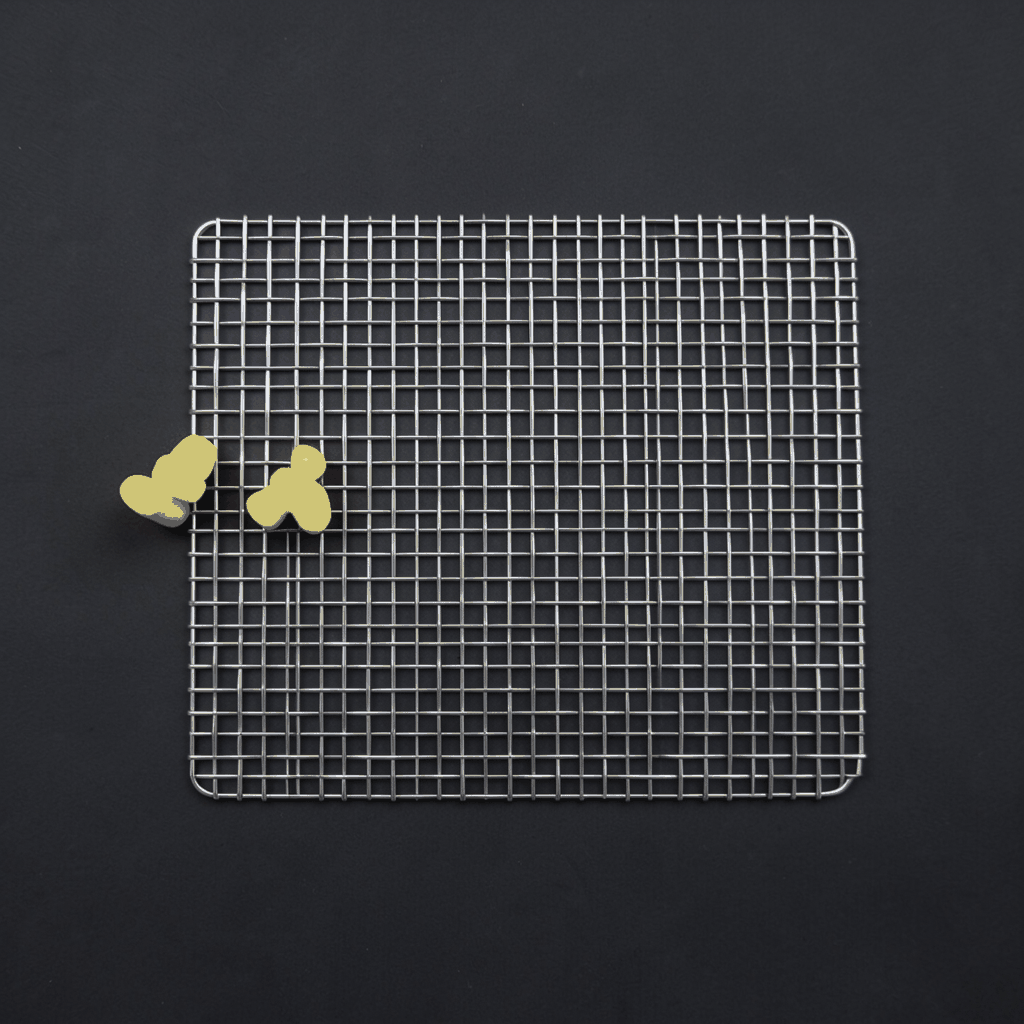
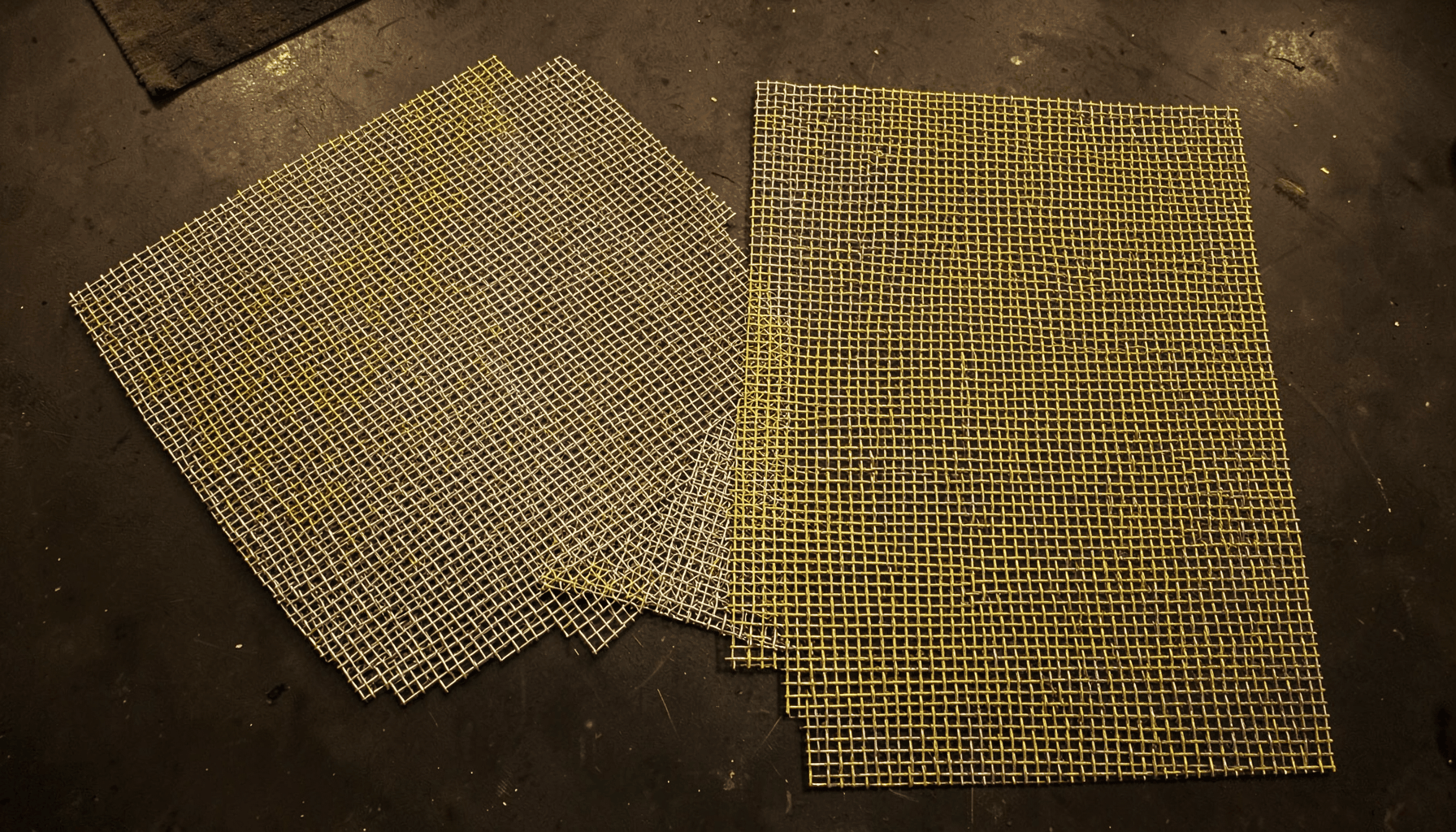
The wire diameter, mesh type, support bars, and weld construction must be considered together. Fine wire mesh retains small components but may restrict liquid movement or collect scale. Expanded metal and perforated sheet can offer higher stiffness, while woven wire mesh provides open circulation and useful containment for smaller parts. Reinforced corners, perimeter frames, and bottom supports help prevent sagging under a wet or heated load.
Aluminium and copper alloys may suit specialised applications, but they should not be selected solely for low weight or appearance. Their strength, thermal expansion, compatibility with quenching chemicals, and resistance to abrasion need to be checked against the operating cycle. A manufacturer can recommend an appropriate alloy after reviewing bath temperature, load mass, immersion time, and cleaning method.
Getting Dimensions And Lifting Points Right
Basket dimensions should be taken from the usable tank area rather than the nominal external size. The design needs clearance for liquid circulation, hoist movement, guides, tank walls, heating elements, pumps, and any internal fixtures. Allowance for thermal expansion is also important when a basket moves between a hot furnace, a quench bath, and a cooling or washing station.
The lifting arrangement deserves the same attention as the mesh body. Two-point and four-point lifting systems distribute force differently, and the choice depends on the basket length, load centre, working load limit, and available crane or hoist. Fixed lifting lugs may suit a regular production line, while removable lifting frames can make loading and storage easier.
A basket should remain stable while suspended and should not tilt enough to release parts or expose operators to splashing. Reinforced lifting eyes, cross-bracing, and a clearly defined centre of gravity support safer handling. Where a forklift is used, pockets can be added to the base, although their position must not interfere with drainage or cause the basket to become unstable during transport.
The stated capacity should distinguish between the basket’s own weight, the dry component load, retained liquid, and dynamic forces during lifting. A basket that appears suitable by static weight alone may be overloaded when oil or water clings to the parts and mesh. Engineering review of welds, lifting points, and support members is valuable for high-cycle industrial use.
Managing Safety And Bath Contamination
Quenching transfers heat rapidly and can produce agitation, vapour, splashing, smoke, or flammable mist. The basket should support controlled immersion and lifting rather than sudden drops or uncontrolled swinging. Open mesh can help liquid flow through the load, but the final design must match the bath’s circulation system and the site’s operating procedure.
Oil quenching requires careful attention to ignition sources, temperature control, ventilation, housekeeping, and the condition of the liquid. In Australia, storage and handling of flammable and combustible liquids may involve requirements under AS 1940, state or territory legislation, and the site’s risk assessment. The basket itself does not remove the need for suitable fire protection, emergency response equipment, guarding, and operator training.
Water baths can create different hazards, including steam, hot splash, corrosion, and slippery floors. Water quality, additives, and contamination from scale or process residues may affect both the basket and the treated parts. A removable basket liner or tray can simplify cleaning, but it should not significantly restrict drainage or circulation.
Under Australia’s model Work Health and Safety framework, businesses must identify hazards, provide safe plant and systems of work, and maintain equipment in a safe condition. WHS duties are administered through individual states and territories, so a facility in Melbourne, Brisbane, Perth, or Sydney should confirm the requirements that apply locally. Lifting equipment and attachments also require suitable inspection, identification of working limits, and documented maintenance.
Practical Checks Before Ordering
A clear specification allows a manufacturer to assess the basket as a complete handling system rather than a simple mesh container. Include the part drawings or photographs, maximum batch weight, component dimensions, operating temperature, quench medium, bath dimensions, lifting equipment, and expected number of cycles per week.
Process Details To Prepare
- Quenching medium and typical operating temperature
- Maximum dry load and estimated retained liquid weight
- Tank length, width, depth, and internal obstructions
- Loading method, hoist type, and lifting-point arrangement
The specification should also describe how the basket is cleaned and stored. If it moves between a furnace and a bath, the expected furnace temperature and transfer distance matter. If it is exposed to alkaline cleaners, salt solutions, or shot-blasting residue, those details can influence the material and surface finish.
Features Worth Reviewing
- Mesh opening, wire diameter, and support-frame construction
- Drainage, dividers, liners, lids, or retaining bars
- Weld finish, corner reinforcement, and lifting-eye design
- Identification marks, working-load information, and spare-part needs
Samples, drawings, and a pre-production review can help confirm that the opening size will contain the smallest part and that the largest part can be loaded without snagging. For repeat orders, an agreed drawing revision and inspection criteria reduce variation between batches.
Supporting Australian Production Requirements
Australian buyers often require equipment that integrates with established workshop systems rather than a generic imported container. A heat treatment contractor in Melbourne may need baskets sized for an existing electric furnace and overhead crane, while a mining equipment supplier near Perth may prioritise high load capacity, repairability, and resistance to abrasive scale. A fabrication or automotive plant in Brisbane may value fast changeover and compact storage between production runs.
Local operating conditions can affect the specification. Coastal facilities around Sydney, Adelaide, or Newcastle may face salt-laden air and higher corrosion exposure, while remote sites may need a basket that can be cleaned and repaired with limited access to replacement parts. A robust frame, replaceable mesh panels, and simple lifting hardware can reduce downtime when maintenance resources are spread across a large site.
Lead time, packing, and delivery should be considered early when sourcing from China or another overseas manufacturing centre. Drawings need to define metric dimensions, material grades, weld expectations, inspection points, and packaging protection. Importers should also allow for freight, customs clearance, GST, exchange-rate movement, and the time required for local commissioning or modification.
Traceability can be useful for regulated or quality-sensitive production. Material certificates, dimensional inspection records, load-test documentation, welding records, and photographs before dispatch may support internal quality systems. The exact documentation should be agreed before manufacture, particularly when the basket will form part of a validated heat treatment process.
Building A Reliable Custom Supply
A specialist metal mesh manufacturer can combine woven mesh, expanded metal, perforated plate, solid bar, and formed sections to achieve the required balance of openness and strength. The most suitable design may use heavier material around the base and lifting points, with lighter mesh on the sides to encourage fluid movement. This approach avoids adding unnecessary weight while protecting the areas that receive the greatest stress.
Prototype production is useful when the basket shape, part mix, or quenching cycle is unusual. A trial unit can reveal whether parts stack, whether liquid drains quickly enough, and whether the basket is easy to load with gloves and handling tools. Feedback from operators should be included before the design is released for a larger production run.
Routine inspection should cover mesh damage, cracked welds, distorted frames, stretched lifting eyes, corrosion, missing retaining bars, and accumulated scale. Baskets that have been dropped, overloaded, or exposed to abnormal heat should be removed from service until assessed. Keeping a record of inspection dates and observed defects can support safer maintenance planning.
Shuo Ke Wire Mesh Product Technology Co., Ltd. can develop made-to-order baskets using stainless steel, iron, and other suitable alloys, with dimensions and features matched to the quenching operation. Share the bath layout, load information, lifting method, material preference, and drawings to obtain a practical basket proposal for Australian industrial use.