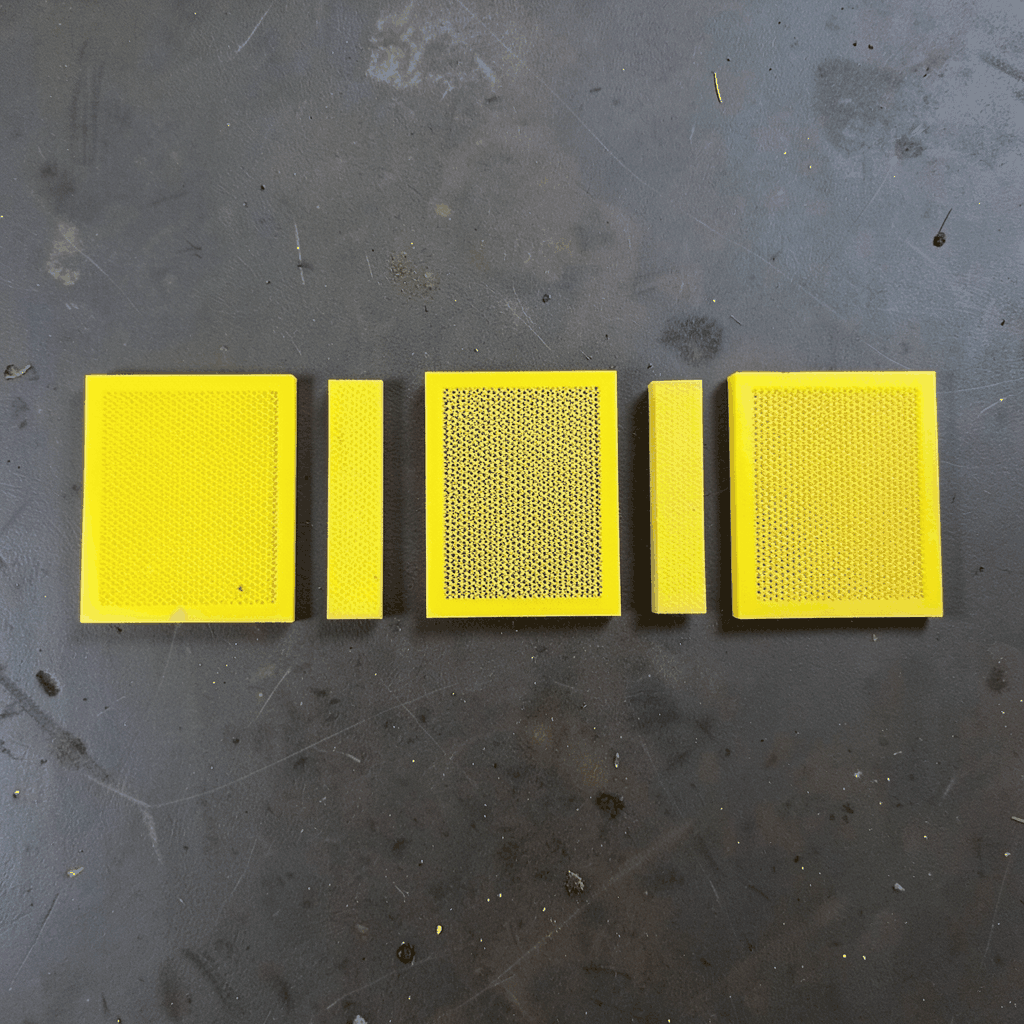
Custom mesh filters for hydroponic and aquaponic systems
A well-chosen screen does more than trap stray roots and fish feed: it protects pumps, keeps channels clear and gives the biological stage a cleaner working environment. Hydroponic growers usually need to remove suspended media, leaf fragments and biofilm; aquaponic operators also need to capture solids before they drift into fish tanks or settle into oxygen-limited corners. The right panel balances particle retention, water throughput and cleanability rather than simply using the finest available mesh.
Shuo Ke Wire Mesh Product Technology Co., Ltd. is a China-based manufacturer and processor of architectural and industrial metal mesh products, including woven and welded screens, partitions and architectural cladding. That fabrication background transfers usefully to custom mesh filters: panels can be cut, framed and finished around a particular sump, filter tower or pump inlet instead of forcing a generic cartridge into an awkward vessel.
Choose the filtration job
Start by listing what each screen must remove and where it sits in the water path. A reservoir inlet may need to exclude leaves, insects and floating media, while a return line may only need to stop root fragments. Aquaponic loops usually place mechanical filtration ahead of the biofilter because uneaten feed and faecal solids consume oxygen as they decay. Hydroponic loops have a different challenge: particles can lodge in NFT channels or drip lines and make pump performance inconsistent.
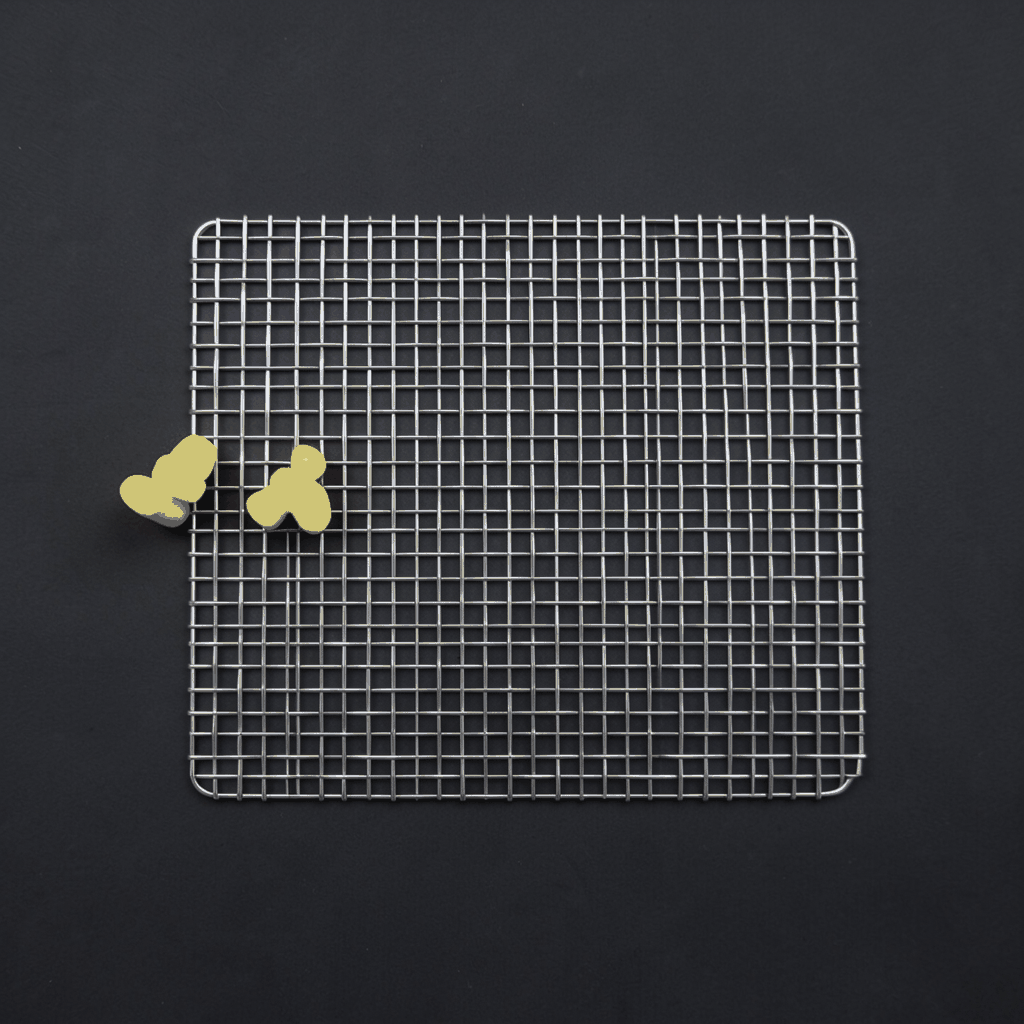
Choose between a removable panel, a cylindrical cartridge, a bag-style element and a hinged cassette according to the space and cleaning routine. Removable flat panels are simple to inspect, but they need enough clearances to lift out without damaging mesh or seals. Cartridges can fit compact vessels and may capture finer particles, while a framed cassette can support heavier solids and provide a convenient handle. Screens do not replace biological filtration, and fine mesh alone does not remove dissolved ammonia, nitrate or many pathogens.
Match mesh size to flow
A practical starting point is to match aperture size to the unwanted particle, then test that choice in service. Coarse woven screens around 0.5–1 mm can stop leaf pieces and media before they reach pumps. For prefiltering a biofilter, approximately 100–200 micrometre openings are commonly used to retain small suspended solids while leaving dissolved nutrients available to the biological stage. A finer polishing stage may use a 50–100 micrometre element where flow permits.
Mesh count and aperture are not the same thing. Specify clear aperture, wire diameter and open area, because a larger wire can weaken a panel even when its hole size stays constant. The mesh supplier should calculate or test pressure loss at the intended flow instead of relying on an open-area percentage alone. Allow for dirt, biofilm and root growth, which reduce effective open area during a growing cycle.
The pump curve matters as much as the nominal hole size. A high-flow pump forced through too little screen area can run hot, cavitate or create enough suction to pull air into a poorly sealed housing. Compare expected head loss with the pump’s available head, and design a readable pressure or flow indicator where possible. Several parallel screen areas often require less maintenance than one densely woven panel.
Select durable filter materials
Stainless steel is a common choice for wet filtration, but the grade should follow the actual water chemistry. Grade 304 generally suits clean, low-chloride freshwater; Grade 316 or a marine-grade equivalent gives better resistance to chlorides, coastal spray and salt concentration in evaporation tanks. Very acidic water, residual oxidisers and crevices can still attack stainless steel, so passivated surfaces, clean welds and regular inspection matter.
Aluminium offers low weight and good corrosion resistance in many freshwater systems, yet it can be unsuitable in high-pH, strongly alkaline or saline conditions unless the alloy and finish are selected carefully. Copper has useful antimicrobial properties but should not contact fish-system water because it can harm aquatic life. Mild steel or iron needs a properly specified protective coating and should not be left as a rusting water-contact surface.
Compatible fittings prevent problems that a sound mesh panel cannot solve. Isolate dissimilar metals where galvanic corrosion is possible, avoid embedded iron particles, and use non-shedding gaskets and seals. A fine surface finish reduces the places where biofilm can anchor. Specify a smooth, non-porous panel with no loose fibres, sharp wire ends or powder residues, and ask for passivation or an equivalent finishing process appropriate to the chosen alloy. Where chlorinated water is used for sanitation, it must be neutralised before reaching the biofilter.
Design for Australian growing conditions
Australian summers can push a small reservoir well above the temperature of a shaded nutrient solution. High UV, warm water and evaporation encourage algae, accelerate biofouling and concentrate salts when a grower repeatedly tops up with hard water. Shade cloth over the reservoir, adequate mixing and a planned water-replacement routine are simple controls that also reduce the maintenance burden on the screen.
Perth’s hard bore water deserves specific attention. High calcium and magnesium can promote scaling, and elevated pH may encourage iron or manganese deposits on metal surfaces. A test of the actual supply water can reveal whether softening, pH adjustment or a removable upstream strainer will protect the filter better than simply selecting a heavier mesh. The same principle applies wherever collected rainwater is mixed with municipal water, although rainwater can carry leaf litter from roof catchment.
Flow demand also changes through the year, and a typical backyard set-up may offer little room for service access. Leave enough clearance to wash panels without dismantling the entire loop, and monitor reservoir levels as evaporation and plant uptake reduce them. In a commercial installation, log cleaning intervals and replacement cycles so a busy harvest period does not catch the filtration stage with a clogged screen.
Build around pumps and maintenance
Locate the screen where it can be removed safely and where negative pressure cannot pull it against its frame. A pump inlet needs enough separation from the wall to avoid drawing a vortex, while a gravity return needs a housing that cannot trap air or flood the pump when the sump level drops. Bag filters need a supported mesh core so the fabric does not collapse around the outlet, and hinged panels need positive catches rather than relying on pressure alone.
Australian pump specifications commonly involve 240-volt single-phase equipment, so confirm the actual flow and head at 50 hertz rather than copying a wattage figure from overseas equipment. Match the pump model to the filter’s clean and dirty pressure losses, then check the controller, non-return valve and electrical enclosure. A bypass can keep the loop running during cleaning, but it must not allow unfiltered water to bypass the biofilter and return directly to the fish tank.
Establish a cleaning routine before the system is running at full load. Remove captured solids while they are still visible, inspect welds and seals, and keep tools and wash areas separate from food crops and fish tanks. Use warm potable water and a soft brush where appropriate, then rinse thoroughly; avoid soap, oily cleaners and unapproved chemical residues. In warm weather, biofilm can establish between services, so an interval based on flow and turbidity is more useful than a fixed monthly schedule.
Specify the right custom details
A useful filter specification includes vessel dimensions, flow rate, head loss, particle type, mesh aperture, material grade, service access and the orientation of the inlet and outlet. For a multi-stage tower, clarify which screen catches coarse debris, which protects the pump and which polishes the water before biofiltration. Include the expected solids load and how often the grower can clean each stage. Drawings with metric dimensions are more useful than sketches with unlabelled assumptions.
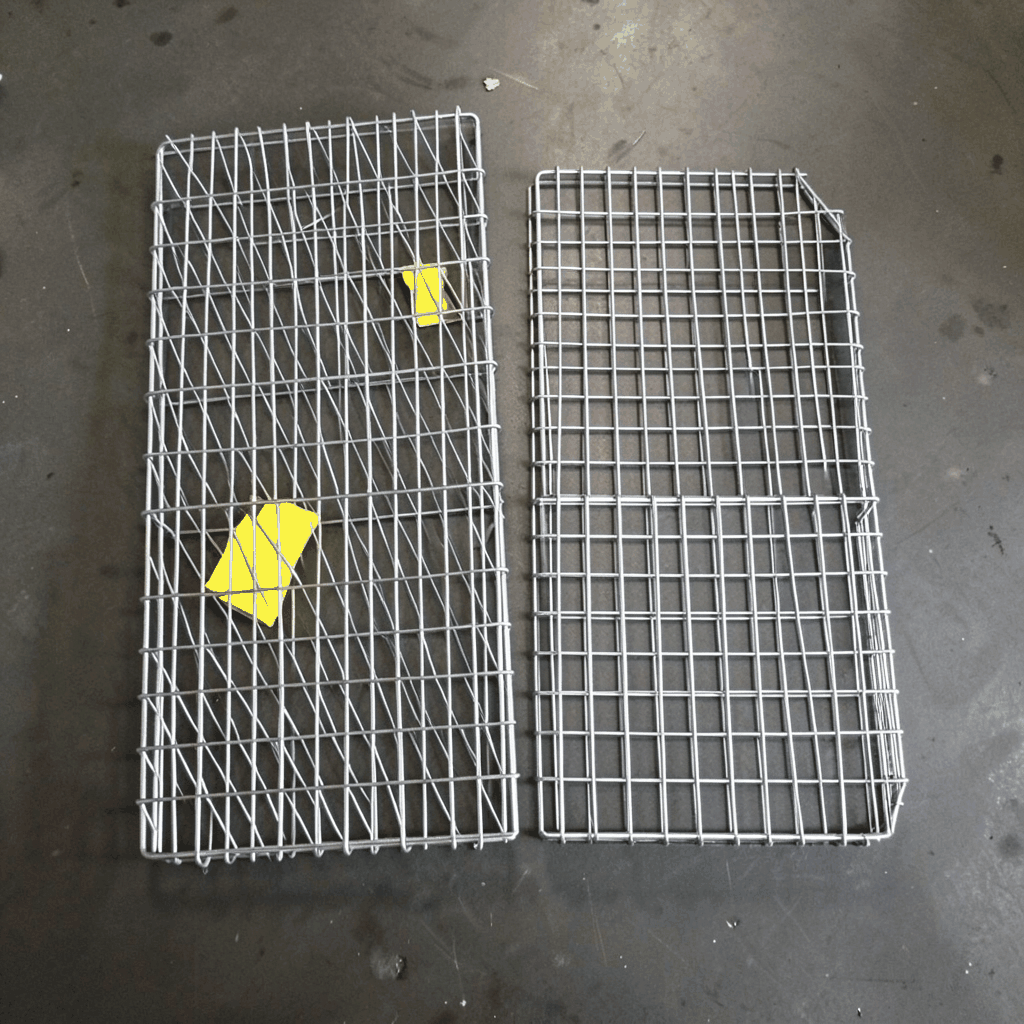
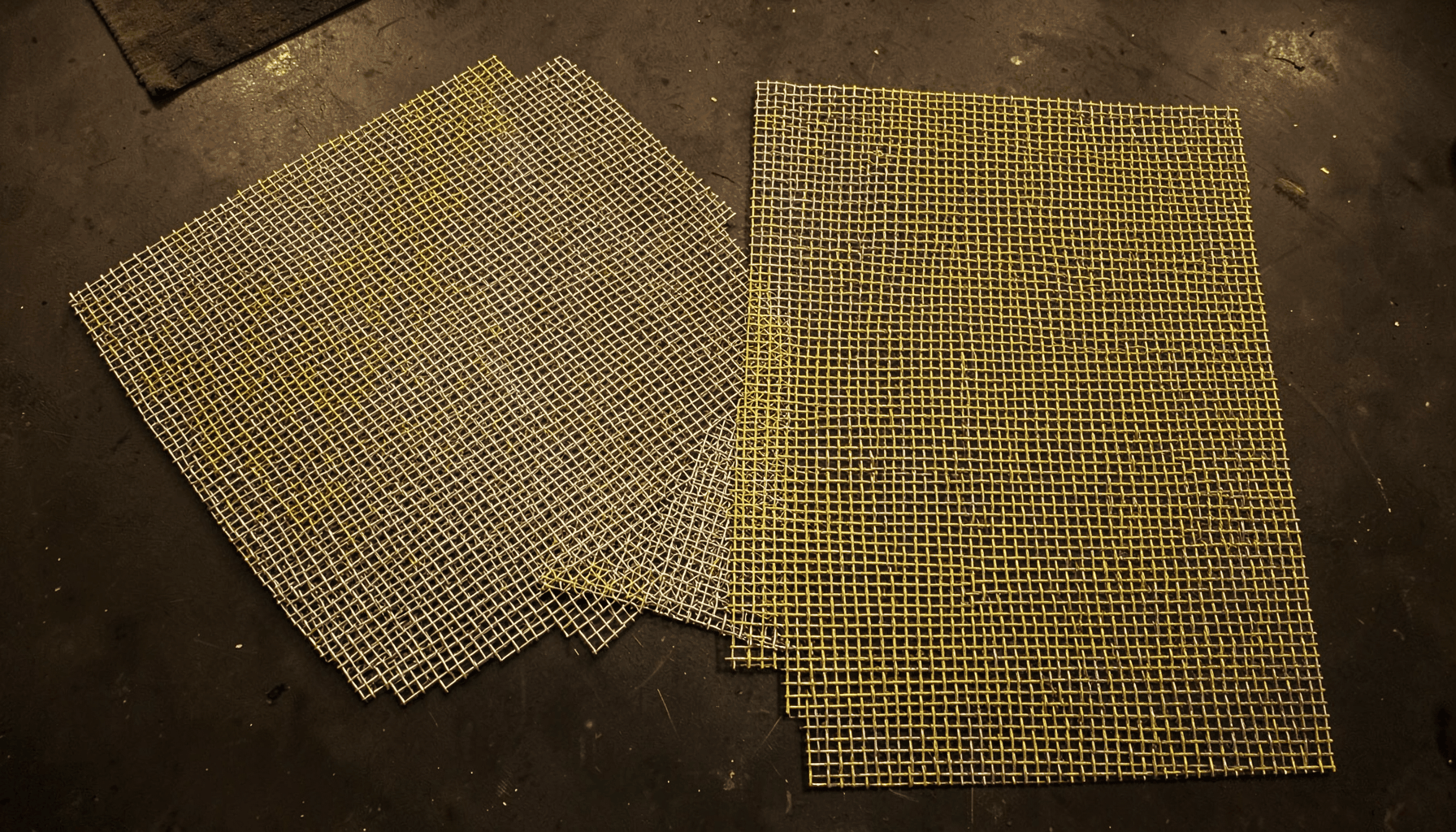
The fabrication method also affects durability. Woven wire suits flexible, fine filtration; welded mesh provides stable apertures for rigid panels; laser-cut sheets can form support grilles and decorative covers around a filter frame. Shuo Ke can develop the mesh, edge treatment, handle, frame and mounting arrangement as one component, with a sample panel to confirm fit before a larger run. For cylindrical elements, specify the seam construction and end-cap retention so the cartridge cannot open under pressure. During workshop preparation, quality cordless power tools can assist with trimming and jigs, while corrosion-critical panels are still made and finished by the mesh specialist.
For commercial production, add the supplier’s traceability and hygiene requirements to the specification. Australian growers may need evidence for food-safety, quality assurance and retailer programmes such as Freshcare, while aquaponic enterprises can face additional council, biosecurity, environmental and fish-welfare obligations. State these expectations early so material declarations, finish records and inspection evidence can be built into the order rather than requested after delivery.
Request a filter built for your system
Send Shuo Ke the tank or sump dimensions, pump flow and head, target filtration stage, water analysis, expected particle load and preferred access arrangement. A photograph of the existing housing and a sketch showing pipe connections can clarify details that a parts list misses. These inputs allow the team to compare apertures, frame options and alloys against the service conditions, rather than quoting a generic filter that may restrict the pump or collect solids in the wrong place.
Contact Shuo Ke Wire Mesh Product Technology Co., Ltd. to request a buildable recommendation, a sample or a production-ready quotation for a custom mesh filter matched to your hydroponic or aquaponic loop. Provide the required quantity and delivery destination in Australia so the material, finish, packing and transport requirements can be reviewed together.