
Custom Mesh Grilles Engineered for HVAC Equipment Intakes
Australia stretches from the tropical humidity of Cairns to the dry inland heat of Alice Springs, and from the salt-laden coastal air of Fremantle to the cool, damp winters of Hobart. HVAC equipment has to cope with that range of conditions while running continuously in homes, offices, shopping centres, hospitals, and industrial plants across the country. The grilles fitted to the outdoor intakes of these systems quietly shoulder a heavy burden: they filter airborne debris, keep pests out of ductwork, shield coils and fans from impact damage, and contribute to overall airflow efficiency. When a grille fails or underperforms, the consequences ripple through the entire installation, raising energy consumption and shortening service intervals.
Most rooftop units, wall-mounted condensers, and commercial plant-room intakes are not designed with a one-size-fits-all grille in mind. Manufacturers ship standard louvres that suit average conditions, but the Australian environment rarely delivers average conditions. A coastal resort in Noosa faces salt spray and nesting birds; a suburban home in Melbourne's outer growth corridors deals with leaf litter and bushfire-rated zones; a data centre in Macquarie Park needs precise airflow management to keep its server halls cool. Custom mesh grilles are the practical answer, allowing engineers and contractors to specify the exact aperture size, open area, material thickness, and frame configuration a site demands.
Specifying custom work has historically meant long lead times and minimum order quantities that deterred smaller installers. That has shifted as international fabricators have built responsive production lines capable of short custom runs without the premium pricing of years past. Building services engineers in Sydney or Brisbane who once had to design around a catalogue can now send drawings for an intake grille and receive a finished product in a matter of weeks.
Shuo Ke Wire Mesh supplies woven and welded metal mesh in stainless steel, aluminium, copper, and iron alloys, with in-house cutting, forming, and finishing capabilities. Working from a technical drawing, a sketch, or a sample of an existing grille, the production team can deliver a custom intake screen matched to the exact dimensions, aperture pattern, and mechanical requirements of a given HVAC unit.
Why Intake Grilles Matter to HVAC Performance
The grille on the suction side of an HVAC system is the first line of defence for the evaporator coil, the fan assembly, and the downstream ductwork. A well-specified mesh screen blocks leaves, twigs, lint, and grass clippings before they enter the unit, reducing the frequency of coil cleaning and extending the interval between major services. In coastal areas around Adelaide or the Gold Coast, the same screen keeps salt-laden air from depositing corrosive residues on aluminium fins and copper refrigerant lines.
Beyond filtration, the grille influences the static pressure the fan must work against. A grille with too little open area forces the fan to pull harder, increasing electricity consumption and shortening motor and bearing life. A grille with too much open area may let in pests or fail to block small debris. Engineers typically calculate the free area of a candidate mesh and compare it against the manufacturer's recommendations for face velocity at the intake.
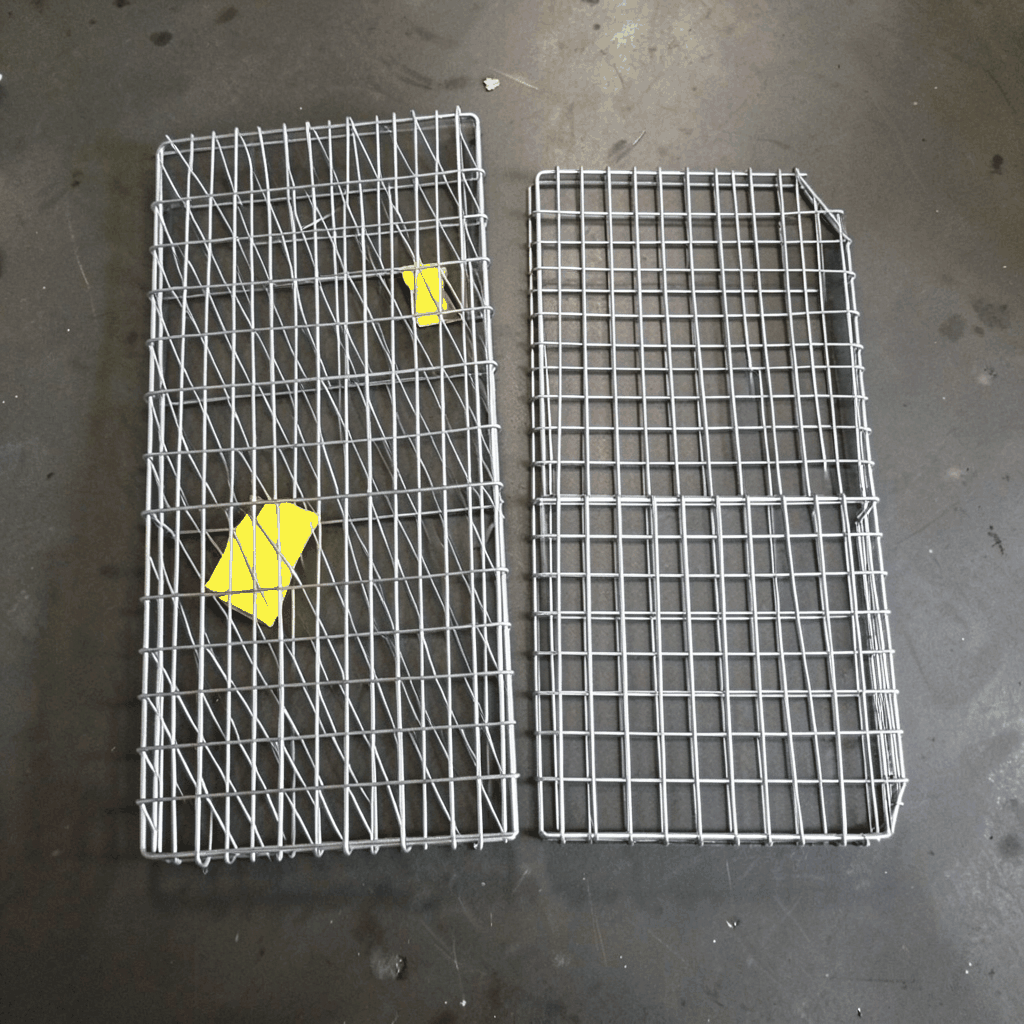
A custom grille also offers mechanical advantages over off-the-shelf alternatives. Frames can be rolled to fit non-standard cabinet openings, mitred corners welded to suit odd angles, and mounting holes placed to align with existing fasteners. For retrofit projects in heritage buildings in inner Sydney or Melbourne, where the original HVAC chases were laid out a century ago and rarely follow a square line, this level of fit matters.
Material Choices for Australian Conditions
Stainless steel is the default for most HVAC intake grilles because it balances corrosion resistance, mechanical strength, and cost. Grade 304 suits most urban and suburban settings, while grade 316 becomes the sensible choice within a few hundred metres of the surf or in industrial zones where chlorides attack lesser alloys. For tropical Queensland installations exposed to monsoon humidity, upgrading to 316 extends service life and reduces staining on the grille face.
Aluminium mesh offers a lighter alternative where weight matters, such as on rooftop platforms with structural load limits, or on package units mounted on slim-line brackets. Powder-coated aluminium blends with façade colours in residential settings where the condenser sits in a visible courtyard. Aluminium is, however, vulnerable to galvanic corrosion when paired with stainless steel fixings, so isolation washers and compatible fasteners form part of a properly detailed specification.
Copper and brass appear less often but earn their place in architectural projects where the intake grille doubles as a visible design element, such as in high-end apartments along the Brisbane River or boutique hotel lobbies in Perth's CBD. These alloys develop a protective patina that suits heritage palettes and resist marine atmospheres well, though their cost places them in a different category from utilitarian meshes.
Aperture Patterns and Airflow Engineering
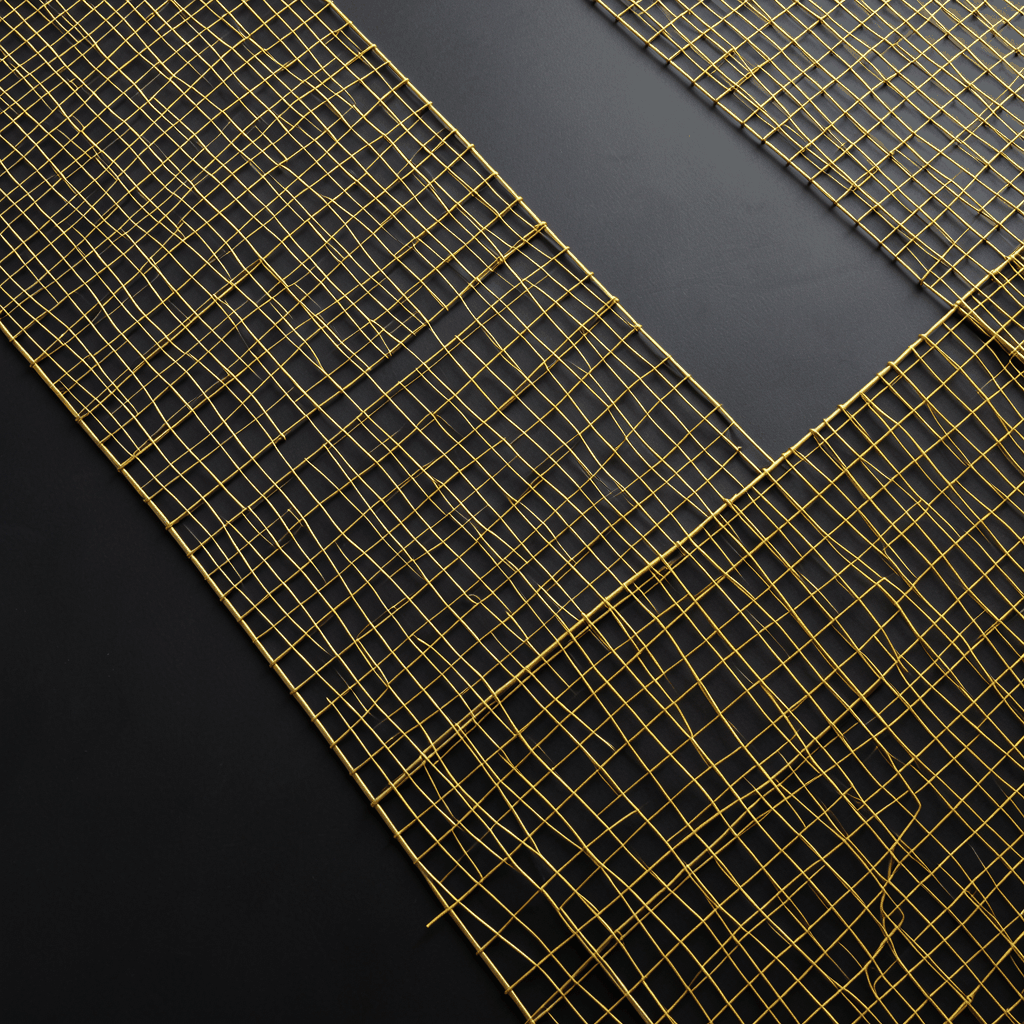
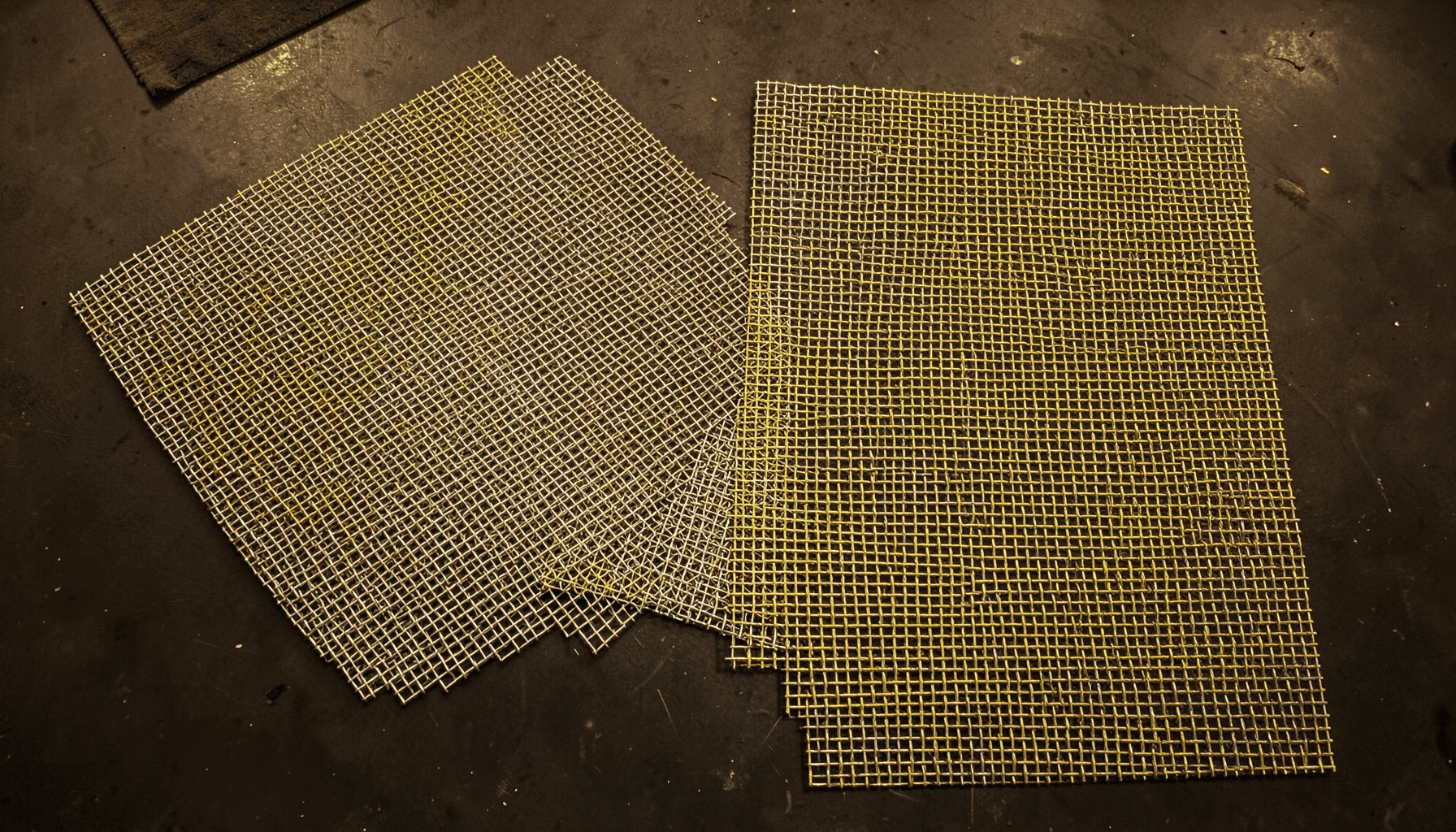
Woven mesh produces a regular, predictable aperture that suits most HVAC intake duties. The aperture is defined by the number of wires per inch in each direction and the wire diameter, giving the engineer a known open area and a known pressure drop across the screen. Welded mesh offers a stiffer panel that holds its shape under suction load, useful on large face areas where woven cloth might deflect and rattle against the frame.
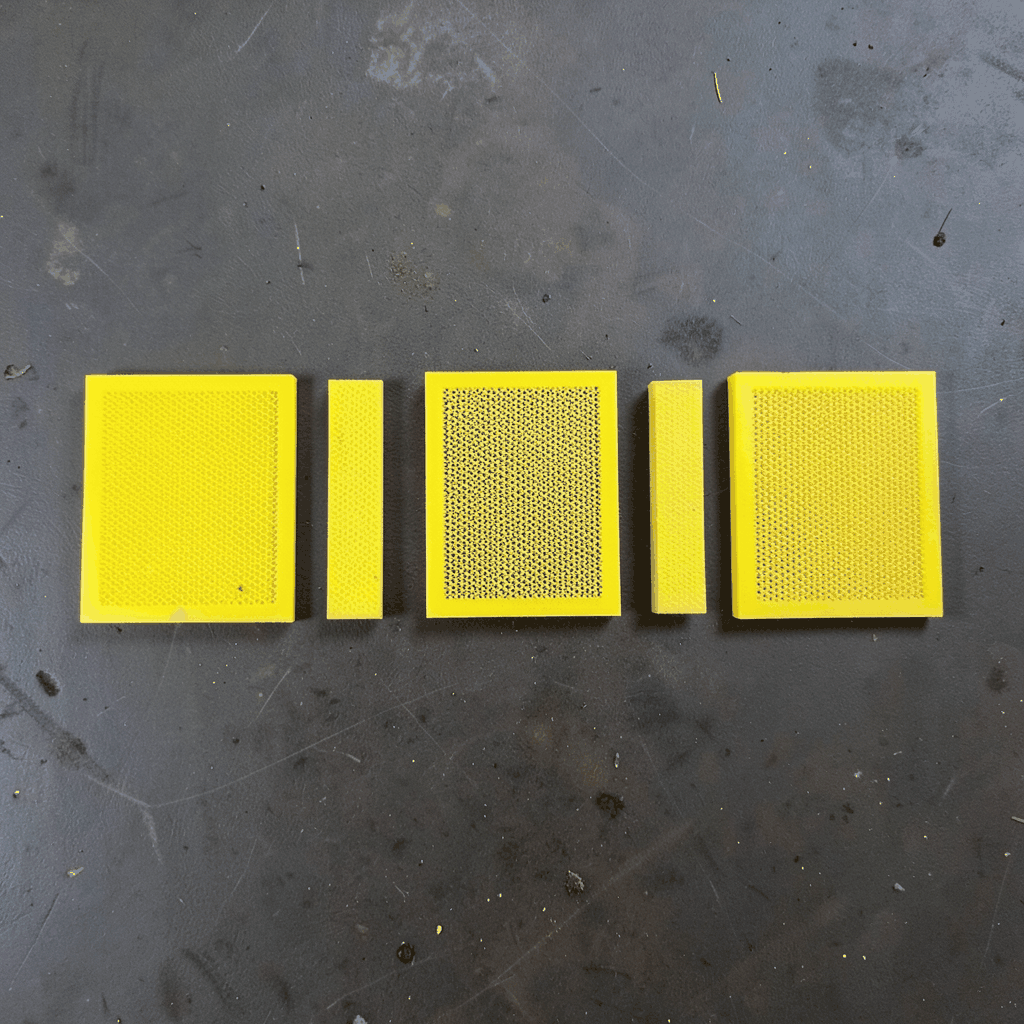
Perforated sheet is a third option, machined with round, square, or slotted holes. Slot patterns can be aligned to the dominant airflow direction to reduce turbulence and pressure loss, an approach sometimes specified on large commercial plant in airport terminals or hospital central energy plants. Selecting between woven, welded, and perforated formats comes down to the size of the intake face, the contaminants expected, and the fan's sensitivity to back-pressure.
For projects with specific acoustic requirements, such as recording studios or hotel guest-room risers, mesh density affects not only airflow but also the attenuation of fan noise. A denser mesh absorbs a small fraction of high-frequency noise transmitted back through the intake path, complementing duct silencers downstream.
Corrosion Resistance in Coastal and Industrial Sites
Australian building standards and the National Construction Code recognise that material selection in certain exposure conditions must go beyond ordinary specifications. Within designated coastal zones, particularly along the New South Wales and Victorian shorelines, designers specify marine-grade alloys or protective coatings that withstand chloride exposure. The same logic applies to industrial corridors around Port Hedland, Kwinana, or Newcastle, where airborne contaminants accelerate corrosion of unprotected ferrous components.
A stainless steel intake grille with a fine weave blocks debris but also creates a surface that holds moisture against the metal. Salt crystals concentrate in the mesh as seawater mist evaporates, and over time that concentration drives pitting corrosion even in grade 304 material. Specifying grade 316 or applying a polyester powder coat over a suitably primed substrate slows this process significantly. For extreme cases, woven mesh in duplex stainless steel or titanium is available, though the cost is rarely justified outside of offshore or chemical-plant applications.
Galvanised steel remains a budget option for sheds, warehouses, and rural installations where the grille is rarely seen and replacement is straightforward. In a poultry shed in the Riverina or a machinery shelter in the Pilbara, a hot-dip galvanised welded mesh grille delivers years of service at low cost and can be replaced without specialised tooling.
Sizing, Fabrication, and Frame Integration
Custom work begins with accurate dimensions. HVAC intake faces are rarely perfectly square: cabinet edges are often rolled, mounting flanges sit proud of the face, and the structural surround may include drip rails or weather hoods that the grille must clear. Providing a fabricator with the exact overall dimensions, the aperture size, and the position of any fixing points avoids the costly rework of returning a mis-sized panel.
Frames are typically fabricated from folded sheet steel or aluminium angles, welded at the corners and finished with a powder coat that matches the surrounding cabinet. For architectural applications, a stainless steel frame with a No. 4 brushed finish reads as a deliberate design choice rather than a piece of mechanical hardware, suitable for visible plant screens in mixed-use developments or premium residential lobbies in South Yarra.
Production lead times depend on the material, the complexity of the frame, and the surface finish. A straightforward stainless-steel welded mesh panel with a mitred frame can be turned around quickly, while perforated sheet with a coloured powder coat and a custom mounting flange takes longer. Australian projects are usually best served by communicating the critical path to the fabricator early, particularly when the grille is part of a wider façade or rooftop upgrade with phased handover dates.
Standards, Compliance, and Practical Specification
Australian engineers work within a regulatory framework that includes the National Construction Code, relevant AS/NZS standards for mechanical services, and site-specific requirements such as Bushfire Attack Level (BAL) ratings in designated zones. A grille specified for a BAL-40 or BAL-FZ application, common in peri-urban developments across the Adelaide Hills or the rural fringes of Melbourne and Canberra, may need to satisfy additional ember-protection criteria that influence aperture size and frame detailing.
Energy efficiency is the other consideration shaping grille specification. The Nationwide House Energy Rating Scheme (NatHERS) and commercial NABERS assessments reward HVAC systems that maintain their rated performance over time. A grille that resists corrosion and holds its open area through years of service helps the system stay on its design rating, supporting the building's broader sustainability credentials and the owner's operating cost projections.
Specifying a custom mesh grille comes down to three decisions: the alloy and finish, the aperture geometry, and the frame configuration that suits the installation. With detailed drawings, clear airflow targets, and an understanding of the local exposure conditions, a custom grille becomes a reliable component of an HVAC system rather than a maintenance liability.
Reach out to a mesh specialist early in the design phase, share the intake dimensions and site conditions, and request a sample or shop drawing before fabrication begins. The effort spent on getting the specification right up front saves hours of cleaning, callouts, and premature component replacement later in the life of the system.