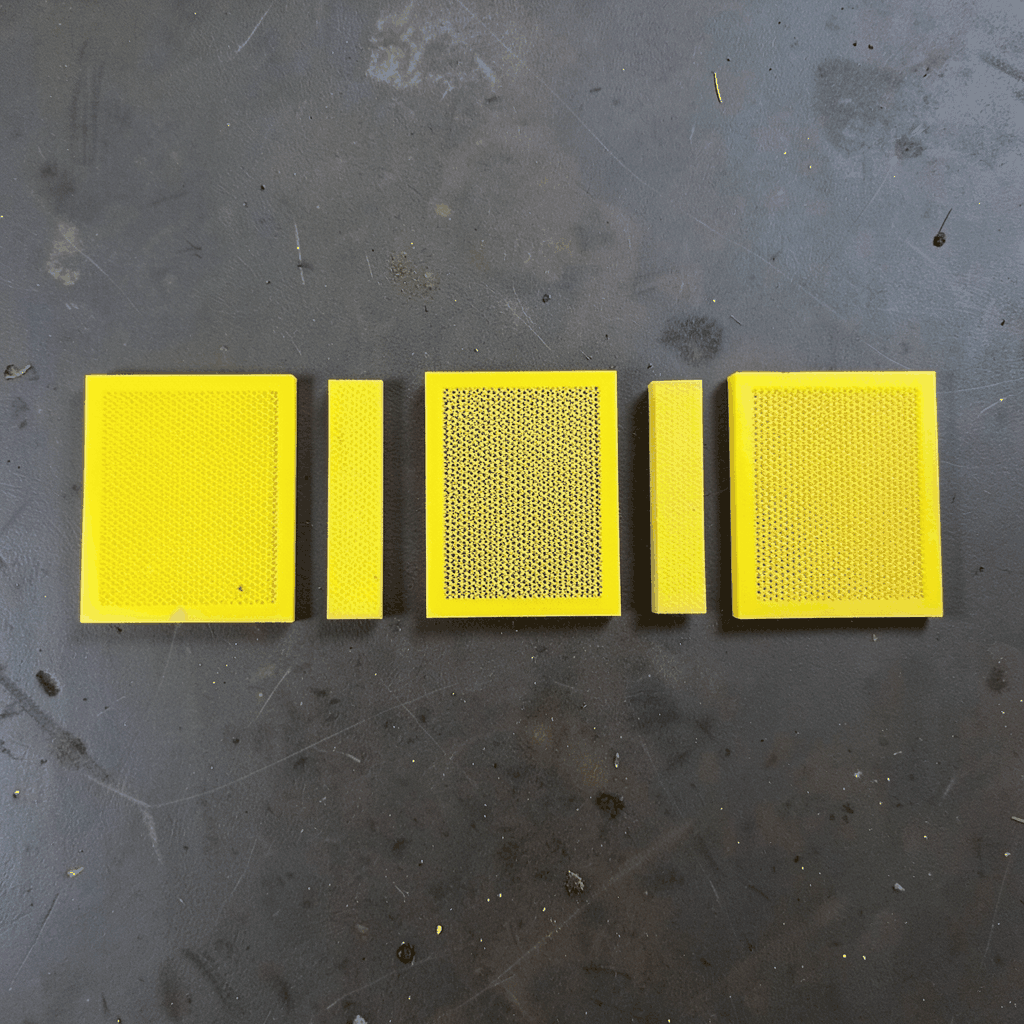
Custom mesh grilles for reliable speaker protection
Custom mesh grilles for speaker and audio equipment protection are more than decorative covers. They form a barrier around drivers, amplifiers, studio monitors and connected electronics while preserving airflow for active equipment. A well-proportioned grille can resist impact, limit dust and casual tampering, and suit a home, theatre, hospitality venue or public installation. It must also avoid changing the sound in ways listeners notice.
The right result comes from coordinating the enclosure, driver position, panel dimensions, fixing method and acoustic target rather than choosing mesh by appearance alone. Measurements, photographs and a description of the installation environment let a fabricator control gaps and edges. For commissioned work, Shuo Ke Wire Mesh Product Technology Co., Ltd. can translate these requirements into a fabrication brief and develop its custom mesh solutions around the enclosure.
Protection requirements beyond impact resistance
Speaker cabinets and nearby electronics face different hazards. Indoor monitors may need resistance from pets, children, tools and repeated handling. Ceiling and in-wall speakers can collect dust from renovations or HVAC systems. Outdoor and patio systems also require rain management, while equipment near kitchens, pools or coastal buildings may encounter corrosive moisture. The grille should therefore be sized to the risk rather than treated as a universal shield.
Protection starts with the weakest part of the assembly. Wide gaps can admit fingers or debris; thin sheet can flex around a fastener; sharp cut edges can damage cables; and a tight bolt pattern can make maintenance difficult. A robust panel uses suitable sheet thickness, supported edges, corrosion-resistant fixings and a clear path for wiring. Security screws or captive fasteners may be appropriate where equipment is publicly accessible.
Driver geometry determines the available clearance. A grille sitting too close to a cone or dome can alter airflow, create pressure variations or produce visible acoustic artefacts. Bass reflex ports need their own openings, and recessed drivers require enough depth for the panel to remain flat. The mounting frame should hold the mesh under controlled tension without twisting the cabinet or marking a finished wall.
Materials suited to Australian environments
Powder-coated aluminium offers a light panel with good stiffness and many exterior colour options. It works well for ceiling speakers, home cinemas and commercial fit-outs where weight and clean lines matter. Stainless steel is stronger and suited to security-conscious or industrial applications, but the grade and finish still matter. Galvanised carbon steel can be economical indoors, provided it is kept away from salt-laden air and prolonged moisture.
Perforated sheet usually provides a neat face and predictable open area, while woven wire mesh, expanded metal and laser-cut architectural panels offer distinct visual effects. Copper and brass can provide a warm decorative finish, but they need careful isolation and coating when used beside aluminium or steel. Dissimilar metals in direct contact may create galvanic corrosion, particularly in wet environments, so the fixing specification should be reviewed as a complete assembly.
Australian conditions make the environment detail important. In coastal areas around Perth, Brisbane, Sydney and Adelaide, salt can collect on fine wire and fasteners; grade 316 stainless or a suitably specified coated system may be warranted, while pool chemicals demand separate assessment. In bushfire-prone parts of Victoria and South Australia, buyers may ask about ember resistance. A metal grille should not automatically be described as a fire-rated or ember-protection system, because performance depends on openings, attachments, coatings and the relevant test or building requirement.
Acoustic transparency, airflow and weather
A grille changes sound when its open area, perforation pattern, wire diameter, depth and distance from the driver differ from the design assumed by the loudspeaker manufacturer. There is no universally “sound-transparent” mesh. Fine woven fabric may be acoustically gentle, but rigid mesh can introduce diffraction or resonances. A representative sample should be compared with the uncovered speaker at normal and low listening levels before the full panel is approved.
Open area provides useful airflow and bass performance, but simply increasing it can weaken impact resistance or visual refinement. Perforated sheet allows hole size and pitch to be balanced; woven mesh can carry load differently across its width; expanded metal creates longer openings that may expose larger objects. Where weather enters the enclosure, an overlapping or angled profile can reduce direct water exposure without trapping it behind the panel.
Heat is often the overlooked constraint. Amplifiers, receivers and active speakers generate heat that must escape through designed vents, and a dense grille across every opening can raise internal temperatures. Rear clearance for passive cabinets, unobstructed cooling paths and replaceable dust filters should be considered together. Outward-facing panels need drainage holes and drip edges so moisture does not travel along the mesh into the cabinet.
Australian project and compliance considerations
Dense apartments in Sydney, Melbourne and Brisbane often leave little space behind walls or above ceilings. Residents regularly use compact home cinemas, gaming systems and streaming equipment, while cafés, small theatres and live-music rooms need robust access for technicians. In those settings, a flush grille, shallow frame and removable front can be more useful than a deep decorative enclosure. Melbourne’s strong café and music culture, for example, creates many shared spaces where appearance and reliable service access must coexist.
Australian fabrication and fit-out teams commonly work in metric, and local panel shops may already hold aluminium, stainless steel and powder-coating stock. That can make rapid revisions and site checks practical. Drawings should nevertheless identify whether dimensions apply to the visible panel, pitch line, aperture or finished frame. Confirming tolerance, colour, fixings and handedness on a signed drawing helps prevent confusion when installation is handed to a local cabinetmaker, electrician or audiovisual contractor.
Standards depend on what is being supplied. AS/NZS 60065 addresses safety for in-scope audio, video and information technology equipment, while registration and labelling under the Electrical Safety RCM regime apply to regulated electrical products; a passive grille should not be assumed to inherit the compliance of the finished speaker. Commercial installations may also engage National Construction Code, fire-safety, access and egress requirements. The grille must not obstruct approved ventilation or escape routes, and building or balcony work can require project-specific review by the responsible designer or contractor.
Production-ready specifications and recommendations
A useful fabrication pack identifies the driver model, enclosure drawings, panel size, exposure level, desired appearance and available fixing points. It should also define the expected open area, maximum allowable depth and whether a filter, hinged door, security fastener or drain path is required. These details turn a visual concept into a product that installers can handle consistently.
- Provide a dimensioned drawing with the driver centre, speaker aperture, frame profile, tolerances, fixing locations and cable routes marked rather than relying on a photograph alone.
- Test a representative mesh sample for listening quality, bass response, cooling airflow, splash behaviour and secure attachment before approving a large architectural panel.
- State the environment and service-life needs, including indoor, coastal, poolside, dusty or outdoor exposure, then select aluminium, 304 or 316 stainless steel, or another suitable substrate and coating as a system.
- Detail edge treatment, gasket or isolation interface, corrosion-resistant fixings, drainage, panel removal and clearances for maintenance in the final installation drawing.
A first-article inspection can confirm hole alignment, weld consistency, coating adhesion, flatness and fastener access. For architectural grilles, an agreed finish reference and a nearby installation sample reduce variation across multiple rooms or cabinets. These checks are particularly valuable when matching mesh across a home theatre, foyer or public venue.
To move a project into fabrication, send the enclosure dimensions, speaker model, site photographs, exposure conditions and preferred finish to the mesh supplier for review. The manufacturer can then discuss panel construction, attachment, drainage and sampling around the actual installation rather than forcing a standard catalogue pattern into a custom application. For residential, commercial, architectural or municipal work, an early technical exchange can shorten revisions and protect the acoustic design.
The completed brief is the foundation of a durable result. Linking acoustic intent with Australian climate realities, compliant installation needs and maintainable fixing details allows teams to produce speaker protection that looks integrated and remains practical after commissioning.