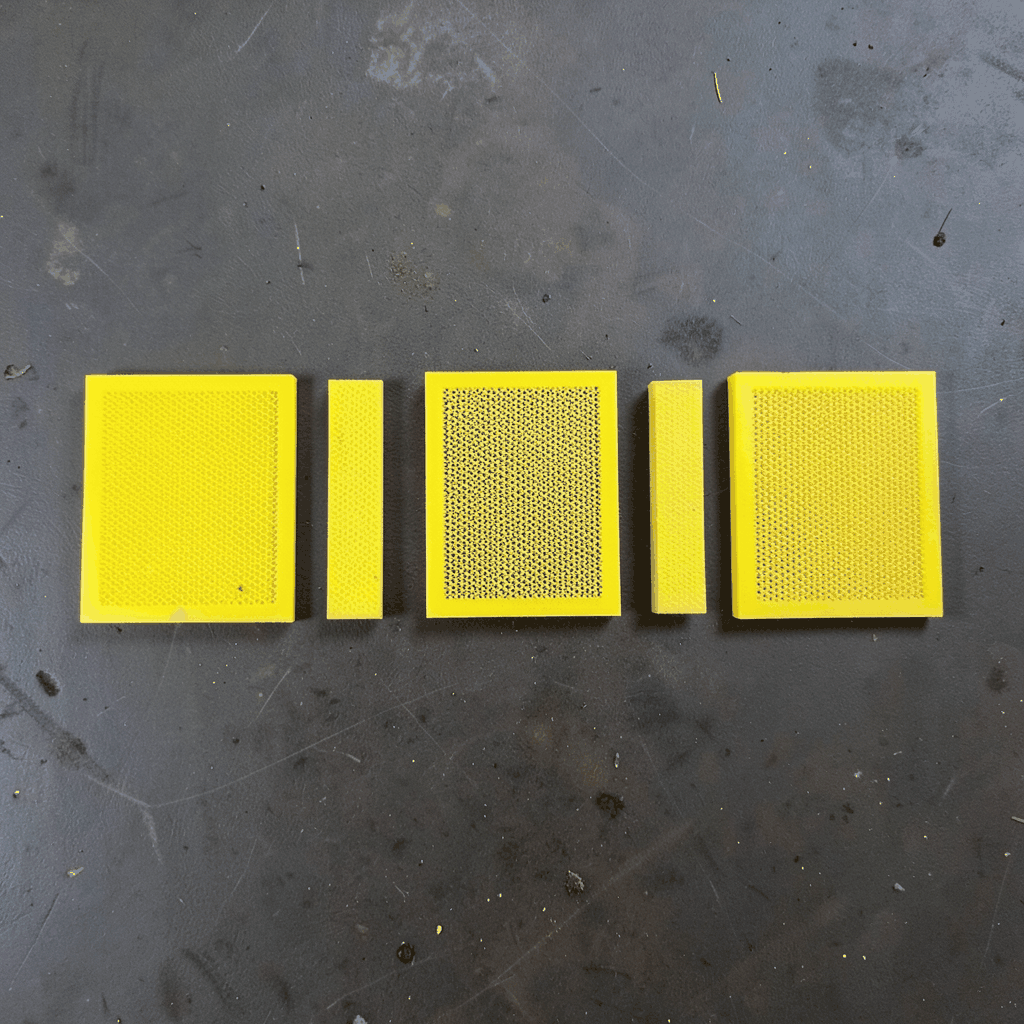
Custom mesh inserts for suspended ceiling light diffusers
Suspended ceilings are often designed around acoustic performance, service access, lighting, and a clean architectural finish. Light diffuser panels sit at the intersection of these requirements. They must soften glare, distribute illumination, and remain visually consistent with the ceiling grid. A custom metal mesh insert can add a durable, refined layer to that assembly while giving designers greater control over light transmission and surface character.
Perforated and woven metal elements can be produced in stainless steel, aluminum, copper, iron, and other alloys. Their open structure allows light to pass through or reflect across the ceiling plane, while the selected wire diameter, aperture, pattern, and finish determine the final appearance. This makes mesh suitable for offices, retail interiors, hotels, transportation facilities, restaurants, public buildings, and residential projects.
For a manufacturer and processor such as Shuo Ke Wire Mesh Product Technology Co., Ltd., the value of a ceiling mesh insert lies in the combination of fabrication accuracy, material selection, and practical engineering. Each component can be developed to suit the diffuser size, ceiling system, lighting source, and maintenance requirements of a particular project.
Why metal mesh works with light diffuser panels
A metal mesh insert can create a visual filter between a light source and the occupied space. Instead of presenting a completely smooth diffuser surface, the mesh introduces a controlled pattern of lines, openings, or woven texture. The resulting ceiling can appear more dimensional without adding heavy decorative panels or complex structural elements.
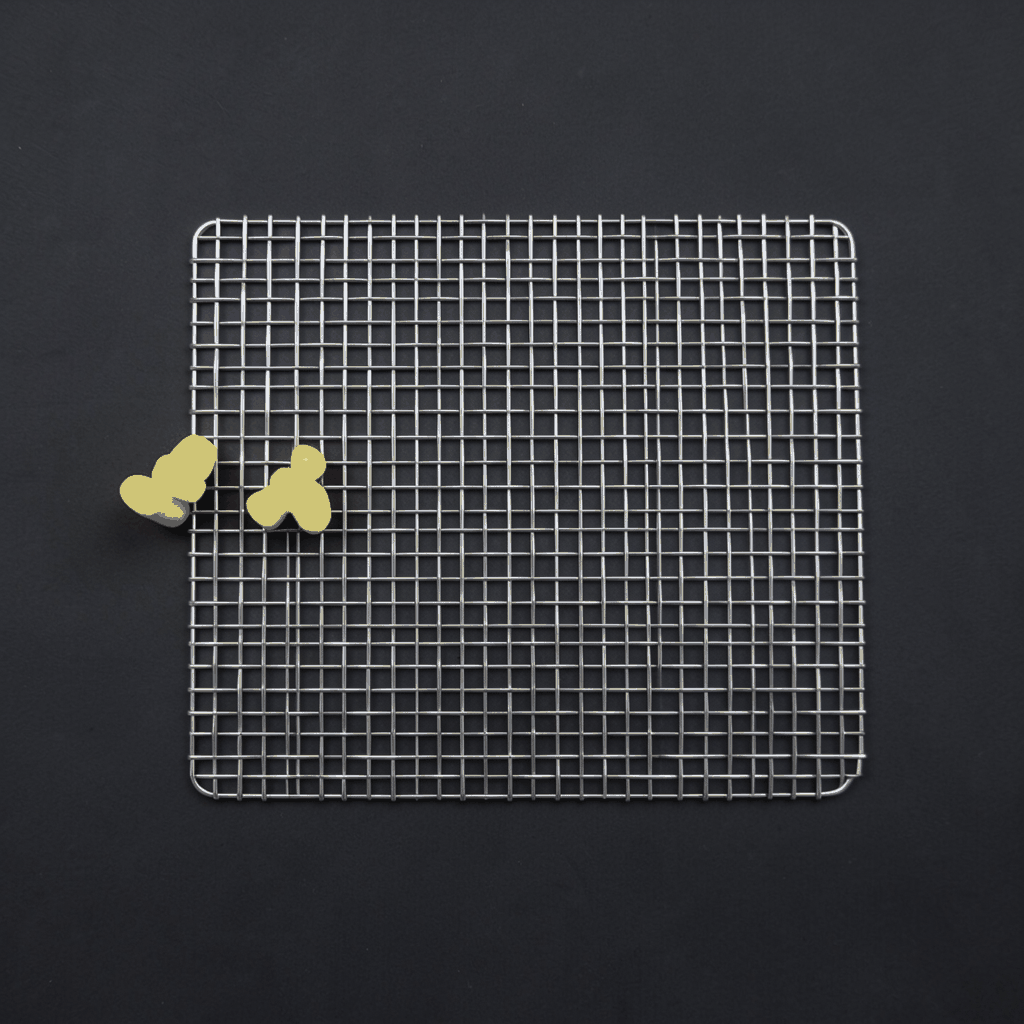
The degree of openness affects both appearance and performance. Fine woven wire mesh produces a subtle texture and can help conceal lamps, LEDs, or internal ceiling components. Expanded metal and perforated sheets offer stronger geometric definition, with patterns that can align with architectural motifs. A more open configuration may provide higher light transmission, while a tighter mesh can create greater visual screening and a softer glow.
Metal also performs well in demanding interior environments. Stainless steel resists corrosion and is easy to clean, aluminum reduces weight, and copper provides a distinctive natural or treated finish. When the correct alloy and surface treatment are selected, the insert can remain stable through routine cleaning, temperature changes, and long service periods.
Design variables that shape the finished ceiling
The mesh specification should be developed together with the diffuser and ceiling grid rather than treated as an isolated decorative choice. Wire diameter, opening size, mesh count, panel dimensions, edge treatment, and fixing method all influence the fit and visual result. Small changes in these variables can noticeably alter shadowing, brightness, and the perceived scale of the pattern.
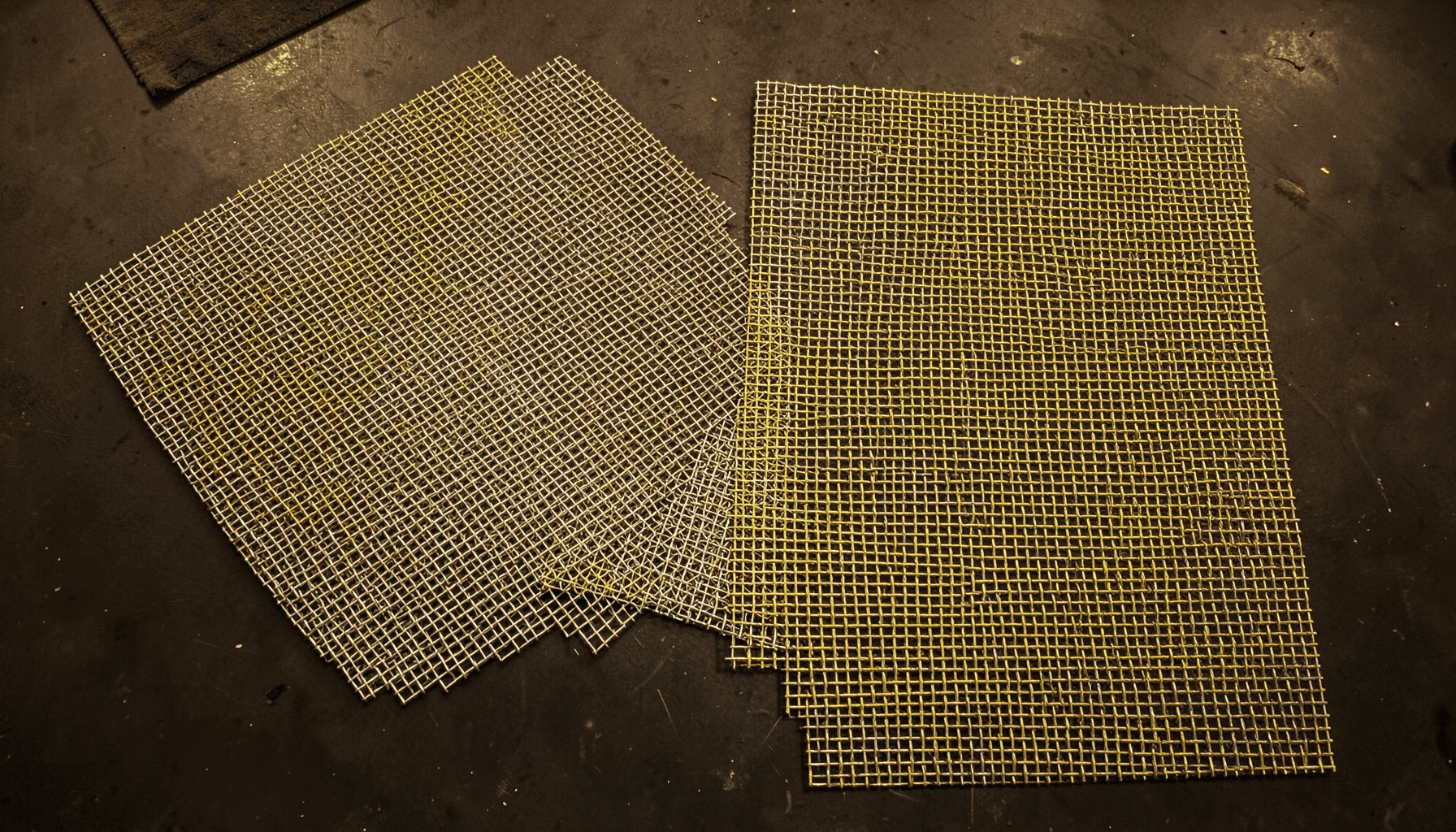
Woven wire mesh is available in plain weave, twill weave, Dutch weave, and other configurations. Plain weave can provide a balanced, regular appearance for general ceiling applications. Twill weave creates a diagonal visual direction and may be useful when a project requires a more textile-like finish. Decorative architectural mesh can combine larger openings with shaped or layered patterns for stronger visual impact.
For rigid inserts, perforated metal and expanded metal provide different effects. Perforated panels use repeated round, square, slot, or custom-shaped openings. Expanded metal is cut and stretched to create diamond or other elongated apertures, often with good stiffness-to-weight performance. Laser-cut screens allow logos, repeated motifs, and project-specific graphics to be incorporated into the ceiling design.
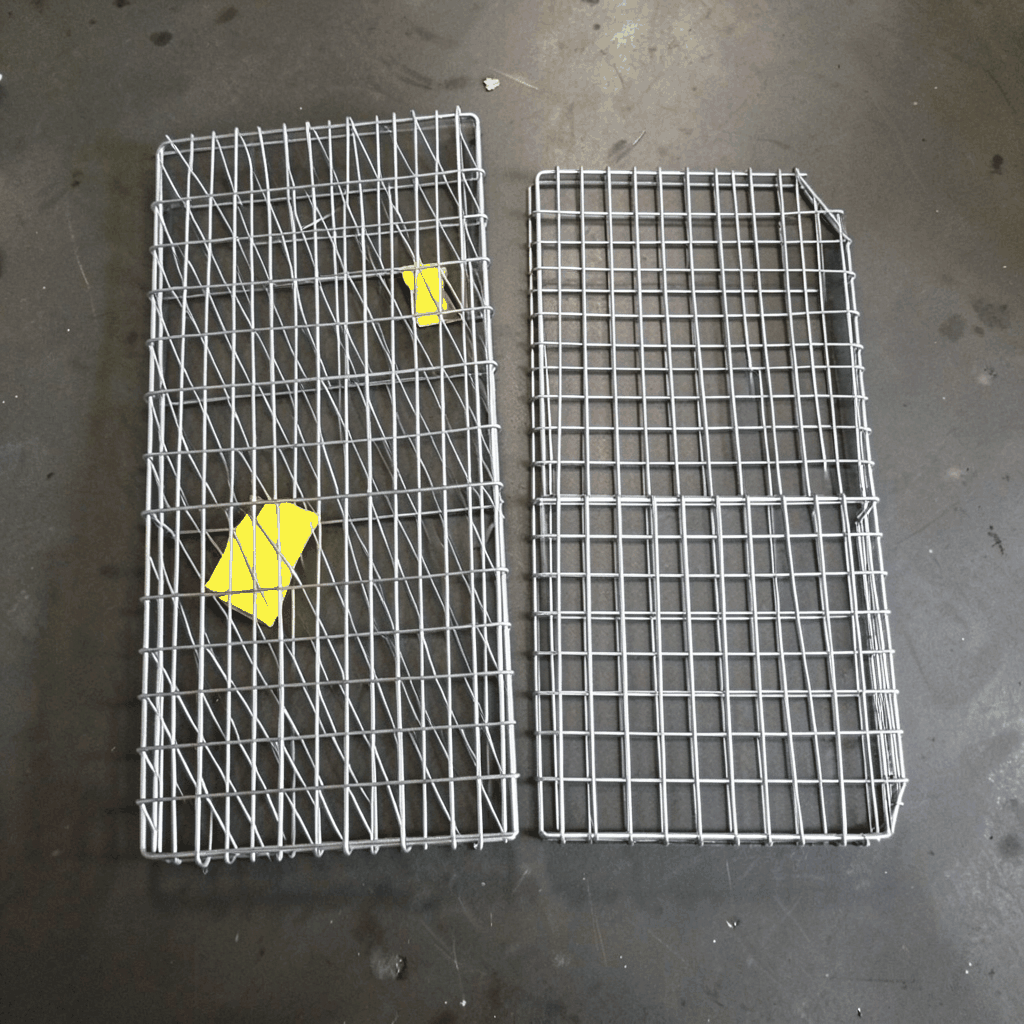
Edge construction is equally important. Folded edges, welded frames, hemmed borders, and flat perimeter strips can improve rigidity and make installation easier. A framed insert may be appropriate where panels need to be removed for access, while a flat mesh sheet may suit a modular diffuser assembly with clips or concealed retainers.
Matching materials, finishes, and light behavior
Material choice affects the weight, reflectivity, color stability, and maintenance profile of the insert. Stainless steel is a dependable option for commercial interiors, transit areas, kitchens, and humid locations. Grades such as 304 or 316 may be selected according to the exposure conditions. Aluminum is useful when low weight is important, especially for larger removable panels.
Copper and bronze-toned alloys can add warmth to hospitality, retail, and high-end residential interiors. Iron or mild steel may be suitable for interior applications when protected with powder coating, paint, or another corrosion-resistant finish. The correct choice depends on the environment, structural requirements, budget, and desired design language.
Surface treatment changes the way light interacts with the metal. Mill finish surfaces retain a raw industrial character, while brushed finishes create directional highlights. Polished metal can increase reflection and brightness but may produce sharper visual contrast. Powder coating provides a broad range of colors and can help coordinate the mesh with the ceiling tile, diffuser frame, or surrounding interior finishes.
The diffuser itself may be opal, frosted, prismatic, microprismatic, or another engineered material. A mesh insert should be tested with the actual diffuser and light source because visual results vary with LED spacing, color temperature, panel depth, and viewing angle. A sample can reveal moiré patterns, unwanted shadows, glare, and differences in apparent brightness before full production begins.
Comparing mesh options for suspended ceilings
The most appropriate insert depends on the desired combination of transparency, rigidity, visual texture, weight, and cost. The following comparison provides a practical starting point for design discussions.
| Mesh type | Visual character | Light transmission | Typical strengths | Common ceiling applications |
|---|---|---|---|---|
| Woven wire mesh | Fine, textile-like, regular | Medium to high | Flexible specification, refined texture, broad alloy selection | Offices, hotels, retail, decorative diffuser overlays |
| Perforated sheet | Precise and geometric | Low to high, depending on open area | Rigid panels, repeatable patterns, easy framing | Linear lighting, modular ceiling panels, feature zones |
| Expanded metal | Dimensional diamond or custom aperture | Medium to high | Lightweight stiffness, strong architectural presence | Lobbies, public interiors, exposed ceiling features |
| Laser-cut screen | Graphic and project-specific | Variable | Custom motifs, branding, controlled patterning | Hospitality, retail, cultural, and premium interiors |
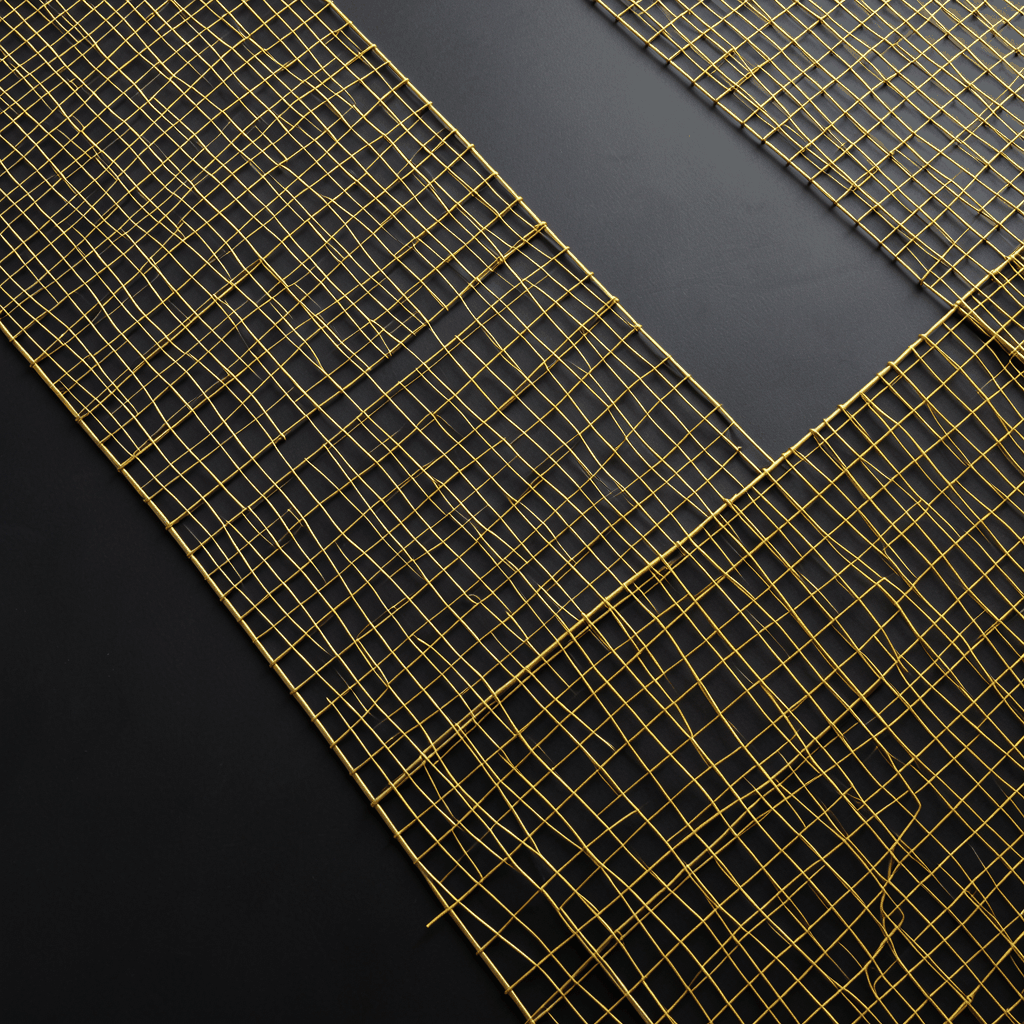
| Decorative layered mesh | Rich depth and shadow | Medium | Strong visual impact, adaptable composition | Feature ceilings, reception areas, statement lighting |
A woven mesh insert is often preferred when the project calls for a continuous, lightweight visual veil. Perforated panels are more suitable when the ceiling requires a firm, flat surface with consistent geometry. Laser-cut components can establish a recognizable identity, but they generally require closer coordination of panel joints, support frames, and access points.
Engineering details for reliable installation
A ceiling insert must be compatible with the suspension system and the diffuser panel dimensions. Before fabrication, the project team should confirm module size, grid profile, panel thickness, lighting cavity depth, access requirements, and allowable weight. These details help determine whether the mesh should be bonded, clipped, screwed, framed, or supported on an independent carrier.
Removable access is especially important in commercial buildings. Lighting drivers, wiring, air distribution components, sensors, and fire protection equipment may need inspection or replacement. A well-designed insert can be lifted or released without damaging the mesh, diffuser, or adjacent ceiling components. Magnets, spring clips, concealed fasteners, and hinged frames may be considered where appropriate.
Large panels may need intermediate reinforcement to prevent sagging or vibration. The required support depends on the alloy, mesh thickness, panel dimensions, and installation orientation. Edges should be checked for sharp points, exposed wire ends, and unfinished cut sections. Folded or framed borders can improve handling safety and provide a consistent contact surface.
Fire and building-code requirements should be reviewed early. Metal itself is generally non-combustible, but coatings, adhesives, backing materials, and adjacent diffuser components may have separate classifications. Light output, emergency lighting, maintenance access, and cleanability should also be assessed as part of the complete ceiling assembly rather than judged from the mesh alone.
Custom manufacturing from drawing to delivery
A reliable production process starts with clear technical information. Useful project data includes ceiling module dimensions, mesh material, opening pattern, open-area percentage, panel quantity, finish, edge detail, fixing method, and required tolerances. CAD drawings, sample images, and physical references can help align expectations between the designer, ceiling contractor, lighting supplier, and mesh manufacturer.
Prototype production is valuable when the insert has a complex pattern or when light quality is a major design concern. A sample panel can be installed with the proposed diffuser and LED arrangement to evaluate luminance, glare, shadow behavior, color, and joint visibility. Adjustments to aperture size or surface finish at this stage are typically easier than modifications after mass production.
Manufacturing may include wire weaving, sheet perforation, laser cutting, forming, welding, grinding, polishing, brushing, powder coating, or anodizing. Quality checks can verify panel dimensions, flatness, edge condition, finish consistency, and attachment points. For repeated ceiling modules, stable tooling and documented inspection procedures help maintain uniformity from the first batch to the last.
Packaging and labeling also deserve attention. Mesh panels can be protected with separators, film, corner guards, and moisture-resistant packing as required by the shipping route and finish. Each panel should be identified by size or installation zone when the project contains several patterns or configurations. This reduces confusion during delivery and supports a more efficient installation sequence.
Practical recommendations for a successful specification
The best result comes from coordinating decorative intent with the actual performance of the suspended ceiling. A mesh insert should be specified as part of a complete lighting and access system, with samples used to confirm the appearance under realistic conditions.
- Select the alloy according to humidity, cleaning chemicals, weight limits, and the expected service environment.
- Define the open area and mesh scale with the diffuser, LED layout, and required light level in mind.
- Use framed or reinforced edges for large panels, removable access sections, and areas subject to frequent handling.
- Approve a full-size or representative sample before committing to production quantities.
- Confirm finish, tolerances, fixing hardware, packaging, and installation drawings with all project stakeholders.
Custom fabrication can also solve conditions that standard ceiling accessories cannot address. A manufacturer may adapt panel dimensions to unusual grid modules, create transition pieces around columns or bulkheads, or produce matching mesh for wall cladding, elevator surrounds, partitions, and lighting features. This continuity helps maintain a consistent material language throughout an interior.
Shuo Ke Wire Mesh Product Technology Co., Ltd. supports architectural and industrial projects with metal mesh processing across multiple materials and applications. Its capabilities in decorative mesh, laser-cut screens, filters, baskets, fences, and related products can support projects that require both visual refinement and dependable fabrication.
Bring the ceiling layout, diffuser specification, lighting details, and preferred mesh finish to a qualified metal mesh manufacturer for review. With accurate drawings, practical samples, and coordinated engineering, a custom insert can turn an ordinary suspended ceiling into a durable lighting feature with a clear architectural identity.