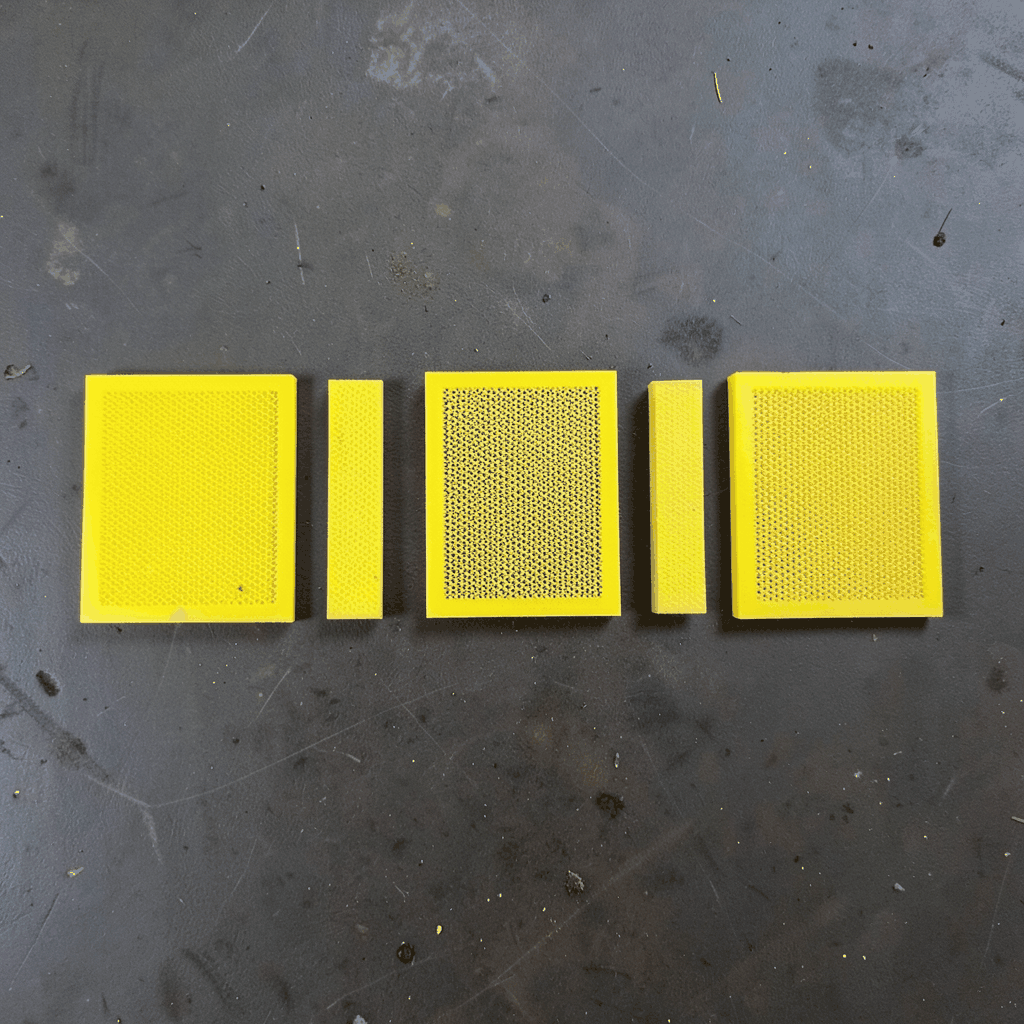
Custom Metal Mesh Inserts for Ventilated Sauna Cupboards
A sauna cupboard has a practical job beyond storage. It may hold towels, cleaning supplies, electrical components, heaters, controls, or personal items while operating in a room with high temperature, frequent humidity, and repeated changes in airflow. Solid cabinet doors can trap heat and moisture, while poorly selected openings may weaken the furniture or create an unfinished appearance.
Custom mesh inserts provide a controlled way to ventilate cupboard doors, side panels, drawer fronts, and equipment enclosures. The mesh can conceal stored items, support continuous air circulation, and give timber or metal cabinetry a clean architectural detail. With the right material, opening pattern, edge treatment, and mounting method, the insert becomes part of the cupboard system rather than an afterthought.
Shuo Ke Wire Mesh Product Technology Co., Ltd. manufactures and processes metal mesh for architectural and industrial applications. Stainless steel, aluminum, copper, iron, and other alloys can be formed into solutions suited to residential sauna rooms, hotel wellness areas, gyms, spas, and commercial bathing facilities.
Why Sauna Cupboards Need Ventilated Inserts
Warm, damp air can accumulate inside enclosed cabinetry, especially when a cupboard is positioned near a sauna heater, beneath a bench, or against a wall with limited circulation. A ventilated door or panel helps reduce stagnant pockets and allows moisture to escape after use. This can support the service life of timber shelves, stored textiles, adhesives, and internal hardware.
Airflow requirements vary by cupboard function. A towel cabinet may need broad, quiet ventilation across its door, while an electrical enclosure may require a carefully distributed opening area that supports cooling without exposing controls. A storage unit for oils or accessories may prioritize concealment and easy cleaning. Mesh inserts can be engineered around each use rather than applying one standard opening to every cabinet.
The insert also affects the visual atmosphere of the room. Fine woven wire mesh offers a refined, almost fabric-like surface, while perforated sheet produces a regular and contemporary appearance. Expanded metal creates a stronger directional pattern and may suit robust utility cupboards. These choices allow architects and furniture manufacturers to coordinate ventilation with sauna benches, wall cladding, handles, and lighting details.
Selecting Materials for Heat and Humidity
Stainless steel is often the safest starting point for sauna cabinetry because it combines corrosion resistance, mechanical strength, and easy maintenance. Stainless steel mesh can tolerate humid conditions and repeated cleaning when the correct grade and finish are specified. Grade selection should reflect the room environment, cleaning chemicals, salt exposure, and proximity to steam or treated water.
Aluminum offers low weight and can be anodized or coated in selected colors. It is useful for large cupboard doors, removable panels, and installations where reducing hinge and frame loads matters. Copper provides a distinctive warm tone that can complement natural timber, although its surface will change over time and should be selected with the desired patina in mind.
Iron and mild steel may be suitable for dry, protected locations when a durable coating is applied, but they need more careful protection in humid sauna environments. Galvanized or powder-coated finishes can improve resistance, yet the specification should account for cut edges, scratches, fastener compatibility, and cleaning routines. In demanding projects, a stainless steel solution can offer greater long-term consistency.
The mesh must also be compatible with the frame. Dissimilar metals can create corrosion concerns when moisture is present, particularly where aluminum, stainless steel, and carbon steel meet. Insulating washers, suitable fasteners, drainage details, and sealed or protected edges help create a more reliable assembly.
Comparing Mesh Formats and Visual Effects
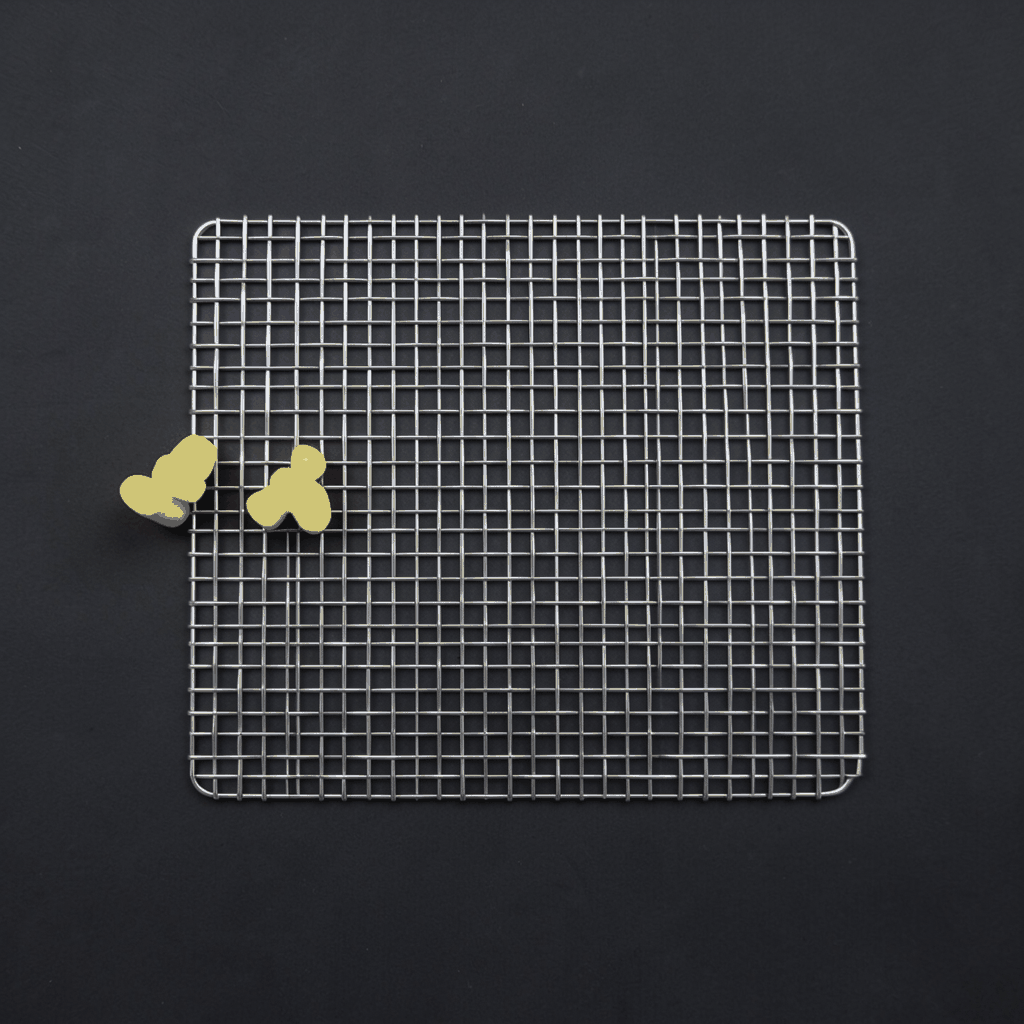
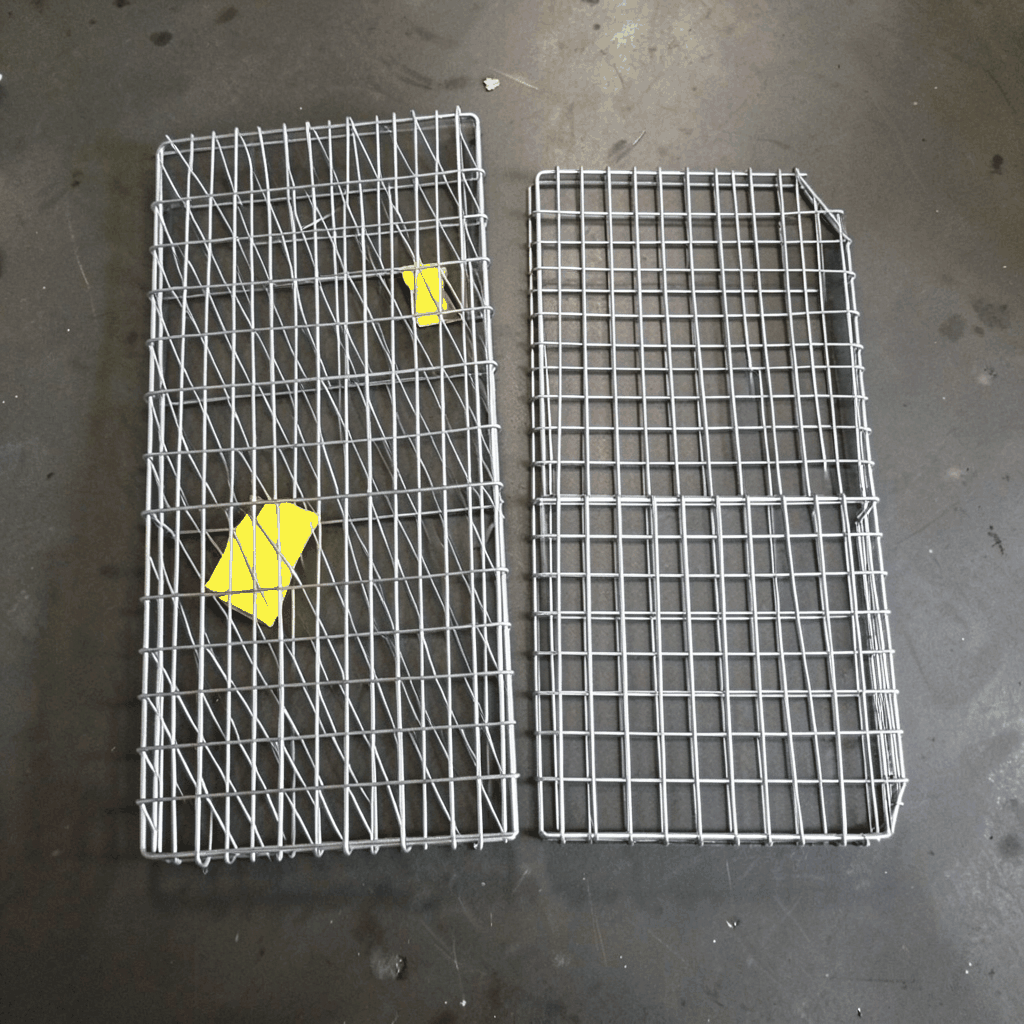
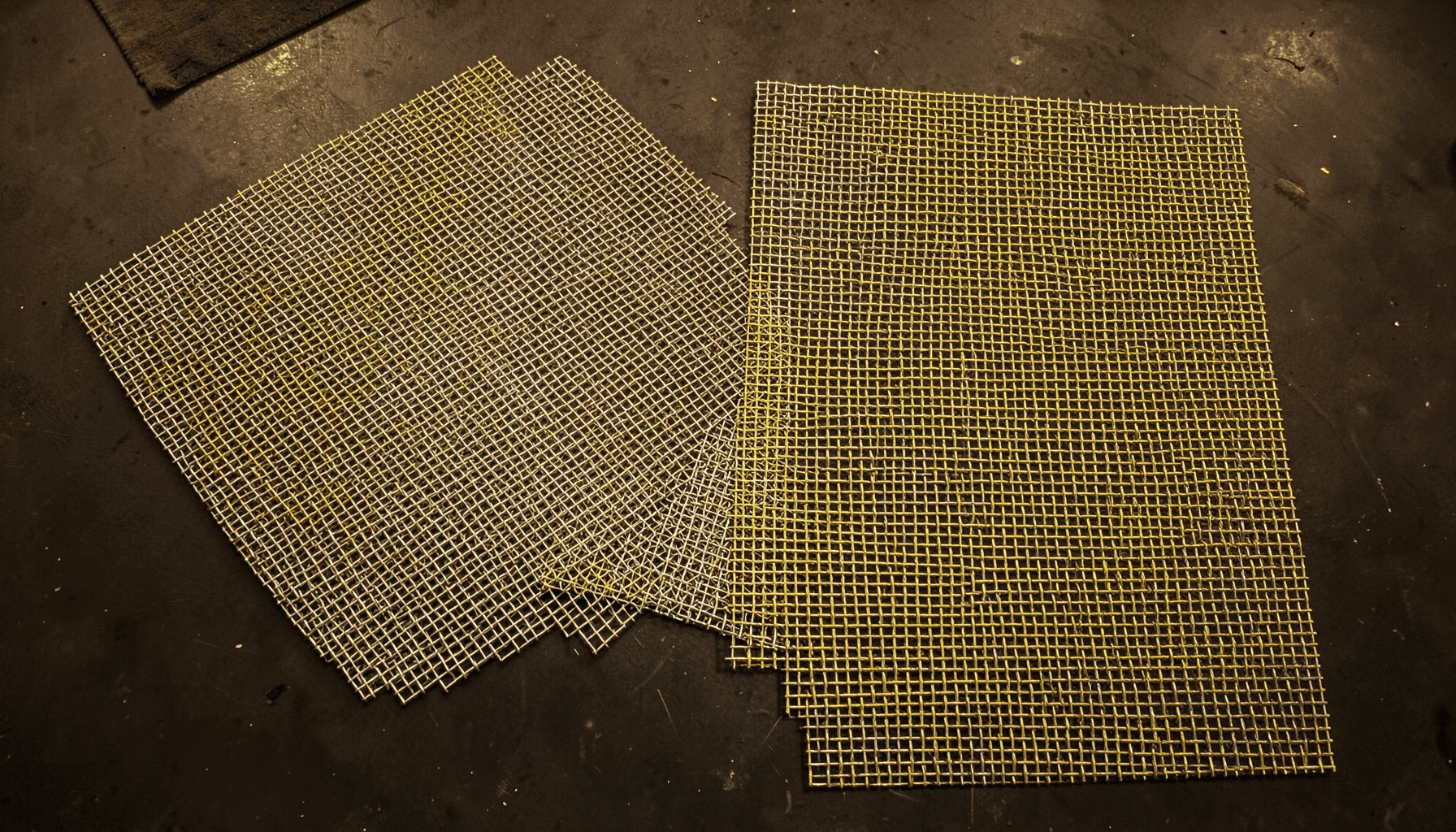
The best format depends on the required ventilation area, impact resistance, appearance, and fabrication method. Woven wire mesh is flexible and can be supplied in fine apertures that balance airflow with privacy. Welded wire mesh is more rigid and provides a stable panel for larger doors or areas subject to frequent handling.
Perforated metal sheet has a solid surrounding surface, which makes it easy to form into a framed insert and gives designers precise control over hole size and spacing. Laser-cut panels can carry customized geometric patterns, logos, or natural motifs, although the design should retain enough open area for effective ventilation. Expanded metal offers a strong, continuous sheet with a distinctive diamond pattern and useful airflow.
| Mesh format | Ventilation character | Appearance | Suitable cupboard uses | Key specification points |
|---|---|---|---|---|
| Woven wire mesh | Fine, distributed airflow | Subtle and refined | Towel doors, decorative panels, shelving inserts | Wire diameter, aperture, crimp, frame tension |
| Welded wire mesh | Open and rigid airflow | Technical and orderly | Utility cupboards, equipment doors, lower storage | Wire gauge, weld quality, panel flatness |
| Perforated sheet | Controlled airflow through regular holes | Clean, modern, solid surround | Cabinet fronts, control enclosures, wall-mounted units | Hole shape, pitch, open-area ratio, thickness |
| Laser-cut screen | Pattern-dependent airflow | Decorative and customizable | Feature doors, spa furniture, branded interiors | Pattern strength, kerf, open area, edge finishing |
| Expanded metal | Continuous directional airflow | Textured and architectural | Robust storage, service cupboards, partitions | Strand width, mesh length, thickness, orientation |
A supplier should calculate open area rather than judging ventilation by appearance alone. Two panels with similar visual patterns may perform differently because hole size, wire diameter, pitch, and frame coverage change the actual air passage. The final design should also consider whether a filter, backing fabric, or insect screen will reduce airflow.
For projects requiring strong stainless steel components, reviewing examples of precision stainless fabrication can help demonstrate how mesh selection, edge processing, and panel construction influence performance in demanding environments. Sauna cupboards do not require prison-grade barriers, but the same attention to dimensional accuracy and robust fabrication is valuable.
Designing the Insert Around the Cabinet
The insert should be defined as part of the door or panel construction from the beginning. A mesh panel can be captured between timber rails, clamped inside a metal frame, fixed with a rear retainer, or installed as a removable cassette. Each method affects the visible edge, service access, cleaning, and future replacement.
For timber sauna furniture, a narrow reveal around the mesh can create a deliberate transition between natural wood and metal. The opening should be accurately routed or fabricated so that the insert sits flush and does not create sharp projections. A rear frame can hide fixings while allowing the mesh to be removed if the cabinet interior needs servicing.
Large doors require attention to stiffness and sag. A lightweight woven mesh may reduce the panel load, but the frame still needs adequate rigidity. Welded mesh or perforated sheet can contribute more structural stability, especially when fitted into a wide door. Hinges, latches, handles, and magnetic catches should be selected according to the completed door weight rather than the frame alone.
Ventilation openings should be positioned to support natural convection when possible. Lower openings can admit cooler air, while upper openings allow warmer air to leave. Where a cupboard contains heat-producing equipment, the internal layout should prevent the mesh from being blocked by shelves, stored products, cable bundles, or insulation.
Finishes, Safety, and Maintenance
Surface finish influences both appearance and daily care. Brushed stainless steel can coordinate with sauna hardware and resist visible fingerprints better than a highly polished surface. Satin or powder-coated aluminum offers color flexibility, while a raw metallic finish may suit a deliberately industrial interior. Any coating should be rated for the expected temperature and humidity range.
Edges deserve particular attention in a room where users may move barefoot or handle doors with wet hands. Cut mesh should be deburred, folded, framed, or covered with a suitable profile. Small apertures can reduce the chance of fingers or objects passing through, but the correct size depends on the cupboard location and the equipment behind it. A protective backing may be needed where controls, wiring, or delicate contents require additional separation.
Cleaning should be simple enough for regular commercial use. Smooth frames, accessible corners, and drainage-friendly details reduce the chance of soap residue and moisture collection. Stainless steel should be cleaned with compatible products rather than abrasive pads or chloride-heavy chemicals. Coated surfaces need a non-aggressive cleaning method that preserves the finish.
A sample panel is worthwhile before approving a production run. It allows the project team to assess color, reflectivity, mesh visibility, edge safety, airflow, and the relationship between the insert and the surrounding timber. It can also reveal whether the selected aperture conceals contents sufficiently under the actual sauna lighting.
Recommendations for a Reliable Specification
A clear technical brief helps the manufacturer produce inserts that fit both the cabinet and the room environment. The specification should include the opening dimensions, mesh format, material grade, finish, frame method, quantity, tolerances, and intended installation position.
For custom sauna cabinetry, the following points provide a practical starting framework:
- Define the cabinet function and required ventilation area before selecting the mesh pattern.
- Choose stainless steel, aluminum, or another alloy according to humidity, temperature, cleaning chemicals, and expected service life.
- Confirm the open-area ratio after allowing for frames, backing screens, shelves, and internal obstructions.
- Request samples or drawings showing aperture size, wire or sheet thickness, edge treatment, and fixing details.
- Coordinate mesh inserts with hinges, latches, timber movement, electrical access, and the final interior design.
Manufacturing drawings should show whether dimensions refer to the visible opening, the overall frame, or the cutout in the cupboard door. This distinction prevents common fitting problems, particularly when a mesh cassette must be installed after a cabinet has been finished. Corner radii, hole positions, screw access, and removable sections should be agreed before fabrication.
For larger hospitality or wellness projects, consistent production is as important as the first sample. Batch color, mesh tension, weld appearance, cut quality, and frame dimensions should remain uniform across guest rooms and shared facilities. A manufacturer with in-house processing capabilities can coordinate cutting, forming, welding, surface treatment, and inspection more efficiently.
Building a Durable Ventilation Detail
Custom mesh inserts can give sauna cupboards a practical ventilation path while strengthening the visual connection between storage furniture and the wider interior. The most successful designs treat the insert as a coordinated component: its material suits the environment, its open area supports airflow, its frame protects users, and its finish complements the surrounding architecture.
Shuo Ke Wire Mesh Product Technology Co., Ltd. can develop customized woven mesh, welded mesh, perforated panels, expanded metal, and decorative screens for residential and commercial applications. Share the cupboard drawings, required dimensions, material preferences, and finish goals with the technical team to develop a ventilated insert package ready for fabrication.