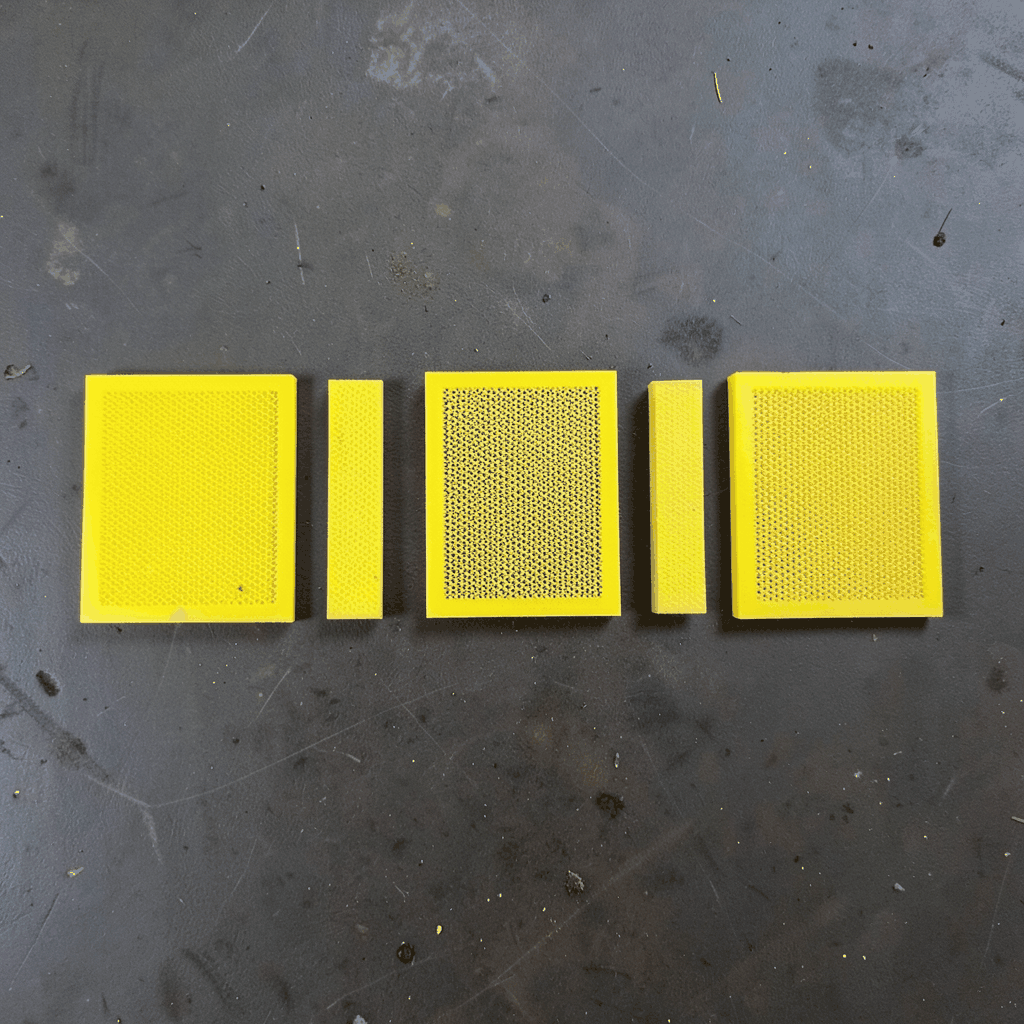
Custom Mesh Panels for Commercial Storefront Security Gates
Commercial storefronts need protection after business hours, but a solid barrier can make a property appear closed, dark, and uninviting. Custom mesh panels offer a practical alternative by combining controlled access with visibility, airflow, and a more refined architectural appearance. They can be integrated into sliding gates, folding grilles, bi-fold doors, rolling security systems, and fixed screen assemblies.
For retail stores, shopping centers, dealerships, pharmacies, restaurants, and municipal facilities, the gate is part of the building’s public face. Its material, pattern, color, and operating method should support the storefront design while addressing forced-entry risks, daily handling, and long-term exposure to weather.
Shuo Ke Wire Mesh Product Technology Co., Ltd. manufactures and processes architectural and industrial mesh products for customized applications. Stainless steel, aluminum, copper, iron, and other alloys can be formed into decorative panels, security screens, partitions, fences, gates, and related components according to project requirements.
Balancing Security With Storefront Visibility
A mesh security gate creates a physical separation without producing the closed-off effect associated with opaque steel shutters. Openings in the panel allow customers and passersby to see displays, illuminated signage, product arrangements, and interior finishes after closing time. This visibility can help a storefront maintain a clean presentation during non-operating hours.
Mesh also supports ventilation. Air can move through the gate, which is useful for enclosed malls, covered walkways, parking-connected retail areas, and storefronts exposed to warm or humid conditions. Better airflow can reduce condensation and help prevent an enclosed frontage from feeling stagnant.
The level of protection depends on the wire diameter, aperture size, weave or perforation pattern, panel construction, frame, locking system, and mounting method. A decorative mesh curtain may be suitable for visual separation and moderate access control, while a rigid welded mesh or expanded metal panel may be more appropriate where impact resistance and tamper resistance are priorities.
Security should therefore be considered as a complete gate assembly rather than as a mesh pattern alone. Hinges, tracks, guides, fasteners, locks, and surrounding wall connections all influence the final performance.
Selecting Materials For Commercial Conditions
Stainless steel is a strong choice for storefront gates that require corrosion resistance, a clean appearance, and frequent handling. Grades such as 304 and 316 can be selected according to the environment. Grade 316 is often considered for coastal locations or areas exposed to salt and aggressive cleaning conditions. Stainless steel mesh can be woven, welded, expanded, or fabricated into decorative architectural panels.
Aluminum provides a lightweight option for large gates and movable screens. Its lower weight can reduce the load on tracks, hinges, and operating mechanisms, making it useful for folding or sliding systems. Aluminum panels can receive anodized or powder-coated finishes in a broad range of colors, allowing them to coordinate with shopfront frames, signs, and facade elements.
Iron and carbon steel are widely used where structural strength and cost efficiency are important. With appropriate pretreatment and coating, steel panels can support demanding commercial applications. Powder coating, paint systems, galvanizing, and specialized protective finishes help address exposure to moisture, abrasion, and routine cleaning.
Copper and other alloys are chosen when the gate has a strong decorative role. Their color and surface character can add warmth to luxury retail, hospitality, heritage, or premium residential-commercial developments. Material selection should account for the desired appearance, local climate, cleaning routine, expected service life, and available maintenance resources.
Comparing Mesh Panel Options
Different mesh constructions provide different combinations of transparency, strength, weight, and design flexibility. The best selection depends on whether the storefront prioritizes maximum visibility, impact resistance, a lightweight operating system, or a distinctive architectural identity.
| Mesh panel type | Security and strength | Visibility | Common storefront applications | Finish options |
|---|---|---|---|---|
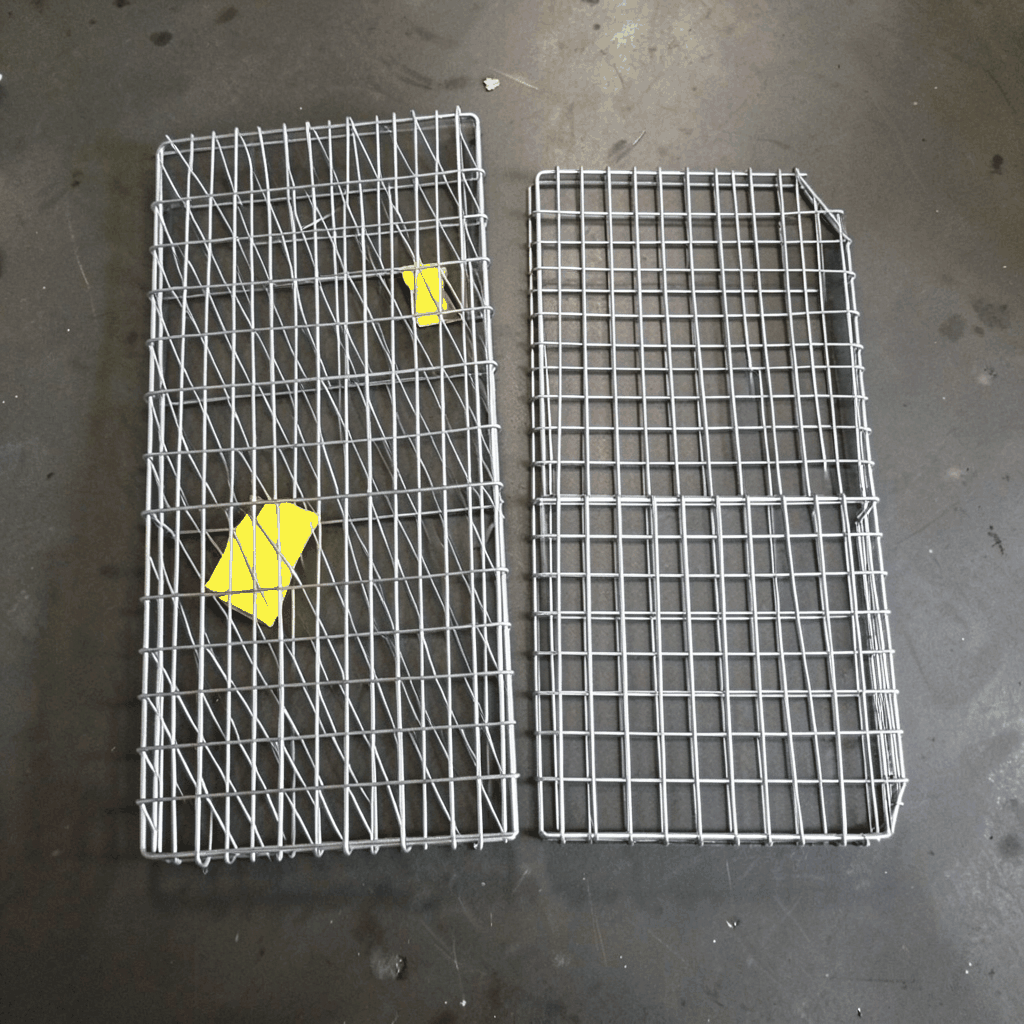
| Welded wire mesh | Rigid structure and dependable resistance to bending | Clear to moderate, depending on aperture | Retail gates, service areas, equipment enclosures | Powder coating, paint, galvanizing |
| Expanded metal mesh | Strong, lightweight, and difficult to grip or cut through easily | Moderate, with a directional pattern | Rolling gates, facade screens, utility entrances | Powder coating, anodizing, protective paint |
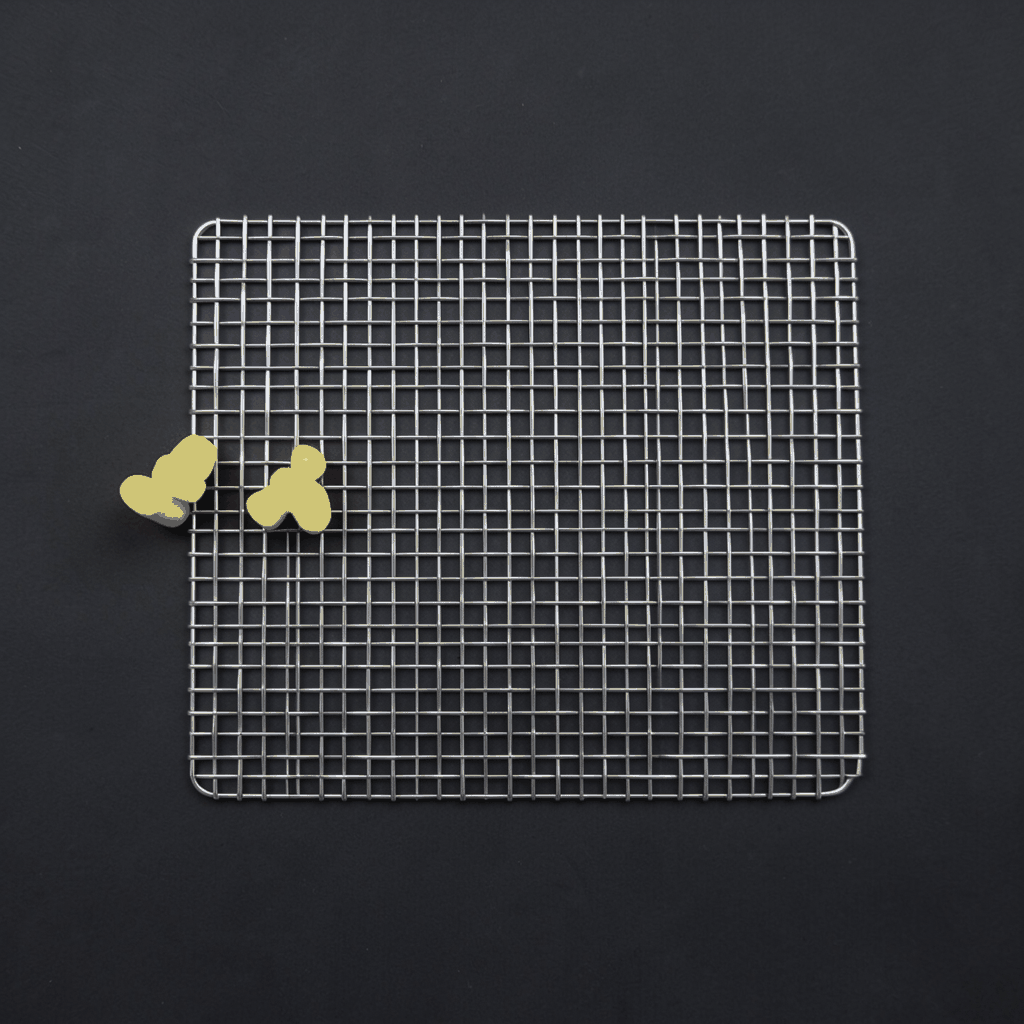
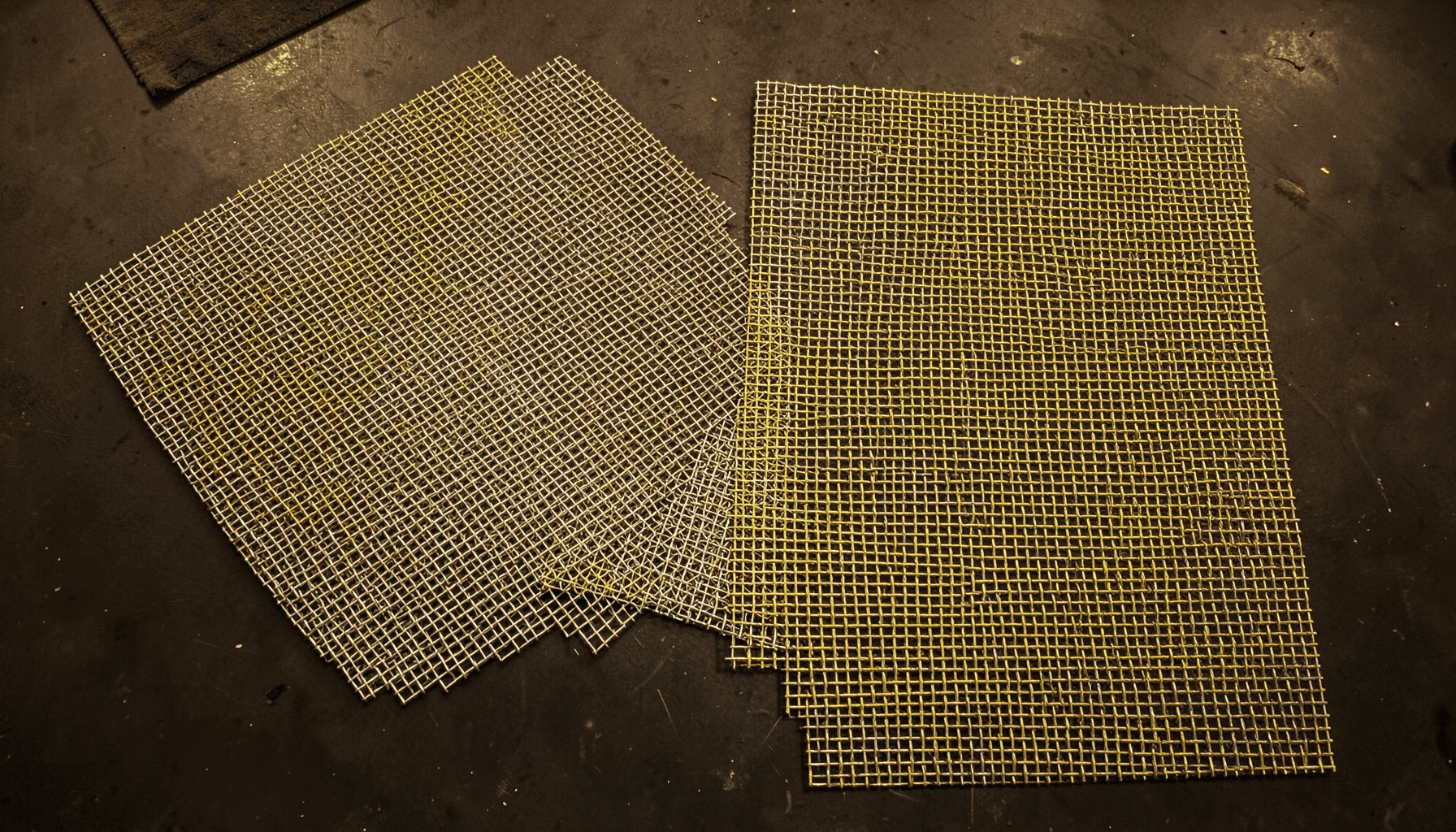
| Woven wire mesh | Flexible or semi-flexible, with refined visual texture | Moderate to high | Decorative security curtains, interior storefront divisions | Stainless steel finish, colored coating |
| Perforated metal panel | Solid panel behavior with controlled openings | Low to moderate, based on hole size and pattern | Branded screens, premium storefronts, elevator or wall cladding | Powder coating, anodizing, PVDF or paint |
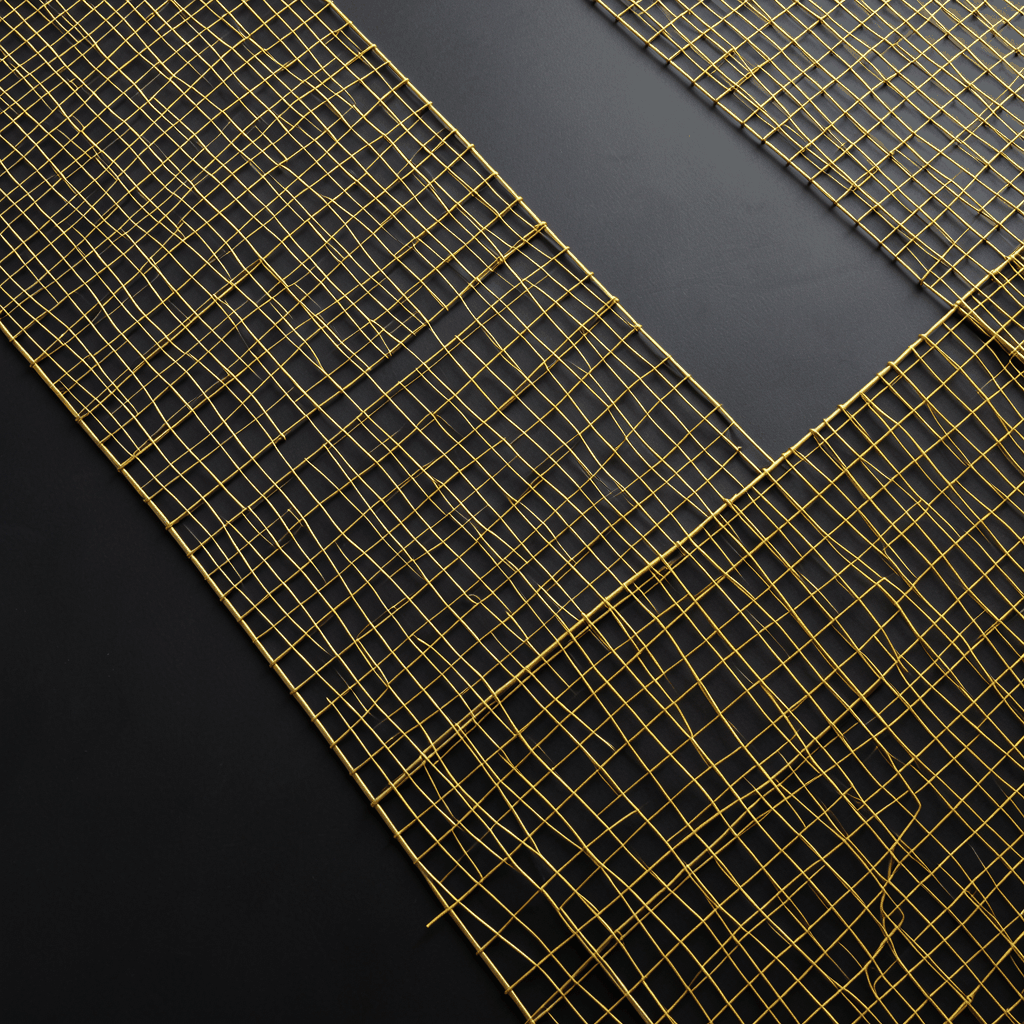
| Decorative architectural mesh | Strong design emphasis with adjustable openness | Moderate to high | Fashion retail, hospitality, showrooms, public-facing gates | Metallic finishes, custom colors, polished or brushed surfaces |
A rigid panel is generally easier to align with a framed gate and can provide a more substantial barrier. Flexible mesh curtains can be useful where the gate must stack, fold, or retract into a limited space. Perforated and decorative panels are especially suitable when branding, pattern, or facade coordination is a central design requirement.
Custom manufacturing allows the aperture, wire thickness, panel dimensions, border frame, and mounting details to be adjusted together. This prevents the common problem of selecting a standard sheet first and attempting to adapt the gate hardware afterward.
Designing For Daily Operation
Commercial security gates may be opened and closed several times each day, so operating convenience is as important as the static strength of the panel. Sliding gates need accurate tracks, adequate clearance, and a frame that remains stable under repeated movement. Folding systems require carefully positioned hinges and balanced leaves to prevent sagging.
For larger openings, the panel weight should be evaluated at the design stage. Heavy stainless steel or thick steel components may require reinforced posts, industrial rollers, additional hinges, or motorized operation. Lightweight aluminum can simplify movement, but the frame and connection points still need enough rigidity for the intended use.
The gate should be compatible with the storefront’s access control system. Possible features include padlocks, mortise locks, panic hardware where applicable, electric strikes, magnetic locks, key switches, remote controls, and integration with building security systems. Lock placement should remain accessible to authorized personnel while limiting opportunities for tampering.
Clearance and maintenance access also deserve attention. Tracks should be positioned to reduce the collection of dirt and debris, and removable or serviceable components can make future repairs easier. In retail environments, quiet movement, smooth alignment, and a compact storage position can improve staff experience and protect the surrounding finishes.
Integrating Security Gates With Storefront Design
A security gate should look intentional when viewed from the street. Mesh panels can follow a storefront’s geometry, repeat a facade motif, frame a logo, or create a consistent language across multiple locations. Laser-cut screens are particularly useful for custom branding, geometric patterns, botanical motifs, and controlled transparency.
Color selection affects how visible the gate becomes after installation. Dark finishes often recede visually and preserve the attention of window displays. Brushed or polished stainless steel can emphasize a modern, technical character, while bronze, copper, or warm powder-coated tones can support upscale retail and hospitality interiors.
Pattern density also changes the perceived scale of the frontage. Small openings can create a more solid appearance and increase privacy, whereas larger openings preserve a stronger visual connection with the display area. A gradient or mixed-pattern panel may provide additional visual interest without compromising the overall function of the barrier.
For shopping centers and multi-unit commercial projects, custom mesh panels can be coordinated across several entrances while still allowing each tenant to use different colors or motifs. This approach creates a unified property appearance and gives individual storefronts a recognizable identity.
Planning Priorities Before Fabrication
Accurate project information helps a manufacturer recommend a suitable construction and avoid unnecessary revisions. Measurements should include the clear opening, finished floor level, available headroom, side clearances, wall composition, drainage conditions, and the intended position of the gate when open.
The specification should also identify the operating frequency, security expectations, exposure to weather, cleaning methods, and relationship to nearby glazing or signage. A gate located in a coastal shopping district may require a different alloy and coating system from one installed inside a climate-controlled mall.
Useful planning priorities include:
- Define the required level of resistance to impact, cutting, climbing, and tampering.
- Select the mesh material according to corrosion exposure, weight limits, appearance, and budget.
- Confirm whether the gate will slide, fold, roll, pivot, or operate as a fixed removable panel.
- Coordinate locks, hinges, tracks, posts, frames, and automation before finalizing panel dimensions.
- Provide finish samples or color references so the fabricated panels match the storefront design.
A manufacturer should receive drawings, photographs, opening dimensions, preferred materials, mesh references, finish requirements, and quantity information whenever possible. Prototype samples or finish panels can be valuable for projects where transparency, color, or decorative detail has a major visual impact.
Custom Fabrication For Reliable Results
Standard mesh products can be useful for straightforward applications, but commercial storefronts frequently contain unusual widths, angled returns, structural obstructions, or strict aesthetic requirements. Custom fabrication allows the gate to fit the actual opening rather than forcing the building to accommodate an off-the-shelf component.
Shuo Ke Wire Mesh Product Technology Co., Ltd. can support projects involving decorative mesh curtains, rigid security panels, laser-cut screens, fences, gates, guardrails, cladding, and related metal products. Its material range and processing capabilities make it possible to develop solutions for retail frontage, commercial entrances, public facilities, and architectural interiors.
The fabrication process may include cutting, forming, welding, edging, framing, surface treatment, and assembly preparation. These steps help control panel dimensions and provide the details needed for installation. Depending on the project, mesh panels can be supplied as individual framed leaves, complete gate sections, or components prepared for integration with customer-selected hardware.
A well-developed specification should describe the desired balance between security, transparency, mobility, appearance, and maintenance. When these factors are defined early, the finished gate is more likely to operate smoothly, complement the building, and deliver dependable service over time.
Give your commercial storefront a security barrier that supports its architectural character. Contact Shuo Ke Wire Mesh Product Technology Co., Ltd. with your opening dimensions, material preference, mesh style, finish, and operating requirements to develop custom panels for a durable, practical, and visually coordinated gate system.