Engineered mesh racks driving Australia's automated parking shift
Across Sydney, Melbourne, and Brisbane, the everyday hassle of circling the block looking for a bay has become part of the rhythm of city life. Developers know it, council planners know it, and anyone who has tried to park near Queen Victoria Building on a Saturday arvo knows it too. Automated parking systems have stepped into that gap, turning what was once a concrete cavern into a precision-engineered storage machine. At the heart of these systems sit custom mesh racks, quietly doing the heavy lifting while drivers walk to the lift lobby.
What makes a parking rack "custom" is not a marketing flourish but a design response to very specific conditions. A residential tower in Perth's CBD has different floor heights, vehicle profiles, and fire egress requirements than a mixed-use development in Fortitude Valley. Mesh racks fabricated for automated garages need to interface with robotic shuttles, lifting platforms, and conveyor plates, while also supporting loads far beyond a standard pallet. The geometry, the aperture size, the material grade, and the weld pattern all shift depending on the project brief.
In Australia, the choice of mesh rack supplier often comes down to more than price. Local buyers want fair dinkum evidence that the product can handle harsh UV, salt-laden coastal air, and the thermal cycling that comes with a day that starts cool and ends at thirty-eight degrees. Chinese manufacturers with deep fabrication capacity have stepped up to meet those briefs, shipping engineered mesh racks that arrive with documentation, certifications, and the kind of dimensional precision that automated systems demand. The conversation has shifted from "can you make it" to "how fast can you iterate the design with us."
This article walks through what custom mesh racks actually do inside an automated parking garage, why Australian conditions shape material choices, how the engineering process works from sketch to site, how integration with robotics plays out, and what owners should expect once the racks are in service.
What a mesh rack does inside an automated parking system
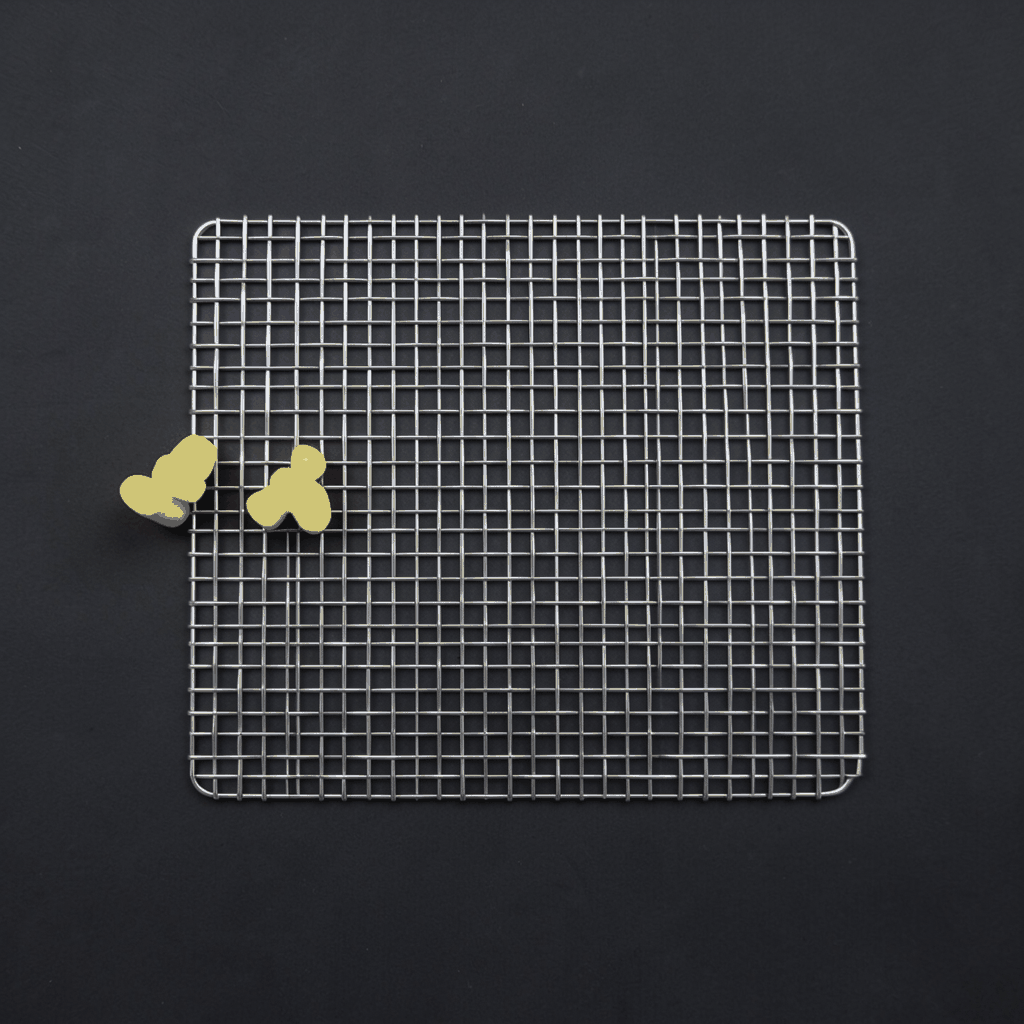
An automated parking garage replaces the driver's steering wheel with a series of mechanical systems. Vehicles are driven into a transfer cabin, lifted by a platform, and then slotted into a parking bay by a shuttle or robot. The rack is the structure that receives and holds each vehicle in position, and in a stacker or puzzle system, it may also allow neighbouring cars to shift sideways to free up a needed bay. Mesh, rather than solid steel plate, has become the preferred surface for these racks because it lets dust, water, and debris fall through, reduces wind loading in semi-open structures, and weighs noticeably less per square metre.
A well-designed rack balances three forces: the static load of the vehicle, the dynamic load created when a shuttle pushes or pulls the car into place, and the cyclical load from repeated use across thousands of cycles per year. Mesh construction, particularly when the wire is locked into a pressed or welded frame, distributes stress across the panel rather than concentrating it at a few weld points. That is why so many automated garage specifications call for either woven mesh with a heavy wire diameter or rigid welded gratings rather than thin sheet metal.
The custom element usually shows up in the geometry of the bay. A standard sedan footprint differs from the wheelbase of a dual-cab ute, and a developer expecting a high proportion of SUVs or prestige European marques will want the rack sized accordingly. Slot width, track gauge, and the height of any wheel guides all become adjustable parameters. Some Australian projects also ask for tapered entry funnels that gently guide wheels into alignment, particularly in garages serving apartment buildings where drivers may be reversing into a tight cabin at night after a long shift.
Material choices shaped by Australian conditions
Stainless steel 304 is the workhorse grade for mesh racks in most Australian installations, and for good reason. It resists the kind of atmospheric corrosion that eats through mild steel in a few short years, particularly in coastal suburbs from Bondi to the Gold Coast where salt spray drifts inland on summer afternoons. For projects within a kilometre of breaking surf, fabricators typically step up to 316 grade, sometimes called marine-grade stainless, which carries extra molybdenum to push back against pitting and crevice corrosion.
Hot-dip galvanised mild steel remains a sensible option for inland projects where the budget is tighter and the corrosion risk is lower. A standard AS/NZS 4680 galvanised coating, applied after fabrication, can give decades of service in Brisbane, Adelaide, or Hobart where the air is drier. Aluminium is rarely used for primary load-bearing rack components because its fatigue behaviour under repeated shuttle loading is less predictable, but it does show up in lighter trim pieces and access platforms where weight matters more than strength.
Powder coating over galvanised steel is a common Australian request, particularly in residential towers where the parking levels are visible from apartments or shared amenities. Black, charcoal, and dark grey are the dominant colour choices because they hide tyre dust and brake residue, but the powder must be specified as a marine-grade or super-durable polyester if the building sits in a coastal council area. UV intensity across Australia is famously aggressive, and standard architectural powders will chalk and fade within five to seven years if not specified for the local UV index.
Engineering from brief to fabrication
The path from a developer's concept to a delivered mesh rack usually begins with a site survey and a load brief. Engineers calculate the worst-case vehicle mass, often allowing for a buffer beyond the heaviest expected car, and from there they determine the wire diameter, aperture size, and bearing bar spacing of the mesh panel. In Australia, compliance with AS/NZS 1170 for structural design actions is non-negotiable, and most rack fabricators work alongside a local structural engineer who signs off on the design before any steel is cut.
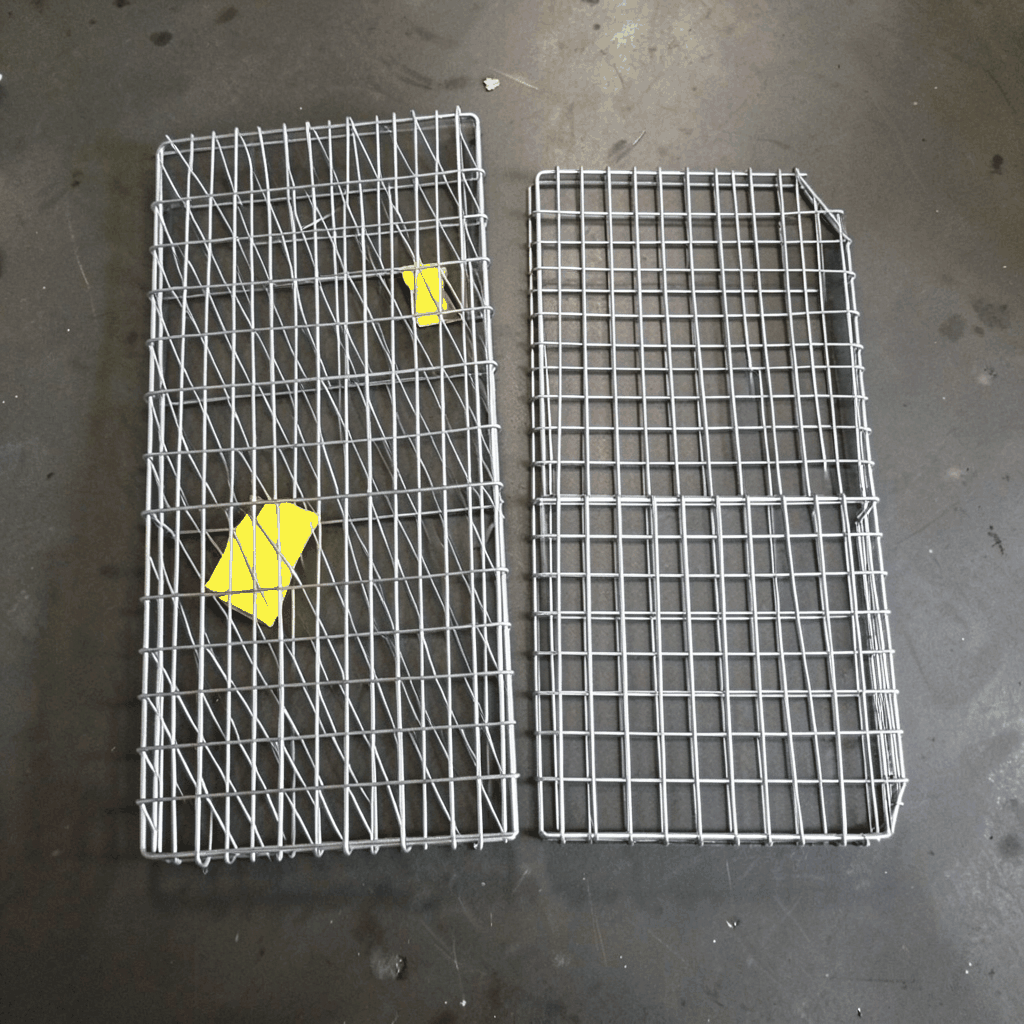
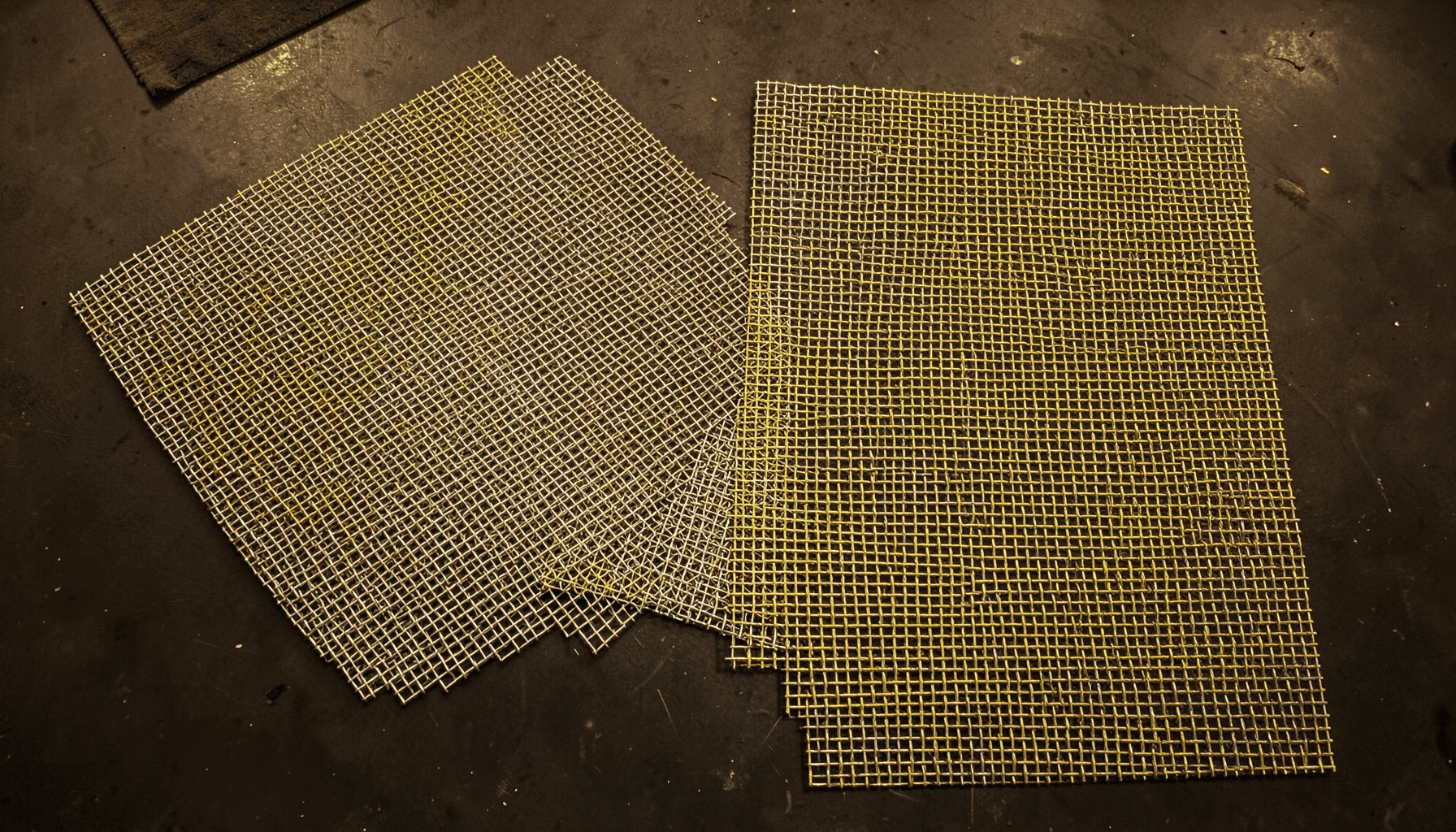
Once the design is approved, the fabricator programs laser or plasma cutters to shape the bearing bars and edge frames, then assembles the mesh through either resistance welding or pressure-locking depending on the chosen pattern. Welded gratings tend to be stiffer and are preferred for the heaviest vehicle loads, while pressure-locked mesh offers a cleaner aesthetic that suits higher-end residential and hotel projects. Each panel is then trimmed, drilled for mounting points, and matched against its position number in the rack assembly drawing.
Quality control at this stage matters more than it does for purely decorative mesh. Dimensional checks confirm the panel sits flat within tolerance, weld shear tests confirm the joints will not fail under cyclic loading, and load tests on sample panels confirm the design margin. For Australian projects, fabricators accustomed to exporting here will also confirm the documentation pack includes a certificate of compliance, material test reports, and any paperwork required by the importing council or building certifier.
Integrating with robotics, lifts, and fire systems
An automated parking system is only as good as the conversation between the rack and the robot that places cars on it. Shuttle systems, whether they ride on rails, run on rubber tyres, or hover on air bearings, need a predictable surface to push against. Mesh racks offer that predictability because the surface deflection under load is consistent and well understood. Robotic vision systems also read the mesh pattern more reliably than a flat plate when confirming a vehicle is correctly seated, since the regular aperture acts as a built-in reference grid.
Fire safety in Australian automated garages runs through the National Construction Code and AS/NZS 1668.1 for smoke control. Mesh racks help here as well because they do not block sprinkler spray patterns the way solid shelving can. Airflow through a mesh rack is high, which means a fire in one bay is less likely to create a hot zone that propagates upward through the stack. Some specifications call for intumescent coating on the rack frame, and that is a conversation worth having with the fabricator early in the design phase.
Electrical integration is another piece of the puzzle. Many modern racks carry inductive charging coils, sensors that confirm vehicle presence, and low-voltage lighting strips that guide drivers during the transfer cabin process. Mesh construction makes retrofitting these systems easier because cables can be routed through the open aperture rather than chased into solid steel. For sites planning a future upgrade to driverless valet parking, this kind of forward compatibility saves a great deal of rework later.
What owners can expect over the rack's service life
A well-specified stainless steel mesh rack in an Australian automated garage should give twenty-five to thirty years of service before major refurbishment. Galvanised racks typically run fifteen to twenty years depending on environment. The biggest variables are cleaning frequency, exposure to salts tracked in on tyres during the occasional southern tablelands frost, and the quality of the original surface treatment. A simple wash-down every six to twelve months, using fresh water rather than recycled greywater, dramatically extends coating life and keeps the rack looking presentable to anyone who walks through the car lift lobby.
Spare parts availability is worth raising during the procurement stage. Even the best rack will eventually need a replacement panel after an unusual loading event or a vehicle collision. Australian projects that source from overseas fabricators should confirm the supplier holds tooling for repeat orders and can ship replacement panels within a defined lead time. A supplier who can digitally archive the original CAD files and reproduce panels to match is far more valuable than one offering a low upfront price, no worries about the long-term picture.
Lifecycle cost is the metric that convinces most strata committees and institutional owners. When the per-bay cost is amortised across the rack's service life, including the avoided maintenance of a conventional concrete parking deck, the numbers usually land in favour of the mesh rack system. Add the soft benefits of reduced ventilation energy, faster construction, and the ability to fit more bays into a smaller footprint, and the case becomes compelling for any inner-city Australian development where land is the constraint.
For developers weighing up options for their next automated parking project, the practical first step is to send a sketch of the proposed garage layout and a one-page brief to a mesh fabricator with automated parking experience. The right supplier will come back with a feasibility opinion, indicative pricing, and a list of questions that sharpen the brief. From there, the conversation moves to engineering, samples, and ultimately a rack system that quietly does its job for decades while the building above it becomes the headline. Reach out to the Shuo Ke Wire Mesh team today to scope a custom rack package tailored to your site, your council, and your operational model.