Custom Metal Mesh Screening For Water Treatment Inlets And Outlets
Water treatment facilities depend on reliable flow control at every intake, channel, tank, and discharge point. Screening at these locations helps keep leaves, stones, plastics, aquatic debris, and larger suspended solids away from pumps, valves, membranes, aeration equipment, and receiving waters. The right screen must also maintain the required flow rate without creating excessive head loss or becoming difficult to clean.
Custom metal mesh solutions give engineers greater control over aperture size, open area, panel dimensions, frame design, and installation method. Instead of adapting a standard screen to an unsuitable opening, a project can be designed around the channel, pipe, tank, or equipment it must protect.
Shuo Ke Wire Mesh Product Technology Co., Ltd. manufactures and processes metal mesh products for architectural, industrial, and municipal applications. Stainless steel, aluminum, copper, iron, and other alloys can be selected according to the water chemistry, mechanical loading, appearance, and service environment.
Why Screening Design Matters
Inlet screens are commonly installed ahead of pumps, raw-water channels, reservoirs, cooling-water systems, and pretreatment equipment. Their primary function is to intercept coarse material before it reaches sensitive machinery. A properly sized intake screen can reduce blockage risks while supporting consistent hydraulic performance.
Outlet and discharge screens serve a different but related purpose. They can prevent fish, floating waste, filter media, and other materials from leaving a treatment basin or entering a nearby waterway. In wastewater and stormwater installations, outlet screens may also improve site safety by covering openings and limiting unauthorized access.
Mesh selection affects both protection and flow. A very fine opening captures smaller particles, but it can collect solids quickly and require frequent cleaning. A larger aperture offers higher open area and easier maintenance, yet may allow unwanted debris through. The best result balances screening efficiency, pressure loss, cleaning access, and the consequences of equipment failure.
Choosing Materials For Water Exposure
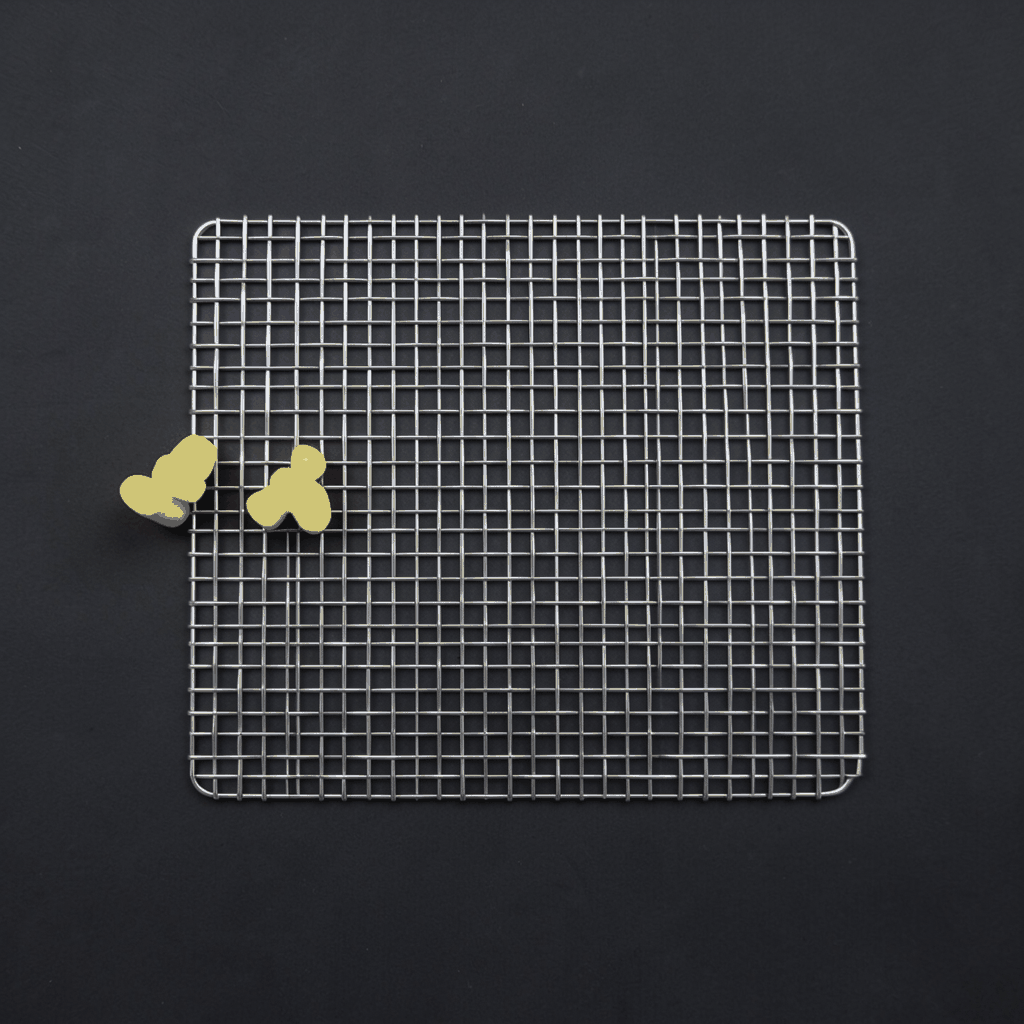
Stainless steel is often selected for water treatment screens because it combines corrosion resistance, strength, and long service potential. Different stainless steel grades can be considered according to freshwater, brackish water, chloride exposure, cleaning chemicals, and the presence of industrial contaminants. Welded and woven stainless steel mesh can be processed into flat panels, cylindrical sections, baskets, guards, and framed screens.
Aluminum offers low weight and useful corrosion resistance for applications where easy handling is important. It may be suitable for access covers, lightweight barriers, ventilation screens, and selected water environments. Copper and copper alloys provide distinctive appearance and particular material properties, while iron and coated steel can be considered where structural demands and environmental conditions support their use.
Material selection should account for the complete installation rather than the mesh alone. Fasteners, frames, hinges, supports, and adjacent pipes can influence corrosion through dissimilar-metal contact. Water temperature, salinity, pH, chemical dosing, ultraviolet exposure, and cleaning procedures should be reviewed before fabrication. A custom manufacturer can use these details to recommend a more suitable mesh and finishing approach.
Engineering Openings And Support
The clear opening is one of the first dimensions to define. It may be a rectangular channel, round pipe, overflow weir, tank wall, pump guard, or irregular civil opening. Accurate measurements allow the screen panel, frame, and fixing points to align properly without leaving bypass gaps where debris can pass around the mesh.
A screen also needs structural support. Hydraulic pressure, vibration, impact from floating objects, cleaning tools, and repeated removal can place stress on the panel. Reinforcing ribs, perimeter frames, folded edges, mounting flanges, and removable brackets can improve rigidity while making inspection and maintenance easier.
Open area is another important engineering factor. A mesh with a high percentage of open space can help maintain flow, but its effective performance depends on fouling, submergence, approach velocity, and the condition of the surrounding channel. Designers should assess the clean-screen and partially blocked-screen conditions when determining panel size and support spacing.
For pump protection, the screen should be positioned so that flow approaches it evenly. Poor placement can create localized suction, vortexing, uneven loading, or rapid debris accumulation. Custom dimensions and shaped sections can help accommodate bends, transitions, grating supports, and existing treatment equipment.
Comparing Mesh Configurations
Different mesh constructions provide different combinations of filtration, strength, cleanability, and visual appearance. The correct configuration depends on the particle size to be retained, water velocity, access for cleaning, and the expected mechanical load.
| Mesh Configuration | Typical Water Treatment Use | Main Advantages | Key Design Considerations |
|---|---|---|---|
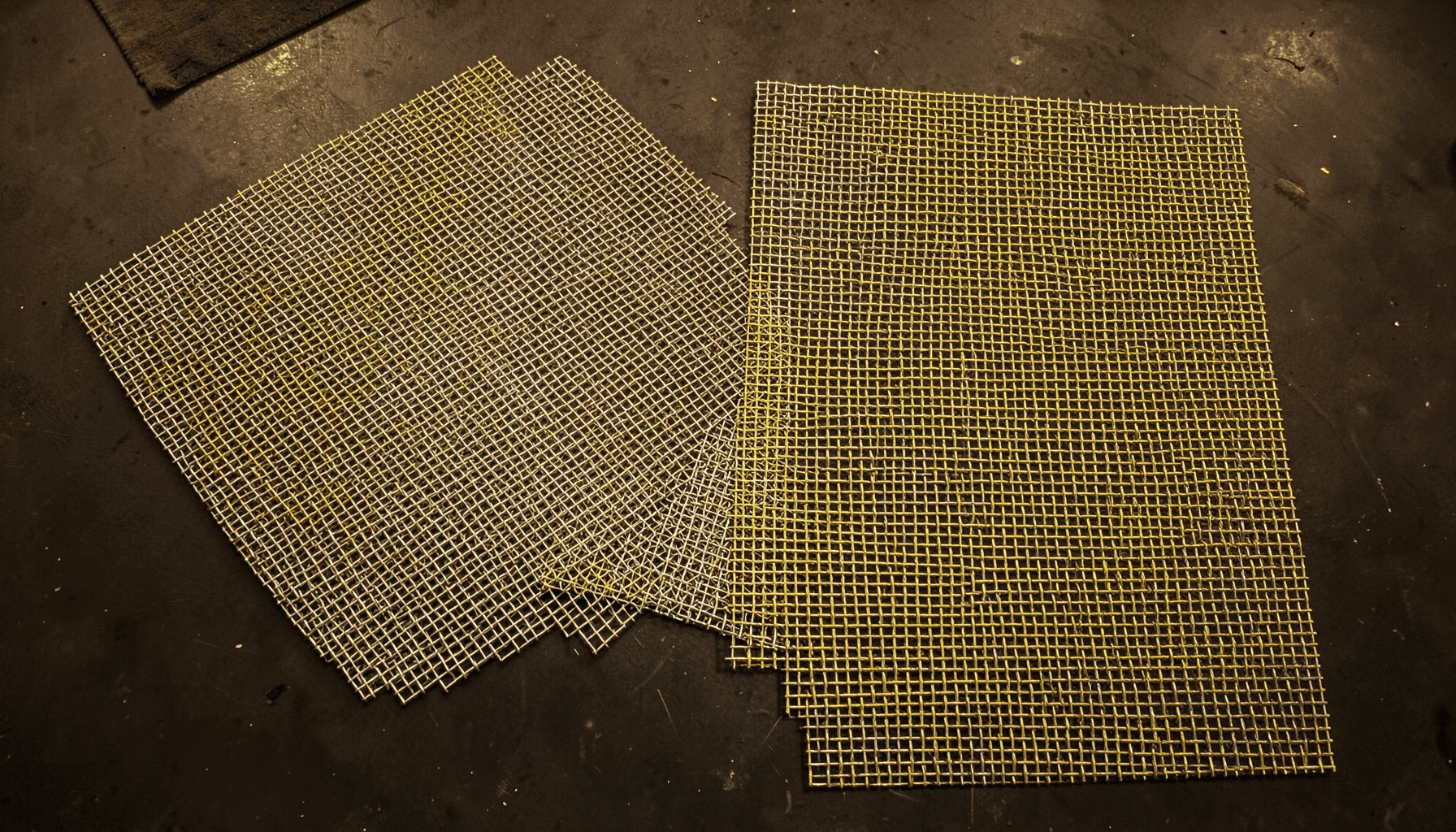
| Woven wire mesh | Fine intake screening, pump protection, filter guards, small-particle separation | Precise openings, broad aperture range, adaptable to framed panels and baskets | Fine mesh may foul quickly and needs suitable cleaning access |
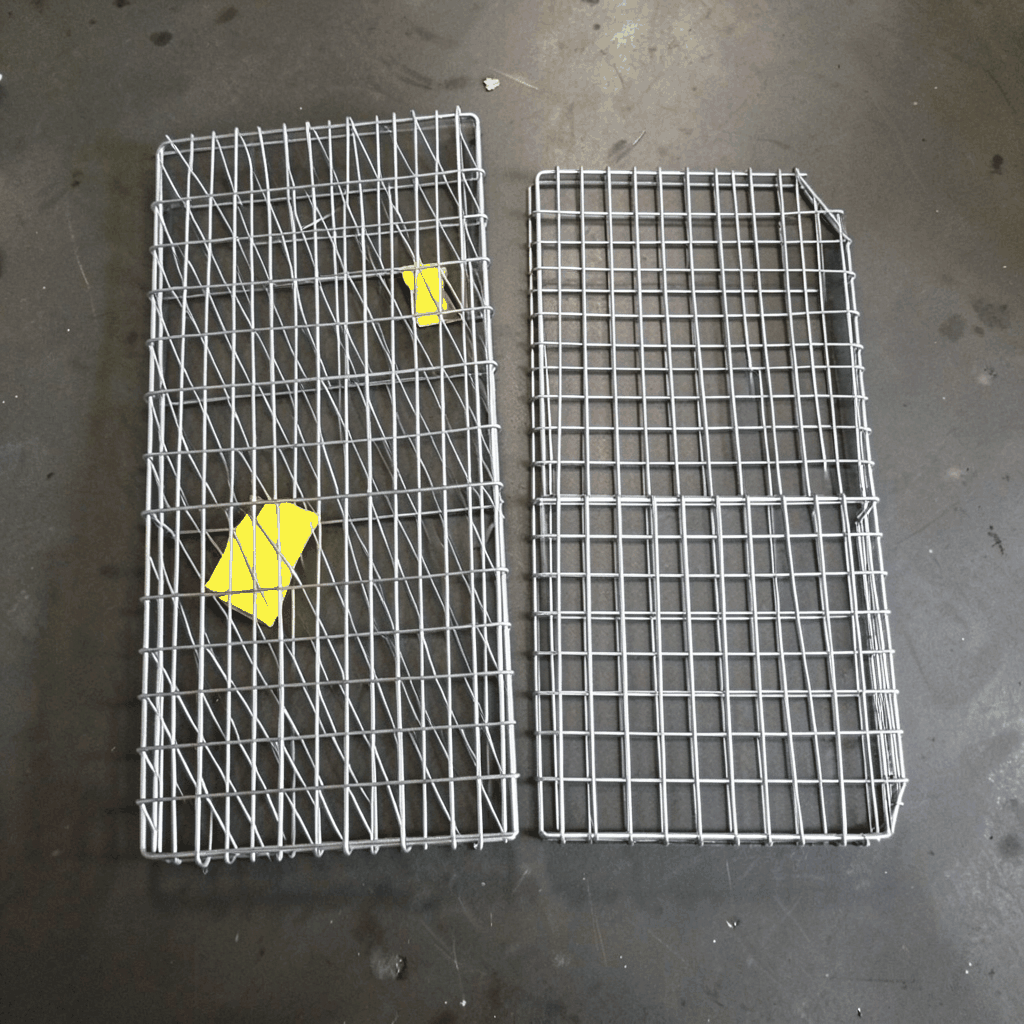
| Welded wire mesh | Coarse inlet screens, outlet barriers, channel covers, equipment guards | Rigid construction, strong welded joints, easy panel fabrication | Opening size and wire diameter must suit impact and hydraulic loading |
| Perforated metal sheet | Protective covers, strainer plates, tank openings, splash and debris control | Uniform holes, durable sheet structure, simple cleaning surfaces | Hole pattern and open area influence pressure loss and retention |
| Expanded metal mesh | Walkway guards, ventilation panels, protective screens, secondary barriers | Lightweight, rigid, economical use of sheet material | Mesh geometry may be less suitable for fine particle screening |
| Framed mesh assembly | Removable intake and discharge screens, access doors, baskets, skimmer panels | Simplifies installation, handling, inspection, and replacement | Frame material, fasteners, lifting points, and sealing details require coordination |
| Custom formed mesh | Cylindrical guards, curved panels, hopper screens, pipe-end protection | Fits unusual equipment and restricted spaces | Forming radius, reinforcement, and cleaning method should be specified early |
Woven wire mesh is useful when a project requires controlled and relatively fine openings. Welded mesh is often preferred for rigid coarse screening, especially where panels must resist contact with debris or repeated handling. Perforated sheet can provide a solid, cleanable structure when uniform holes and sheet stiffness are more important than flexible mesh formats.
The table provides general guidance rather than a universal specification. In some installations, a coarse welded screen may be paired with a finer internal mesh or downstream filter. Layered screening can distribute the debris load and simplify maintenance, although the combined arrangement must be checked for flow resistance and access.
Customization For Installation And Service
Custom fabrication can include cutting, bending, welding, rolling, edging, drilling, and frame assembly. These processes allow a metal mesh screen to match the dimensions of an existing channel or equipment housing. The result may be a flat removable panel, a hinged cover, a slide-out cassette, a cylindrical guard, a basket, or a modular bank of screen sections.
Connection details should be designed with maintenance in mind. Bolted screens can be removed for washing or replacement, while hinged designs may allow routine inspection without complete disassembly. Lifting handles, guide rails, quick-release fasteners, and numbered panels are practical features for larger installations.
The screen must also work with the facility’s cleaning method. Manual raking, pressure washing, air scour, water jets, brushing, and mechanical screening equipment place different demands on mesh strength and frame design. A fine woven panel may require gentler cleaning than a heavy welded screen, while a perforated plate can offer a durable surface for repeated washing.
For visible municipal or commercial sites, the screen may need to combine utility with a finished appearance. Clean edges, consistent welds, brushed or polished surfaces, and coordinated frames can make an intake or outlet installation look more integrated. Where the screen is part of a public landscape, architectural metal mesh can support both safety and visual quality.
Project Details Worth Specifying
A clear technical brief helps prevent an unsuitable screen from being selected. It should describe the opening, water conditions, retained material, cleaning routine, and access limitations. It should also identify whether the screen protects equipment, controls discharge, improves public safety, or performs several functions at once.
Useful project information includes:
- Opening length, width, diameter, depth, and available fixing space
- Target particle size, debris type, and required screening level
- Water temperature, salinity, pH, chemical exposure, and expected corrosion conditions
- Normal and peak flow rate, water level variation, and likely hydraulic pressure
- Required open area, allowable head loss, and acceptable blockage condition
- Preferred mesh type, wire diameter, aperture, sheet thickness, and frame material
- Cleaning method, removal frequency, lifting requirements, and replacement access
- Finish, edge treatment, fastener grade, safety requirements, and delivery format
Early coordination between the treatment engineer, civil contractor, equipment supplier, and mesh manufacturer is valuable. It confirms that the screen will fit the opening and remain accessible after pipework, handrails, pumps, and covers are installed.
Built For Reliable Municipal And Industrial Use
Water treatment screens are exposed to more than flowing water. They may encounter grit, biological growth, floating waste, impact, vibration, sunlight, disinfectants, and repeated cleaning. A robust design therefore depends on the interaction between mesh material, support structure, opening geometry, and maintenance practice.
Shuo Ke Wire Mesh Product Technology Co., Ltd. can develop customized metal mesh components for industrial, architectural, residential, and municipal requirements. Its product range includes stainless steel mesh, aluminum mesh, copper mesh, iron mesh, fences, guardrails, filters, baskets, cladding, and other fabricated solutions. This range supports projects that need a practical screen as well as a coordinated finish across nearby structures.
A custom quotation should include drawings or measurements, material recommendations, mesh specifications, frame details, surface treatment, and packaging requirements. Prototype panels or sample sections may also help confirm fit, rigidity, appearance, and cleaning performance before larger production.
Selecting the right screen at the design stage can reduce installation changes, simplify maintenance, and protect downstream equipment. Contact Shuo Ke Wire Mesh Product Technology Co., Ltd. with your opening dimensions, water conditions, flow requirements, and preferred mesh function to develop a durable screening solution for treatment inlets, outlets, channels, tanks, and discharge points.