Custom mesh trays for reliable parts washing in Australian workshops
Parts washing is quicker when technicians do not have to balance greasy components on a bench or chase small fasteners down a sink. A custom mesh tray keeps bolts, brackets and similar items grouped while wash fluid, rust flakes and grit escape through the openings. The technician gains a repeatable way to move parts through pre-cleaning, detergent washing, rinsing and inspection. Compared with improvised perforated containers, a purpose-built tray keeps the load stable and makes the wash stage easier to standardise across technicians.
The right tray is shaped around Australian workshop conditions, including right-hand-drive vehicles, metric benches and sinks, and hot summers in Sydney, Melbourne, Brisbane and Perth. It should also suit the mix of European, Japanese and Korean vehicles commonly serviced locally while resisting the cleaners, coastal moisture and daily handling that shorten the life of an improvised basin liner. The result should provide longevity without adding unnecessary weight or specialist features the team will never use.
Why purpose-built mesh trays improve workshop washing
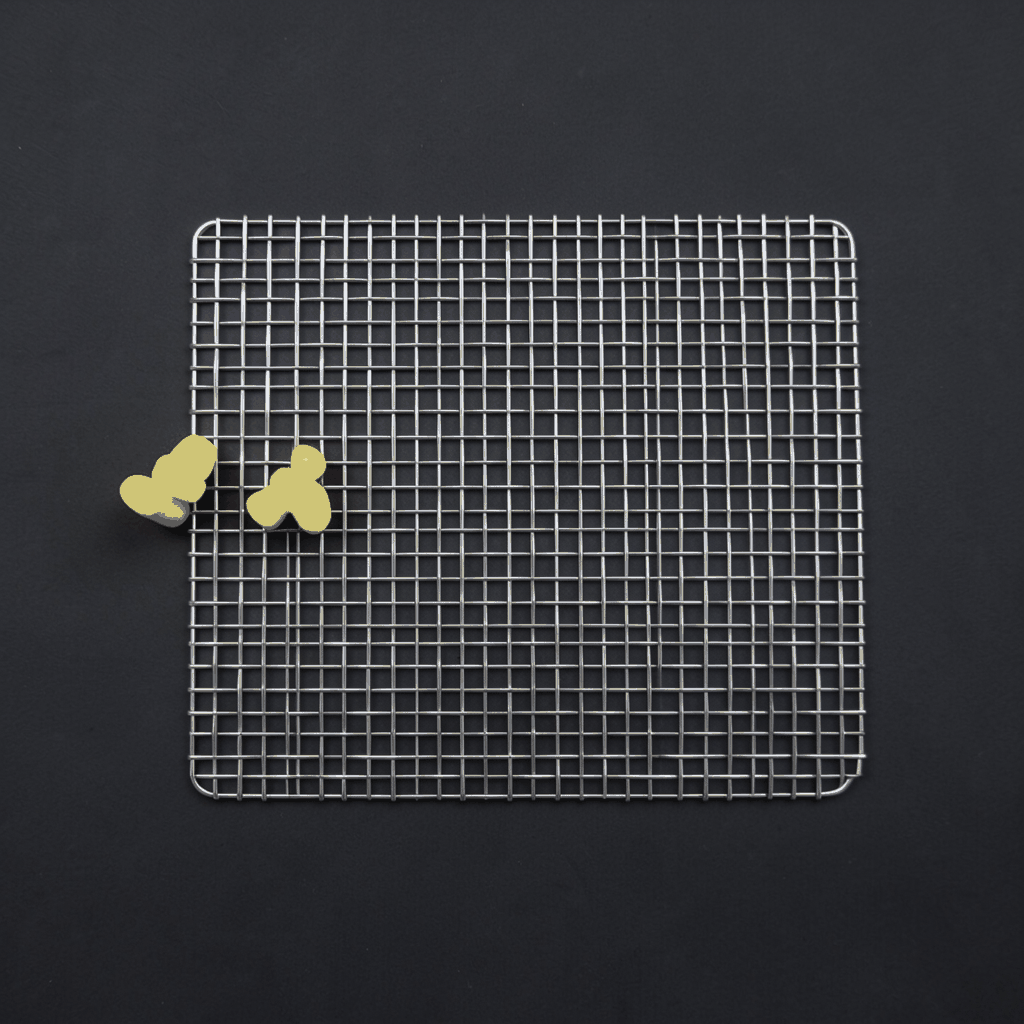
Mesh trays offer a useful compromise: they retain parts more securely than an open sheet, yet drain more freely than a solid tub. Woven or welded apertures can be selected according to the smallest component that must remain in the tray. Fine mesh preserves tiny hardware; larger openings suit bulky, already secure items and improve liquid movement.
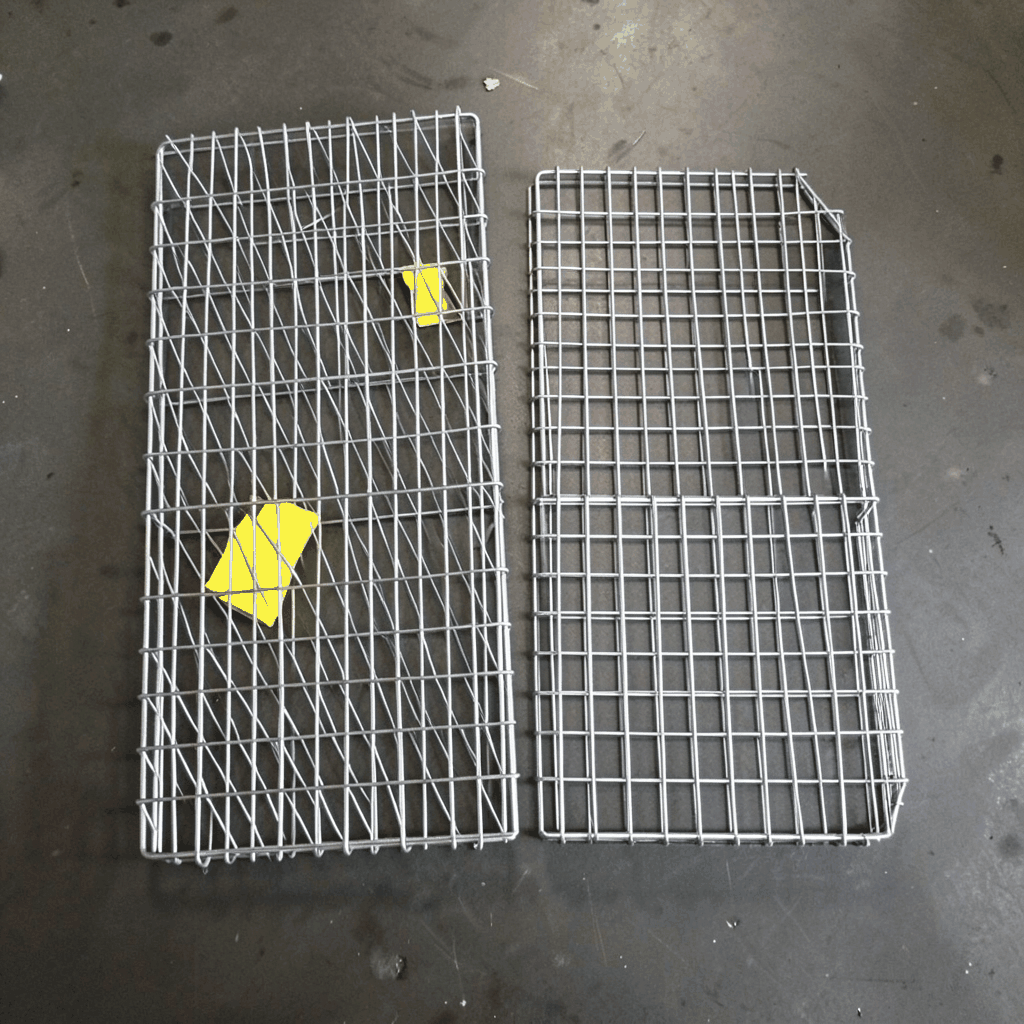
Custom dimensions remove the guesswork from a crowded wash bench. A tray sized to the available sink can sit securely on its rim, leave space for hoses and extraction, and avoid bridges that impede rinsing. Adequate side depth stops parts from climbing out during movement, while a stable base helps technicians lift a full load without twisting. It can also be shaped to sit within a movable trolley, allowing washed assemblies to move between bays without doubling the handling.
Good fabrication also protects the workflow. Smooth wire ends, reinforced rims and securely attached handles reduce snagging and handling risk. A base arranged to drain towards one edge prevents dirty solution from pooling inside the tray, helping it dry faster and reducing the film of grit that can settle around brake and suspension components. These details matter more than decorative complexity.
Match the tray to the parts and cleaning cycle
Start with the parts, not an aperture number. Fine woven stainless mesh can hold small bearings, clips and fasteners; a larger welded grid can support brackets, manifolds and heavier housings. The opening must be small enough to retain the part and large enough to let wash fluid and loosened contamination pass. Sharp-edged components may need a liner or separate compartment to prevent abrasion. A useful example is a wide tray with a fine removable liner: the liner retains fasteners during the first wash, while the base provides stiffness for larger components.
The cleaning cycle sets further requirements. In a pre-rinse, detergent and final-rinse station, the tray should drain quickly at every stage and fit without blocking the sink outlet. Removable inserts can separate mixed components, and a shallow model can make parts easier to inspect. Deep baskets may be necessary for greasy assemblies, but they should never be so deep that hidden residue remains trapped.
Open trays are not suitable for every item. Seized bearings may mask bearing races from the cleaner, while electrical units, sensors, airbags and sealed components can be damaged by immersion. Keep products marked “not washable” out of the bath, and use a lidded basket or closed container where fine contamination must be contained rather than allowed to drain away.
Select materials for chemistry and Australian conditions
Stainless steel is the usual practical choice because it combines corrosion resistance, strength and cleanable surfaces. Grade 304 is often suitable for general workshop detergents, while grade 316 gives a higher level of resistance in chloride-rich or coastal settings. The grade alone does not guarantee compatibility: cleaner concentration, temperature, exposure time and residual chloride all affect performance.
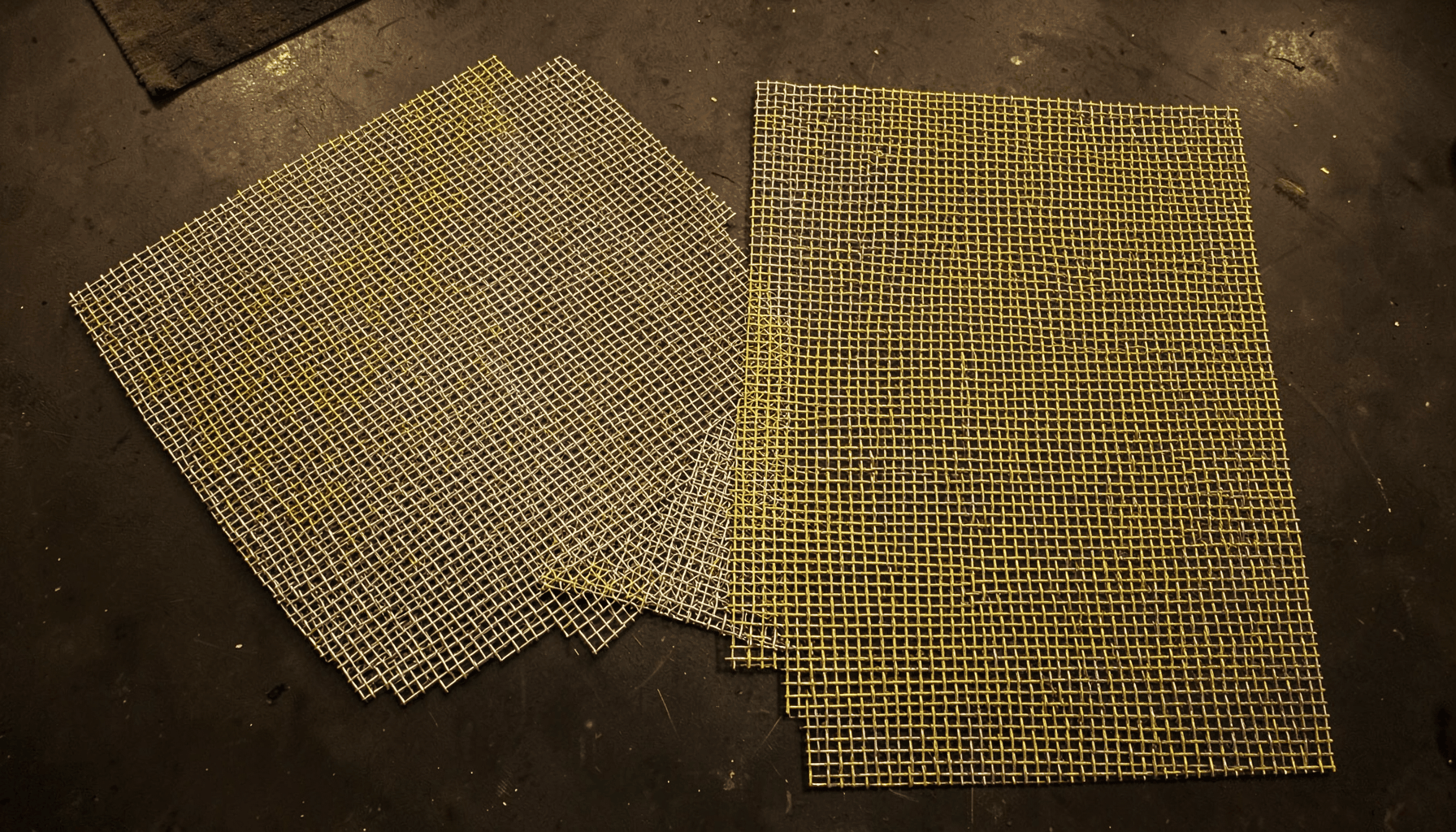
Shuo Ke Wire Mesh Product Technology Co., Ltd. produces mesh in several metals and processes custom forms through its custom mesh solutions. Aluminium offers lower weight for portable handling, but its compatibility with alkaline cleaners and abrasion should be checked. Copper and iron can suit selected applications, yet wet use makes corrosion resistance and coating quality especially important. Request grade information and finish details before specifying a wash tray. For stainless fabrication, a passivated weld and smooth surface make the tray easier to sanitise and reduce sites where residue can settle.
Chemical selection should follow the safety data sheet supplied with each cleaner, together with the workshop’s required workplace controls. Strong acids, caustic solutions and hypochlorite products can attack some stainless grades under prolonged contact. Test a sample in the actual bath, especially if the workshop combines products or uses heated solutions. The fabricator should also weld and finish the tray in a way that limits crevices and trapped residue. Stainless is durable, not immune, so inspection and replacement should form part of the maintenance schedule.
Design around real workshop movements
Measure the whole station before approving dimensions. Record the sink’s internal length and width, rim height, outlet position, nearby taps, hoses, extraction arms and the space available on the bench. Illustrative tray sizes such as 450 by 300 mm or 600 by 400 mm can guide a discussion, but final measurements must reflect the actual parts, sink and technician’s hand clearance. Metric sizing is standard in Australian workshops.
Capacity needs support, not just thin wire. Ask how the load will be distributed, whether the tray will be lifted while full, and whether it must support wet components with sharp corners. A reinforced base, rolled perimeter, comfortable handles and optional dividers can prevent distortion. Stackable frames can improve storage, provided nested trays do not scratch parts, lock together or trap water.
Visual management matters in busy service bays. A shallow removable insert, colour-coded handles or a small label area can distinguish brake parts from engine components and reduce mixing. Smooth edges are particularly valuable where gloves catch frequently. For a cohesive wash station, tray geometry should also complement pre-wetting or spray steps; relevant automotive spray equipment is available via workshop spray equipment. In the Australian market, practical features such as modular storage and easy-clean construction usually create more value than an ornate finish, especially where downtime and labour carry a high cost.
Compare practical tray selection criteria
Before ordering custom mesh trays, compare samples and drawings against the daily tasks. The following checks focus on cleaning performance and construction rather than appearance alone.
Cleaning and build checks
- Smallest required part stays securely contained.
- Openings drain grit without excessive clogging.
- Mesh, rim and handles carry the expected wet load.
- Edges remain smooth, cleanable and easy to inspect.
Commercial terms and local fit-out deserve the same attention, particularly when a tray is imported or made to a one-off drawing. Compare the practical implications with a local supplier.
Purchasing and supply checks
- Confirm dimensions, tolerances and included handles or inserts.
- Compare sample quality, warranty and replacement-part availability.
- Allow for production, shipping and Australian warehouse lead times.
- Check packed size, lift weight and delivery access to the workshop.
For goods imported from China, Australian Customs processes require accurate commercial documentation, including an invoice, packing list and correct tariff classification. A customs broker can confirm the current duty treatment, while GST and freight should be included in the landed-cost comparison rather than treated as later surprises. Check whether local fabrication or a standard-size buffer tray could provide faster replacements. Record whether the order covers complete trays, spare inserts or several sizes under one production run, as each affects the commercial quote and customs treatment. Many Australian workshops keep one modular custom tray and several standard inserts, reducing downtime when parts move between stations.
Specify your next parts-washing tray
A useful specification is simple enough for a technician to approve and detailed enough for a fabricator to manufacture. Record the parts to be washed, their dimensions and weight, smallest cross-section, sink measurements, preferred stainless grade, cleaning chemistry, drainage direction, handling frequency and storage limits. Include a sample part or sketch, and ask for a prototype when fit is critical or the batch is large. A drawing should also show whether the tray must clear a fixed sink rim or sit inside the basin, because that choice changes handles, supports and drainage.
Contact Shuo Ke Wire Mesh Product Technology Co., Ltd. with that information and request a practical tray proposal, material confirmation and production schedule. Specify a durable, correctly sized mesh tray for your Australian workshop now, so parts are contained, rinsed and moved safely without improvised handling, excess fluid or long cleanup delays.