Custom Metal Mesh Baskets For Automated Parts Washing Systems
Automated parts washing systems depend on consistent handling. Every component must enter the cleaning chamber in a stable position, receive the required spray coverage, drain effectively, and leave the machine without damage or rework. The basket is central to each of these steps, yet standard containers often fail when part geometry, chemistry, temperature, or conveyor configuration changes.
Custom metal mesh baskets provide a practical way to match the load carrier to the washing process. Mesh size, wire diameter, frame construction, access openings, handles, dividers, and surface finish can all be selected around the parts and equipment. The result is a reusable industrial basket designed for cleaning performance, safe handling, and long service life.
Shuo Ke Wire Mesh Product Technology Co., Ltd. manufactures and processes metal mesh products for industrial and architectural applications. With stainless steel, aluminum, copper, iron, and other alloy options, a suitable basket construction can be developed for parts washing, degreasing, rinsing, drying, and related material-handling operations.
Why Basket Design Affects Washing Results
A washing basket is more than a container. Its open area controls how cleaning fluid reaches the load and how quickly water, detergent, oil, and residue drain away. If the mesh is too dense, spray pressure may be blocked and fluid can remain trapped. If the openings are too large, small components may fall through or become lodged between the wires.
Load movement also influences cleaning quality. Parts that shift, overlap, or rest tightly against one another may leave hidden surfaces unwashed. A formed basket with the right depth, internal dividers, or compartment layout can keep components separated while still allowing jets to reach critical areas. This is especially useful for machined parts, stamped pieces, fasteners, fittings, and components with blind holes or narrow channels.
The basket must also work with the machine’s motion. Rotary washers, tunnel washers, immersion systems, ultrasonic cleaners, and spray cabinets place different demands on the carrier. A basket intended for a conveyor may need a reinforced base and precise external dimensions, while a basket used for robotic transfer may require locating points and repeatable presentation.
Selecting Metal And Mesh Construction
Stainless steel is frequently selected for industrial washing baskets because it combines corrosion resistance, strength, and cleanability. Stainless wire mesh performs well in alkaline detergents, hot water, and repeated drying cycles when the grade is matched to the process. Common choices may include 304 stainless steel for general service and 316 stainless steel where greater resistance to chlorides or aggressive chemicals is required.
Aluminum offers low weight and can be useful when operators or automated equipment must move large baskets frequently. It may suit applications where reduced handling weight is important, though chemical compatibility and operating temperature must be reviewed carefully. Carbon steel or iron can provide economical strength for controlled environments, especially when a protective coating is appropriate.
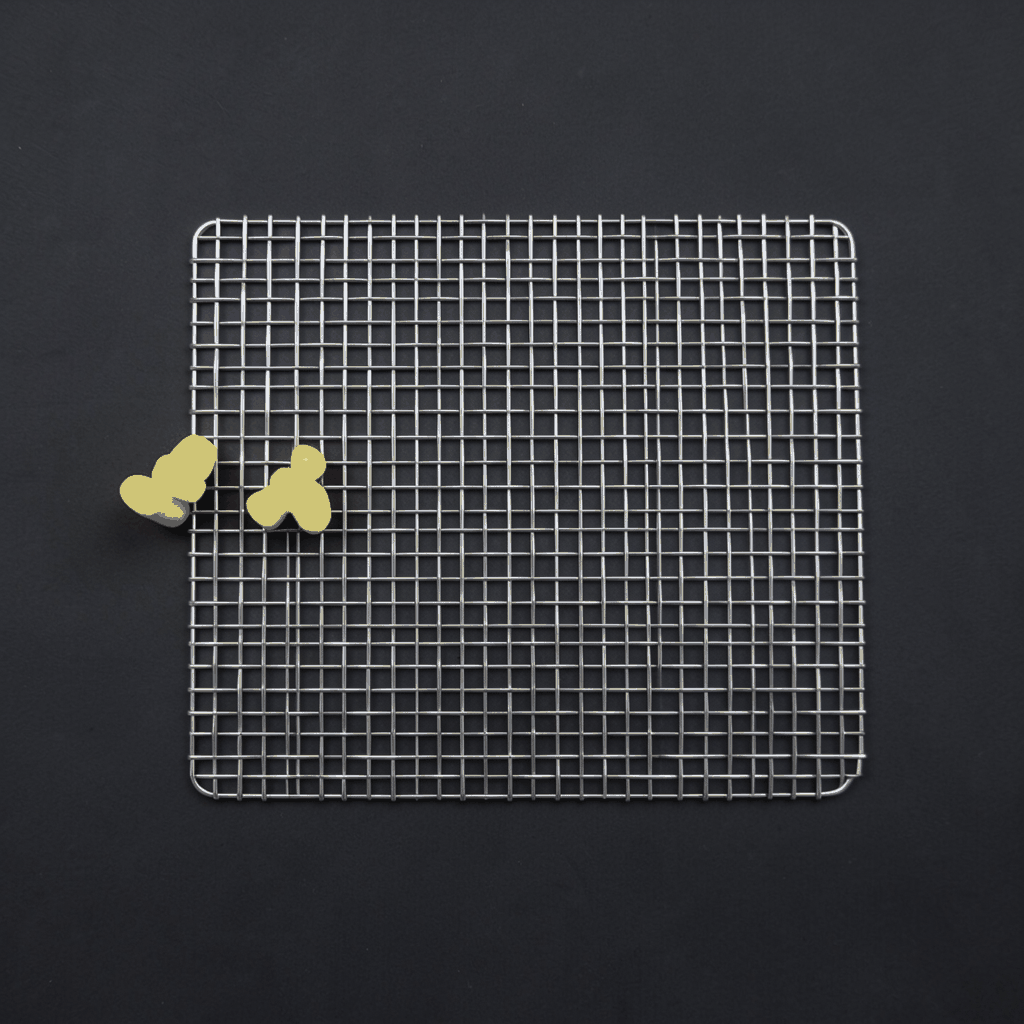
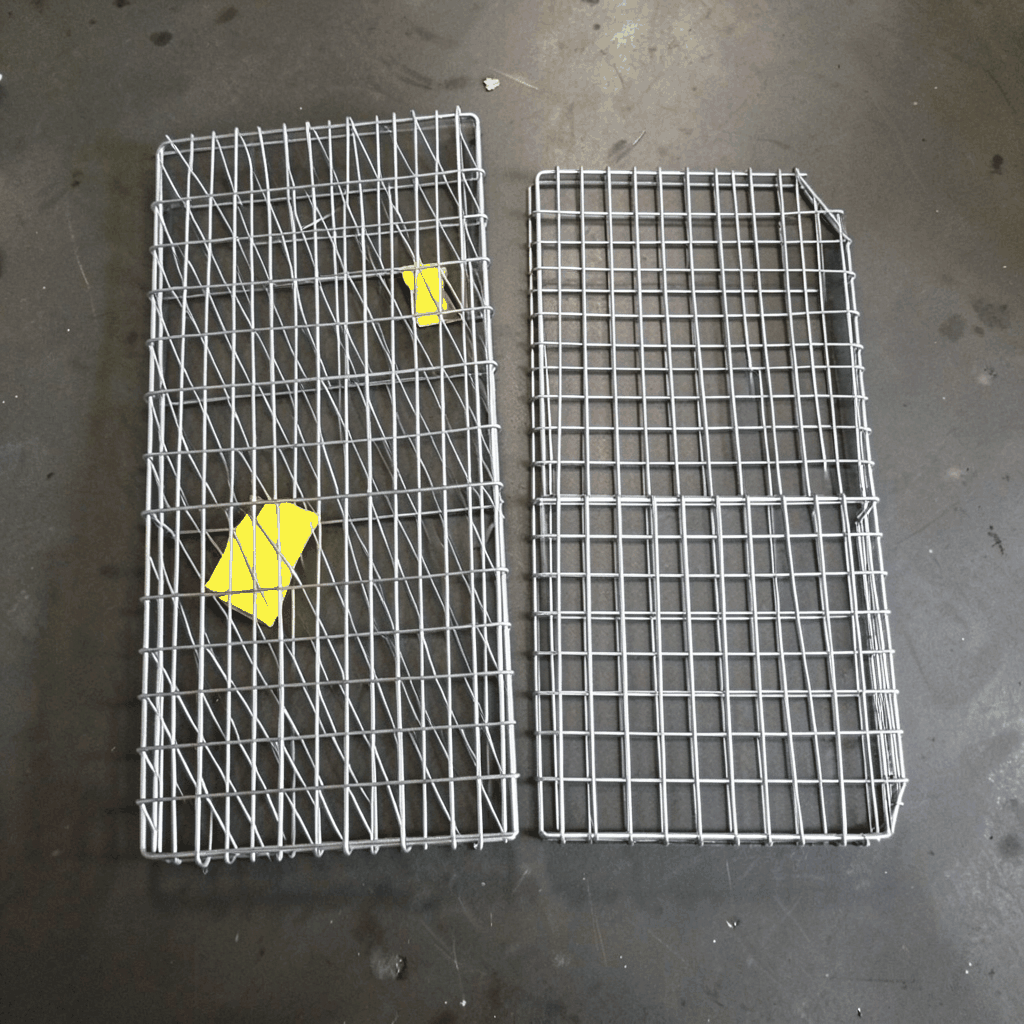
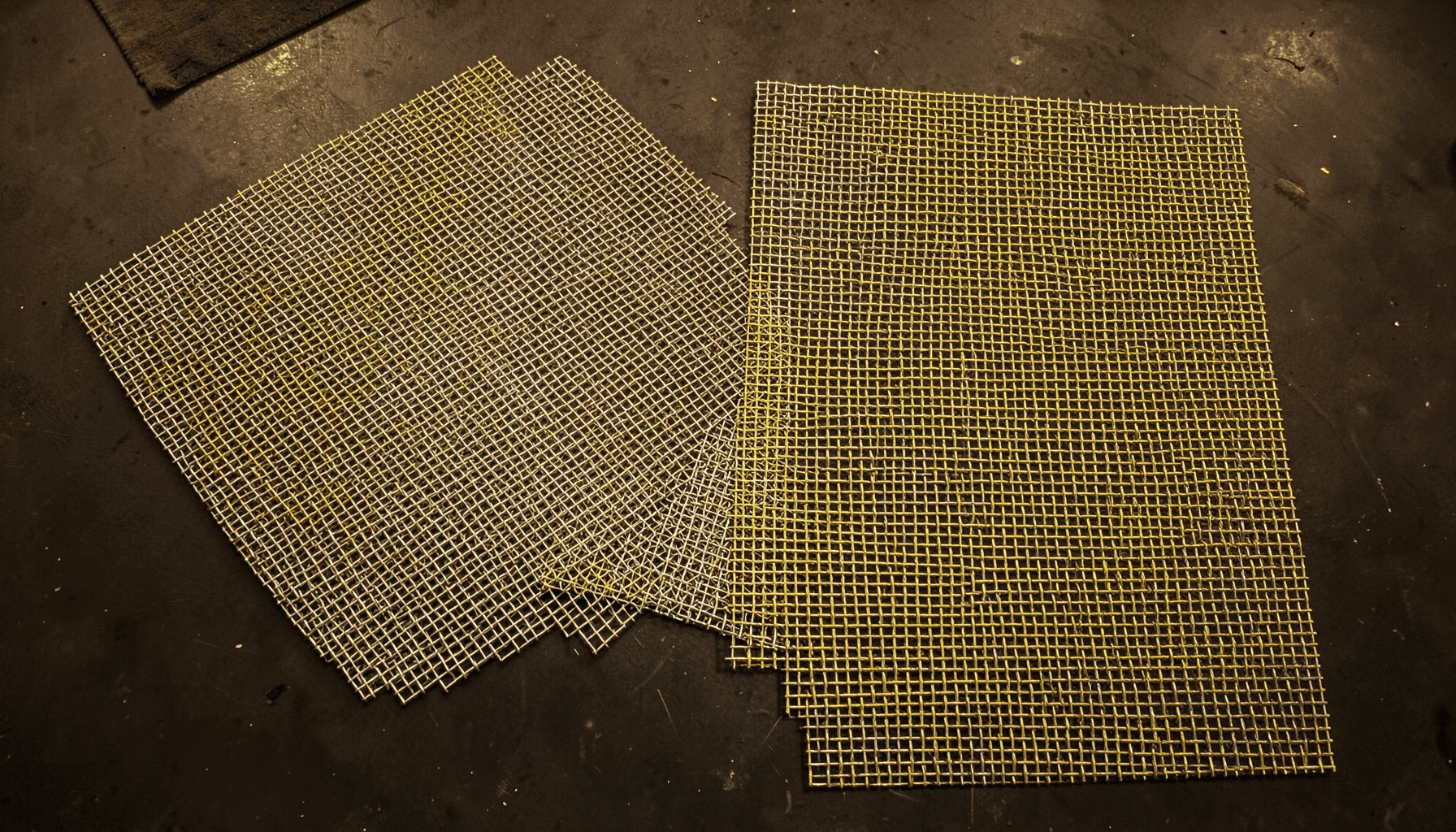
Mesh style also affects basket behavior. Woven wire mesh provides flexible opening configurations and good drainage. Welded wire mesh offers a more rigid grid and can be fabricated into strong panels with consistent spacing. Perforated metal may be selected when a flatter, more uniform surface is required. Expanded metal can provide strength with relatively low weight, although the opening pattern must be checked against the part dimensions.
| Design factor | Common options | Process benefit | Key consideration |
|---|---|---|---|
| Material | 304 or 316 stainless steel, aluminum, coated steel | Matches chemical, thermal, and load requirements | Confirm detergent and temperature compatibility |
| Mesh form | Woven, welded, perforated, expanded | Controls drainage, visibility, and rigidity | Opening size must retain the smallest part |
| Basket shape | Rectangular, square, cylindrical, custom formed | Fits washer chamber and conveyor layout | Allow clearance for spray and movement |
| Internal support | Dividers, trays, partitions, liners | Separates parts and prevents contact damage | Avoid blocking critical spray paths |
| Edge construction | Folded edge, framed edge, reinforced rim | Improves safety and dimensional stability | Eliminate sharp projections and weak corners |
| Handling features | Handles, lifting points, hooks, robotic interfaces | Simplifies transfer and loading | Verify ergonomic and automated clearance |
Matching Mesh Openings To Part Geometry
Opening size should be based on the smallest component, the smallest feature that must be retained, and the direction in which parts may move during washing. A large opening may improve spray access but allow washers, clips, pins, or machined pieces to slip out. A very fine opening can retain small parts but may collect debris and restrict circulation.
The shape of the part matters as much as its overall dimensions. Long, narrow components can pass diagonally through openings that appear smaller than their width. Parts with hooks, threads, slots, or protrusions may catch on the mesh. For these loads, a tighter mesh, perforated liner, or compartmentalized insert can prevent entanglement without closing off the basket.
Part contact should be considered during loading and machine movement. Delicate surfaces may require smooth wire, a protected rim, or a removable mesh liner. Heavy parts need a basket base that distributes weight without excessive deflection. When the basket is inverted, tilted, or rotated, retention features become particularly important.
A sample load is often the most reliable basis for design. Reviewing actual components helps determine opening size, usable depth, partition spacing, and the clearance required around the load. It also reveals whether parts need to be washed individually, in layers, or in dedicated pockets.
Engineering For Automated Equipment
Automated systems require repeatable dimensions. A basket that varies in width, height, or base alignment can interfere with conveyors, transfer arms, hoists, indexing stations, and washer doors. Reinforced frames, formed corners, and controlled welding help maintain the basket’s shape over repeated cycles.
The external profile should be designed around the equipment rather than selected independently. Important details include conveyor rail spacing, chamber entry width, spray bar clearance, lift capacity, stacking height, and drain direction. If baskets are transferred by a robot, the design may need consistent pickup points, access for grippers, and a stable center of gravity.
Stacking and nesting can reduce storage and return-transport costs. Nestable baskets may use tapered sidewalls, while stackable versions may include feet, locating collars, or reinforced upper rims. These features should not interfere with washing coverage or cause one basket to block another during drying.
For high-volume production, repeatable basket identification can support traceability. A welded tag plate, stamped code, barcode carrier, or dedicated mounting point may be added without placing loose labels inside the cleaning zone. The identification method should withstand heat, detergents, impact, and regular handling.
Surface Finish, Hygiene, And Service Life
A well-finished basket is easier to clean and safer to handle. Smooth welded joints, rounded corners, deburred edges, and properly finished cut ends reduce the chance of snagging gloves, damaging parts, or retaining oily residue. Crevices should be minimized because trapped contamination can return to subsequent loads.
Passivation or other suitable finishing treatments may be considered for stainless steel baskets, especially when welding has affected the surface. The correct treatment depends on the alloy, fabrication method, chemicals, and cleanliness requirements. Coated carbon steel may be suitable for less aggressive processes, but damaged coatings should be monitored because exposed steel can corrode.
Thermal cycling can gradually change a basket’s shape. Repeated exposure to hot wash water, rinsing, and forced-air drying creates expansion and contraction, while heavy loads place stress on the base and corners. Reinforcement should be positioned where it adds strength without producing dead zones that block spray coverage.
Maintenance is simpler when the basket can be inspected quickly. Operators should be able to see broken wires, bent frames, loose welds, clogged openings, and corrosion during routine handling. A modular design with replaceable liners or inserts may extend service life when only one section experiences concentrated wear.
Designing Around The Complete Washing Cycle
The cleaning stage is only one part of the basket’s working life. Before washing, the carrier may be loaded manually, by chute, or by robot. During washing, it may pass through pre-rinse, chemical cleaning, high-pressure spray, immersion, ultrasonic treatment, final rinse, and drying. Afterward, it may be inverted, transferred, unloaded, stacked, or returned to the loading area.
Each stage creates design requirements. Open bottoms and angled surfaces can improve drainage. A stable base can prevent tipping during conveyor movement. Handles should remain cool and accessible when practical, while lifting points must be positioned for balanced loads. If a basket is rotated, parts must remain contained without creating a pocket where liquid accumulates.
The operating environment should be described before fabrication begins. Useful information includes maximum loaded weight, part dimensions, detergent composition, wash temperature, cycle time, spray pressure, machine opening dimensions, and handling method. Photographs, drawings, or sample parts can help translate production needs into a workable custom wire basket design.
For manufacturers and processors, custom fabrication allows the same basic basket platform to support several part families. Adjustable dividers, removable partitions, and interchangeable liners can reduce the need for entirely separate carriers. This approach is valuable when product sizes change or when one washing line serves multiple production programs.
Practical Specification Checklist
A clear specification helps prevent dimensional conflicts and unnecessary redesign. It should describe both the basket and the process in which the basket will operate.
- State the material grade, wire diameter, mesh opening, and preferred mesh type.
- Provide the basket’s external length, width, height, weight capacity, and required clearances.
- Identify the smallest part, the most delicate surface, and any components that must be separated.
- Describe washing chemicals, temperature range, spray or immersion method, drying process, and cycle frequency.
- Mark required handles, lifting points, dividers, feet, stacking features, labels, and robotic pickup locations.
Prototype evaluation is especially useful for unusual loads. A trial basket can be checked for spray penetration, drainage, part retention, loading time, unloading convenience, and compatibility with the machine. Adjustments to the opening pattern or internal layout at this stage are usually easier than correcting production interruptions later.
A dependable supplier should be able to discuss mesh selection, frame reinforcement, welding, edge treatment, and finishing as one connected design. This coordinated approach avoids a basket that meets a dimensional drawing but performs poorly in the actual washer.
Custom metal mesh baskets can be produced for general-purpose cleaning or engineered around a specific automated line. Whether the requirement is a fine stainless steel parts basket, a reinforced welded-wire carrier, a perforated insert, or a multi-level washing tray, the design should support reliable flow from loading through unloading.
Share your part drawings, sample dimensions, machine clearances, and operating conditions with Shuo Ke Wire Mesh Product Technology Co., Ltd. Its engineering and fabrication capabilities can help develop a durable, process-compatible basket that improves retention, drainage, handling, and repeatability in automated parts washing systems.