Custom Stainless Mesh Baskets Built for Quench Hardening Operations
Australia's heavy industry stretches from the iron ore operations of Western Australia to the precision component makers tucked into Melbourne's manufacturing corridors, and every link in that chain relies on reliable heat treatment. Quench hardening remains one of the most widely used methods for boosting the hardness and wear resistance of carbon and low alloy steel components, from crusher liners bound for Pilbara mines to drive shafts produced for Sydney's automotive aftermarket. Yet the basket that carries red hot workpieces into the quench tank is often treated as an afterthought, when in reality its design, alloy, and fabrication directly affect part quality, production uptime, and operator safety.
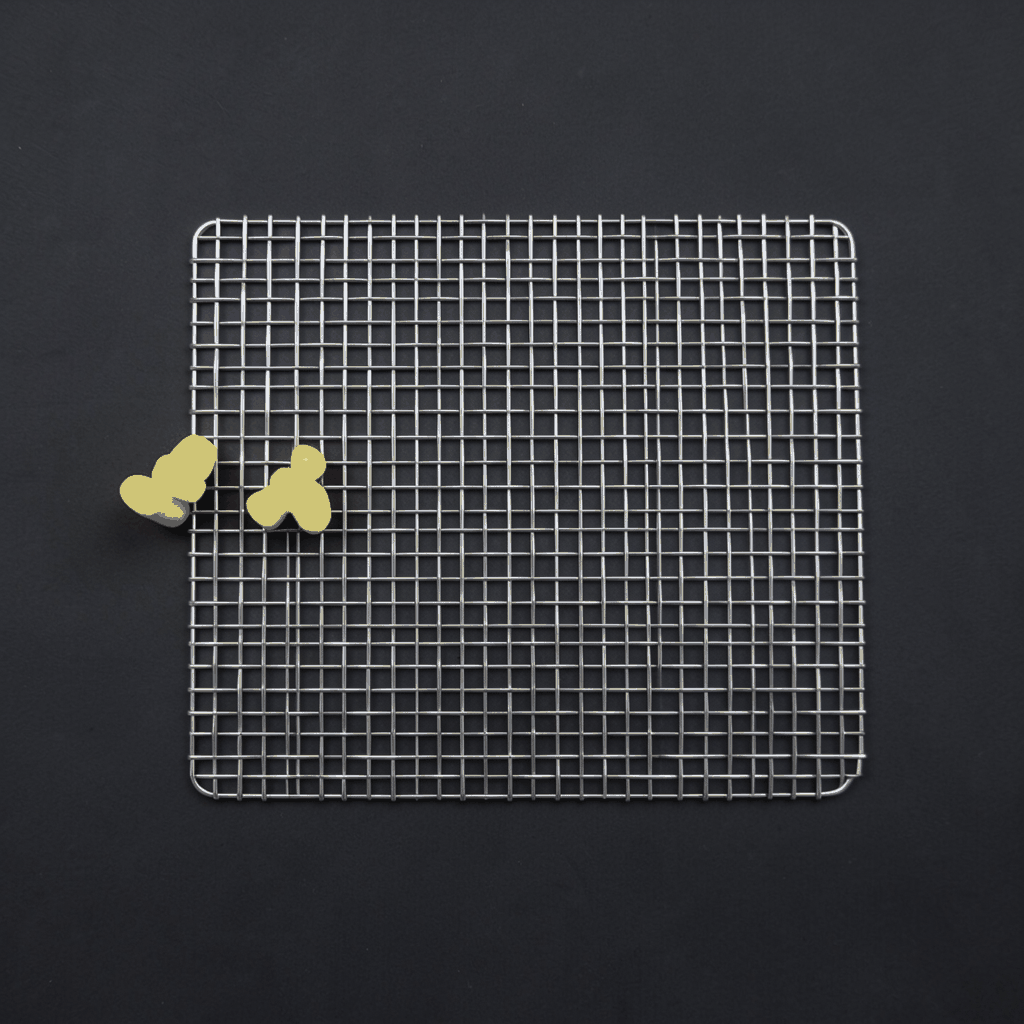
Engineered mesh baskets from Shuo Ke Wire Mesh Product Technology Co., Ltd. are designed specifically for the punishing conditions of oil, polymer, and water quench baths. By combining high temperature austenitic stainless steel grades with tailored mesh geometry and reinforced structural frames, these baskets give Australian heat treaters a durable, repeatable handling platform that holds up shift after shift.
Why Quench Hardening Demands Purpose Built Basket Design
A quench tank cycle is brutal on any handling tool. Workpieces enter the bath at temperatures between 800 and 950 degrees Celsius, and the basket must plunge that mass into the fluid within a prescribed delay window to lock in the desired microstructure. Any deformation of the basket at peak temperature will throw parts out of position, leading to uneven cooling rates, soft spots, or cracking. Australian heat treatment shops servicing the mining sector, particularly those processing wear plates in Nowra and the Illawarra region around Wollongong, know that inconsistent quench rates translate directly into rejected batches and warranty claims.
A purpose built basket addresses several variables at once. The mesh aperture must allow full fluid circulation so that quench oil or polymer reaches every surface of the workpiece, yet it must also retain small components like fasteners and pins that are commonly case hardened. The frame must be stiff enough to resist the asymmetric loads created when a heavy forging is loaded off centre, but light enough to keep overall heat mass low. Baskets fabricated from mild steel will scale, lose dimensional accuracy, and contaminate the quench bath within a few hundred cycles, which is why stainless mesh baskets have become the standard for serious commercial heat treaters across Brisbane, Adelaide, and beyond.
Stainless Steel Grades That Survive the Heat
Grade selection is where most basket failures begin. Standard 304 stainless steel performs well in many woven mesh applications, but its oxidation resistance at sustained temperatures above 700 degrees is limited. For quench baskets, austenitic grades such as 310, 321, and 309 are far more common because they hold their tensile strength and resist scaling when repeatedly cycled through the high temperature zone. Where brine or salt contaminated quench baths are used, particularly in marine component workshops along Australia's eastern seaboard, the corrosion resistance of the basket becomes as important as its heat resistance, and the same alloy logic that guides fencing specifications in coastal installations applies. Engineers reviewing the principles behind marine alloy selection will recognise the overlapping priorities of chloride exposure, thermal cycling, and long service life that govern both product categories.
For particularly aggressive service, baskets are sometimes built from duplex stainless grades, which combine high strength with superior resistance to stress corrosion cracking. While these materials cost more per kilogram, the longer interval between basket replacements and the reduced risk of catastrophic failure in a busy heat treatment cell often justify the premium. Shuo Ke's production team works with clients to specify the grade that matches their particular quench medium, cycle frequency, and workpiece mass.
Geometry, Mesh Aperture, and Part Protection
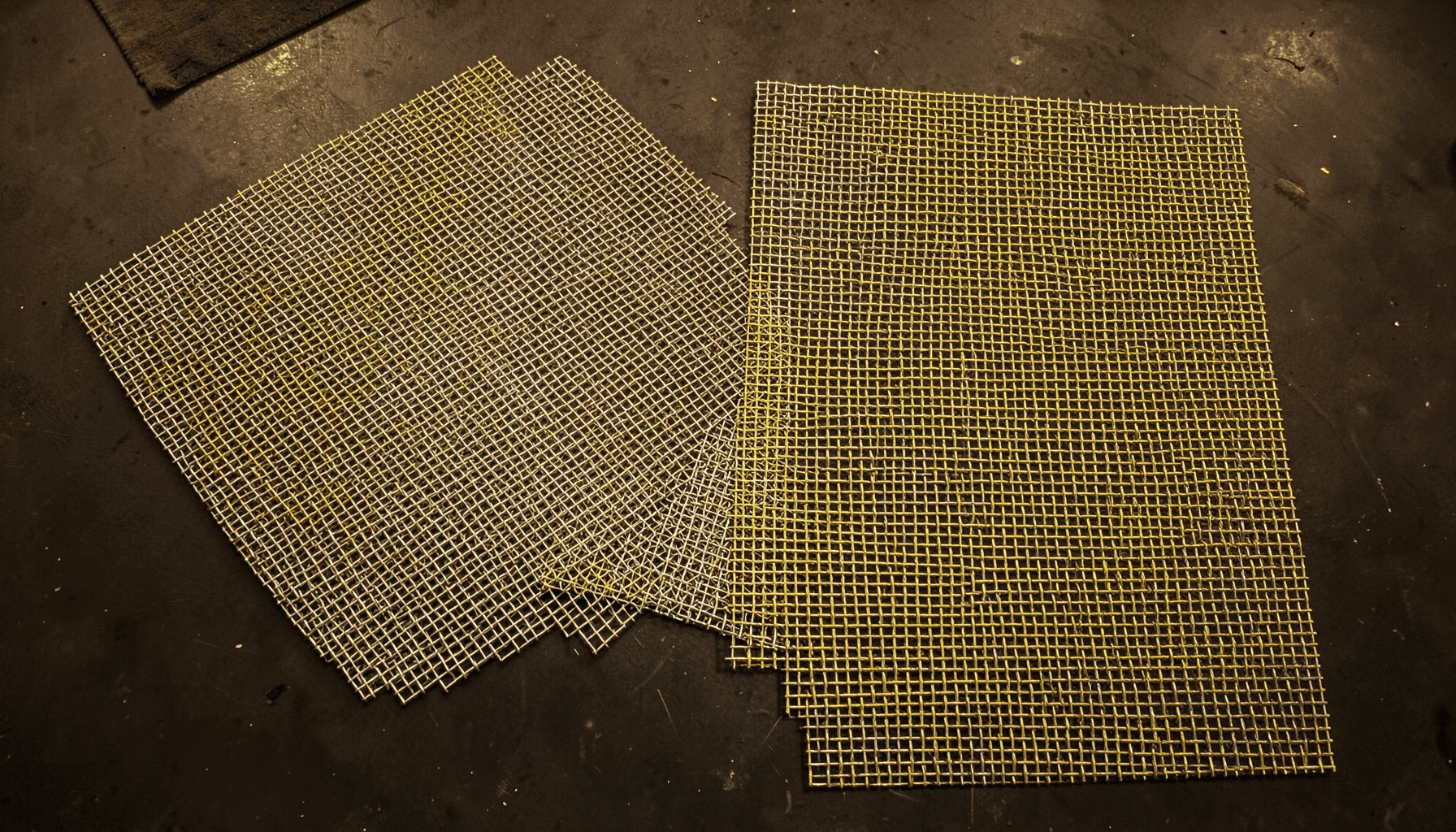
Beyond the alloy question, the geometry of a quench basket determines how evenly heat transfers out of the workpiece. Apertures that are too small create steam pockets or vapor blankets in the quench fluid, slowing the cooling rate and risking the formation of bainite rather than martensite in harden able steels. Apertures that are too large let components escape, particularly small pins, washers, and gear teeth that are routinely case hardened for Australian agricultural and mining equipment suppliers. A typical custom basket uses mesh apertures between 6 and 20 millimetres, paired with a robust peripheral frame and cross bracing that prevents the mesh from sagging after thousands of thermal cycles.
Part orientation is another design variable. Long slender items such as shafts and pins need internal dividers or stackable trays to keep them separated, while flat plates and rings benefit from open basket floors with minimal contact points. Shuo Ke routinely builds baskets with removable dividers, hinged access panels, and lifting lugs sized for the customer's overhead crane or fork attachment. For operations running small batch work in Perth's mining service hubs, modular baskets that can be reconfigured between jobs save significant handling time.
Welding and Structural Integrity Under Thermal Shock
The welds on a quench basket are arguably the most vulnerable feature. Repeated thermal cycling, combined with the mechanical shock of loading and unloading heavy workpieces, opens up porosity and cracks at poorly executed joints. Shuo Ke uses TIG welding with filler wires matched to the parent mesh alloy, and welds are typically ground smooth to eliminate crevices that would otherwise trap quench oil and accelerate corrosion. For baskets that will see thousands of cycles per year, full penetration welds at every intersection are not optional.
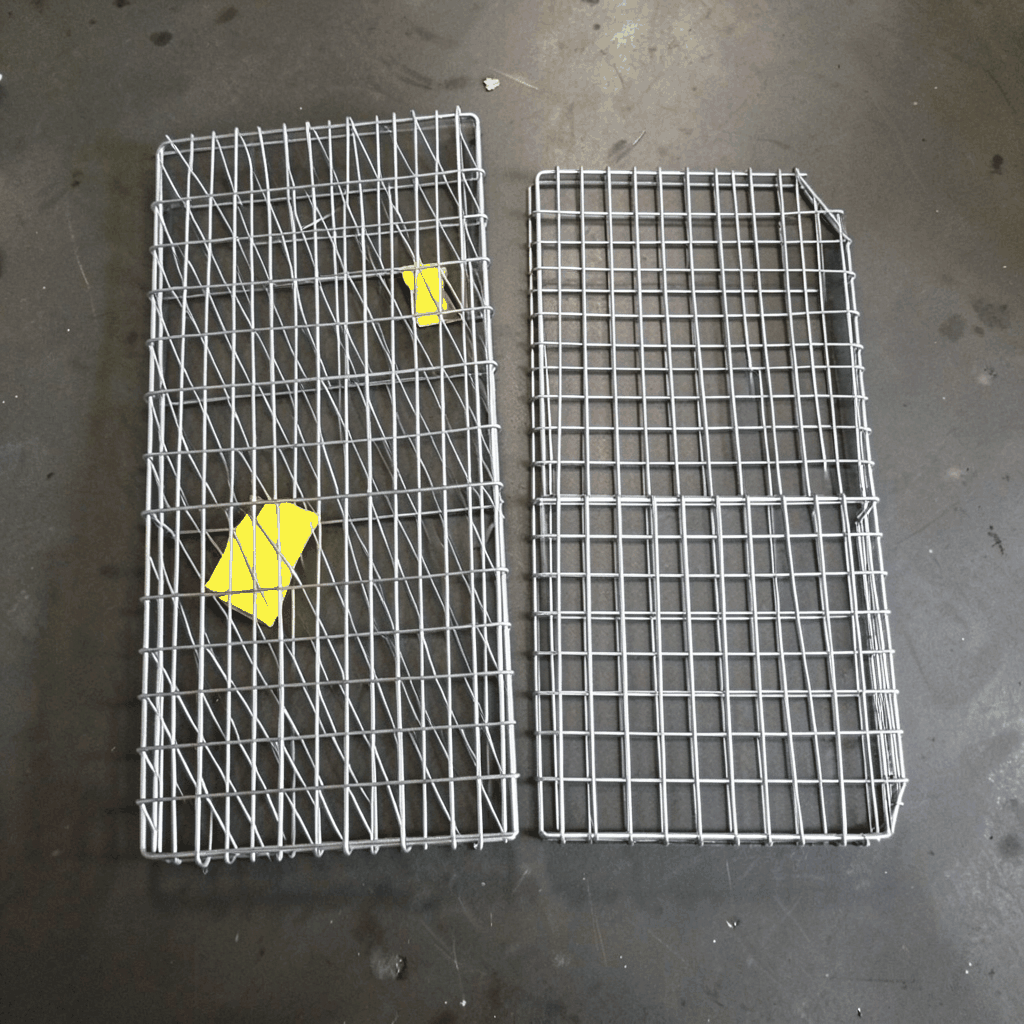
Reinforcement patterns also matter. A simple rectangular frame looks tidy but concentrates stress at the corners, where thermal expansion and contraction work against each other every cycle. Diagonal bracing, gusseted corners, and doubled uprights at lifting lugs distribute those forces more evenly and extend basket life considerably. Shuo Ke's engineering team reviews each customer's process parameters, including quench tank depth, fluid temperature, and the maximum mass loaded per cycle, before finalising the structural layout.
Maintaining Quench Fluid Quality Through Basket Choice
Quench fluids are expensive, and contaminated baths lead to soft spots, stains, and unpredictable hardness results. A basket that sheds scale, rust, or weld spatter directly contaminates the fluid and forces premature replacement. Stainless mesh baskets dramatically reduce this contamination source, and their smooth, ground weld surfaces release trapped oil back into the tank rather than holding it in pockets that go rancid over time.
For polymer quench baths, which are particularly sensitive to contamination and water content, the clean surface of a high grade stainless basket helps maintain stable cooling rates over long production runs. Australian shops running mixed automotive and mining component work in Melbourne's eastern suburbs often specify baskets with electropolished finishes to further reduce surface drag and fluid carry over, a small detail that pays back quickly through reduced bath top up costs.
Sizing for Australian Production Volumes
Production volumes vary enormously across the Australian heat treatment sector, from small job shops handling a few hundred kilograms per week in regional Tasmania to large contract heat treaters running continuous furnace lines in Sydney and Newcastle. Shuo Ke builds baskets in any required footprint, from compact 300 by 300 millimetre units for laboratory and tool room work to heavy duty 1200 by 1500 millimetre pallets for production scale forging operations. Stackable designs multiply throughput in cells with limited floor space, while dedicated single piece baskets suit automated handling systems where consistent dimensions ensure smooth transfer between furnace and quench station.
Lead times for custom baskets are typically four to six weeks from confirmed drawings, with rapid prototyping available for urgent tooling change overs. Engineers can supply CAD files, hand sketches, or sample workpieces, and Shuo Ke's design team returns a detailed drawing for approval before production begins. This collaborative workflow suits Australian buyers who need to lock in tooling ahead of seasonal production peaks, particularly the mining equipment rebuild cycle that runs hard in the months leading into the dry season in the Pilbara.
Partnering with a Custom Mesh Manufacturer
Specifying the right quench basket is ultimately about matching alloy, geometry, and fabrication quality to a specific process. Shuo Ke Wire Mesh Product Technology Co., Ltd. draws on decades of woven wire and welded mesh production to deliver baskets engineered for the realities of commercial heat treatment, including the high cycle counts, varied quench media, and demanding safety standards that Australian operations work to every day. Clients can request samples, discuss factory recommendations, and confirm customisation options to match their most challenging heat treatment cells, and the company will translate those requirements into a basket that performs reliably from the first quench to the thousandth.