Custom wire mesh trays for cable management in data centers
Data centers depend on orderly, accessible, and durable cable pathways. Power cables, fiber-optic lines, control wiring, and network connections must move between racks, rooms, and equipment zones without creating congestion or restricting maintenance access. A well-designed tray system gives these cables a defined route while supporting airflow, visibility, and long-term operational reliability.
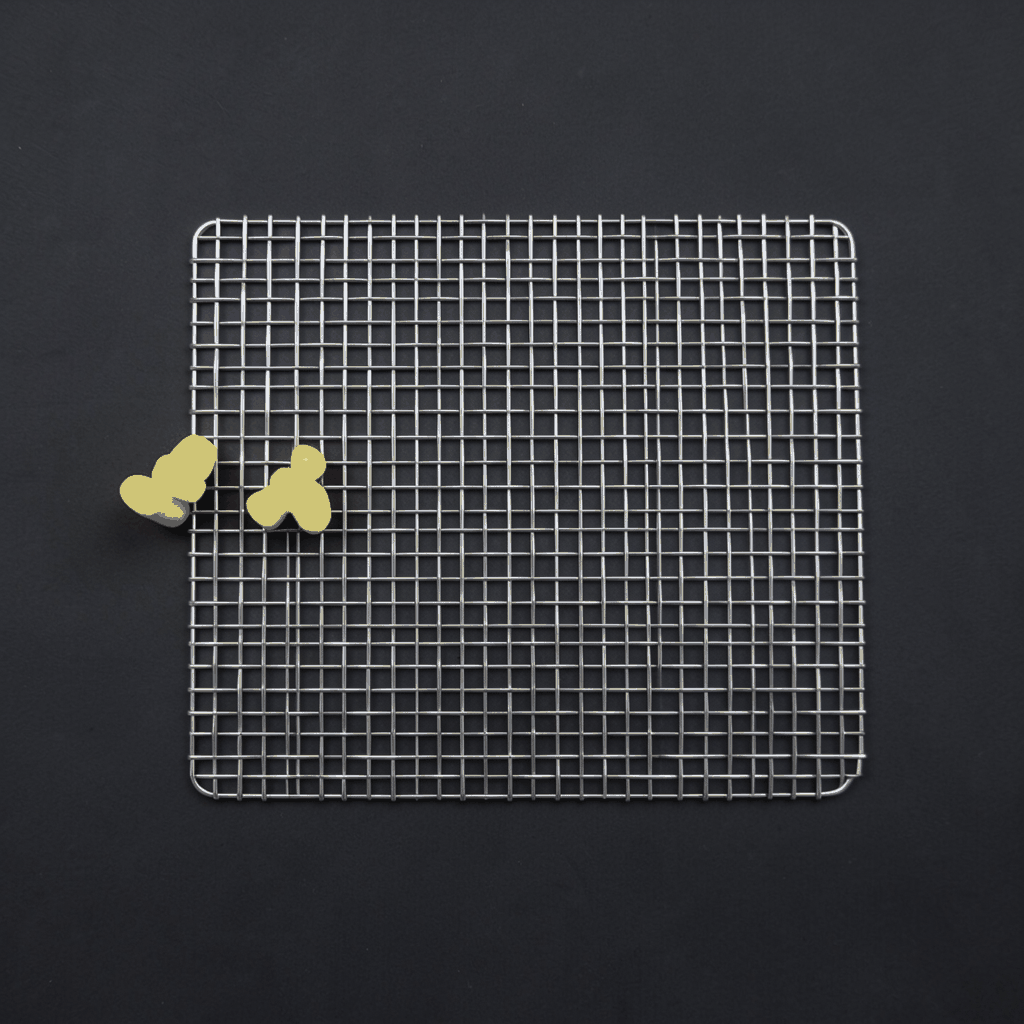
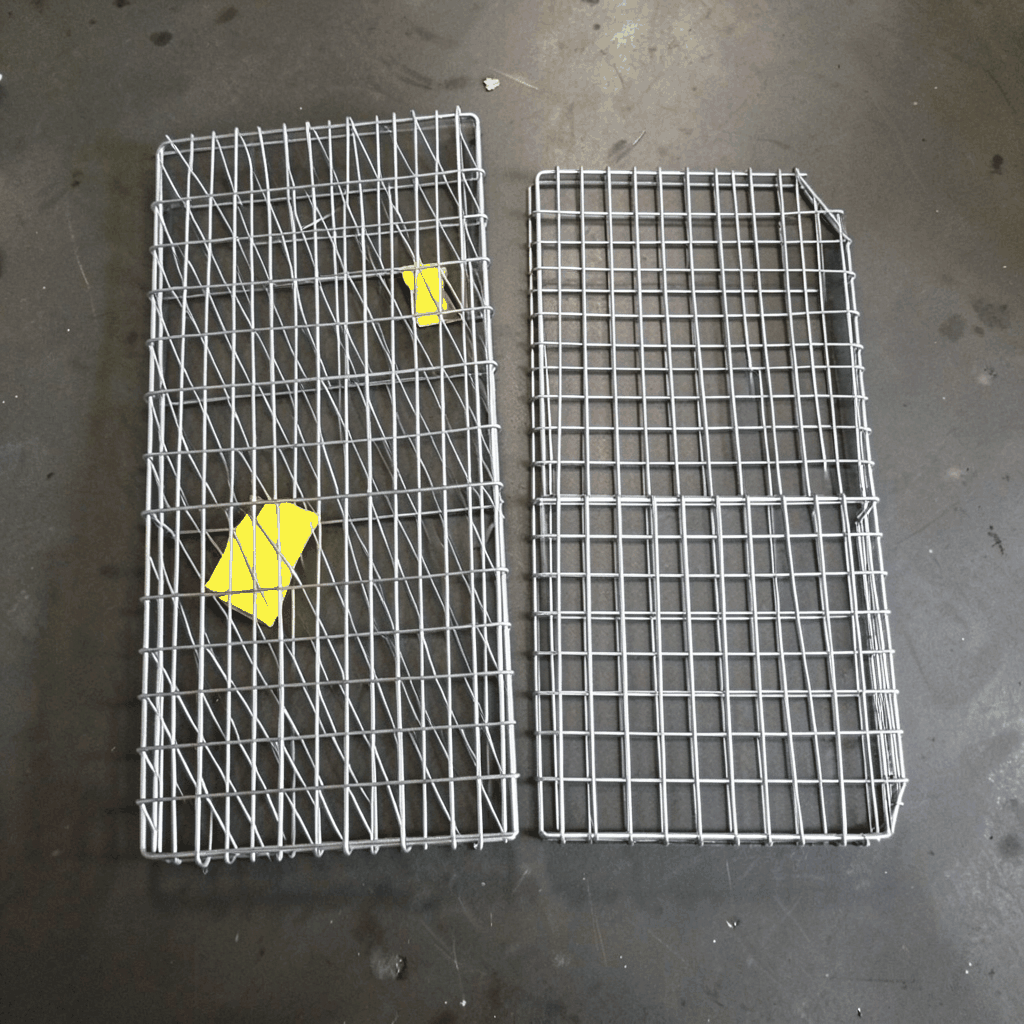
Custom wire mesh trays are particularly useful where standard cable baskets cannot accommodate unusual dimensions, dense cabling, complex layouts, or strict material requirements. Their open construction provides ventilation and allows technicians to inspect cable runs from multiple angles. With the right wire diameter, mesh opening, finish, and support arrangement, a tray can be adapted to both the physical structure and technical demands of a data center.
For projects that require more than an off-the-shelf solution, a specialist manufacturer can combine metal forming, welding, cutting, and surface treatment into a single production process. This approach helps create cable containment that fits the facility accurately while maintaining a clean architectural appearance and dependable mechanical performance.
Why cable containment deserves custom engineering
Cable trays do more than hold wiring above a rack row. They influence installation speed, cable separation, maintenance access, cooling performance, and future expansion. A pathway that is too narrow may cause excessive bending or difficult patching. A tray with insufficient load capacity can deform under the weight of copper cables, power cords, fiber bundles, and accessories.
Custom fabrication allows the containment system to reflect actual site conditions. Tray width, depth, length, support spacing, and access features can be adjusted for overhead pathways, underfloor routes, wall-mounted runs, or vertical drops. Special sections can be made for changes in direction, elevation, or pathway density, reducing the need for improvised field modifications.
Mesh construction also supports visual inspection. Technicians can identify overcrowding, disconnected cables, or damaged insulation without removing a solid cover. The open sides and base allow air to circulate around cable bundles, which can be valuable in rooms where thermal management is closely controlled. A carefully planned system supports both installation discipline and ongoing service work.
Selecting metal, mesh, and protective finish
Stainless steel is a strong choice for facilities that require corrosion resistance, clean surfaces, and long service life. Stainless steel cable trays can perform well in humid environments, industrial buildings, coastal regions, and locations where regular cleaning is required. Grades such as 304 and 316 may be selected according to exposure conditions and chemical contact.
Aluminum offers low weight and natural corrosion resistance, making it useful where installers must handle long sections or where the building structure has limited reserve capacity. It can also be suitable for suspended pathways with many support points. Copper has excellent conductivity and a distinctive appearance, though its higher material cost usually limits it to specialized architectural or technical applications.
Iron and carbon steel can provide economical strength for indoor environments when protected with an appropriate finish. Galvanizing, powder coating, or other treatments can improve resistance to oxidation and give the tray a specified color. The finish should be chosen according to humidity, cleaning agents, temperature, installation location, and expected maintenance conditions.
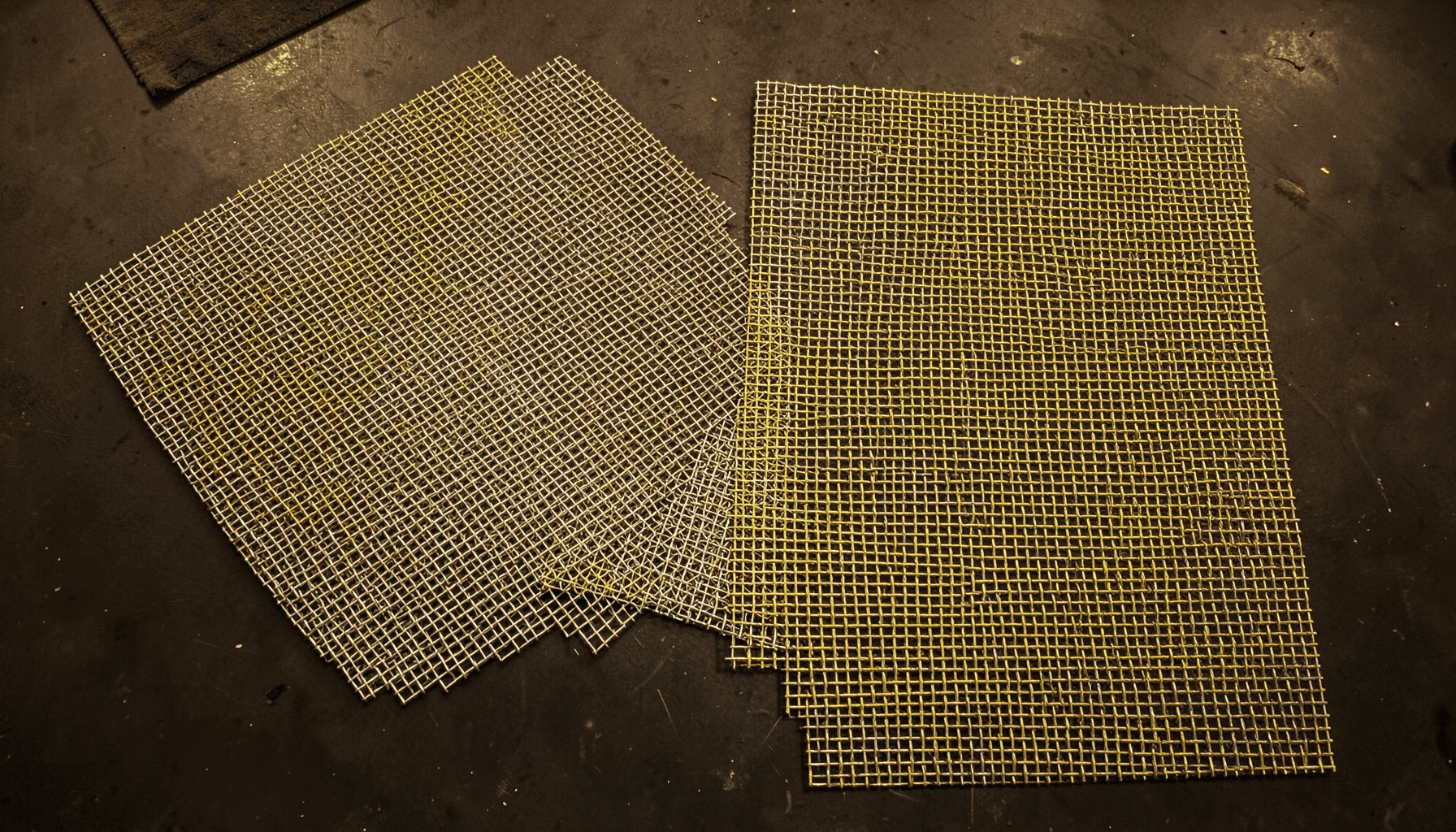
Mesh opening size affects both weight and cable support. Smaller openings help prevent small cables and accessories from slipping through, while larger openings reduce material use and can improve ventilation. Wire diameter and welded joint quality are equally important. A tray should resist twisting, sagging, and local deformation when cables are installed or rearranged.
Designing trays around data center pathways
A useful design begins with a cable pathway survey. Engineers should identify rack positions, overhead clearances, hot-aisle and cold-aisle arrangements, power distribution routes, telecommunications zones, and points where cables transition between horizontal and vertical directions. This information helps determine whether the project requires ladder racks, basket trays, wire mesh cable trays, or a combination of systems.
Separation is essential when power and data cables share a facility. Dedicated tray levels or parallel routes can reduce electromagnetic interference and simplify compliance with internal operating procedures. Fiber-optic cables may also need larger bend radii and gentler support than heavier power cords. Accessories such as dividers, radius drops, brackets, clamps, and drop-out fittings should be considered during the design stage rather than added after installation.
The tray should leave room for growth. Filling a pathway to its maximum capacity on the first installation can make future upgrades difficult and increase the risk of cable compression. A practical design reserves additional space for new servers, switching equipment, monitoring systems, and redundant power connections. This forward-looking capacity can lower labor costs during later expansion.
Custom sections are especially valuable around columns, beams, cooling equipment, fire barriers, and restricted ceiling areas. Laser-cut plates or formed mesh components can create openings for cable exits while preserving edge safety. Smooth, deburred surfaces help protect insulation and fiber jackets during pulling, routing, and repeated maintenance.
Comparing common tray requirements
The most suitable specification depends on the environment, cable load, pathway location, and maintenance strategy. The following comparison gives a practical starting point for selection; final dimensions should be verified against project drawings, loading calculations, and applicable standards.
| Requirement | Stainless steel mesh tray | Aluminum mesh tray | Coated steel mesh tray |
|---|---|---|---|
| Corrosion resistance | Very high, especially with suitable grade selection | High in many indoor and humid settings | Depends strongly on coating quality and damage protection |
| Relative weight | Medium | Low | High |
| Mechanical strength | High | Medium to high | Very high |
| Typical use | Critical facilities, humid areas, clean technical spaces | Suspended pathways and weight-sensitive installations | General indoor routes and high-load applications |
| Maintenance needs | Low | Low, with attention to dissimilar-metal contact | Periodic inspection for coating damage |
| Design flexibility | High | High | High |
| Finish options | Brushed, polished, passivated, or custom | Mill finish, anodized, or coated | Powder coated, galvanized, or painted |
Material selection should also account for fasteners and support hardware. Using incompatible metals in a damp environment can create galvanic corrosion. Stainless steel, aluminum, and coated steel components should be paired thoughtfully, with suitable isolation methods where required. The same attention applies to wall anchors, threaded rods, splice plates, and rack-mounted brackets.
For projects with strict visual requirements, the tray finish can be coordinated with ceilings, equipment enclosures, partitions, or other metalwork. A consistent appearance is useful in customer-facing technical rooms and facilities where infrastructure remains visible. Decorative quality should support the engineering purpose rather than compromise load capacity or access.
Fabrication and installation details that matter
Precision manufacturing improves the fit of each tray section and reduces cutting on site. A capable wire mesh processor can produce straight lengths, bends, tees, reducers, vertical drops, and custom mounting parts according to approved drawings. Welding should create secure joints with minimal sharp projections, while edge treatment should protect cables and installers.
Before production, the manufacturer should review dimensions, tolerances, corner radii, support locations, cable exit points, and connection methods. Samples or prototypes can confirm that the mesh opening, wire thickness, and finish meet expectations. For larger projects, a coordinated numbering system for sections and accessories can make delivery and installation more efficient.
The installation method depends on the building structure and tray load. Ceiling suspension may use threaded rods, trapeze supports, channel brackets, or dedicated hangers. Wall-mounted pathways require anchors suited to concrete, masonry, steel, or modular construction. Support spacing must account for the tray’s own weight, cable load, concentrated loads, vibration, and local requirements.
An experienced supplier of custom mesh solutions can help translate a cable routing concept into practical fabricated components for architectural and industrial settings. This is useful when a data center includes unusual structural conditions, visible pathways, mixed materials, or a need to coordinate cable containment with other metal products.
Installation teams should maintain suitable separation between tray sections and other services. Clearance around lighting, sprinklers, ventilation equipment, fire protection systems, and access panels helps preserve safety and serviceability. Cables should be supported without excessive ties or compression, and every vertical drop should include a controlled route that prevents sharp bends.
Checking performance before project handover
Quality control should cover both the metal product and the completed pathway. Dimensional inspection confirms that tray sections match drawings and connect correctly. Weld inspection can identify incomplete joints, cracks, excessive spatter, or weak attachment points. Surface inspection should verify that coatings are continuous and that stainless steel surfaces have not been contaminated during fabrication.
Load testing or engineering calculations may be appropriate for heavily populated routes. The assessment should consider distributed cable weight, point loads from bundles, dynamic forces during installation, and the spacing of supports. Trays located above critical equipment deserve particular attention because a failure could affect cooling units, servers, or live electrical systems.
Cable management quality is also visible after installation. Bundles should be routed neatly, labeled clearly, and separated according to system type. Spare capacity should remain available, while unused sections should not become storage areas for packaging, tools, or unrelated components. A clean pathway reduces troubleshooting time and supports efficient changes.
Routine inspections can identify loose fasteners, damaged coating, corrosion, overloaded sections, and unsupported cable drops. In facilities with frequent upgrades, the pathway should be reviewed after major equipment changes. Keeping accurate drawings and photographs of tray routes makes future work safer and reduces accidental interference with existing services.
Practical recommendations for project teams
Procurement decisions are stronger when engineering, operations, and installation teams review the cable containment system together. A specification should describe more than tray width and length. It should identify material grade, wire diameter, mesh opening, finish, load expectations, accessory requirements, packaging, and inspection criteria.
For a dependable result:
- Survey rack layouts, cable types, structural supports, and service clearances before requesting a quotation.
- Reserve expansion capacity so future cables can be added without overcrowding existing routes.
- Separate power, data, fiber, and control wiring according to performance and safety requirements.
- Specify smooth edges, secure welds, compatible fasteners, and a finish suited to the site environment.
- Request drawings, samples, load information, and accessory schedules before approving mass production.
The quotation process should also clarify tolerances and delivery details. Long tray sections may need protective packaging to prevent bending during transport, while small fittings should be labeled by installation zone. A complete accessory package can include splice connectors, bends, tees, reducers, dividers, brackets, drop-outs, and grounding provisions where required.
Custom wire mesh trays provide a practical balance between strength, ventilation, accessibility, and adaptable design. When their dimensions and materials are developed around actual data center conditions, they can support cleaner installations and more manageable infrastructure throughout the facility’s operating life.
Discuss your pathway layout, material requirements, and fabrication details with a qualified metal mesh manufacturer to develop trays that fit the building and the cable system accurately. With sound engineering and controlled production, custom containment can become a durable part of the data center’s long-term infrastructure.