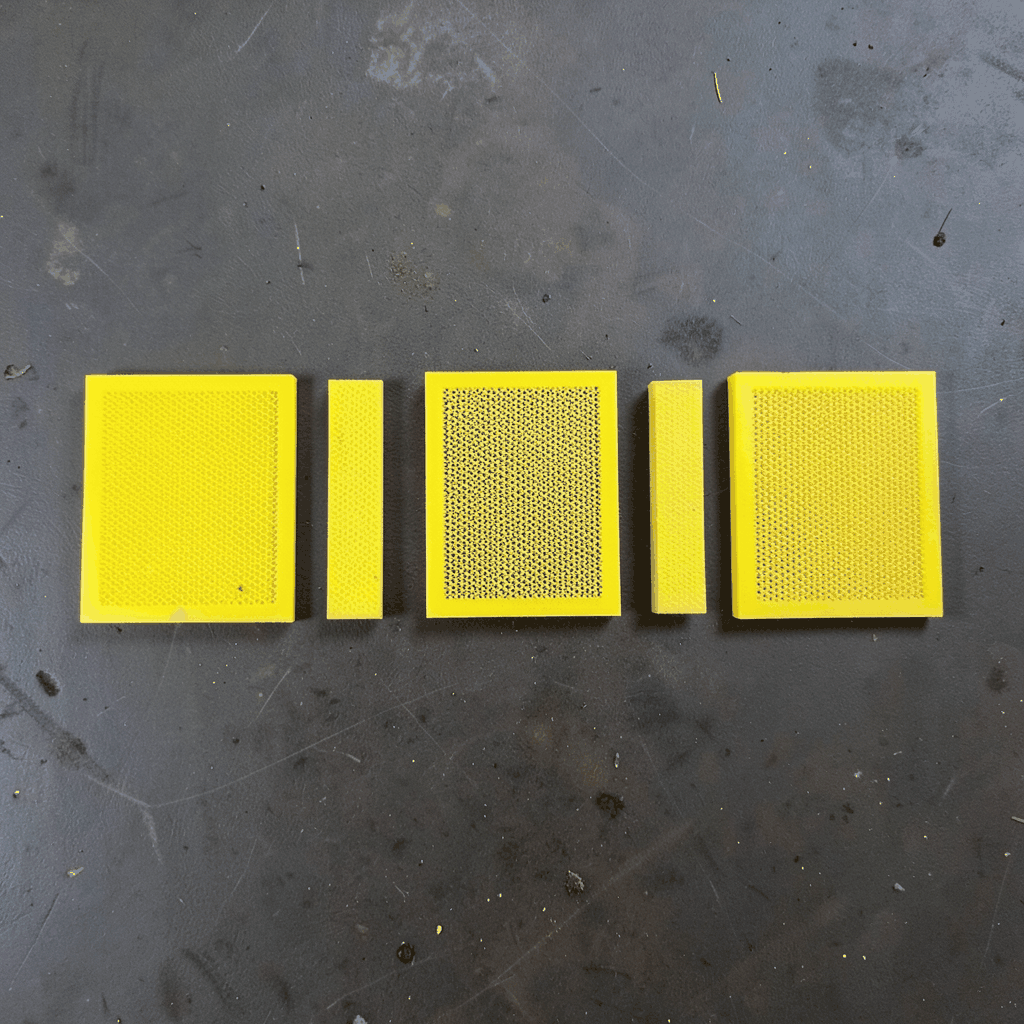
Custom wire mesh trays for heat treatment furnace loading
Heat treatment furnace loading demands more than a simple metal basket. A tray must support components securely, allow heated air or protective gas to circulate, tolerate repeated thermal cycling, and remain stable when exposed to scale, quenching conditions, and mechanical handling. The right wire mesh construction can improve batch consistency while reducing loading time and product damage.
Custom furnace trays are used for annealing, hardening, tempering, stress relieving, sintering, brazing, and other controlled heating processes. Their design depends on the workpiece material, operating temperature, furnace atmosphere, batch weight, loading method, and the way parts move through the production line.
For Australian manufacturers, a tray may need to suit a continuous belt furnace in Melbourne, a batch furnace serving mining equipment in Perth, or a fabrication plant near Newcastle. Long transport distances, demanding production environments, and the need for reliable replacement parts make practical engineering and repeatable fabrication especially important.
Selecting the right material for furnace service
Stainless steel is a common choice for heat treatment baskets and trays because it offers a useful balance of heat resistance, strength, corrosion resistance, and availability. Grades such as 304 and 316 may be suitable for general industrial conditions, while higher-temperature stainless alloys can be considered for furnace applications involving extended exposure or severe thermal cycling. The correct grade should be selected according to the actual furnace temperature and atmosphere rather than a general assumption about stainless steel.
Nickel-based alloys are often specified when a tray must maintain strength at elevated temperatures or resist carburising, oxidising, or other aggressive atmospheres. Aluminium is valuable for lightweight guards, covers, and room-temperature handling equipment, but it is not generally the first choice for high-temperature furnace trays. Carbon steel can be economical for lower-temperature work or sacrificial fixtures, although oxidation, scaling, and dimensional change need to be assessed.
Copper, brass, and other specialised alloys may be relevant for particular processing environments, but they require careful evaluation of melting behaviour, chemical compatibility, and contact with the treated components. A metal mesh manufacturer can help compare alloy options by looking at furnace temperature, heating cycle, part weight, expected service life, and cleaning requirements.
How mesh construction affects heating and loading
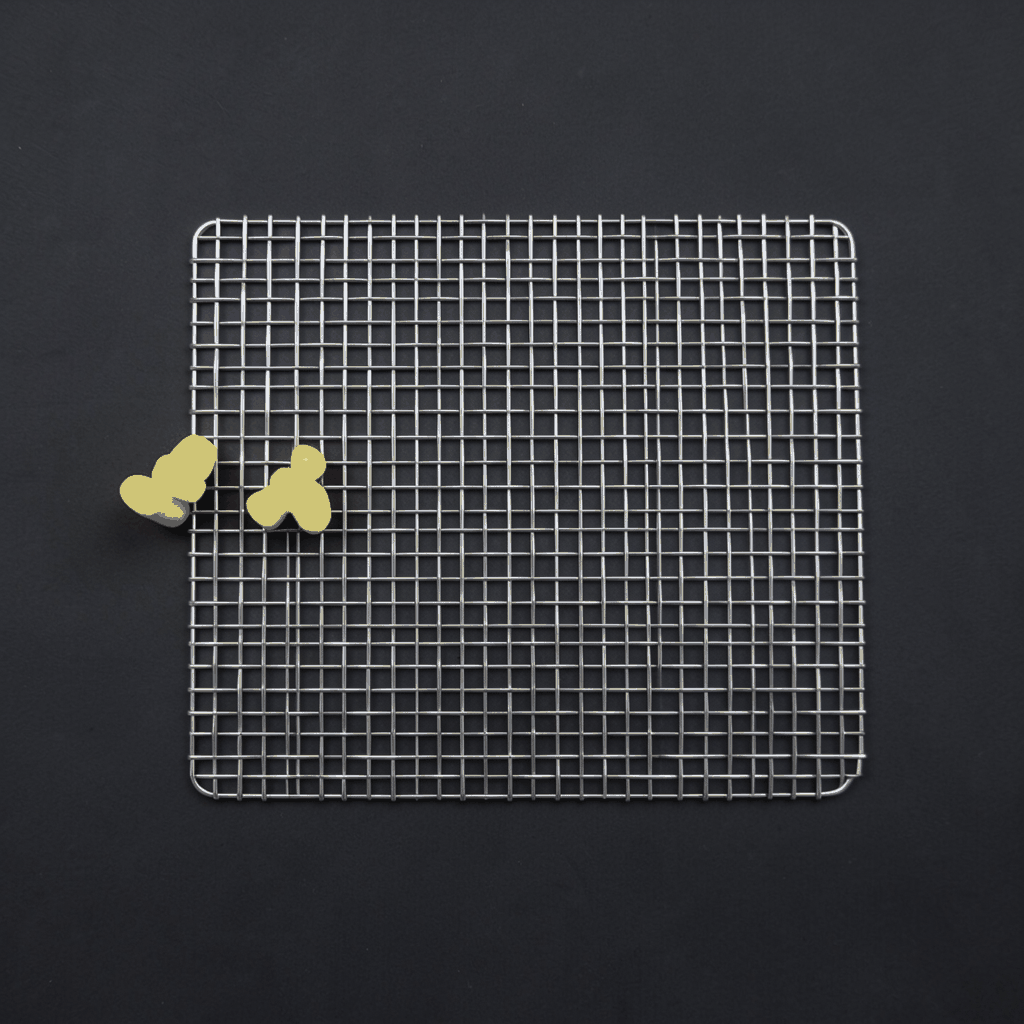
The open area of a wire mesh tray affects the movement of heat, air, and protective gas around the parts. A suitable aperture allows circulation through the load and helps reduce cold spots caused by a solid base. It can also allow scale, oil residue, or loose contamination to fall away from the workpieces instead of remaining trapped beneath them.
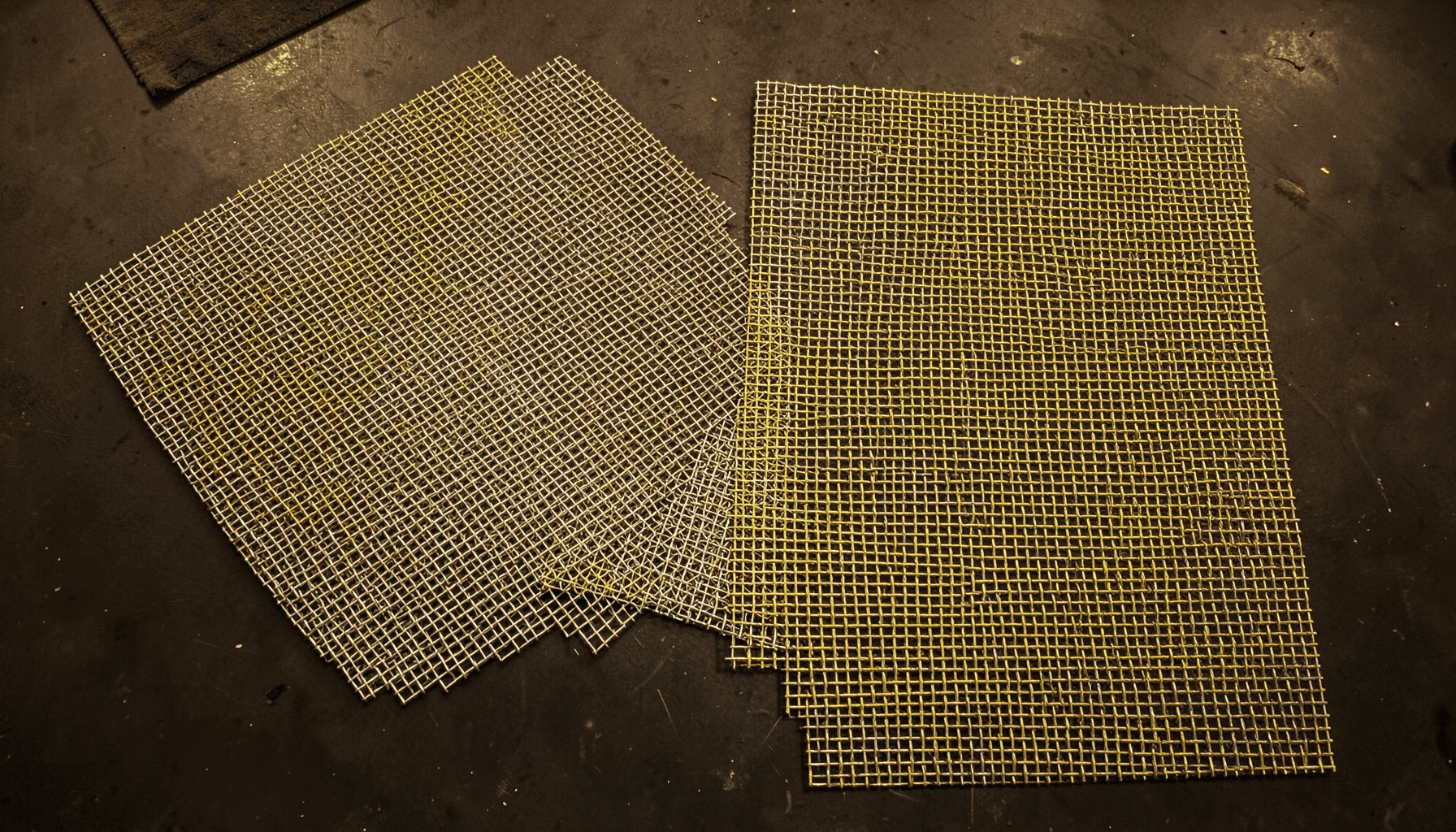
Mesh size must be balanced against component dimensions. If the opening is too large, small parts may tip, fall through, or become marked by uneven support. If it is too fine, the tray may restrict gas movement, add unnecessary weight, and retain more debris. Woven wire mesh, welded wire mesh, perforated sheet, and expanded metal can each serve different furnace loading requirements.
Wire diameter and support spacing are equally important. Fine wire may provide a smooth contact surface for smaller components, while heavier wire is better for dense loads or large steel parts. Reinforced edges, cross supports, folded rims, and formed corners help distribute weight and reduce deflection. These features are particularly useful when trays are moved with forklifts, trolleys, cranes, or furnace charging equipment.
Designing trays around the furnace and workpiece
A custom tray should be developed around the furnace opening, hearth clearance, rail system, and loading equipment. Even a small error in width or height can cause interference with furnace doors, rollers, charging arms, or internal fixtures. Accurate dimensions are essential when trays are stacked or positioned in a controlled pattern.
Workpiece geometry determines whether the tray needs a flat deck, raised dividers, locating pins, pockets, side walls, or removable partitions. Shafts may require cradle supports to prevent rolling. Thin components may need a fine mesh base to avoid distortion. Small fasteners or castings may be contained with a deeper basket profile, while large fabricated parts may need an open frame with several reinforced contact points.
Thermal expansion should be allowed for during design. A tray that fits neatly at room temperature may bind when heated, particularly if it is inserted into a narrow furnace or stacked with other fixtures. Sliding joints, clearance zones, expansion gaps, and suitable weld placement can help manage movement. The design should also avoid sharp projections that could scratch treated parts or create handling risks.
Managing heat, atmosphere, and repeated thermal cycling
Furnace trays are exposed to repeated expansion and contraction. Over time, this can cause warping, fatigue at welded joints, cracked corners, loosened connections, or sagging of the mesh deck. A robust tray design uses suitable wire diameter, support spacing, corner construction, and reinforcement to keep thermal stresses under control.
The furnace atmosphere has a direct effect on service life. Oxidising conditions can accelerate scale formation, while carburising or nitriding environments may alter the surface and mechanical behaviour of some alloys. Salt baths, cleaning chemicals, quenching oils, and residues from treated parts can create additional corrosion risks. Tray construction should be reviewed as part of the whole process rather than selected by temperature alone.
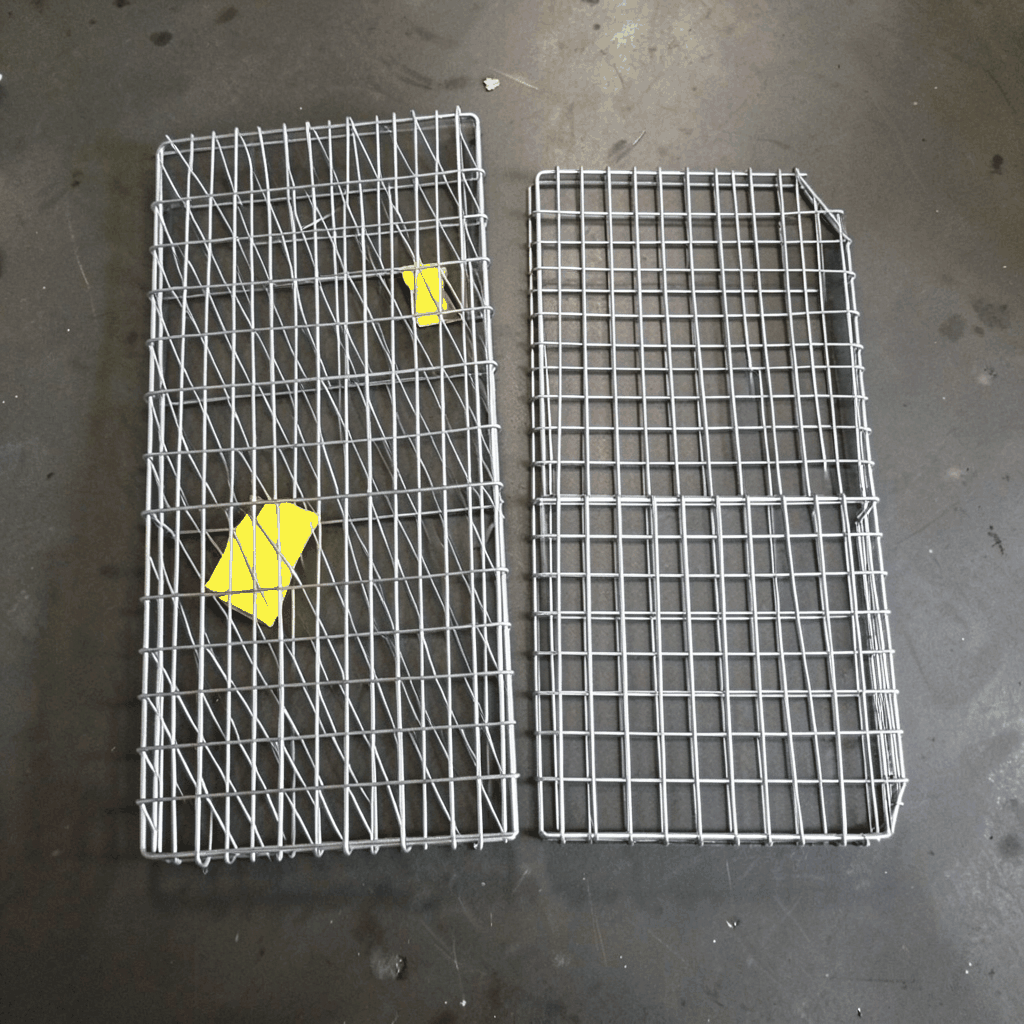
Welded mesh trays provide rigid and consistent support, while woven mesh can offer flexibility and a more compliant contact surface. Depending on the application, welds may need to be ground smooth, protected from distortion, or placed away from high-stress corners. Removable mesh panels can simplify maintenance when the base wears faster than the frame.
Practical considerations for Australian production sites
Australian factories often need equipment that can handle variable production schedules and long supply chains. A heat treatment operator in regional Queensland may run mining components in heavy batches, while a precision manufacturer in Melbourne may process smaller parts with strict dimensional requirements. A tray that is easy to identify, clean, repair, and reorder can provide value well beyond its initial purchase price.
Australian Standards and site safety procedures should be considered alongside the furnace supplier’s requirements. Tray lifting points, load ratings, safe working clearances, and handling methods should be documented clearly. In a busy workshop around Dandenong, Geelong, or western Sydney, standardised tray dimensions can also simplify forklift movement, storage, and operator training.
For customers in Perth and other areas serving the resources sector, replacement lead time can be a major operational concern. A tray specification with alloy grade, mesh type, wire diameter, external dimensions, working load, and drawing revision helps ensure that repeat orders match the original design. Clear identification is useful when multiple trays look similar but serve different furnace cycles.
Australian terminology can vary between businesses. One plant may call the product a furnace basket, another a heat treatment rack, charging tray, annealing tray, or mesh fixture. Sharing photographs, sketches, furnace drawings, and sample parts helps eliminate confusion when technical teams are working across states or coordinating with an overseas manufacturer.
Improving service life and operating efficiency
Correct loading practice has a major influence on tray performance. Overloading the centre, stacking parts too high, or allowing components to bridge unsupported areas can create localised stress and permanent deformation. Operators should follow a defined loading pattern that keeps weight distributed across reinforced areas and maintains the required circulation paths.
Cleaning is also important. Accumulated scale, carbon, oil, and treatment residue can block mesh openings and increase tray weight. Depending on the process, trays may be brushed, blasted, washed, or chemically cleaned. The cleaning method must suit the tray alloy and welded construction. Aggressive cleaning that removes too much material can shorten service life, while insufficient cleaning may contaminate later batches.
Inspection intervals should focus on sagging, cracked welds, distorted edges, enlarged openings, corrosion, and loose support members. A tray does not need to be discarded at the first sign of wear if it can be safely repaired, but repairs should restore the original load path and clearance. Replacing a damaged mesh panel or reinforcement can be more economical than replacing the whole frame.
Customisation can also improve handling speed. Stacking feet, lifting lugs, forklift pockets, identification plates, guide rails, and hinged covers may be added when they suit the production process. These features should be designed so they do not restrict airflow, interfere with furnace components, or introduce unnecessary mass.
Working with a custom mesh manufacturer
A reliable manufacturing process begins with a complete technical brief. Useful information includes furnace type, maximum and normal operating temperature, atmosphere, cycle duration, tray dimensions, workpiece size, batch weight, loading direction, handling equipment, and expected number of cycles. Photographs of the existing tray and examples of failure points can reveal practical details that a dimensioned drawing may not show.
The manufacturer can then recommend a suitable mesh pattern, alloy, frame arrangement, and reinforcement method. Prototypes or a small trial batch may be appropriate where the loading pattern is new or the furnace has tight clearances. Testing should consider hot deformation, part marking, handling stability, and compatibility with the actual process rather than relying only on room-temperature inspection.
Quality control should cover material verification, dimensional checks, weld integrity, mesh opening consistency, edge finish, and load-bearing features. For repeat production, approved drawings and revision control help maintain consistency. This matters when trays are used across several sites or when a replacement is ordered months after the original batch.
Shuo Ke Wire Mesh Product Technology Co., Ltd. produces customised metal mesh products for industrial and architectural applications, using materials such as stainless steel, iron, aluminium, copper, and other alloys. Its engineering approach can support the development of furnace loading trays, baskets, screens, guards, and related fabricated mesh components according to a customer’s dimensions and operating conditions.
Share your furnace specifications, workpiece details, target load, and preferred handling method with Shuo Ke Wire Mesh Product Technology Co., Ltd. The team can review the requirements and develop a durable, practical mesh tray solution for heat treatment operations in Australia and other industrial markets.