Designing Mesh Baskets for Collecting and Transporting Machined Parts
Machined components rarely move directly from a cutting tool to final assembly. They pass through washing, inspection, heat treatment, coating, storage, and internal transport. At each stage, the container must protect part geometry, allow fluids and chips to escape, and remain compatible with forklifts, conveyors, hoists, and automated handling equipment.
A well-designed wire mesh basket does more than hold parts. Its opening size, wire diameter, frame construction, surface finish, and loading pattern all influence production efficiency. A basket that suits small turned components may be unsuitable for sharp-edged castings, while a container designed for dry storage may perform poorly in a parts washer.
For manufacturers and processors, the goal is to create a reusable industrial basket that matches the part, the process, and the handling environment. Stainless steel mesh, mild steel wire, aluminum, and other alloys can be formed into baskets for different load capacities and operating conditions.
Start With The Part And Process
The first design decision is the type of machined part the basket will carry. Dimensions, weight, surface sensitivity, geometry, and quantity per load determine the basket’s internal volume and mesh configuration. Small precision components need openings that prevent loss or entrapment, while large components may require a heavier support structure rather than a fine screen.
Consider the part’s sharp edges and contact points. A rough weld, exposed wire end, or poorly finished corner can scratch a machined surface. Contact zones should therefore be smooth, rounded, or protected with suitable edging. Dividers, shelves, or formed pockets may be appropriate when parts must remain separated during transport.
The production route also affects the design. Parts going through aqueous washing need open sides and a bottom that drains quickly. Components exposed to heat require an alloy and frame that retain strength at operating temperature. If the basket will move through a vibratory finishing line, its joints must resist repeated impact and mechanical fatigue.
Load frequency matters as well. A basket used several times each shift requires stronger handles, reinforced corners, and a stable base. A container used for occasional storage may prioritize stackability, corrosion resistance, or compact nesting.
Select Mesh And Material Carefully
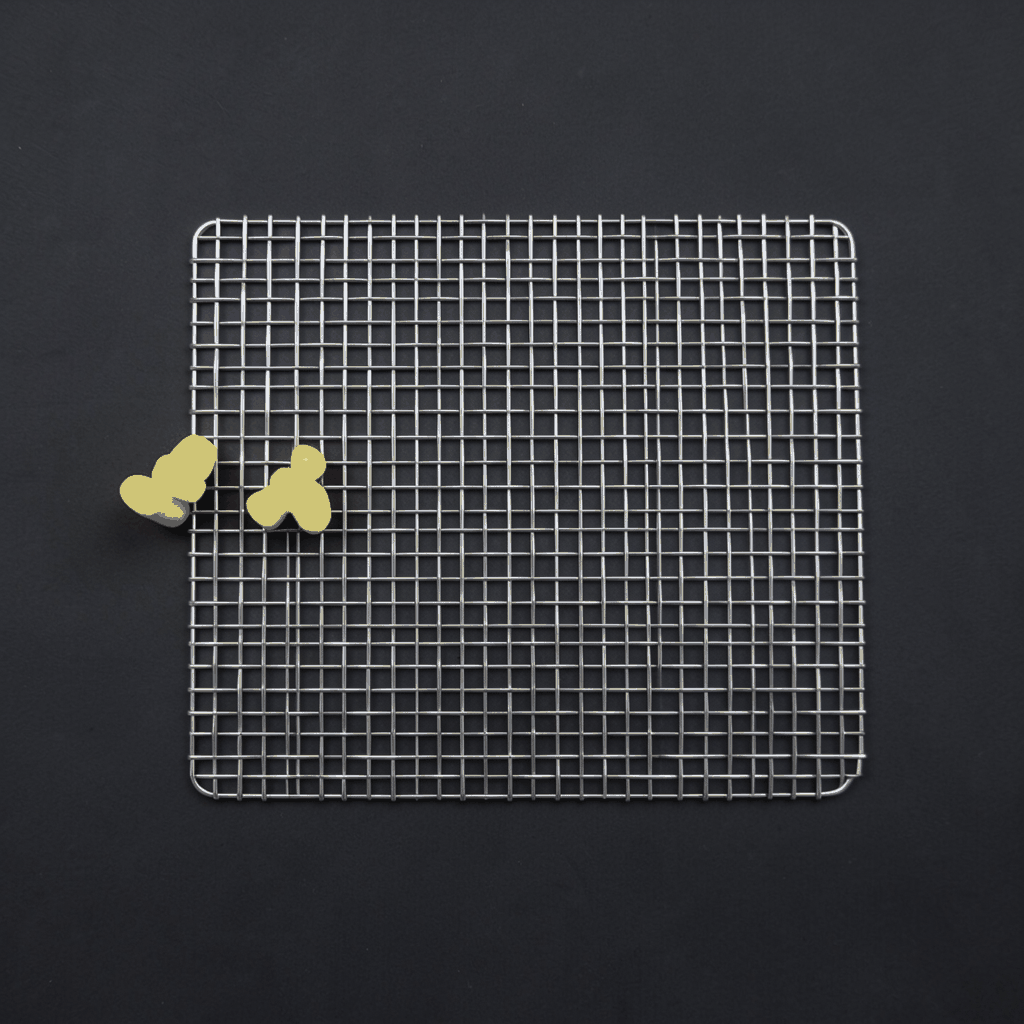
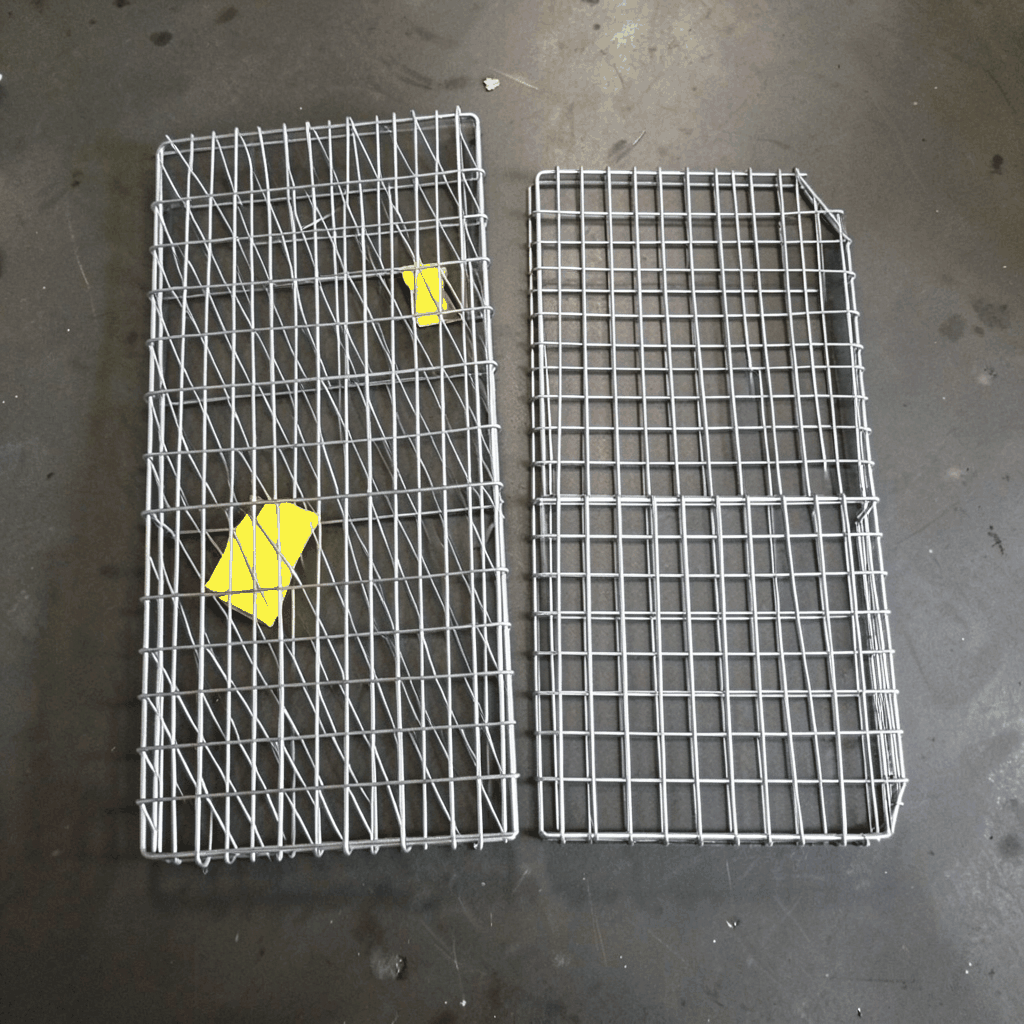
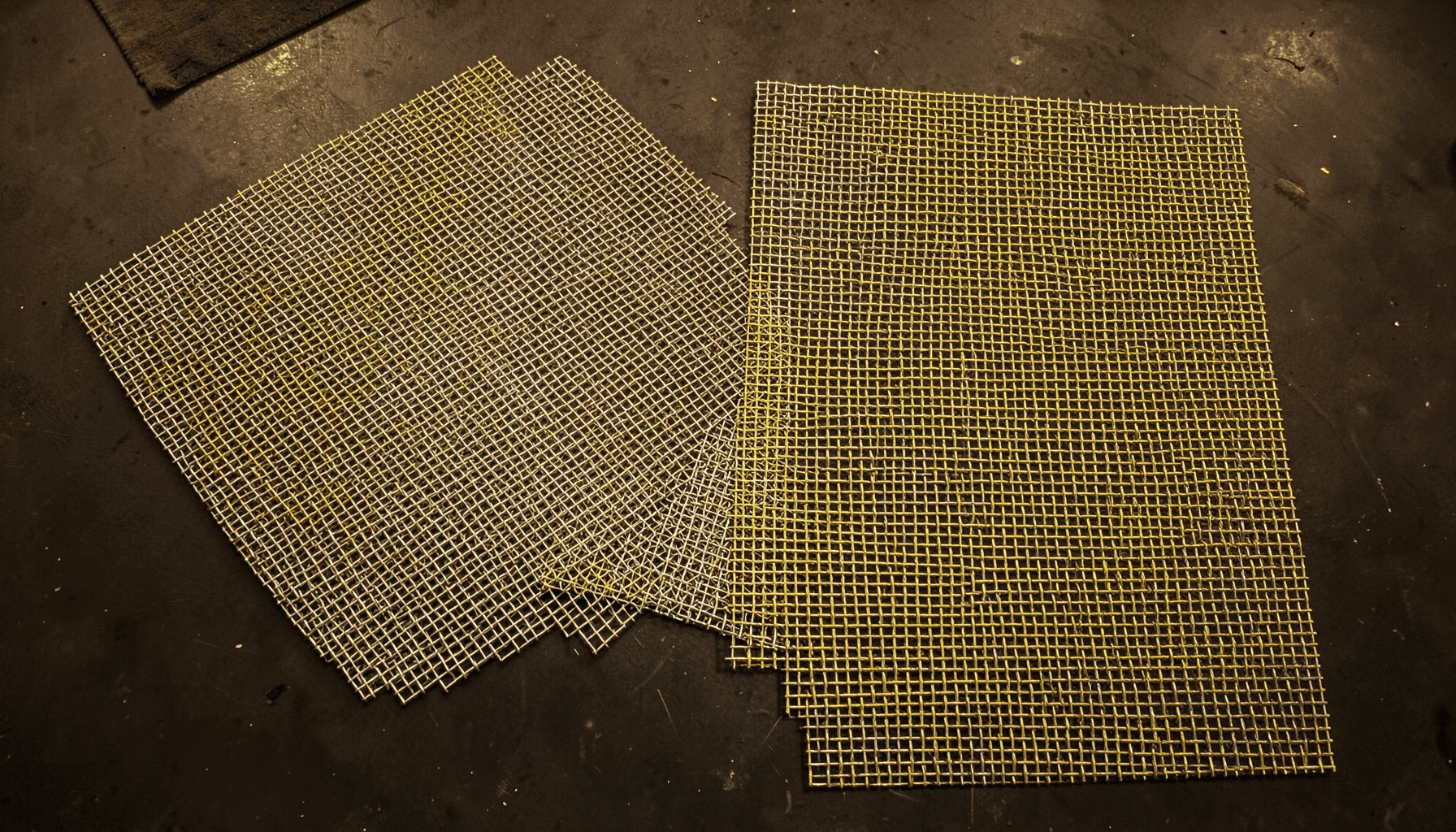
Wire mesh is available in woven, welded, expanded, and perforated forms. Welded mesh is often suitable for industrial baskets because its fixed intersections provide consistent openings and good dimensional stability. Woven mesh can offer flexibility and fine filtration, but it may deform under concentrated loads unless supported by a rigid frame.
Opening size should be selected according to the smallest component dimension, process debris, and cleaning requirements. Oversized openings reduce material use and improve drainage, but they can allow small parts to fall through or become wedged. Very fine mesh contains small items effectively, although it can retain chips, increase cleaning time, and reduce fluid circulation.
Stainless steel is a strong choice for wet processing, wash systems, and environments where corrosion resistance is important. Grades such as 304 and 316 may be considered according to chemical exposure, temperature, and cleanliness requirements. Carbon steel can provide high strength at a lower initial cost when the environment is dry or when a protective coating is suitable.
Aluminum offers low weight and useful corrosion resistance, making it attractive for manual handling or applications where total basket weight must be controlled. Copper and specialty alloys may be selected for electrical, thermal, or decorative requirements, although their strength, cost, and compatibility with chemicals must be assessed before production.
Engineer The Basket Structure
The mesh itself is only one part of the container. A rigid perimeter frame prevents the sides from spreading, supports the load, and helps the basket maintain its shape during lifting. Frames may be fabricated from wire, flat bar, angle, tube, or formed sheet, depending on the basket size and expected load.
The bottom deserves particular attention because it carries the concentrated weight of the parts. A flat mesh bottom may be sufficient for light components, while heavier loads may require cross supports, longitudinal runners, or a reinforced plate beneath the mesh. Feet or skids can raise the basket above the floor, improve forklift access, and reduce contact with contaminated surfaces.
Handles should be positioned to keep the basket balanced when lifted. For crane use, lifting lugs or certified attachment points must be aligned with the center of gravity and designed for the full working load. For manual handling, handles should provide enough clearance for gloves and avoid sharp transitions that create pressure points.
Stacking features improve warehouse utilization, but they must be designed around the loaded condition. Nesting baskets save space when empty, whereas stackable baskets need locating collars, corner posts, or interlocking feet to prevent sliding. The design should also account for whether a lid, cover, or retaining frame is required during movement.
Match Construction To Handling Equipment
Industrial parts baskets often move through several handling systems. Forklift pockets can be built into the base, but their height and spacing must match the equipment used at the facility. If a basket will be carried by pallet trucks, automated guided vehicles, conveyors, or overhead cranes, the support structure should be tested against each interface.
Automation requires repeatable dimensions. A robot gripper or transfer mechanism may depend on consistent handle locations, stable basket height, and unobstructed access. Variations caused by flexible mesh, uneven welds, or overloaded sides can create positioning errors. Reference surfaces, locating holes, and standardized external dimensions help integrate baskets into a production cell.
The basket should also support safe loading and unloading. A low front opening, removable side, hinged gate, or tilting base may reduce manual reaching. For components that must remain oriented, internal dividers can create predictable presentation positions. These features should be balanced against cleaning access and the risk of trapping chips.
The following comparison illustrates how common design variables influence industrial use:
| Design Variable | Common Options | Main Advantage | Key Consideration |
|---|---|---|---|
| Mesh form | Welded, woven, expanded, perforated | Controls drainage, retention, and rigidity | Match opening consistency to part size |
| Material | Stainless steel, carbon steel, aluminum | Balances corrosion resistance, strength, and weight | Review chemicals, temperature, and load |
| Base | Flat mesh, reinforced mesh, plate-supported | Supports different load levels | Prevent sagging under concentrated weight |
| Handling | Fork pockets, lifting lugs, side handles | Integrates with plant equipment | Confirm balance and rated working load |
| Surface | Plain, coated, passivated, polished | Improves durability or cleanliness | Avoid coatings that cannot withstand washing |
| Form | Fixed, stackable, nesting, collapsible | Improves storage and circulation | Ensure stability when loaded |
Design For Cleaning And Part Protection
Machining produces oil, coolant, chips, dust, and fine metal particles. If the basket traps these residues, contamination can move from one batch to another. Open mesh, sloped surfaces, drainage gaps, and rounded corners make it easier for wash fluid and compressed air to reach all areas.
Avoid unnecessary closed cavities. Tubular frames with unsealed ends can hold water and debris, while overlapping plates can create difficult-to-clean crevices. Where hollow sections are used, they should be sealed appropriately or designed with drainage and inspection access. Welds should be continuous or sufficiently finished in areas where residue could accumulate.
Surface treatment depends on the operating environment. Stainless steel may be passivated or finished to improve corrosion resistance and cleanability. Carbon steel may be painted, powder coated, galvanized, or left untreated for controlled dry use. Coatings need to withstand abrasion from parts, cleaning chemicals, and repeated handling.
Protection of the machined component is equally important. Fine mesh or a smooth perforated surface may reduce marking on finished parts. For delicate surfaces, designers can add replaceable liners, polymer edge guards, separators, or custom contact pads. Any added material must tolerate the process temperature and cleaning agents.
Validate Capacity, Safety, And Service Life
A basket’s rated capacity should be based on the combined weight of the parts, fixtures, moisture, and any internal accessories. The calculation should include dynamic forces created during forklift movement, crane lifting, conveyor transfer, and sudden stops. A basket that handles a static load may still fail when it is dragged, tipped, or lifted unevenly.
Testing should reflect actual use. Load tests can reveal bottom deflection, frame distortion, handle movement, and weld weakness. Trial washing can show whether chips remain trapped or whether parts collide during agitation. A pilot batch also helps confirm that workers can load, unload, stack, and identify the basket without unnecessary effort.
Ergonomics should be included in the specification. Heavy baskets should have machine-assisted handling or suitable lifting points rather than relying on manual lifting. Handles need enough clearance, and the basket height should support safe access. Labels, barcode plates, or engraved identification areas can improve traceability across multiple production stages.
Maintenance planning extends the useful life of reusable containers. Inspect mesh openings, corner welds, feet, lifting points, and protective finishes at regular intervals. Establish a repair limit for bent frames or damaged mesh. Standardized components and replaceable runners can make refurbishment more economical than replacing the entire basket.
Build A Specification That Manufacturers Can Use
A clear manufacturing brief prevents uncertainty during quotation and fabrication. It should state the external and internal dimensions, target load, mesh type, opening size, wire or sheet thickness, material grade, frame profile, handle arrangement, and required finish. Include a drawing that identifies tolerances and critical locating points.
Describe the complete handling route. A basket intended for a parts washer, heat-treatment furnace, and overhead crane needs a different specification from one used only for warehouse storage. State whether the basket must nest, stack, collapse, pass through a doorway, fit a standard pallet position, or interface with a robot.
Useful design decisions include:
- Define the smallest part and the maximum permitted mesh opening.
- Calculate working load from parts, liquid retention, fixtures, and handling forces.
- Identify every chemical, temperature range, and cleaning method the basket will encounter.
- Specify lifting, forklift, stacking, and automation interfaces with dimensional details.
- Require smooth contact surfaces, finished welds, and inspection criteria for critical areas.
A manufacturer experienced in architectural and industrial metal mesh can then translate the requirements into a practical fabrication design. Custom welded wire baskets, perforated containers, reinforced frames, dividers, covers, and specialized handling features can be produced in stainless steel, aluminum, iron, or other suitable alloys.
Move From Concept To Production
The most effective machined-parts basket is designed as part of the production system rather than treated as a generic container. Start with the component and its process route, then define mesh retention, drainage, structural support, handling, cleaning, and operator safety. This approach reduces part damage, improves internal logistics, and creates a reusable asset with predictable service life.
Shuo Ke Wire Mesh Product Technology Co., Ltd. can support custom industrial mesh solutions for collecting, washing, storing, and transporting manufactured components. Share the part dimensions, load requirements, handling method, operating environment, and preferred material to develop a basket design suited to your workflow and ready for production review.