Designing Modular Mesh Wall Systems for Exhibition Booths
Exhibition booths must attract attention quickly, guide visitors naturally, and support changing displays without forcing the exhibitor to rebuild the entire stand. Modular metal mesh wall systems offer a practical way to achieve this balance. They combine a clear architectural structure with visual openness, allowing products, graphics, lighting, and people to remain visible from multiple angles.
Unlike solid temporary walls, mesh panels can divide space without making a booth feel closed. Stainless steel, aluminum, copper, and coated iron mesh can introduce texture, reflection, color, or industrial character while remaining suitable for repeated installation. The same components may serve as back walls, display screens, product racks, privacy partitions, or suspended feature elements.
A successful system begins with more than an attractive pattern. Panel dimensions, connection details, structural stability, transport requirements, lighting performance, and future reconfiguration all influence the final result. Careful planning turns decorative wire mesh into a reusable exhibition architecture rather than a one-time backdrop.
Start with the booth’s functional zones
The first step is to divide the stand according to visitor movement and business priorities. A typical layout may include an open entrance, a product presentation zone, a meeting area, a storage section, and a branded focal wall. Mesh partitions can separate these functions while preserving visual continuity across the booth.
Panel placement should support circulation instead of creating narrow passages or hidden corners. Lower-density mesh or larger openings work well near entrances because they maintain transparency. A denser weave can define a meeting area or conceal cartons, literature, electrical equipment, and staff storage. Different mesh types can be combined within one coordinated frame system to create changes in privacy and visual weight.
The wall system should also provide usable surfaces. Panels may hold shelves, hooks, sample boards, monitors, signage, or lighting tracks when reinforced with suitable support members. Defining these loads during design prevents a decorative wall from being overloaded after installation and makes the structure safer for repeated use.
Select mesh for appearance and performance
The metal used in an exhibition display affects weight, finish, maintenance, and perceived quality. Stainless steel mesh is a strong choice for high-traffic booths because it resists corrosion, retains a professional appearance, and supports fine woven or architectural patterns. It suits technology, engineering, medical, hospitality, and premium consumer brands.
Aluminum mesh reduces handling weight and can be anodized, powder coated, or finished in custom colors. It is useful when panels are large or when the booth will be assembled by a small installation team. Copper mesh brings warmth and a distinctive surface that works well with lighting, natural materials, and luxury-oriented displays. Iron and mild steel offer cost-effective strength, especially when protected with powder coating.
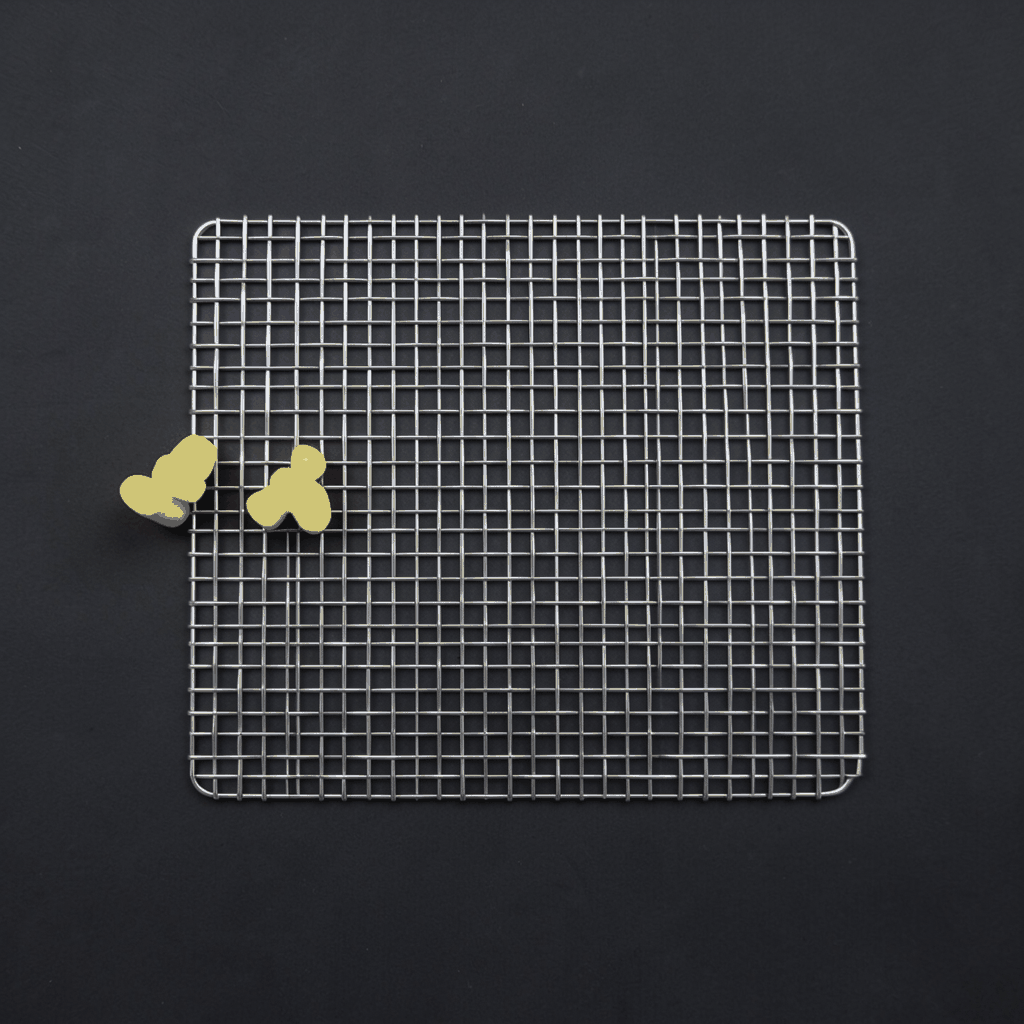
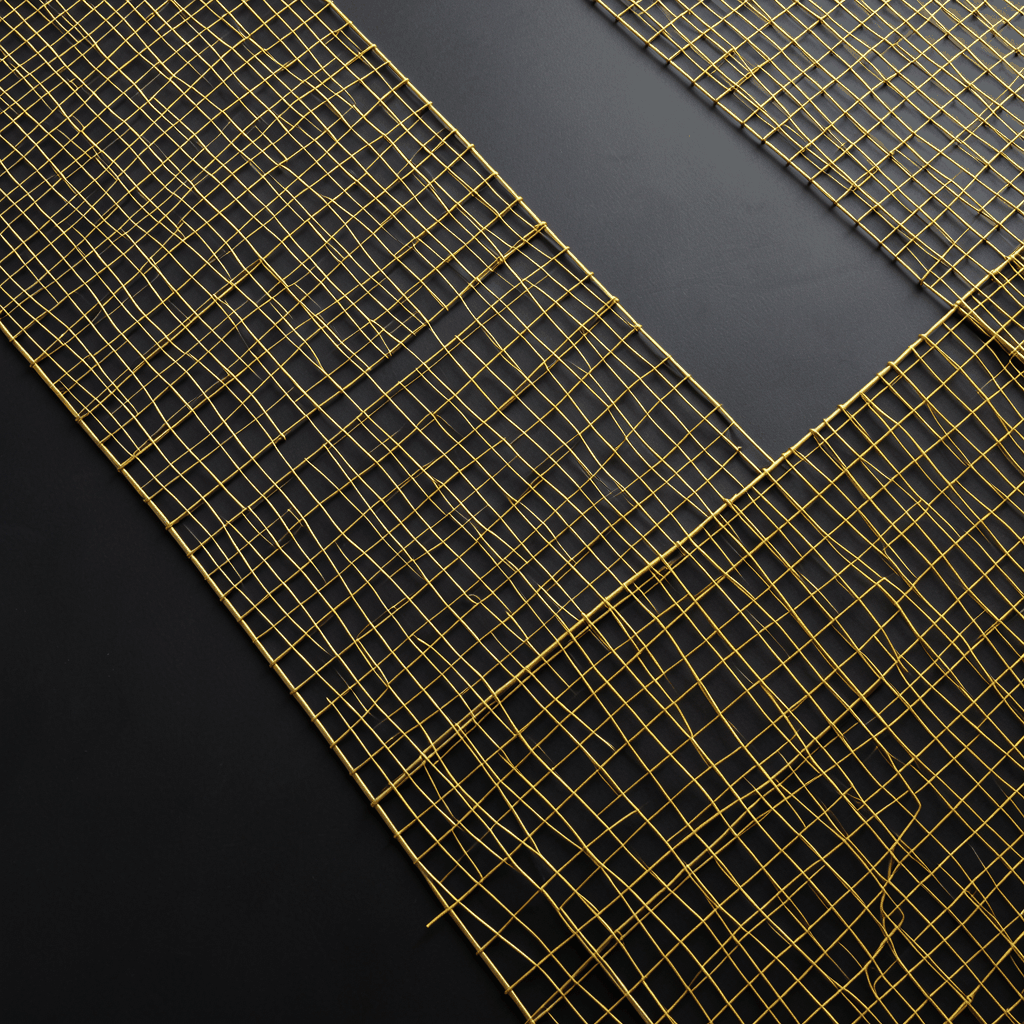
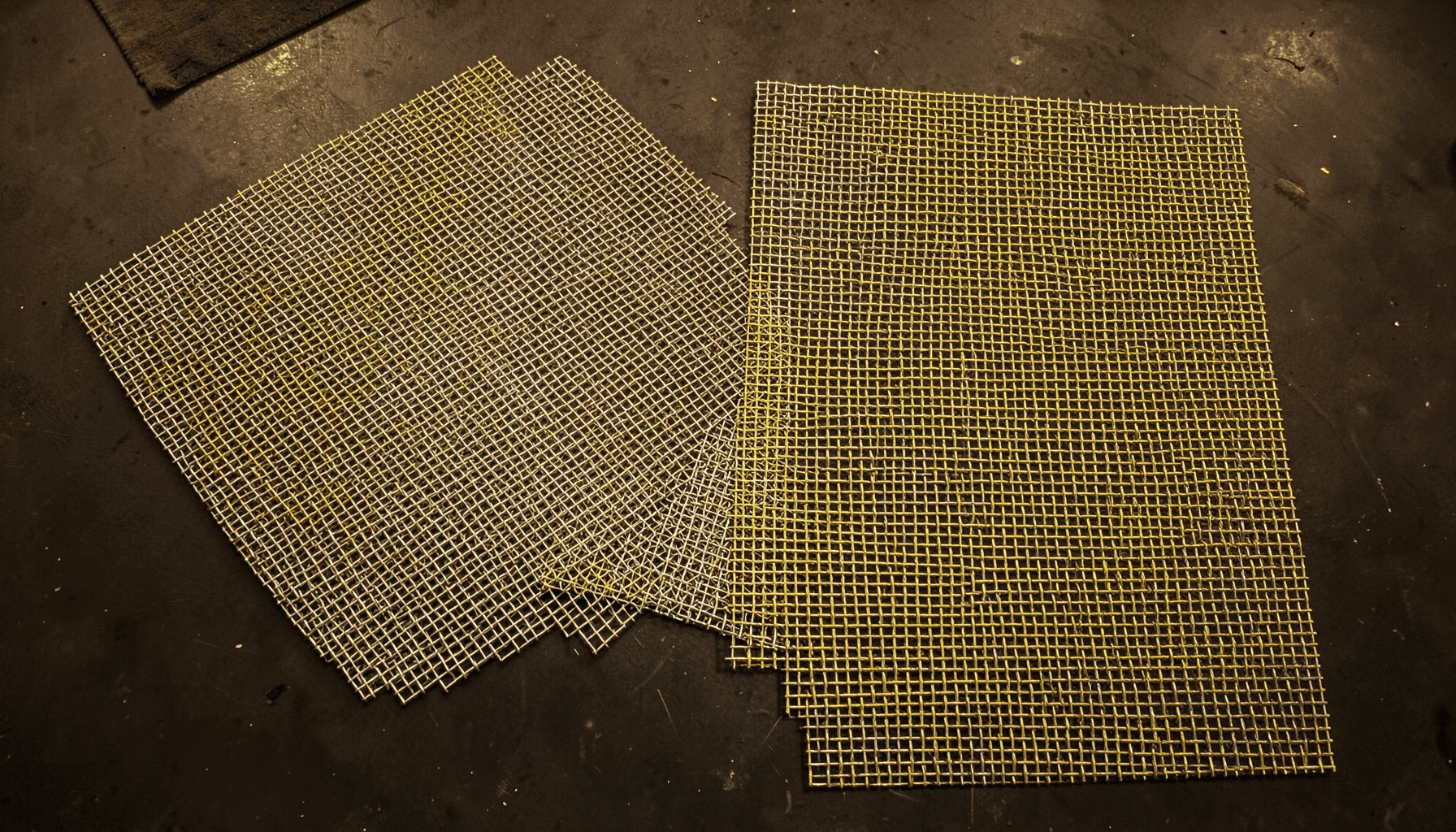
Mesh style should match the intended visual message. Expanded metal creates a bold, directional pattern; woven wire mesh produces a finer and more refined surface; chain-link or ring-style mesh introduces movement and a textile-like quality; perforated or laser-cut panels can carry logos, motifs, and controlled graphics. Open area, wire diameter, aperture size, and panel orientation all influence visibility and shadow.
| Mesh solution | Visual character | Typical exhibition use | Main planning point |
|---|---|---|---|
| Stainless steel woven mesh | Refined, reflective, technical | Feature walls, premium displays, partitions | Specify weave tension and edge treatment |
| Aluminum expanded mesh | Lightweight, geometric, contemporary | Large backdrops and movable dividers | Confirm rigidity for wide panels |
| Copper mesh | Warm, decorative, distinctive | Luxury, lifestyle, hospitality, and craft brands | Protect finish from handling and oxidation |
| Powder-coated steel mesh | Bold, durable, color-focused | Branded walls, shelving, and structural screens | Coordinate coating color with graphics |
| Laser-cut metal screen | Graphic and highly customizable | Logos, patterns, storytelling panels | Allow for support framing and clean edges |
| Chain or ring mesh | Flexible, dynamic, textile-like | Curtains, entrances, and suspended features | Secure the top track and control movement |
Build a repeatable modular framework
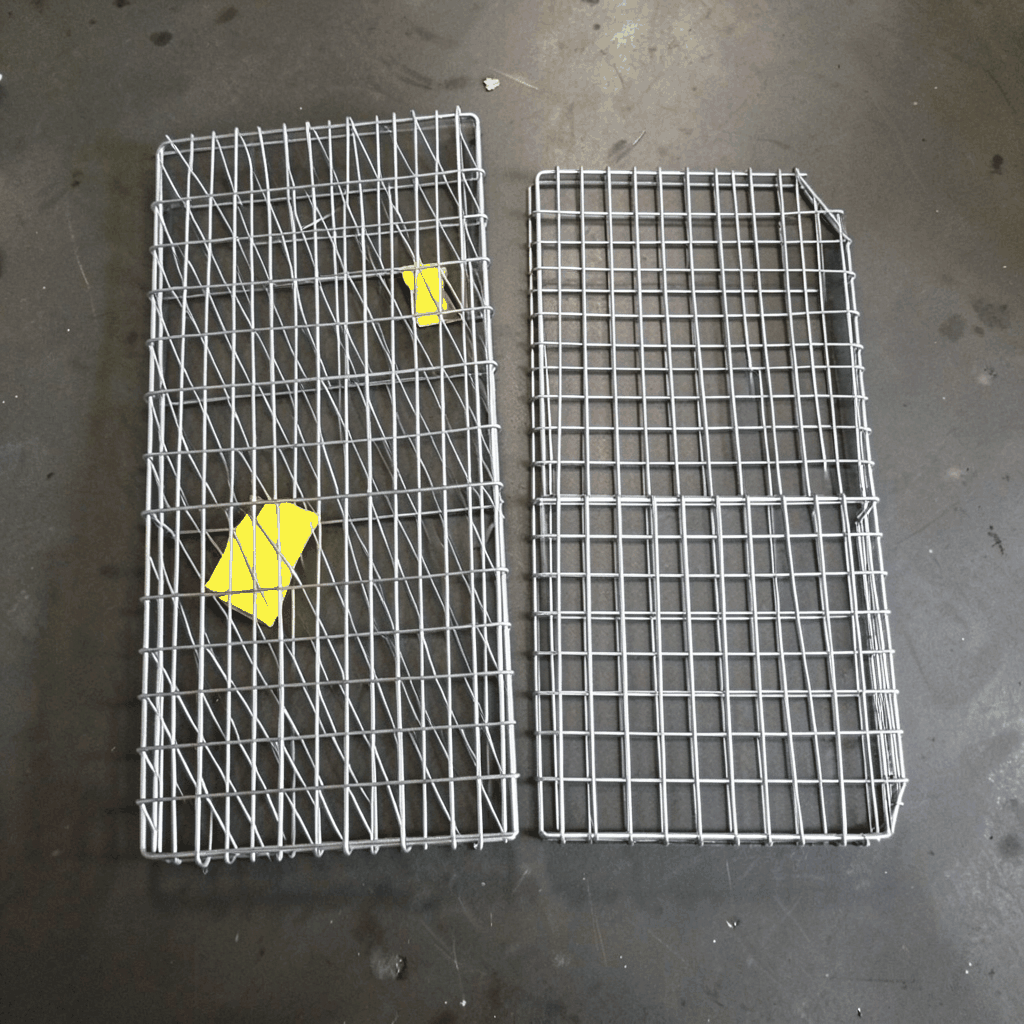
A modular booth wall normally consists of mesh infill, a perimeter frame, vertical posts, base plates, connectors, and optional horizontal rails. Standardized components simplify packing and make it easier to replace one damaged section without discarding the full system. A consistent module might be designed around common transport dimensions, such as narrow panels that pass through doors and fit efficiently into protective cases.
Connection methods determine how quickly the booth can be assembled. Bolted joints provide strong, visible connections and are practical for repeated use. Hidden clamps create a cleaner architectural appearance, while slot-and-lock systems can reduce tool requirements. If the booth travels between venues, connections should tolerate repeated tightening without deforming the frame or damaging the mesh edge.
Base stability requires special attention. A freestanding panel may need a weighted base, a wider foot, a concealed floor plate, or a connection to an adjacent panel. Tall walls, suspended curtains, and screens carrying monitors or shelving require load calculations and venue approval. The system should remain stable when visitors brush against it, when doors open nearby, or when air movement affects flexible mesh.
Coordinate transparency, graphics, and lighting
Metal mesh is valuable because it can define space without fully blocking it. This quality allows a brand wall to be seen from an aisle while still creating a visual boundary. However, transparency must be controlled. A highly open mesh may cause graphics behind it to look fragmented, while a dense mesh can reduce light and make a small booth feel heavy.
Graphic panels can be mounted in front of, behind, or within the mesh. Back-mounted fabric graphics provide a soft visual field, while printed rigid panels create stronger color contrast. Laser-cut screens can integrate brand symbols directly into the architectural surface. For a more subtle identity, a logo may be applied through selective coating, etched metal, or a cut-out pattern that becomes visible when illuminated.
Lighting should be considered at the same time as the mesh specification. Front lighting emphasizes the metal surface and weave detail. Backlighting creates silhouettes, moiré effects, and glowing brand areas. Linear LEDs installed inside frame channels can outline the wall, while adjustable spotlights can highlight products mounted on the panel. The selected finish should be tested under the actual color temperature because polished, brushed, dark, and copper-toned surfaces reflect light differently.
Plan for installation, transport, and reuse
A beautiful wall system can become impractical if it is difficult to move or assemble. Every panel should be reviewed for weight, grip points, edge protection, and packing order. Mesh edges need safe finishing so that installers and visitors are not exposed to sharp wire ends or unfinished cuts. Protective separators can prevent polished or coated surfaces from scratching during transport.
Component identification saves time at the venue. Posts, panels, bases, and brackets should carry simple labels that correspond to an assembly drawing. A compact hardware kit should include spare fasteners, joining plates, leveling pieces, and basic tools. If a booth is expected to travel internationally, packaging should protect the system against vibration, moisture, and repeated loading.
Reuse is one of the strongest advantages of modular exhibition architecture. A back wall for one show can become two smaller product screens at another venue. A long partition can be reassembled into a corner display, entrance portal, or retail fixture. Designing several compatible panel sizes and connector positions gives the exhibitor more layout options without requiring a new fabrication cycle.
Refine the system through practical specifications
Customization should be based on measurable requirements rather than appearance alone. Define the panel height, width, mesh opening, wire or sheet thickness, frame profile, surface finish, color, mounting points, and expected accessories. If shelves, screens, or samples will be attached, provide their dimensions and weight before production begins.
A prototype or sample panel can reveal issues that drawings may miss. It allows the design team to inspect transparency, edge quality, color, reflected light, connector visibility, and compatibility with graphics. For woven mesh curtains or flexible screens, a physical sample also shows how much movement and sag will occur at the chosen span.
Manufacturers experienced in architectural and industrial metal mesh can support this process with material recommendations, custom cutting, bending, welding, laser processing, and finishing. A supplier such as Shuo Ke Wire Mesh Product Technology Co., Ltd. can develop decorative and functional mesh components for booth partitions, wall cladding, display screens, and related hardware. The most useful production brief includes the intended venue conditions, installation frequency, required finish, and desired reuse cycle.
Use a clear design review before fabrication
A structured review reduces costly changes and helps align the exhibition designer, brand team, fabricator, and installer. The following checkpoints are especially useful:
- Confirm the booth footprint, maximum height, aisle setbacks, fire rules, and venue installation restrictions.
- Select mesh material, pattern, open area, finish, and edge treatment based on visibility and handling requirements.
- Identify every load-bearing point for shelves, screens, signage, lighting, samples, and suspended features.
- Prepare an assembly drawing with module codes, connector locations, base details, and packing dimensions.
- Approve a physical finish sample or prototype before ordering the complete wall system.
This review should also address cleaning and maintenance. Fingerprints are more visible on polished metal, while textured or dark finishes may collect dust in recessed areas. A simple cleaning method, replacement panel strategy, and storage specification will preserve the system between exhibitions.
Build for the next exhibition
The most effective mesh booth walls are designed as adaptable assets. Their value comes from the ability to change the arrangement, update the branding, and support new products without losing structural consistency. A well-engineered framework can remain useful across trade shows, showrooms, retail activations, museums, and corporate events.
Begin with the booth’s visitor flow, then develop the mesh pattern, frame, finish, accessories, and lighting as one coordinated system. Work with a metal mesh manufacturer that can provide accurate fabrication, safe edges, reliable connections, and customized finishes. Contact Shuo Ke Wire Mesh Product Technology Co., Ltd. to discuss a modular exhibition wall system tailored to your booth dimensions, brand appearance, display loads, and future reuse plans.