Durable Stainless Steel Mesh for Boat and Marine Railing Systems
Australia is defined as much by its saltwater edges as by its red centre. With more than 35,000 kilometres of mainland coastline, plus countless bays, rivers, tidal estuaries and island passages, the country is a working marine environment as much as it is a recreational one. Private vessels, charter boats, ferry terminals, marinas and waterfront homes all rely on railing systems that must stand up to salt spray, UV exposure, and the constant mechanical stress of foot traffic and wave action. Choosing the right infill material therefore shapes both the safety record and the visual character of every waterfront project from Sydney Harbour to Cairns Marina.
Marine environments are unforgiving on metals. Chloride ions attack unprotected surfaces, humidity accelerates pitting, and daily temperature swings between sun and sea breeze stress the grain structure of base materials. Stainless steel remains the most dependable option for railing infill in these conditions, but the grade, weave geometry and finish all need to be considered against the specific Australian microclimate where the railing will be installed. The right combination delivers decades of service with minimal maintenance, and it also opens up architectural possibilities that glass, timber battens or powder-coated aluminium cannot match.
Wire mesh panels, woven cable systems and welded architectural grilles have moved well beyond industrial workplaces. They now appear on the balustrades of waterfront apartments, the guardrails of ferry wharves, the safety screens of charter catamarans, and the perimeter fences of canal-front properties. The shift reflects both a tightening regulatory environment around fall protection and a growing appetite among Australian designers for honest, low-maintenance materials that age gracefully in salt air.
Why Stainless Steel Mesh Performs in Australian Waters
The core advantage of stainless steel mesh in marine settings lies in its self-healing oxide layer. Grades such as 316 and 316L contain molybdenum, which dramatically improves resistance to chloride-induced pitting and crevice corrosion compared with standard 304 stainless. In an Australian context, this matters because a single summer of northerly sea breezes in places like the Gold Coast Broadwater or Port Phillip Bay can deposit enough salt on an exposed railing to compromise lesser alloys within a season. Marine-grade mesh, properly finished, simply sheds that salt and continues to perform.
The woven or welded structure of the mesh itself also contributes to its longevity. Open-area designs allow wind to pass through rather than buffet against solid panels, reducing fatigue on stanchions and base plates. In cyclonic regions of far north Queensland, that wind permeability is not just a comfort feature but a structural one, lowering the load transferred to the deck or balustrade frame during a tropical storm. The same openness also means that any salt that does settle has little chance of pooling against the surface, because the geometry naturally encourages drainage and drying.
Stainless steel mesh is also non-combustible and dimensionally stable. It will not warp in the way that timber infill tends to, particularly in the humid conditions found around Darwin Harbour or the Whitsundays, and it will not shatter like glass panels, which is a meaningful consideration for charter operators and commercial wharves where impact loads are a real possibility. For owners, that translates into a single specification decision that covers safety, durability and visual finish in one product.
Mesh Specifications and Marine-Grade Alloys
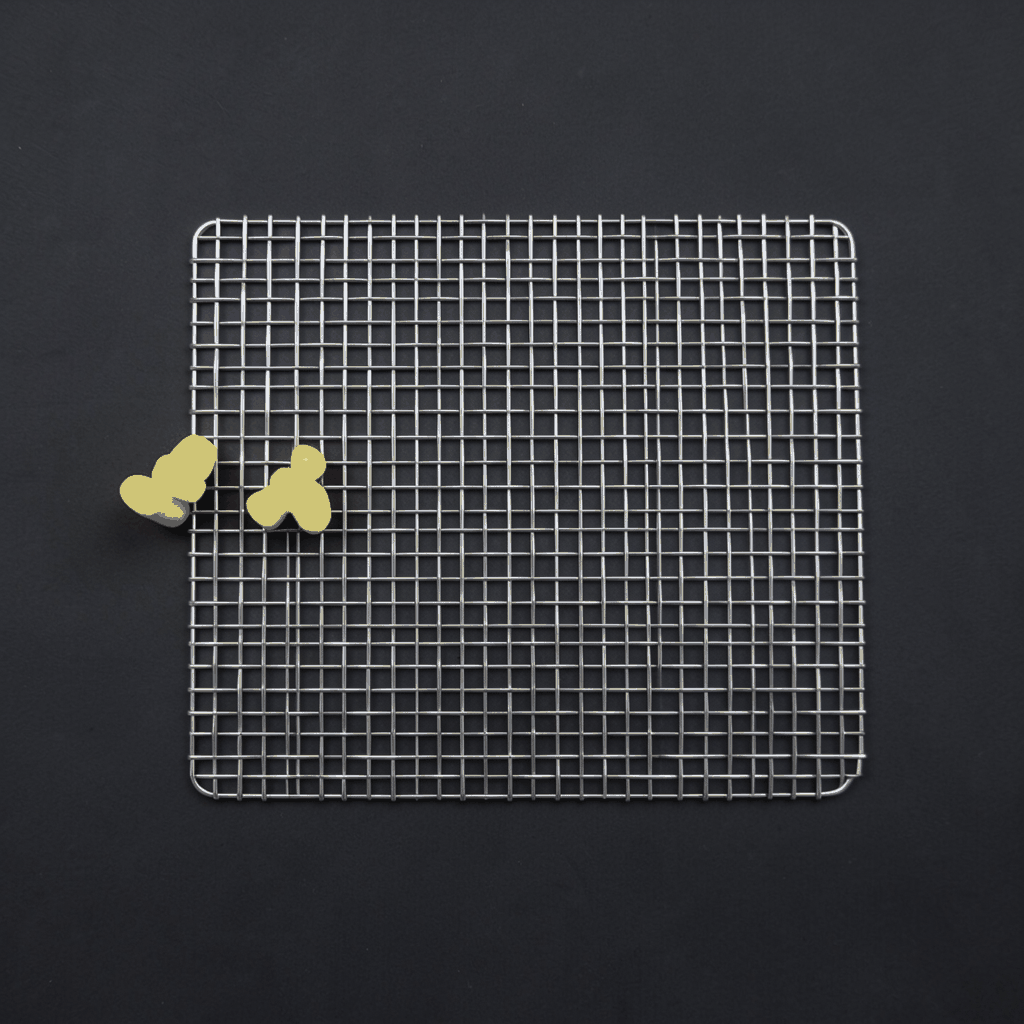
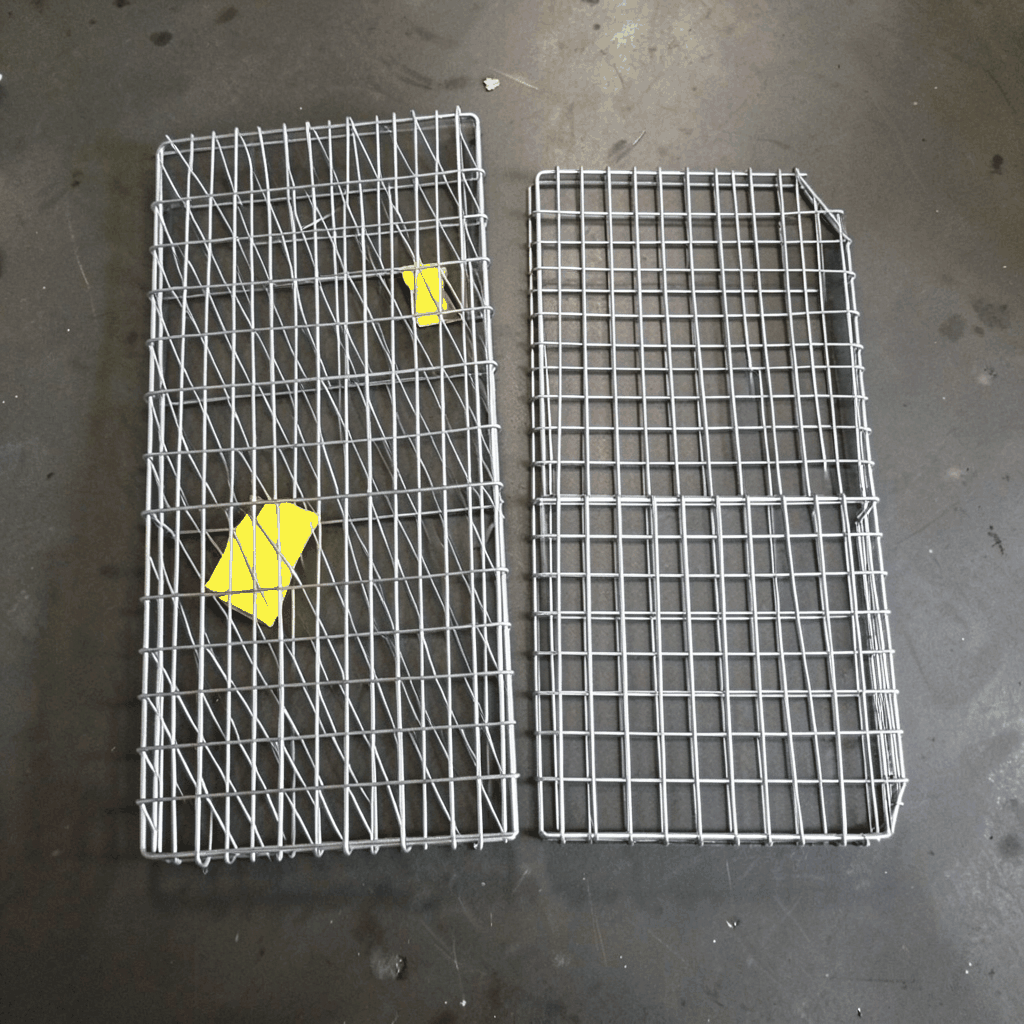
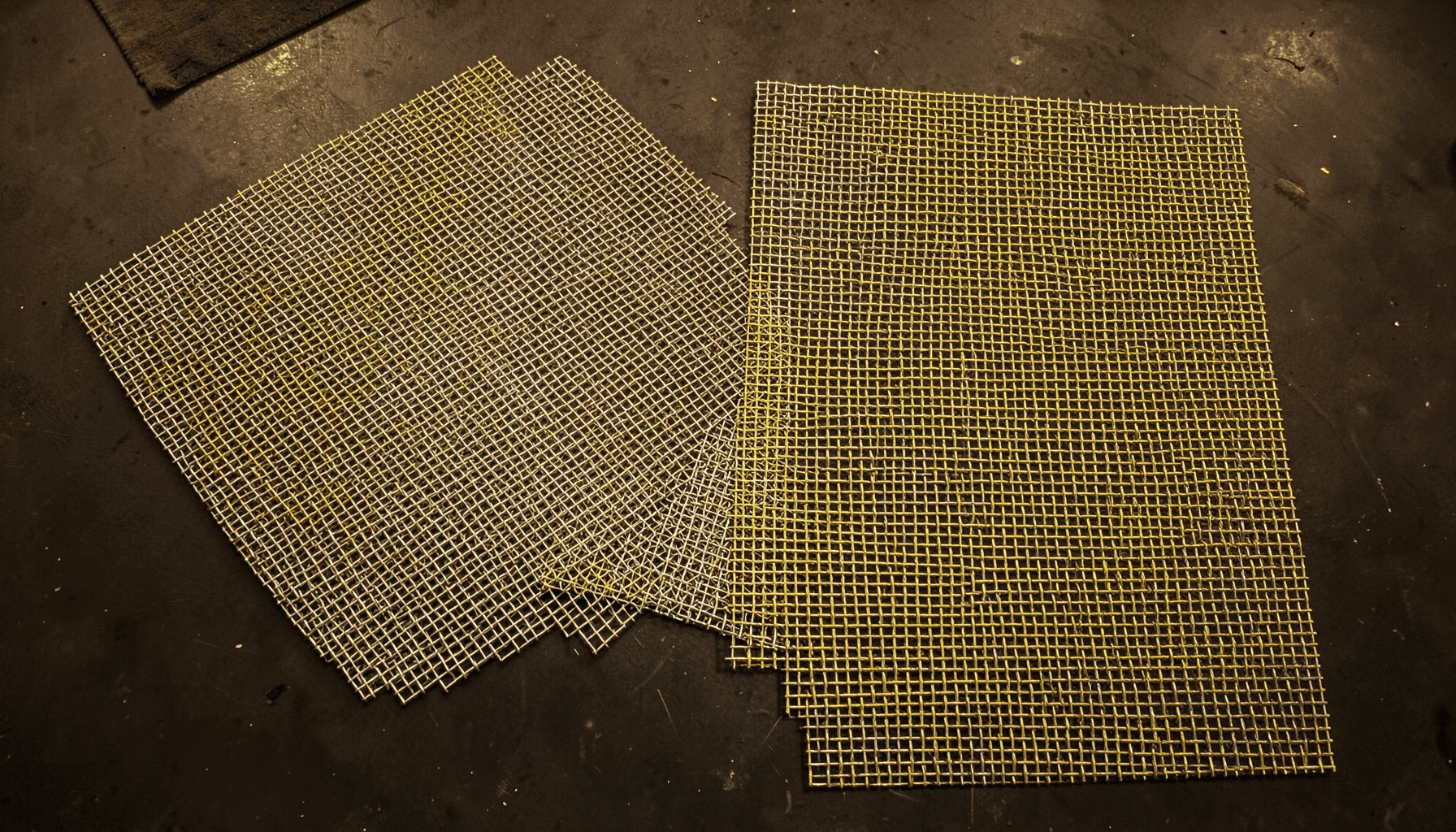
Specifying mesh for a marine railing project is not a one-size decision. The two most common weave families are woven architectural mesh, which has a flexible cloth-like appearance and is often drawn tight in a frame, and welded wire mesh, which delivers a more rigid, geometric look suitable for heavier panels. Both are produced in 316 and 316L stainless, and both can be supplied with a range of aperture sizes, wire diameters and finishes, from mill finish through to electro-polished or PVD-titanium coated surfaces for premium waterfront builds.
For most Australian marine applications, 316 grade remains the practical baseline. In more aggressive zones, particularly around tidal mud flats in Moreton Bay, the rust-prone structures of older Fremantle harbour, or anywhere a railing is regularly drenched by breaking spray, 316L is often preferred. The low-carbon variant reduces the risk of sensitisation at welded joints, which is important when fabricators are folding, rolling or tig-welded mesh into curved handrail terminations. Duplex grades such as 2205 are also gaining traction on commercial vessels and offshore walkways where the added strength allows thinner, more open panels without sacrificing the 125 mm sphere rule required under the National Construction Code.
Finish selection matters just as much as grade. A passivated surface, achieved through a citric or nitric acid bath, removes free iron contamination and stabilises the chromium oxide layer. Electropolishing goes further, smoothing the microscopic peaks and troughs of the steel surface so that salt has even fewer places to lodge. For projects in heritage-sensitive precincts such as The Rocks in Sydney or the Salamanca waterfront in Hobart, a brushed or bead-blasted finish is often specified to soften reflections and align with the surrounding built character.
Compliance with Australian Standards and Local Councils
Every marine railing in Australia must satisfy the National Construction Code, supported by referenced Australian Standards. Guardrails and balustrades must generally prevent a 125 mm sphere from passing through any opening, must resist the design loads set out in AS/NZS 1170.1, and must reach the prescribed minimum height of 1000 mm above the deck or floor for non-residential settings, or 865 mm for some residential fall situations. Mesh panels, with their consistent aperture and known load characteristics, are one of the cleanest ways to demonstrate compliance with these requirements, because engineers can calculate the panel's capacity directly from wire diameter, pitch and alloy strength.
Beyond national rules, Australian local councils often impose additional conditions in marine and waterfront precincts. The City of Gold Coast, for instance, maintains strict design guidelines for canal-front properties that balance private view corridors with public safety. The City of Sydney's waterfront planning controls likewise look for materials that will not leach, stain or visually degrade in shared harbour-edge spaces. In Western Australia, the Department of Transport and local shires such as the City of Fremantle scrutinise materials used on jetties, ferry landings and fishing platforms because of high public usage and exposure to Indian Ocean swells.
Corrosion protection expectations are also codified in AS 2312 and AS/NZS 4792, which address the treatment of steel components used in atmospheres classified as C4 and C5. Marine and coastal zones, particularly within one kilometre of breaking surf, are routinely classed as C5, the most aggressive category. Specifying mesh that has been manufactured, passivated and finished in accordance with these standards, and supported by a mill certificate traceable to the batch, gives builders, certifiers and council officers a clear audit trail. It also protects the project from the warranty disputes that often arise years later when an inferior infill has begun to tea-stain a pristine waterfront façade.
Applications from Sydney Harbour to the Whitsundays
The versatility of stainless steel mesh is on display across almost every Australian marine setting. In Sydney, the material is increasingly chosen for the balustrades of harbour-facing apartments around Mosman and Kirribilli, where owners want an unobstructed view of the bridge but refuse to compromise on the balustrade height rules that protect children and pets. In the same city, ferry operator wharves along Circular Quay have retrofitted mesh infill into existing structural frames to meet modern safety codes while preserving a slim heritage profile.
Further north, the Gold Coast's canal estates at Main Beach and Surfers Paradise have used stainless steel mesh as both pool compliant barrier and jetty edge protection, allowing the same panel to perform a dual function across water and land. In Brisbane, the Eagle Farm and Portside precincts have turned to woven mesh for the balustrades of riverside dining decks, where the openness preserves sightlines to the river while the alloy handles the brackish conditions of tidal reaches. Around the Whitsundays, charter operators are specifying marine-grade mesh panels for the boarding gates of sailing catamarans, valuing the material's light weight, its resistance to barefoot scrapes, and the way it dries quickly between trips.
The same product family is also being adopted in less visible applications. Industrial fish farms in the Spencer Gulf use mesh infill on service platforms and feed barges. Naval and coastguard facilities at HMAS Stirling on Garden Island specify mesh for the guardrails of secure pontoons. Even remote infrastructure such as the boardwalks at Broome's Mangrove Hotel and the viewing platforms at Jervis Bay rely on stainless mesh to provide fall protection that can survive the local conditions without constant repainting or replacement.
Custom Fabrication and Lifecycle Value
Off-the-shelf mesh panels rarely suit a marine railing project without some level of adaptation. Curved bulwarks, tapered transoms, asymmetrical stanchions and the irregular geometry of heritage wharves all demand custom cutting, folding and framing. Working with a fabricator that can laser-cut, roll and weld mesh in house, then assemble the finished panels into test-fitted railing modules, removes most of the on-site risk and shortens installation time on what are often congested marine sites with limited cranage.
The lifecycle economics favour stainless steel mesh convincingly. A properly specified 316 mesh panel will typically deliver 25 to 40 years of service in an Australian marine environment with little more than seasonal fresh-water rinsing. Timber infill needs recoating every few years, glass requires periodic replacement after impact events, and powder-coated aluminium eventually chalks and corrodes at weld points. Over a typical asset life, the total cost of ownership of marine-grade mesh is usually lower than any of these alternatives, even when the upfront price is higher.
For Australian specifiers, the next step is to engage a manufacturer that can demonstrate marine project experience, supply full mill certification, and support the design team with aperture, load and finish calculations. Briefs that include site photographs, exposure classification, council requirements and preferred visual character will return the most useful proposals and the shortest lead times.
Shuo Ke Wire Mesh Product Technology Co., Ltd. supports Australian builders, naval architects and waterfront developers with marine-grade stainless steel mesh panels, custom laser-cut infill, and woven balustrade systems engineered for salt-rich environments. Reach out with your drawings, project location and required finish to receive a tailored quotation, technical datasheets and reference projects from comparable marine sites.