
Fabricating Custom Metal Mesh Baskets for Industrial Material Handling
Industrial material handling often depends on containers that can withstand impact, heat, moisture, vibration, and repeated handling without becoming difficult to inspect or clean. Custom metal mesh baskets provide a practical answer when solid bins restrict airflow, hide their contents, or add unnecessary weight to a production process.
A well-designed wire mesh basket can support parts washing, heat treatment, sterilization, storage, picking, transport, and automated loading. Its open construction allows liquids, air, chips, and debris to pass through while retaining components securely. The right configuration also improves workplace visibility and helps operators identify inventory without opening or unloading every container.
Fabrication begins with more than selecting a mesh pattern. Engineers must match the basket’s material, wire diameter, opening size, frame geometry, load capacity, surface finish, and handling features to the working environment. When these decisions are made together, the finished basket becomes a reliable part of the material flow rather than a disposable accessory.
Defining the basket’s industrial function
The first step is to describe what the basket must do throughout its service life. A container used for small machined parts may need fine openings, smooth internal surfaces, and resistance to alkaline cleaning solutions. A basket for large castings may require heavy wire, reinforced corners, a rigid base, and lifting points designed for cranes or forklifts.
Operating conditions determine the basic construction. Temperature, chemical exposure, moisture, abrasion, impact, and stacking loads should be documented before fabrication starts. The design should also account for whether the basket will travel on conveyors, sit on pallets, enter a washing system, or be handled by robotic equipment.
Dimensional information is equally important. External dimensions must fit racks, carts, ovens, hoists, and transport vehicles, while internal dimensions should provide enough clearance for the contents. Overly tight baskets can damage parts during loading, whereas excessive empty space reduces storage efficiency and allows components to shift during movement.
Selecting metal, wire, and mesh configuration
Stainless steel is frequently selected for industrial baskets because it offers corrosion resistance, strength, and dependable performance during cleaning or elevated-temperature processes. Grades such as 304 and 316 may be suitable for different environments, with the final choice depending on chemicals, temperature, contamination risks, and required service life.
Carbon steel and iron can be economical choices for dry indoor applications, especially when the basket will be painted, powder coated, galvanized, or otherwise protected. Aluminum provides low weight and useful corrosion resistance where lifting effort matters, although its strength and heat performance must be checked against the load requirements. Copper and specialty alloys may be used for particular thermal, electrical, or chemical applications.
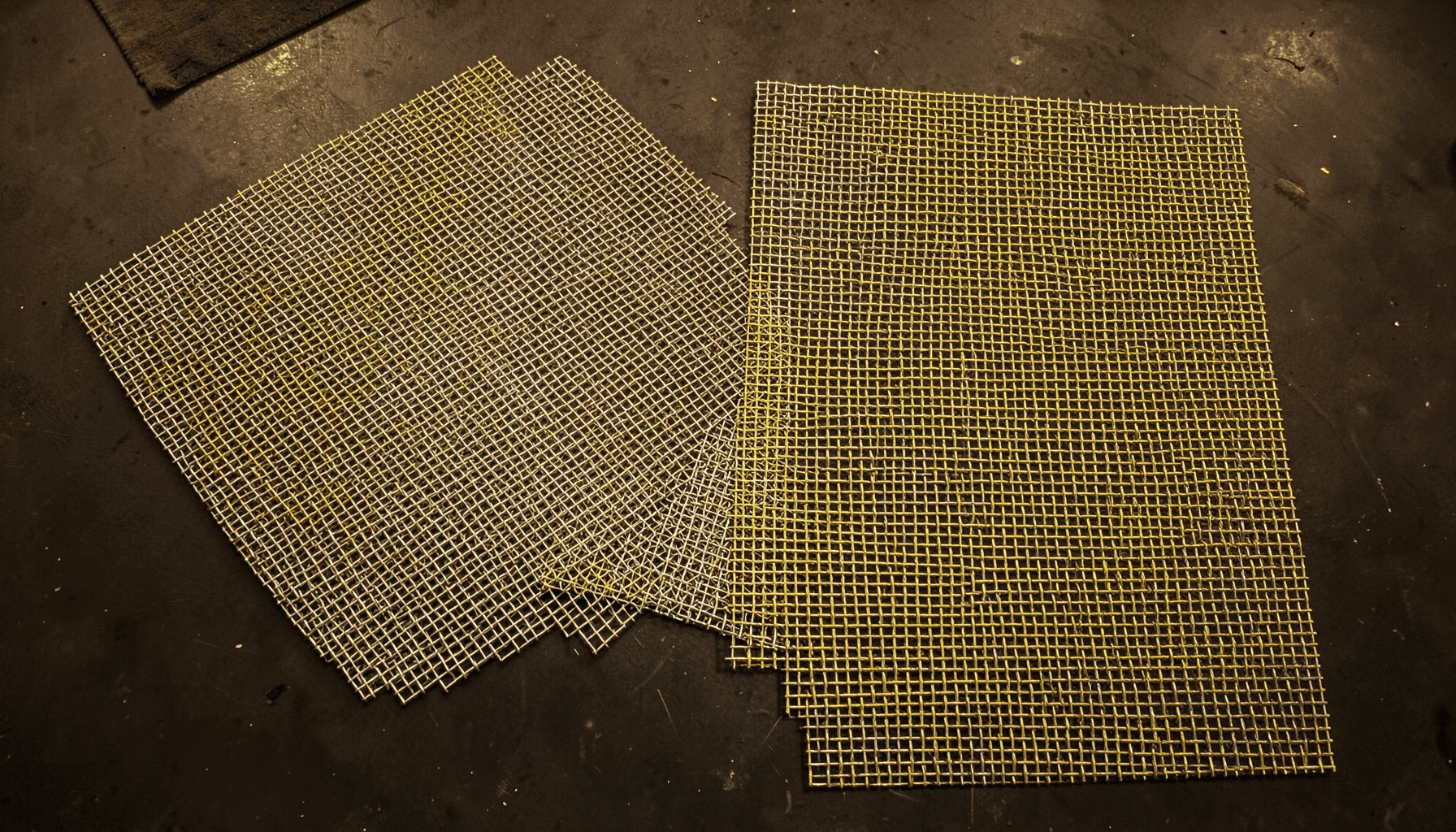
Mesh opening size affects retention, drainage, airflow, and visibility. Expanded metal, welded wire mesh, woven wire mesh, and perforated sheet each create different performance characteristics. Welded mesh offers stable openings and a clean, structured form, while woven mesh can provide flexibility and fine filtration. Expanded metal creates a strong, lightweight surface with directional geometry, making it suitable for baskets that need ventilation and rigidity.
Engineering the frame and handling features
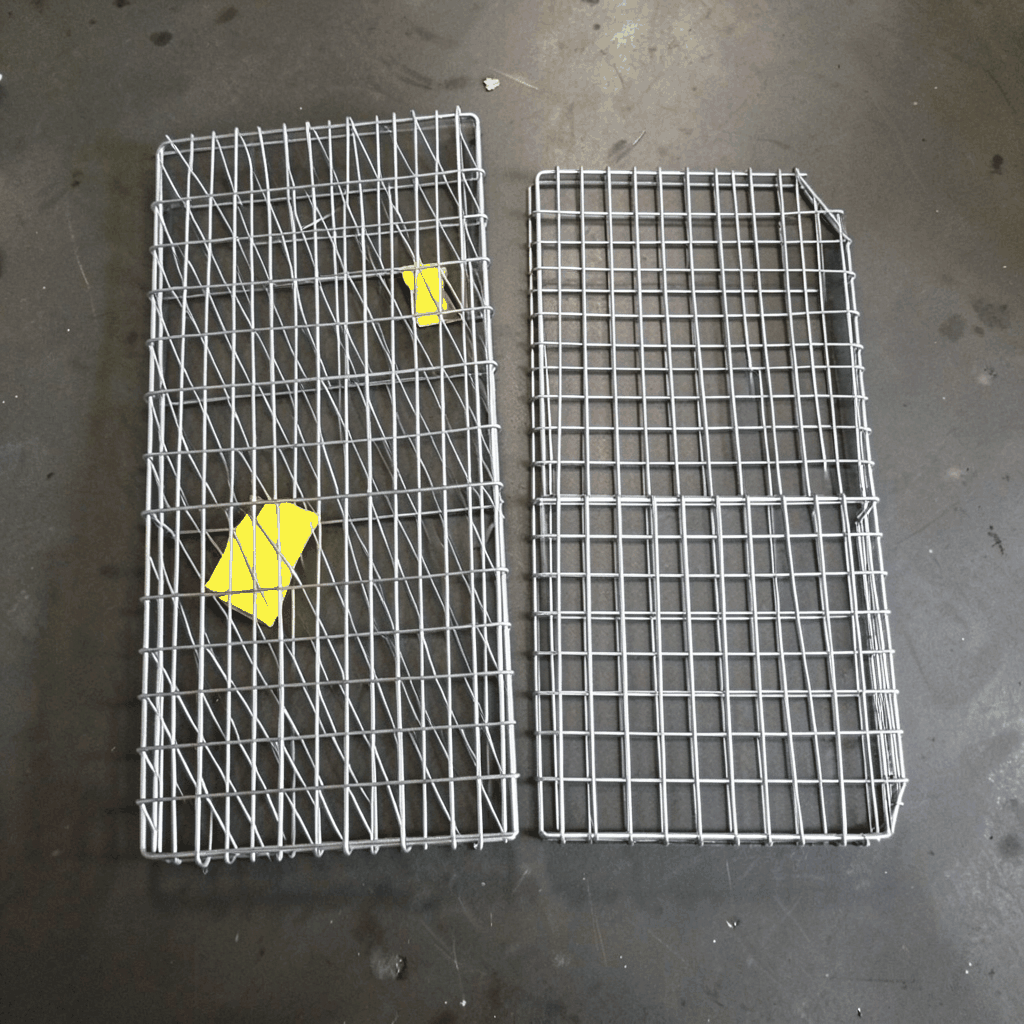
The mesh panel is only one part of a durable handling basket. A perimeter frame, formed edge, angle reinforcement, or tubular support can prevent deformation under load. Bases often require additional runners, crossbars, or plate reinforcement, especially when baskets are lifted from below or stacked in multiple layers.
Corners deserve particular attention because they receive impact during loading, transport, and storage. Fully welded corners can create a rigid assembly, while folded or bolted designs may support easier replacement or maintenance. Any exposed weld should be finished smoothly when the basket will hold delicate components, enter a cleaning line, or require frequent manual handling.
Handling hardware should match the equipment used at the facility. Options may include forklift channels, lifting lugs, crane eyes, detachable handles, hinged lids, lockable covers, castors, and stacking feet. These features need adequate load ratings and clearances. A lifting point that is strong enough in isolation may still be unsuitable if it causes the basket to tilt or interferes with a hoist hook.
Balancing capacity, access, and process efficiency
A custom basket should carry the required load without becoming unnecessarily heavy. Engineers can improve the strength-to-weight ratio through a reinforced base, strategic bracing, larger structural wire, or a stronger perimeter frame rather than increasing material throughout the entire product. This reduces handling fatigue and may lower shipping and energy costs.
The arrangement of contents also affects performance. Dividers, partitions, removable trays, and compartment inserts can keep components separated and reduce contact damage. Fine mesh liners or sheet-metal panels may be added when small parts could pass through the primary openings. For irregular loads, a lid or retaining frame can prevent spillage during tipping, turning, or overhead lifting.
Surface access should support the production process. An open basket may allow spray nozzles to reach all sides of a component, while a deeper container could create shadowed areas during washing or coating. Drainage openings should prevent liquid retention, and internal ledges should be minimized where chips, powders, or contaminants could collect.
| Design factor | Common options | Main effect on performance |
|---|---|---|
| Base construction | Mesh base, reinforced mesh, solid plate, removable tray | Controls load support, drainage, and part protection |
| Mesh type | Welded, woven, expanded, perforated | Determines rigidity, opening stability, airflow, and retention |
| Material | Stainless steel, aluminum, carbon steel, iron, specialty alloy | Affects corrosion resistance, weight, strength, and cost |
| Handling method | Forklift channels, lifting lugs, handles, castors | Determines safe movement and equipment compatibility |
| Surface treatment | Passivation, polishing, powder coating, galvanizing | Improves corrosion protection, cleanability, or appearance |
| Internal organization | Open interior, dividers, inserts, lids | Supports part separation, security, and process control |
| Stackability | Feet, nesting form, interlocking corners | Influences warehouse density and transport stability |
Managing fabrication quality and surface finish
Precision fabrication helps ensure that custom baskets fit the surrounding equipment and perform consistently from one production batch to the next. Cutting, bending, forming, welding, grinding, and inspection should follow defined dimensions and tolerances. For repeat orders, approved drawings or samples can provide a stable reference for future manufacturing.
Weld quality is important in both structural and hygienic applications. Incomplete joints can reduce load capacity, while excessive weld buildup may catch parts or obstruct cleaning. Stainless steel baskets may require passivation after fabrication to restore corrosion resistance around heat-affected areas. Polishing or electropolishing can further improve cleanability where contamination control is important.
The finish should correspond to the operating environment rather than visual preference alone. Powder coating may provide color coding and protection for indoor steel baskets, while galvanizing can support outdoor or damp service. Smooth, burr-free edges are essential for operator safety and for preventing scratches on handled products. Inspection should cover dimensions, opening size, weld integrity, flatness, hardware alignment, and surface defects.
For businesses evaluating production partners, it is useful to review the manufacturer’s ability to process different metals and deliver related wire products. A supplier such as Shuo Ke Wire Mesh can support customized metal mesh solutions for industrial and architectural applications, giving purchasing teams a basis for discussing material, structure, and finishing requirements in one project.
Testing baskets before regular production
Prototype testing can reveal problems that are difficult to identify in a drawing. A trial basket should be loaded to its expected working weight and checked for deflection, twisting, unstable stacking, and damage at lifting points. If the container will be moved repeatedly, testing should include the actual forklift, cart, rack, conveyor, or hoist used at the facility.
Process trials are also valuable. Place representative parts inside the basket and run them through washing, drying, heating, coating, or sterilization equipment as applicable. Observe drainage, airflow, part movement, residue buildup, and access for loading and unloading. These trials may show that a minor change in mesh aperture, basket depth, or divider position can produce a significant operational improvement.
A safe working load should be established with an appropriate safety margin and communicated through markings or documentation. Where baskets are stacked, the allowable stack height and floor conditions should be identified. Periodic inspections can then focus on bent frames, cracked welds, worn feet, distorted lifting lugs, and corrosion at high-contact areas.
Practical recommendations for long-term use
A good custom basket design should remain useful as production conditions change. Standardizing external dimensions across several basket models can simplify racking and transport, while interchangeable inserts allow one frame to handle different components. Color coding, identification plates, barcodes, or laser-marked references can also improve traceability.
Maintenance requirements should be considered before the first order is approved. Baskets that are easy to drain, wash, inspect, and repair will generally deliver greater value than containers designed only for initial purchase price. Replacement handles, feet, dividers, or mesh panels may extend service life when the main frame remains sound.
- Specify the maximum working load, load distribution, and lifting method in the design brief.
- Select the metal and surface treatment according to chemicals, temperature, moisture, and cleaning procedures.
- Use mesh openings that retain the smallest component while preserving drainage, airflow, and visibility.
- Reinforce the base, corners, and lifting points instead of adding unnecessary material everywhere.
- Test a representative prototype with actual parts and handling equipment before approving volume production.
Custom fabrication is most effective when the basket is treated as part of the entire material-handling system. Dimensions, access, stacking, washing, lifting, and maintenance all influence the final result. Clear technical drawings, sample components, photographs of existing equipment, and realistic load data help a manufacturer translate operational needs into a dependable product.
When a facility needs corrosion-resistant wire baskets, high-temperature containers, parts-washing racks, storage bins, or specialized mesh handling equipment, the next step is to prepare a complete specification and discuss it with an experienced fabricator. Contact Shuo Ke Wire Mesh to develop a metal mesh basket suited to the required materials, dimensions, handling method, and industrial process.