Fabricating Folding And Sliding Wire Mesh Gates For Warehouse Aisles
Warehouse aisles need controlled access without losing visibility, ventilation, or usable floor space. A solid steel door can separate work zones, but it may obstruct sightlines and create delays for forklifts, maintenance teams, and emergency inspections. Folding and sliding wire mesh gates offer a practical alternative by securing selected areas while allowing light and air to pass through.
The right gate is more than a mesh panel fitted into a frame. Its construction must match aisle width, traffic patterns, ceiling clearance, floor conditions, security expectations, and the operating environment. Careful planning also determines whether a bi-fold gate, multi-leaf folding gate, or side-sliding system will perform reliably over years of daily use.
A fabricator experienced in stainless steel, aluminum, iron, and other architectural or industrial alloys can adapt the gate to a warehouse’s functional and visual requirements. Mesh aperture, wire diameter, frame profile, hinges, rollers, locks, and surface treatment all influence the finished result.
Assessing the warehouse opening
Start by recording the clear opening between posts, walls, racks, or protective barriers. Measure the width at several points because warehouse structures are not always perfectly square. Check the height from the finished floor to the lowest obstruction, including sprinkler pipes, lighting, cable trays, signage, and overhead doors.
The surrounding circulation pattern is equally important. A gate beside a loading route may need to fold tightly against a wall, while an opening near a pedestrian corridor may be better suited to a sliding leaf that remains within a defined track. Identify where forklifts turn, where pallet loads project into the aisle, and how operators will approach the gate from both sides.
The gate should also be evaluated as part of the warehouse safety system. It may protect inventory cages, battery charging areas, maintenance rooms, machine zones, or restricted storage. Its mesh must prevent unauthorized access without creating hidden corners or limiting the visibility needed for safe vehicle movement.
Selecting mesh, frames, and finishes
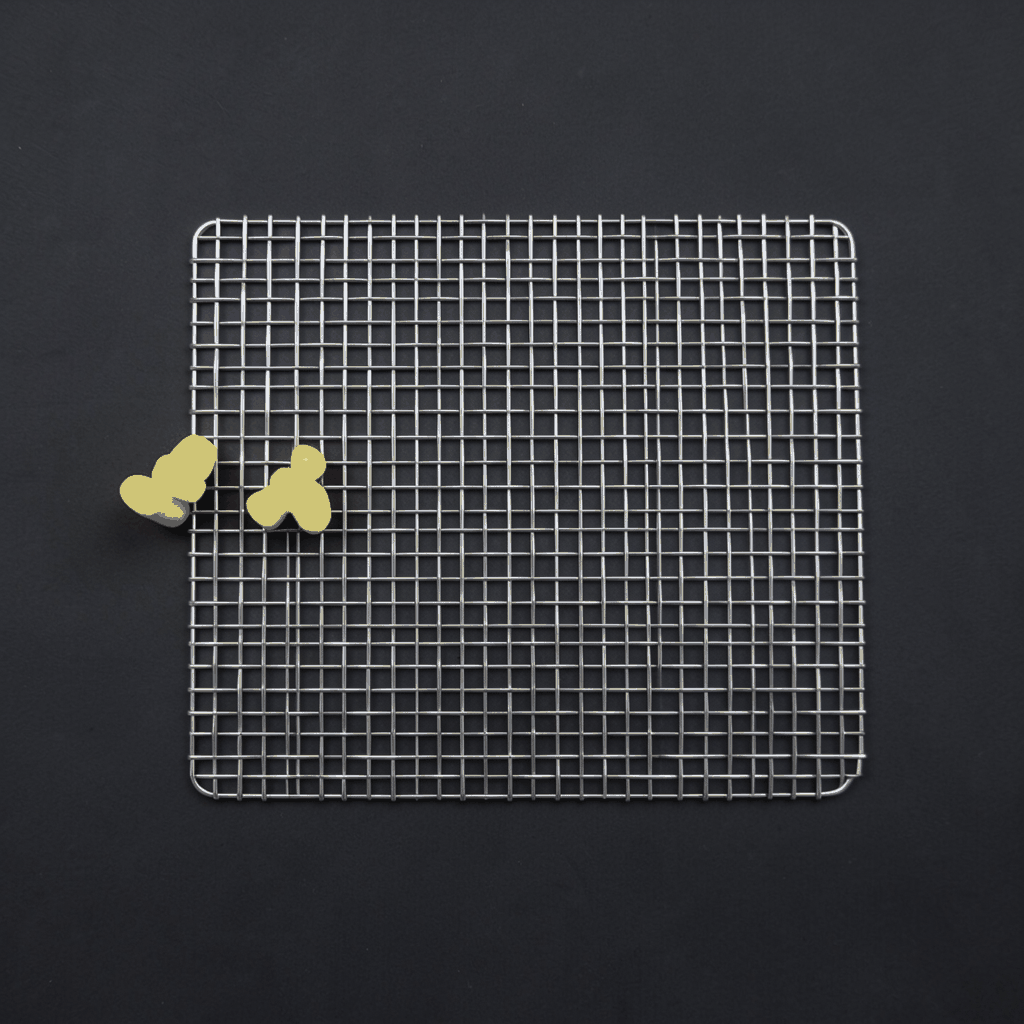
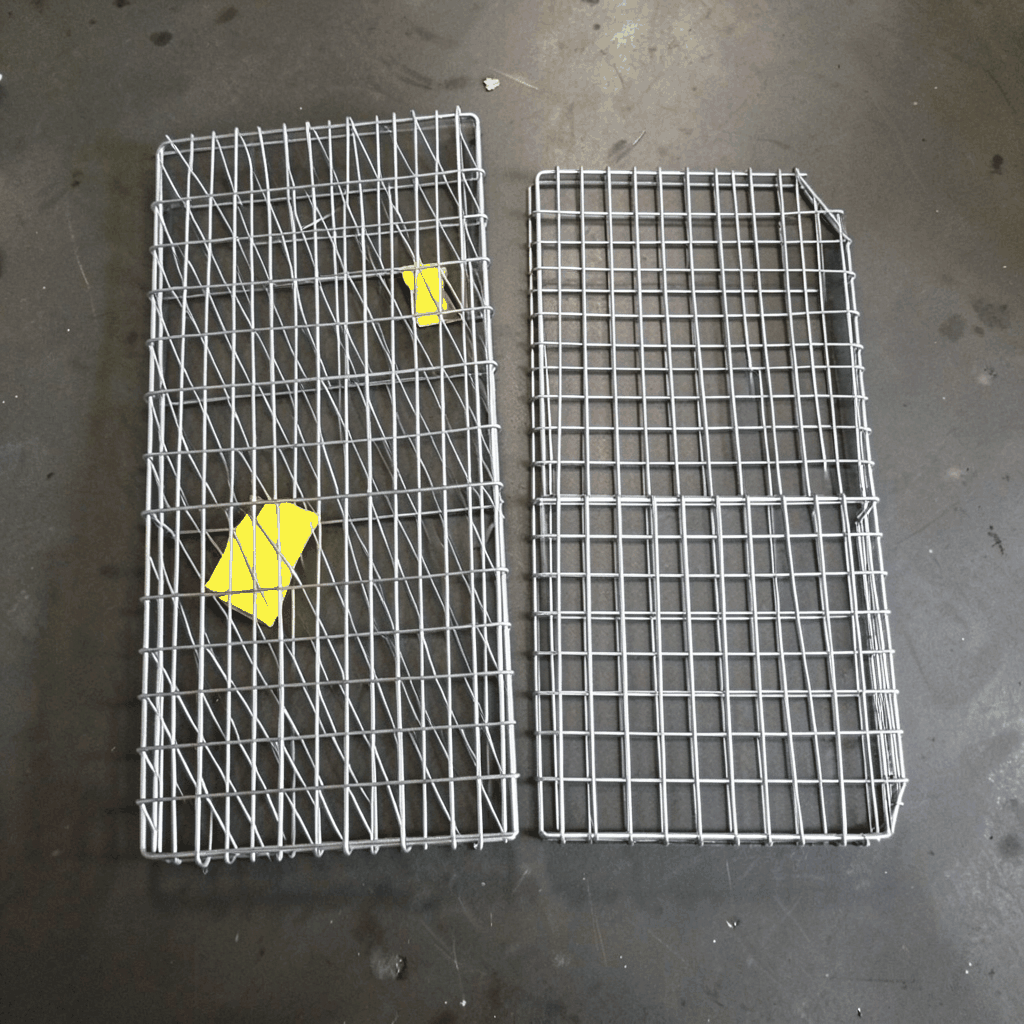
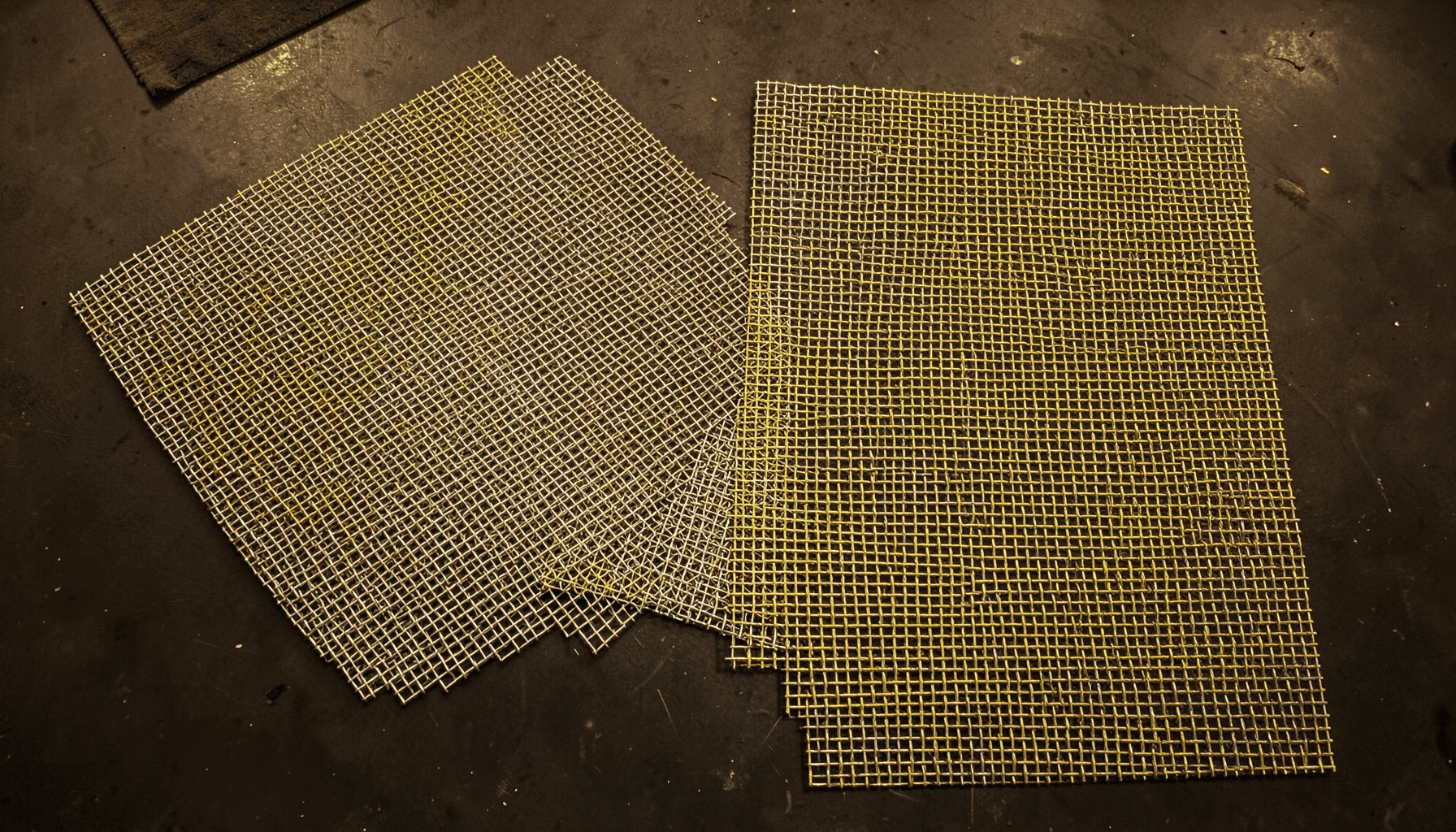
Welded wire mesh is often suitable for warehouse gates because its rigid construction resists deformation and keeps the panel aligned inside a steel frame. Expanded metal can provide a more continuous barrier with fewer openings, while woven wire mesh may be selected where a finer aperture or specialized filtration effect is required. The choice depends on the required impact resistance, visibility, and appearance.
Stainless steel performs well in damp, corrosive, or hygiene-sensitive locations. Mild steel offers a cost-effective structural option when protected with powder coating, galvanizing, or another suitable finish. Aluminum reduces weight and can be useful for frequently operated folding leaves, although the frame and hardware still need sufficient stiffness for the opening size.
Mesh aperture should be small enough to prevent hand access where necessary, but not so dense that it unnecessarily increases weight or reduces visibility. Wire diameter and perimeter frame size should be selected together. A heavy mesh installed in a light frame can cause sagging, while an oversized frame may make the gate difficult to operate.
Surface finishing should support the surrounding facility. Black, gray, white, and safety yellow powder coatings are common, while galvanized finishes are useful for industrial exposure. Where the gate forms part of a branded facility or a public-facing warehouse, decorative panels can be integrated into selected sections. For distinctive visual elements, manufacturers may also provide laser-cut screen options for logos, directional symbols, or controlled-visibility inserts.
Matching the operating style to aisle traffic
Folding gates divide into two broad types. A bi-fold gate has two connected leaves that fold toward one side or toward the center, while a multi-leaf accordion gate uses several narrow sections connected by hinges. Folding systems are useful where there is limited sidewall space and the gate must clear the opening quickly.
A sliding wire mesh gate travels along a top-hung or floor-supported track. It may use one leaf for a smaller opening or two leaves that move in opposite directions for a wide aisle. Sliding designs keep the gate within a predictable plane and can be easier to secure across broad openings, but they require clear runback space beside the opening.
The operating style should reflect how often the gate will move. A frequently used pedestrian access point benefits from low-friction hinges, ergonomic handles, and a compact folding action. A gate opened several times per shift by forklifts may need heavy-duty rollers, protected tracks, guide pins, and a latch positioned for quick access.
| Design factor | Folding gate | Sliding gate |
|---|---|---|
| Space beside opening | Requires little sidewall runback | Needs clear space for the leaf to travel |
| Overhead clearance | Usually modest, depending on hinges | May require a top track or support beam |
| Wide aisle openings | Works with multiple linked leaves | Efficient with single or paired leaves |
| Opening speed | Fast when leaves fold compactly | Smooth but needs full travel distance |
| Floor conditions | Less dependent on a continuous floor track | Floor track may collect debris unless elevated |
| Maintenance focus | Hinges, links, stops, and alignment | Rollers, tracks, guides, and end stops |
| Typical use | Restricted zones and flexible access points | Long openings and controlled vehicle routes |
In many warehouses, a hybrid arrangement provides the best result. A main sliding gate can cover the vehicle opening, while a smaller hinged or folding pedestrian gate provides daily personnel access. This avoids moving a large barrier every time an employee needs to pass through.
Engineering the frame and hardware
Fabrication begins with a stable perimeter frame. Rectangular hollow sections, angle profiles, or formed channels can be used according to the span and expected impact. The frame should be welded or mechanically assembled with accurate squareness, and mesh panels should be fixed so they cannot loosen under vibration or repeated handling.
Folding leaves need carefully positioned hinges and intermediate links. Hinges must support the dead load without excessive play, and the folded package should remain clear of posts, rack uprights, and nearby equipment. A bottom guide or concealed alignment feature can prevent the leaves from drifting while keeping the floor free from trip hazards.
Sliding gates depend on the relationship between leaf weight, roller capacity, and track design. Top-hung systems can keep the floor unobstructed, but the overhead support must carry dynamic loads as the gate starts, stops, and reaches its end position. Floor-supported systems transfer weight downward but require a track that can resist pallet debris, wheel impact, and uneven cleaning conditions.
Stops should limit travel before hinges, rollers, or latches absorb the impact. Handles, drop bolts, padlock fittings, cylinder locks, and access-control hardware should be positioned where operators can use them without reaching through the mesh. If the opening forms part of a fire or emergency route, the locking method must be coordinated with the site’s evacuation and compliance requirements.
Integrating safety and warehouse operations
Visibility is a primary benefit of wire mesh partitions, but it should not be assumed that every mesh pattern provides the same level of awareness. Select an aperture that lets workers see approaching forklifts, moving conveyors, and stored materials. Add high-contrast edge markings or warning bands where the gate could blend into racking or a dark background.
The gate should not swing into a vehicle path or reduce the required width of an escape route. Folding leaves need enough clearance to avoid striking pedestrians, pallets, sprinkler heads, and stored goods. Sliding leaves should have guards or protected leading edges where impact is possible, especially near forklift lanes.
For automated or controlled-access facilities, the gate can be prepared for magnetic locks, card readers, coded entry, sensors, or interlocks. These components should be coordinated with the mechanical design rather than added after installation. Cable routing needs protection from abrasion and forklift contact, and control devices should remain accessible for inspection and emergency release.
A prototype or sample panel can help confirm mesh visibility, coating color, handle position, and folding clearance before full production. This step is especially valuable for custom industrial gates, where small dimensional errors may interfere with rack layouts or traffic separation.
Fabrication quality and installation details
A dependable manufacturer verifies drawings before cutting material. The fabrication package should show opening dimensions, leaf sizes, hinge locations, track lengths, locking points, mesh specification, finish, and mounting details. For a custom order, photographs and site measurements can complement drawings and reveal obstacles that are difficult to identify from a plan alone.
Welding quality affects both appearance and service life. Excessive distortion can prevent leaves from meeting evenly, while weak welds may fail around hinges and latch supports. After fabrication, the gate should be checked for flatness, smooth movement, consistent gaps, and secure mesh attachment. Coating preparation is also important because poorly cleaned steel can develop corrosion beneath the finish.
Installation must begin with a level, properly supported opening. Sliding tracks need accurate alignment from end to end, and folding gates require posts that can resist repeated pulling and pushing. Anchors should match the substrate, whether it is concrete, structural steel, masonry, or a fabricated guardrail. After fixing, operators should test the gate through its complete movement and verify that stops and locks work from the intended sides.
A commissioning check should include several opening cycles under realistic conditions. Inspect for roller noise, hinge binding, frame deflection, floor interference, and latch misalignment. Documenting these checks gives warehouse managers a useful baseline for future maintenance and helps identify whether a problem comes from the gate, its supports, or changing site conditions.
Practical recommendations for a durable gate
The most effective design balances access speed, physical security, visibility, and maintenance. Choosing the lightest possible gate is not always the best approach; insufficient frame stiffness or undersized hardware can create premature wear. At the same time, unnecessary material increases operating effort and places greater demands on hinges, rollers, and supports.
A custom mesh gate should be treated as part of the warehouse’s wider layout. Its dimensions, travel direction, finish, and locking system should support the movement of people and equipment rather than create a new obstruction. These recommendations help guide the specification:
- Measure the opening, floor level, overhead clearance, and sidewall runback before selecting folding or sliding hardware.
- Choose mesh aperture and wire diameter according to visibility, hand-access restrictions, impact exposure, and cleaning needs.
- Use heavy-duty hinges, rollers, guides, stops, and locks rated for the finished leaf weight and operating frequency.
- Protect tracks, handles, and control wiring from forklifts, pallet jacks, dust, moisture, and accumulated debris.
- Request fabrication drawings, finish samples, and a movement check before approving full production.
Routine care should include cleaning mesh and tracks, tightening fasteners, lubricating approved moving parts, and inspecting welds, hinges, rollers, locks, and anchors. Any bent frame or damaged mesh should be repaired promptly because a small misalignment can increase operating force and transfer stress to adjoining hardware.
Shuo Ke Wire Mesh Product Technology Co., Ltd. can develop customized architectural and industrial mesh components for warehouse partitions, access gates, guardrails, screens, and related protective structures. By coordinating material selection, mesh processing, frame fabrication, and finishing, a project can achieve a gate that supports daily logistics while maintaining a clean, durable appearance. Contact the company with your aisle dimensions, operating conditions, preferred material, and access requirements to begin a tailored wire mesh gate solution.