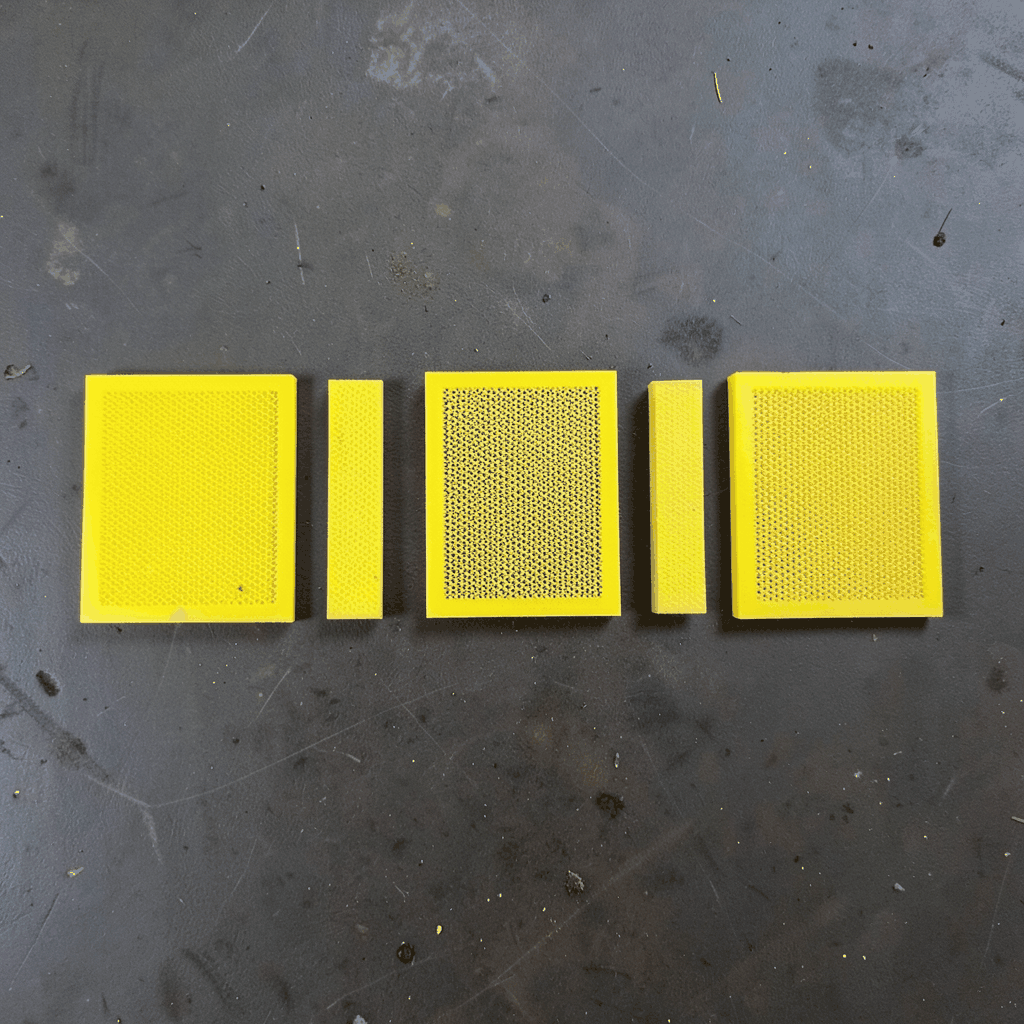
Fabricating heavy-duty wire mesh grate covers for trench drainage systems
Trench drainage systems protect roads, loading bays, factories, public walkways, and commercial properties from standing water. Their performance depends on more than the drain channel beneath the surface. The grate cover must carry repeated wheel loads, resist corrosion, maintain a safe walking surface, and allow water and debris to enter without creating blockages.
Heavy-duty wire mesh grate covers provide a practical alternative to solid plates and some cast grating designs. Their open structure supports drainage, ventilation, and visibility while reducing material use. When properly engineered, fabricated, and finished, these covers can withstand demanding outdoor and industrial conditions.
The correct solution begins with the operating environment. Traffic type, span width, drainage flow, mesh aperture, material grade, support frame, and maintenance access all influence the final design. A manufacturer experienced in custom mesh solutions can adapt the grate construction to project-specific loading and architectural requirements.
Defining the operating requirements
The first fabrication decision is the expected load. A pedestrian path, landscaped courtyard, and airport service road do not place the same demands on a trench cover. Designers should identify whether the grate will receive foot traffic, bicycles, passenger vehicles, forklifts, delivery trucks, or heavy construction equipment.
Wheel loads require special attention because force is concentrated over a small contact area. A cover that appears strong under evenly distributed weight may deform when a narrow tire passes across its center. The design brief should include maximum axle load, wheel spacing, traffic frequency, impact risk, and whether vehicles may turn or brake directly over the drainage channel.
The trench opening and support arrangement are equally important. Longer clear spans require deeper or reinforced bearing members, while irregular channel geometry may require segmented panels. The frame must provide continuous support around the perimeter so that the cover does not rock, rattle, or transfer excessive stress to isolated points.
Selecting materials for drainage environments
Stainless steel is often selected for trench grate covers exposed to moisture, cleaning chemicals, food-processing residues, or coastal air. Grades such as 304 and 316 offer different levels of corrosion resistance, with 316 generally better suited to chloride-rich conditions. Stainless steel also provides a clean appearance for commercial, hospitality, and architectural installations.
Carbon steel and galvanized iron mesh can be economical for industrial yards, utility areas, and protected outdoor applications. Hot-dip galvanizing creates a zinc coating that protects the steel from corrosion, including on edges and welded areas when the process is properly controlled. The required coating thickness should match the exposure class and expected service life.
Aluminum offers low weight and natural corrosion resistance, making it useful where covers must be removed frequently for cleaning or inspection. It has lower structural stiffness than steel, however, so thicker sections or closer supports may be needed. Copper and specialty alloys can serve decorative or chemically specific applications, although their cost and surface behavior require careful evaluation.
Material selection should also consider galvanic corrosion. When stainless steel, aluminum, carbon steel, or bronze components contact one another in a wet environment, electrical potential can accelerate deterioration. Insulating washers, compatible fasteners, protective coatings, and controlled drainage details help reduce this risk.
Engineering the mesh and support frame
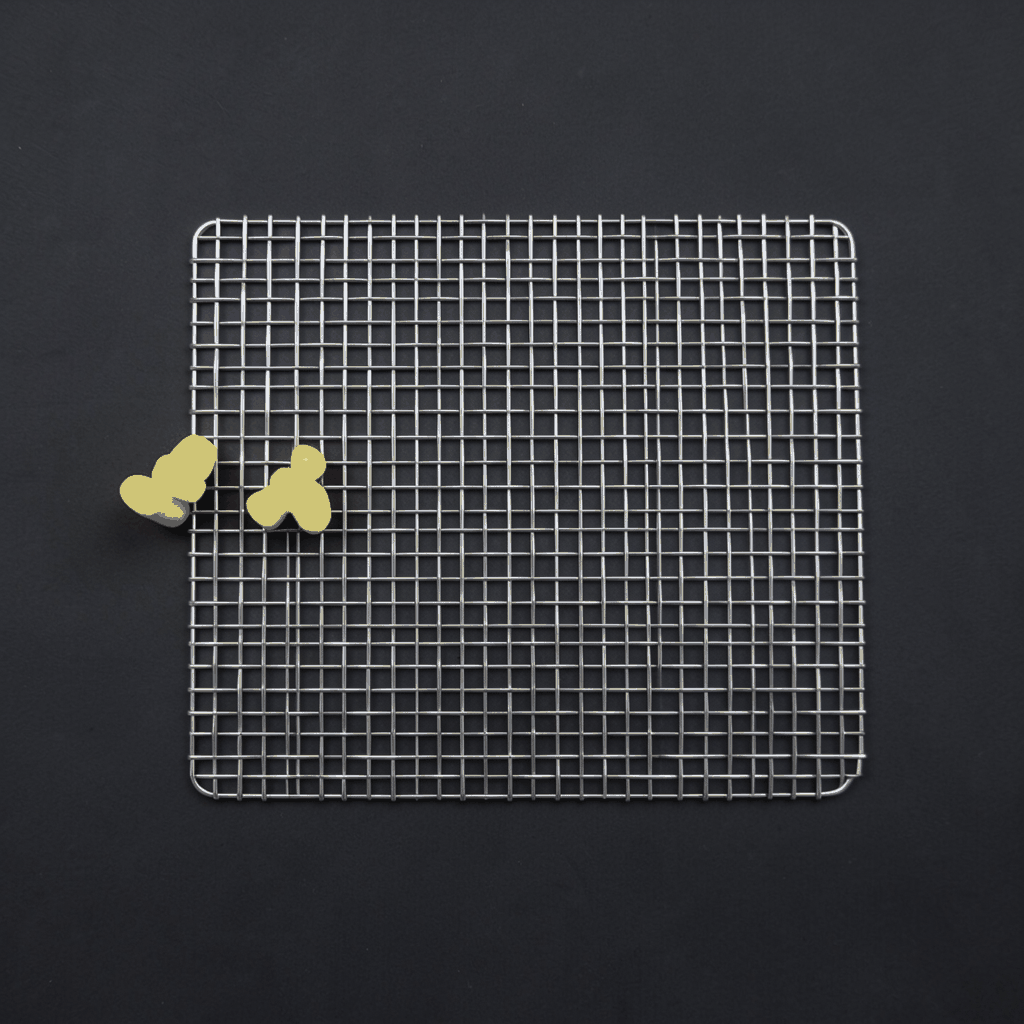
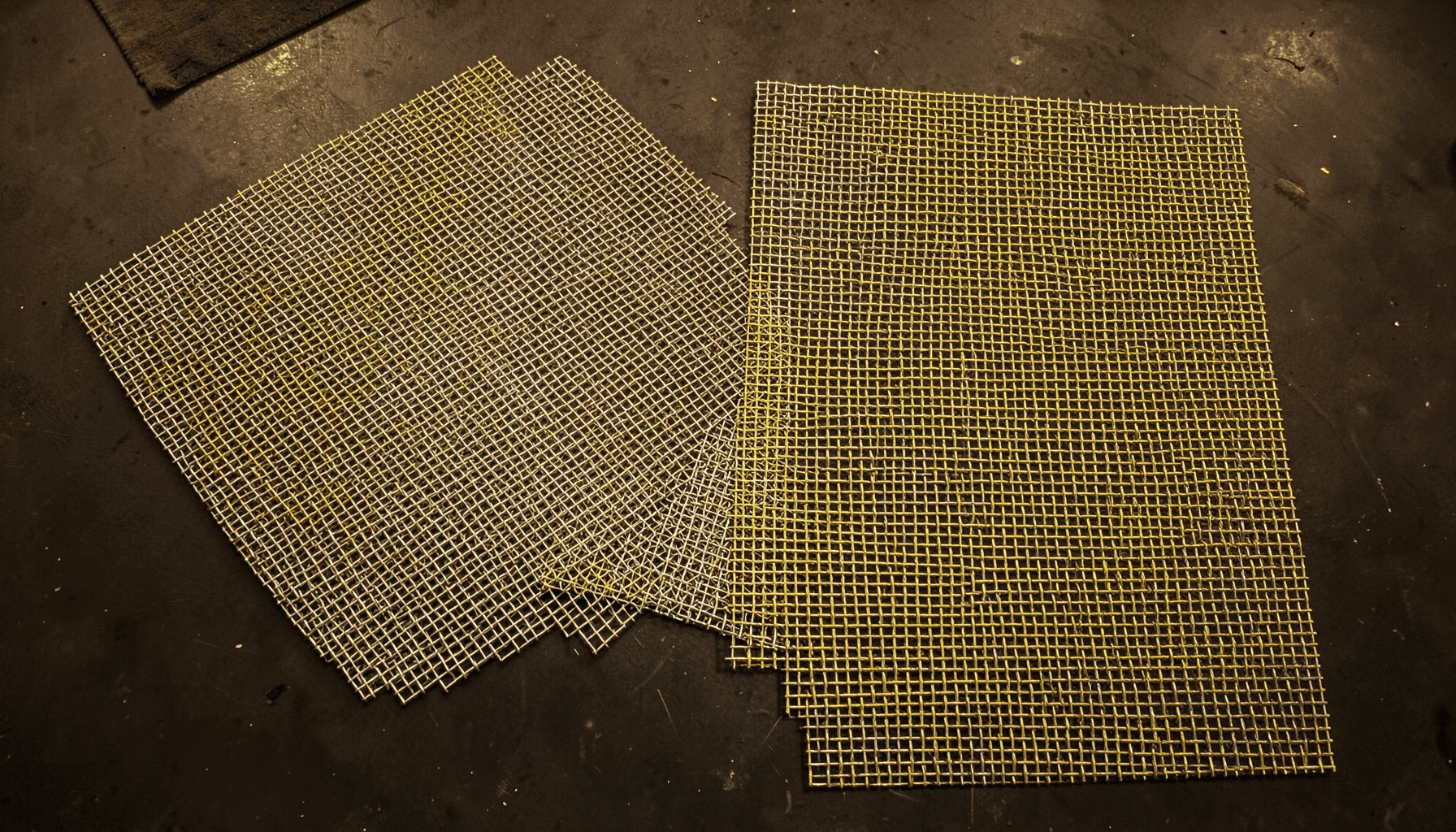
The mesh pattern determines both the hydraulic performance and the walking or driving safety of the cover. Welded wire mesh offers fixed intersections and consistent openings, while woven wire mesh can provide flexibility and a different visual character. For vehicle-rated applications, welded construction with reinforced perimeter bars is typically easier to control dimensionally.
Aperture size must balance flow capacity against safety. Large openings allow leaves, stones, and other debris to enter the channel, while small openings may restrict drainage and clog quickly. Pedestrian zones require openings that prevent shoe heels, walking sticks, bicycle wheels, and mobility aids from becoming trapped. Local accessibility standards should guide the final opening dimensions.
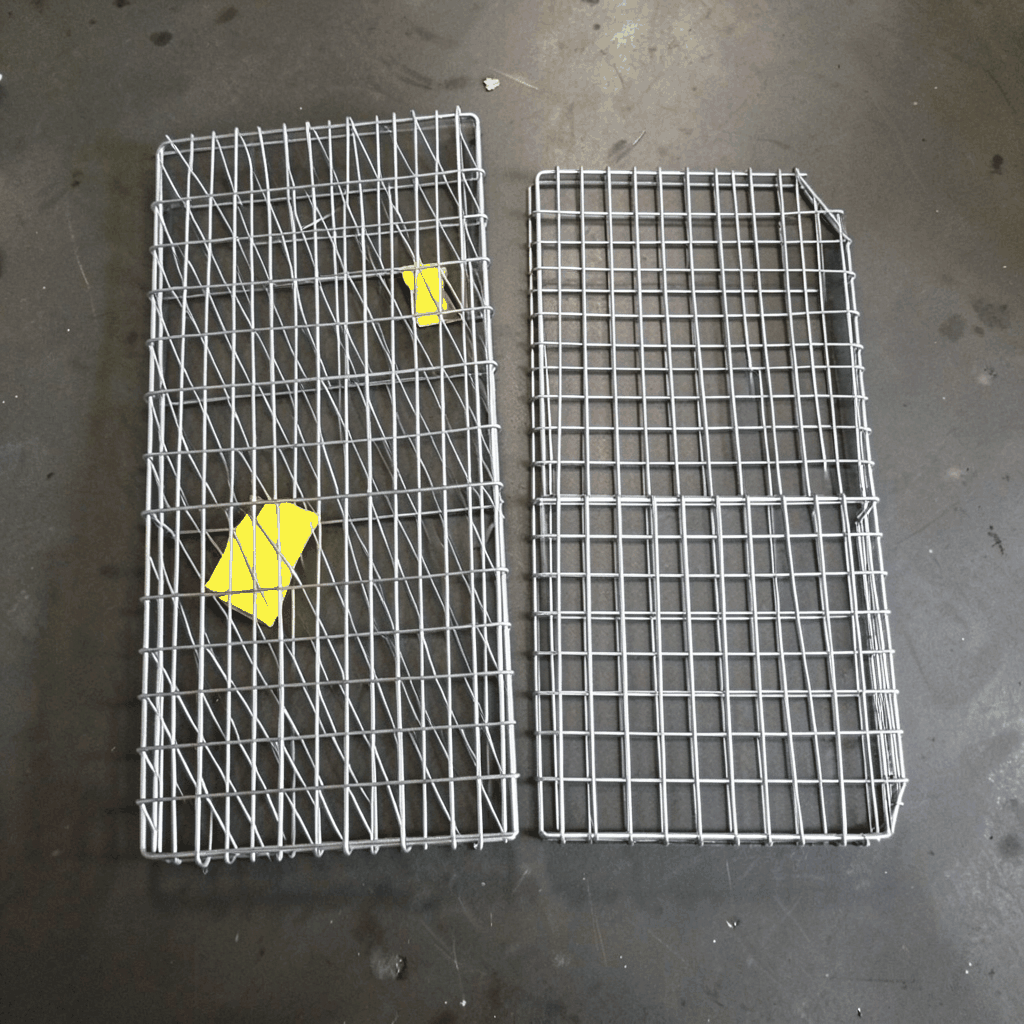
The support frame usually consists of angle steel, flat bar, channel sections, or a purpose-made edge frame anchored to the trench body. Bearing bars should be aligned with the dominant load direction, and cross members can distribute pressure across the mesh. For removable panels, lifting points or recessed handles make maintenance safer and reduce damage to the grate edges.
Anti-slip performance is another central consideration. Serrated bearing strips, raised wire profiles, punched textures, or strategically arranged cross wires can improve traction when the surface is wet. The selected pattern should remove standing water without creating sharp projections that could damage footwear, tires, or cleaning equipment.
Fabrication methods that improve durability
Heavy-duty grate manufacturing starts with accurate cutting and controlled preparation of the wire, bars, and frame components. CNC cutting, automated mesh welding, and calibrated bending equipment help maintain uniform panel dimensions. Consistent tolerances are especially important when multiple grate sections must fit into a continuous trench frame.
Welding must create a secure connection without excessive distortion. Intermittent or weak welds may loosen under repeated wheel impact, while excessive heat can warp thin components or reduce the appearance of stainless steel. Fabricators should control welding sequence, use suitable filler materials, and inspect critical joints before finishing.
The perimeter frame deserves as much attention as the mesh field. Reinforcing flat bars or angle sections protect the cut edges and transfer loads to the trench supports. Corners should be fully joined, and exposed burrs must be removed. Where panels meet end to end, the joint should remain flush so that wheels and carts do not catch on an abrupt height change.
Dimensional inspection should verify length, width, flatness, aperture consistency, weld integrity, and frame squareness. For high-load drainage covers, fabrication records and load testing can provide additional confidence. Prototype panels are useful when the project involves unusual spans, nonstandard channels, or mixed pedestrian and vehicle use.
Comparing grate construction options
Different grate types suit different combinations of traffic, corrosion exposure, maintenance needs, and visual expectations. The comparison below provides a starting point, but final selection should be based on calculated loading and site conditions rather than price alone.
| Grate construction | Main advantages | Typical limitations | Suitable applications |
|---|---|---|---|
| Welded stainless steel mesh | High corrosion resistance, clean appearance, stable openings | Higher material and fabrication cost | Food plants, coastal sites, commercial walkways |
| Galvanized carbon steel mesh | Strong, economical, broad availability | Coating can wear at impact points and cut edges | Industrial yards, service roads, utility zones |
| Aluminum mesh grate | Lightweight, easy to remove, corrosion resistant | Lower stiffness and load capacity than steel | Pedestrian paths, landscaped areas, inspection access |
| Serrated bar grating | Strong load performance, excellent slip resistance | Heavier appearance, larger open channels may collect debris | Factories, parking areas, loading zones |
| Perforated plate cover | Smooth profile, controlled apertures, good visual continuity | Can retain sediment and require thicker material | Architectural paving, light-to-medium traffic |
| Reinforced woven wire panel | Flexible design, decorative potential, efficient open area | Requires careful edge reinforcement for heavy loads | Decorative drainage, low-speed pedestrian applications |
Mesh grate covers are often preferred where high open area is needed. They allow rainwater to reach the channel quickly and can be manufactured in removable sections. Bar grating may be better when concentrated loads are severe, while perforated plate is useful when a more continuous surface is required.
The most reliable approach is to combine the selected mesh with a properly engineered frame. A strong mesh panel installed on a weak or poorly aligned support will still fail prematurely. Conversely, a robust frame cannot compensate for undersized wire, insufficient welds, or unsuitable apertures.
Protecting surfaces and managing maintenance
Surface treatment should match the material and exposure. Stainless steel may be pickled and passivated after welding to restore corrosion resistance around heat-affected zones. Carbon steel can be hot-dip galvanized, powder coated, painted, or supplied with a duplex system that combines galvanizing and a protective topcoat.
Powder coating can provide a wide range of colors for architectural projects, but the substrate must be properly prepared. Any damaged area, weld contamination, or trapped moisture beneath the coating can become a corrosion starting point. For outdoor service, coating specifications should state pretreatment, film thickness, curing conditions, and repair procedures.
Drainage covers should be designed for routine cleaning. Removable panels allow operators to clear sediment, leaves, gravel, and packaging debris from the channel. Hinged sections may be appropriate where covers are opened regularly, while bolted or lockable panels provide better security in public areas and locations exposed to theft or vandalism.
Maintenance teams should inspect bearing surfaces, welds, fasteners, coatings, and frame anchors at scheduled intervals. Rattling, rocking, visible deflection, sharp edges, rust staining, or blocked openings indicate that corrective work is needed. A simple inspection record can help identify repeated overloads or drainage problems before they become safety hazards.
Installation details that prevent early failure
The trench channel must be level, stable, and correctly aligned before grate panels are installed. Uneven concrete shoulders or incomplete bedding can create point loading, causing a panel to bend even when its material specification is adequate. The bearing ledges should be clean, continuous, and wide enough to support the frame without edge breakout.
Grate sections should sit flush with the surrounding pavement. A raised edge can become a trip hazard for pedestrians and a shock point for vehicles. A recessed edge can collect sediment and allow water to undermine the pavement. Installation drawings should identify finished elevations, joint gaps, anchor locations, and access direction.
Fasteners need to withstand vibration, moisture, and repeated maintenance. Stainless steel fasteners are useful in corrosive areas, but they must be compatible with the grate and frame materials. Locking nuts, tamper-resistant bolts, retaining clips, and hinged hardware can prevent movement while keeping the panels serviceable.
Before handover, the system should be checked for free drainage, stable seating, safe opening dimensions, and smooth transitions. A controlled load test may be appropriate for critical sites. The project file should retain material certificates, coating information, fabrication drawings, inspection results, and maintenance instructions.
Practical recommendations for project teams
- Specify traffic class, maximum wheel load, clear span, support spacing, and impact conditions before requesting quotations.
- Select mesh aperture and anti-slip details according to pedestrian safety, drainage flow, debris exposure, and local regulations.
- Match stainless steel, aluminum, galvanized steel, or coated carbon steel to the site’s moisture and chemical conditions.
- Require perimeter reinforcement, controlled welding, dimensional inspection, and documented surface treatment.
- Design removable, hinged, or lockable sections around the actual frequency and method of channel maintenance.
A clear technical specification reduces misunderstandings between the drainage designer, civil contractor, and metal mesh fabricator. It should describe dimensions, tolerances, material grade, wire diameter, reinforcement, finish, loading expectations, and hardware. Drawings should also show how the grate connects to the channel and how operators will remove it safely.
For custom projects, early coordination is valuable. A manufacturer can review the trench geometry, divide long runs into manageable panels, recommend reinforcement, and identify conflicts with paving or drainage components. This process helps control fabrication costs while preserving the required structural and visual performance.
Heavy-duty wire mesh grate covers are successful when their open design is supported by sound engineering. Correct material selection, reinforced construction, reliable corrosion protection, and precise installation allow the drainage system to handle water, traffic, and maintenance demands over a long service period.
Discuss your trench dimensions, loading conditions, material preferences, and finish requirements with Shuo Ke Wire Mesh Product Technology Co., Ltd. to develop a durable grate cover solution suited to the application and surrounding environment.