Fabricating stainless steel mesh for Australian water feature screens
Around a courtyard in Brisbane or behind a plunge pool in a Perth backyard, a sheet of woven or perforated stainless steel can turn a plain water wall into the centrepiece of the whole garden. Demand for this kind of detail has grown steadily across Australia as architects and landscapers look for ways to combine water with structure, privacy, and pattern. Fabricating stainless steel mesh for water feature screens is not a one-size-fits-all job, though. The mesh has to hold its shape under water pressure, survive UV, salt spray, and the chemistry of local water, and still look sharp after years of use.
The brief from a Sydney or Melbourne project often includes the look of the screen as well as the function: how it cuts light, how the pattern reads against the splash, and how it ages in full sun. A good fabricator balances weave geometry, wire thickness, fixing method, and finishing so the screen behaves like a piece of equipment, not a delicate panel. The rest of this article walks through the choices that matter when specifying or commissioning stainless steel mesh for water feature screens in Australian conditions.
Why stainless steel performs around water
Stainless steel carries a passive chromium oxide layer that resists rust and staining in moist environments. Around a water feature, that layer is constantly being challenged by dissolved oxygen, chlorine from pool systems, and mineral content from mains water. In a coastal suburb like Coogee or Scarborough, airborne salt adds another stress on top of that. Stainless grades such as 304 and 316 behave differently here. 304 is fine for sheltered, indoor or fully freshwater installations. For any outdoor feature within a few kilometres of breaking surf, or any installation tied to a chlorinated pool, 316 with its added molybdenum is the more reliable pick.
Australian UV also plays a part. Plastic meshes and coated products fade and embrittle in the harsh sun, while raw aluminium forms a chalky oxide that washes into ponds and discolours stonework below. Stainless holds both colour and reflectivity over the long term, which is one reason designers in Adelaide and Perth still reach for it on facade-adjacent water walls and fountains.
Selecting the right grade and finish
Grade selection comes down to environment, but finish matters as much. A bright mirror polish reflects water movement and shows up fingerprints, water spots, and tea staining more readily. A bead-blasted or vibratory finish softens the glare and hides minor marks from mineral deposits, which is helpful in hard-water areas like much of South Australia where calcium builds up quickly on glass and metal.
For fabrication, sheet thickness between 1.2 mm and 3 mm covers most water feature screens. Weave or perforation pattern should be chosen with hydraulic behaviour in mind: too tight a mesh can create back-pressure behind a weir or scupper, too open a pattern loses the visual continuity designers want. A 5 mm by 5 mm square or a 3 mm round perforation is a common balance for splash zones where the screen also acts as a backer for falling water.
Welds need to be tidy, ground flush on visible faces, and passivated after fabrication to restore the chromium layer disturbed by heat. Any cut edge left raw is a future stain waiting to happen, particularly in a chlorinated pool deck where fumes drift across the screen in summer.
Fabrication methods used for mesh screens
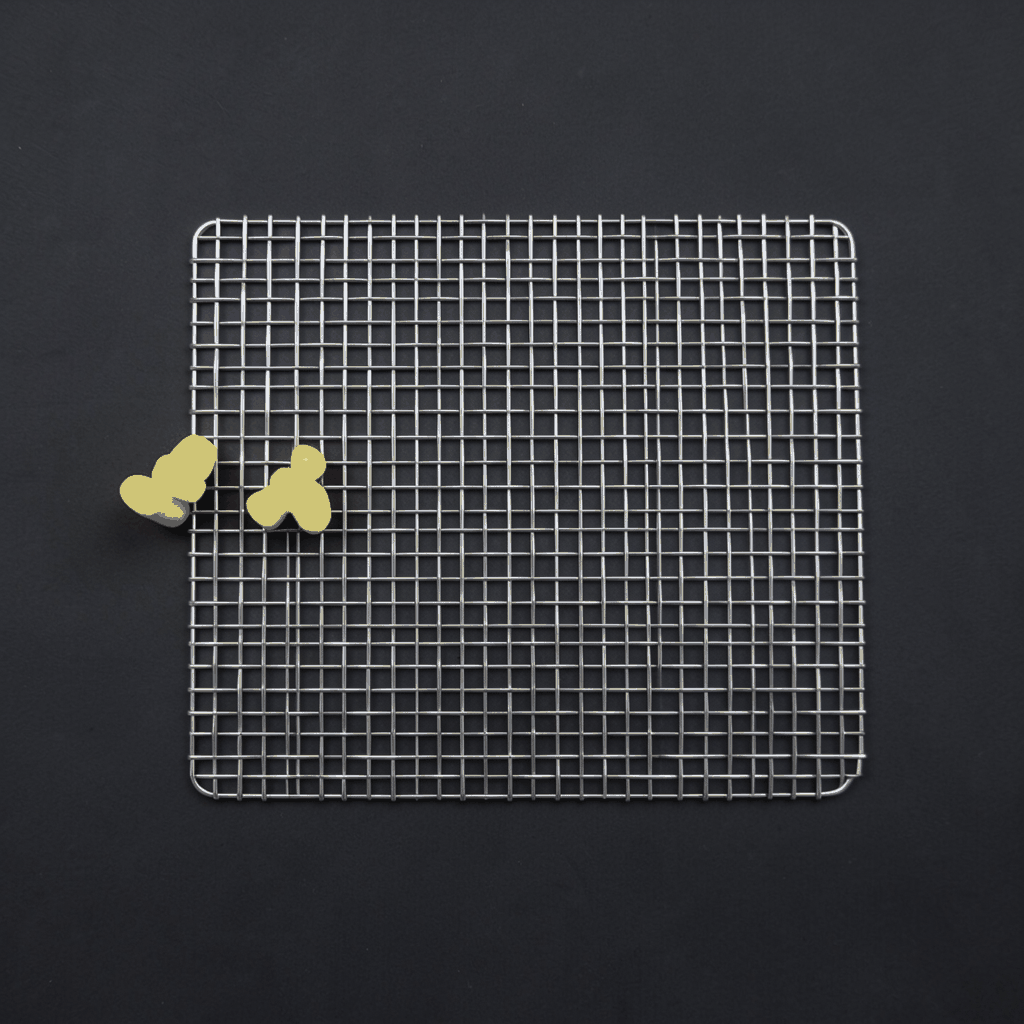
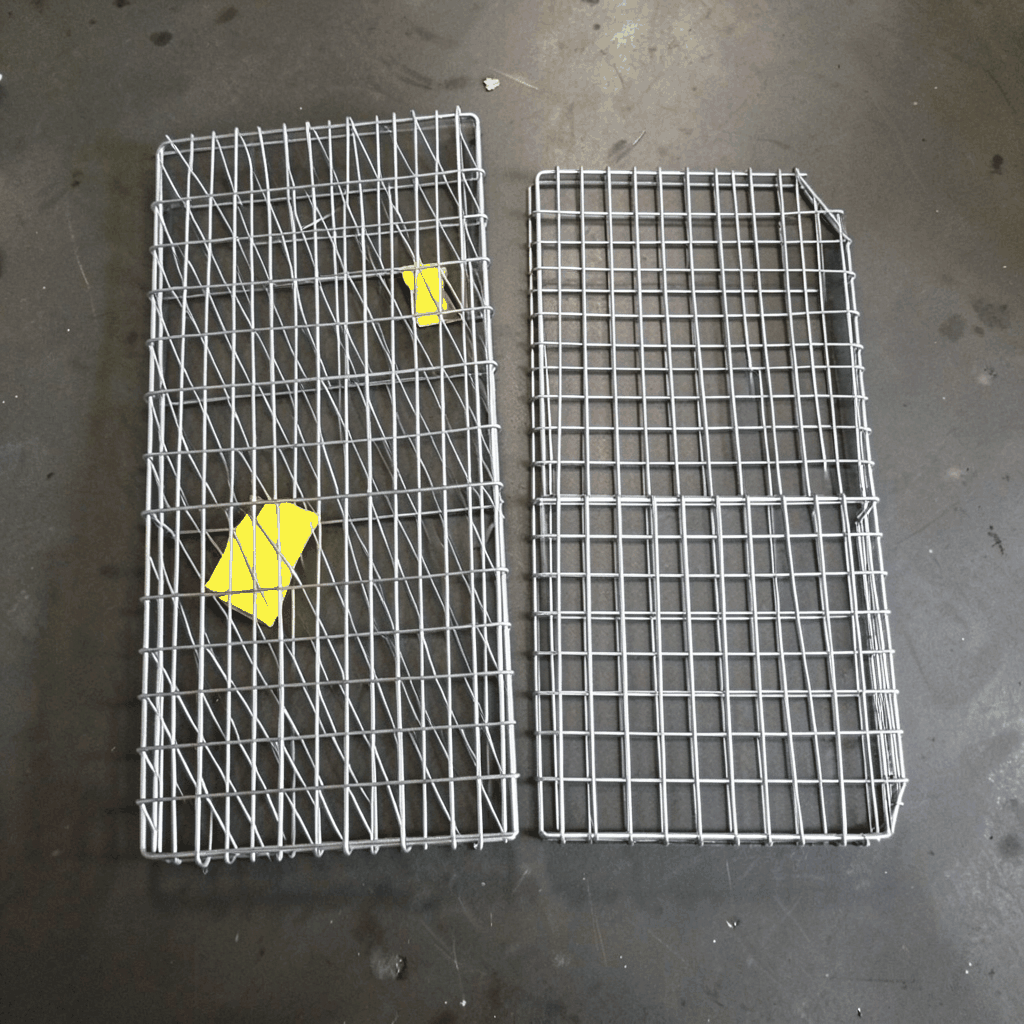
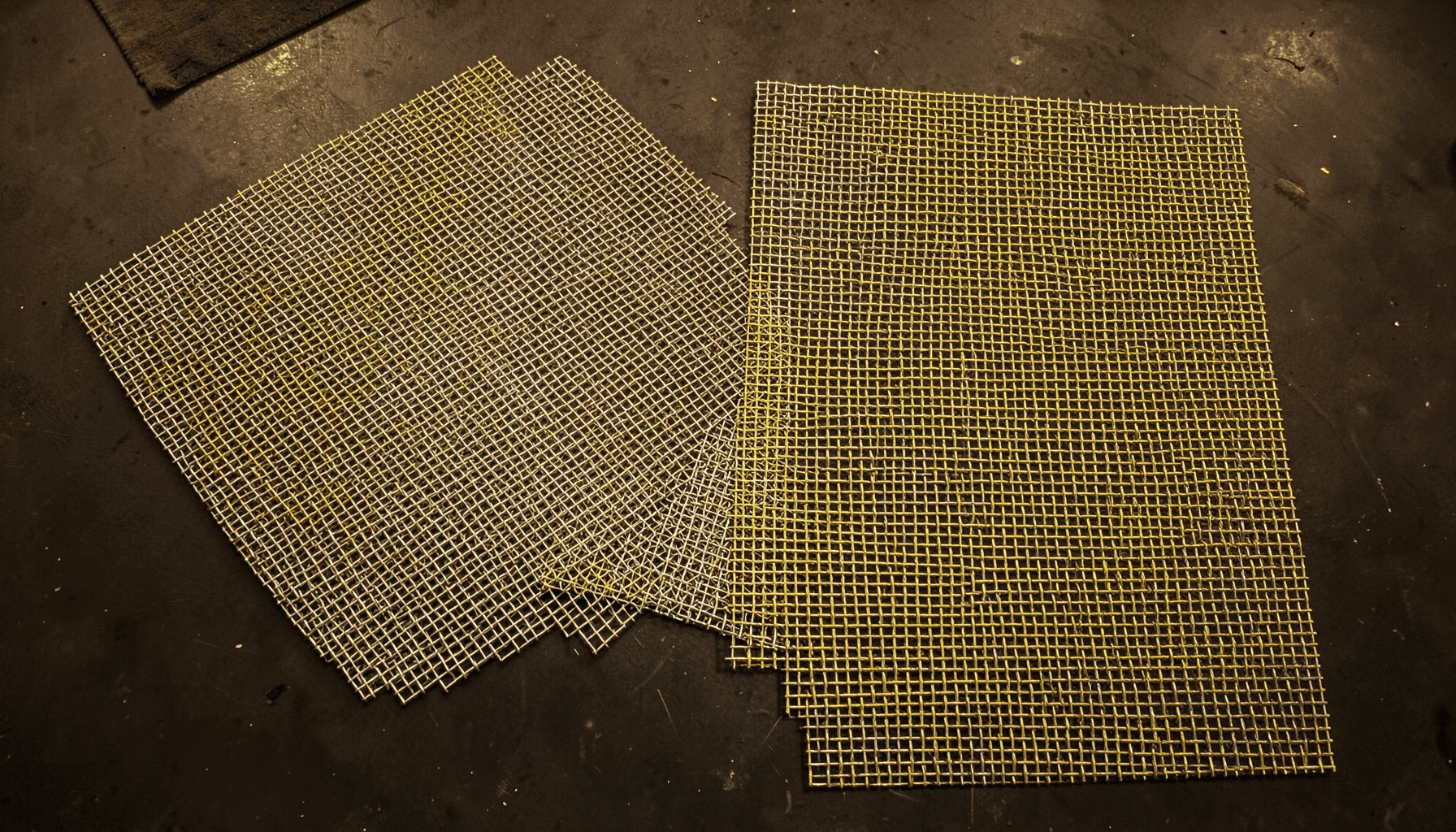
Mesh for water features usually falls into one of three families: woven wire cloth, welded wire panels, or laser-cut sheets. Woven cloth has a soft drape and a slightly textile feel, which works well behind a sheer water curtain in a hotel lobby or a covered alfresco. Welded panels are stiffer and lock the openings precisely, which suits larger architectural screens that span across a fountain basin. Laser-cut sheets open up graphic patterns that designers in Brisbane's New Farm or Sydney's Barangaroo increasingly request for public realm commissions.
Cutting tolerance is tighter than for plain fencing mesh. Water feature screens are usually framed into a perimeter angle or channel, and any out-of-square panel will be obvious the moment the installer offers it up. Frames are best welded from the same grade of stainless so galvanic corrosion is not introduced at the joints. Where dissimilar metals are unavoidable, nylon or EPDM isolators sit between the mesh and any carbon steel bracket.
Patterns that work with water
The pattern choice should echo how the water moves. Horizontal slot perforations read as a falling sheet when water shears over the face, which is why they are popular on modern water walls in Melbourne apartment lobbies. Perforated panels with staggered round holes diffuse a laminar flow into a softer curtain, useful where children may play nearby and splashing needs to feel gentle.
Where the mesh is purely decorative and sits behind a clear glass water blade, designers can push the pattern further without worrying about hydraulic behaviour. Custom motifs, line work drawn from local landscape references, or geometry echoed from a project's facade have all appeared on recent Australian commissions. For these, the fabricator needs accurate CAD data and usually a small offcut sample approved before the full sheet goes into production.
Installation contexts across Australia
Water feature screens turn up across a wide range of Australian projects. In resort pools on the Gold Coast they sit behind sheer descent waterfalls, hiding the surge tank without breaking the line of the pool edge. In commercial plazas they back long linear rills, sometimes running 15 metres or more, where structural deflection across the run has to be controlled. In residential courtyards they often double as privacy screens on a side boundary, with water trickling down the public face.
Local installers tend to favour a stainless sub-frame bolted to the slab or wall, with the mesh panel clipped into place using tamper-resistant fixings. This lets the panel be lifted out for cleaning the basin behind it, which matters when leaves from a neighbouring eucalyptus drop in and clog a weir. Specifying the screen for easy removal adds little to the cost but saves hours of maintenance later.
What to expect from maintenance
A well-fabricated stainless steel mesh screen should need only a gentle freshwater rinse every few weeks to clear dust and salt. In shaded, slow-evaporating corners, owners can wipe the surface with a soft cloth and a mild detergent to prevent tea staining, a cosmetic discolouration that is common in humid coastal air. Avoid harsh abrasives, steel wool, or chloride-based cleaners, as these break down the passive layer and shorten the screen's life.
A yearly check on fixings and frame seals is enough for most residential and light commercial features. Heavily used public fountains, or installations under a constant film of chlorinated splash, benefit from a deeper inspection every six months. Catching a loose clip or a failing seal early keeps water out of the wall cavity and protects the structure behind the screen.
Working with a fabricator on a custom job
Custom jobs begin with a sketch, a water flow rate, and a sense of where the screen sits in the project. From there, a fabricator such as Shuo Ke Wire Mesh can translate that into a workable pattern, advise on grade and thickness, and produce a small sample for sign-off before any full-size sheets are cut. Lead times depend on pattern complexity and finishing, but most architectural water feature screens can be turned around in a few weeks once the design is locked in.
For projects that combine water with other uses, such as a screen that also serves as a balustrade infill or a decorative backdrop to a barbecue, the same panel can usually be detailed to do both jobs. Discussing these secondary roles early avoids redesigning the mesh later and keeps the fabrication on a single, clean production run.
Practical points to lock in before fabrication
- Choose 316 stainless for any outdoor, coastal, or pool-adjacent installation.
- Match the weave or perforation pattern to the hydraulic behaviour you need.
- Specify a frame in the same stainless grade to avoid galvanic reactions.
- Confirm weld passivation is included in the fabrication scope.
- Allow the screen to be removable for routine cleaning of the basin behind it.
- Request a small offcut sample before full production for pattern sign-off.
- Plan a freshwater rinse and a yearly inspection as part of ongoing maintenance.
For a conversation about a specific project, drawing, or pattern, reach out through a fabricator with proven water feature experience to scope a custom stainless mesh screen suited to Australian conditions. If you are still weighing up which screen type suits the water feature best, browse a few reference projects at pattern reference before finalising the specification.