Fabricating Tapered Wire Mesh Baskets for Centrifuge Dewatering
Centrifuge dewatering baskets are precision filtration components that separate liquid from solids while rotating at high speed. Their tapered geometry supports efficient discharge, improves solids handling, and helps operators maintain stable processing conditions. The basket must withstand centrifugal force, abrasion, corrosion, vibration, and repeated cleaning without losing its shape or filtration performance.
A well-fabricated basket is more than a sheet of perforated metal rolled into a cone. Its opening pattern, wire profile, thickness, cone angle, weld quality, balancing, and mounting details all influence the performance of the centrifuge. Small inconsistencies can create uneven flow, accelerated wear, vibration, or difficult solids release.
As a China-based manufacturer and processor of industrial metal mesh, Shuo Ke Wire Mesh Product Technology Co., Ltd. develops customized mesh components for demanding applications. Its experience with stainless steel, aluminum, copper, iron, and alloy products supports the fabrication of engineered baskets for wastewater treatment, chemical processing, mineral separation, food production, and other industrial environments.
Why Tapered Geometry Matters
A tapered basket gradually changes in diameter along its working length. This geometry allows dewatered solids to move toward a discharge zone under centrifugal force, while liquid passes through the mesh openings. The angle of the taper affects residence time, cake movement, loading behavior, and the force required to remove the processed material.
A basket that is too shallow may hold solids for too long or require additional scraping and discharge assistance. A basket with an excessive taper can reduce effective filtration area and cause solids to move too quickly. The correct profile depends on the centrifuge type, rotational speed, feed characteristics, moisture target, and discharge method.
The transition between the cylindrical and tapered areas also requires careful engineering. Abrupt changes can create stress concentrations, while an irregular seam can interrupt the flow of solids. Computer-aided development, controlled forming, and accurate inspection help maintain a consistent conical profile from one end to the other.
Selecting Mesh, Material, And Opening Pattern
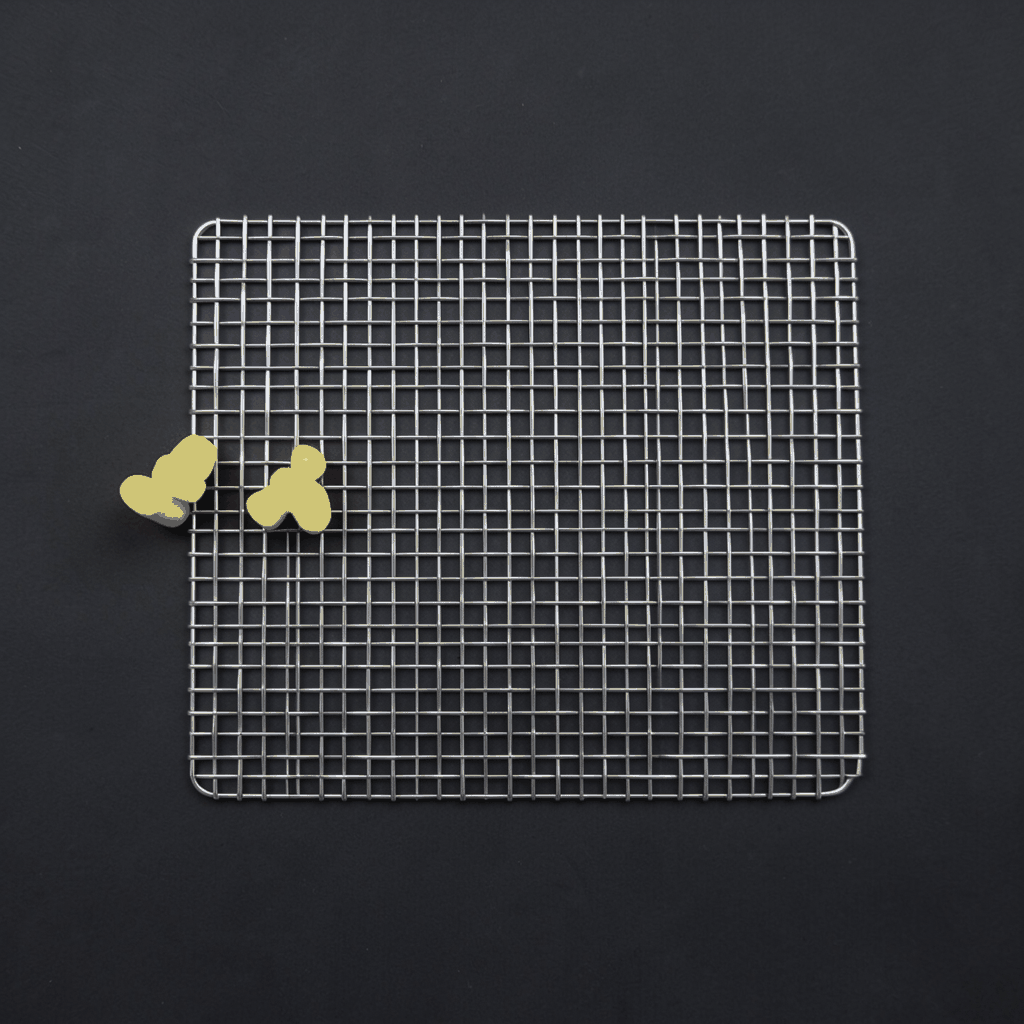
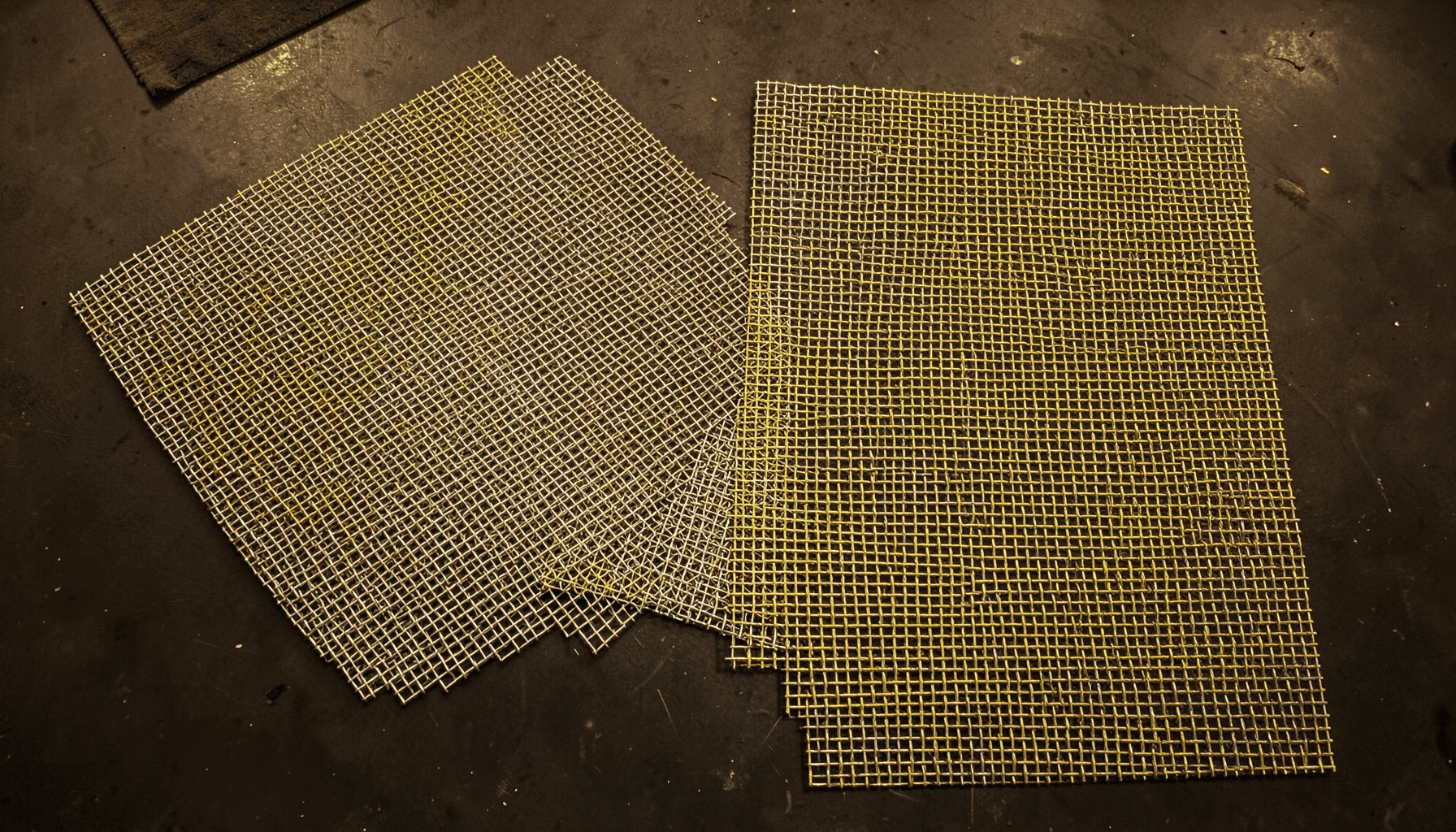
The filtration surface may use woven wire mesh, perforated sheet, wedge wire, or a reinforced combination of materials. Woven mesh provides fine and uniform openings, making it suitable for separating smaller particles. Perforated sheet offers structural strength and predictable hole geometry. Wedge wire designs can provide open flow paths and reduced blinding in applications with larger solids.
Opening size must be selected according to the particle distribution and the required filtrate clarity. An opening that is too large may allow valuable solids to escape. An opening that is too small can restrict drainage, clog rapidly, and increase cleaning frequency. Engineers also need to consider whether the feed contains fibrous matter, sticky solids, crystals, grit, or corrosive chemicals.
Stainless steel is often selected for centrifuge baskets because it combines strength, corrosion resistance, and cleanability. Grade 304 may suit general industrial service, while 316 or comparable alloys are often preferred for chloride exposure, aggressive chemicals, or hygienic processing. Other alloys may be appropriate when weight reduction, electrical conductivity, or specialized chemical resistance is important.
Material thickness should balance rigidity and drainage area. Excessive thickness adds weight and may reduce the effective open area, while insufficient thickness increases the risk of deformation and fatigue. Engineering principles used for material thickness selection can also inform industrial mesh design, although the final basket specification must account for rotational loads, support conditions, and process-specific stresses.
Engineering For Rotational Loads
During operation, the basket is exposed to substantial centrifugal force. The force increases with mass and the square of rotational speed, so a small increase in speed can produce a significant rise in mechanical demand. The basket body, support rings, ribs, fasteners, and welds must work as a unified structure.
The design should identify the maximum operating speed, overspeed condition, basket diameter, unsupported span, and expected solids load. These values help determine the required wall thickness, reinforcement layout, and connection method. A basket that performs well under static loading may still fail through fatigue if it experiences repeated acceleration, braking, vibration, or unbalanced solids.
Reinforcement rings can improve radial stiffness and limit ovalization. Longitudinal ribs may support the mesh over larger diameters, particularly when the filtration surface is thin or the operating speed is high. Reinforcement should be distributed symmetrically so that it does not introduce imbalance or create dead zones where solids accumulate.
Dynamic balancing is essential. The finished basket should be checked for dimensional uniformity, concentricity, and mass distribution before installation. Weld buildup, uneven trimming, or slight variation in mesh tension can affect balance. Precision machining of mounting faces and close control of the central axis further reduce vibration during operation.
Fabrication Process And Quality Control
Fabrication begins with a detailed drawing that defines the small-end and large-end diameters, overall length, cone angle, mesh opening, wire or sheet thickness, support structure, flange details, and connection points. The drawing should also identify tolerances for roundness, concentricity, flatness, and mounting dimensions.
The mesh or perforated material is cut to a developed pattern before forming. For a tapered basket, the pattern resembles a sector or a specialized conical blank rather than a simple rectangle. Accurate development helps prevent gaps, excessive overlap, and uneven opening distribution at the longitudinal seam.
Forming can be completed with controlled rolling, press forming, or staged tooling, depending on the material and basket diameter. Stainless steel work-hardening behavior should be considered during forming, particularly when tight radii or multiple forming passes are required. Excessive force can distort openings or create local thinning.
The longitudinal seam may be welded, mechanically joined, or supported with a designed overlap. Welding is often preferred where a smooth internal surface and high structural integrity are required. Weld penetration, heat input, distortion, and post-weld finishing must be controlled. Grinding or polishing the internal surface can reduce particle hang-up and make cleaning easier.
Quality control should include visual inspection, dimensional measurement, weld examination, opening-size verification, and balance testing. For demanding applications, manufacturers may also perform dye penetrant testing, material verification, surface roughness checks, or trial fitting with the centrifuge support assembly.
| Design Factor | Common Options | Main Benefit | Primary Risk If Misapplied |
|---|---|---|---|
| Filtration surface | Woven mesh, perforated sheet, wedge wire | Controls particle retention and drainage | Blinding, poor filtrate clarity, or solids loss |
| Basket material | 304 stainless steel, 316 stainless steel, alloy steel, specialty alloy | Matches corrosion and strength requirements | Premature corrosion, cracking, or excessive cost |
| Cone profile | Shallow taper, moderate taper, steep taper | Influences solids residence and discharge | Poor cake movement or reduced filtration area |
| Reinforcement | Rings, ribs, backing screen, support frame | Limits deformation under rotation | Imbalance, stress concentration, or blocked flow |
| Seam construction | Welded seam, overlap, mechanical fastening | Provides continuity and serviceability | Leakage, rough internal surface, or fatigue failure |
| Surface finish | Mill finish, brushed, polished, passivated | Supports cleaning and corrosion resistance | Particle retention or difficult sanitation |
| Balance control | Static check, dynamic balance, trial assembly | Reduces vibration and bearing load | Noise, accelerated wear, or unsafe operation |
Matching The Basket To The Process
The feed slurry determines much of the basket design. Fine mineral particles may require narrow openings and abrasion-resistant materials, while fibrous wastewater solids may need a more open surface that resists clogging. Chemical slurries require careful alloy selection, and food or pharmaceutical applications may require sanitary welds, smooth surfaces, and documented material traceability.
Moisture content is another important variable. If the target is a low-moisture cake, the basket must provide sufficient residence time and drainage capacity. If throughput is the priority, a larger open area and faster solids transport may be more valuable than maximum dewatering. The operating cycle should be reviewed together with feed rate, wash liquid, acceleration, and discharge timing.
Cleaning requirements can influence the mesh construction. Baskets exposed to sticky solids may need a smooth internal finish and accessible surfaces for washdown. Applications using high-pressure cleaning should account for jet impact and possible mesh distortion. Where chemical cleaning is used, the cleaning solution must be compatible with the basket alloy and weld finish.
The mounting interface should be verified before production. Bolt circles, flange thickness, keyways, retaining rings, bearing seats, and clearances must match the centrifuge. A basket can meet its filtration specification yet fail during installation if the interface dimensions are incomplete or if the rotating assembly lacks adequate clearance.
Preventing Wear, Fatigue, And Clogging
Abrasive solids can enlarge mesh openings, thin wire sections, and wear the leading edges of perforations. In these conditions, a stronger mesh profile, backing structure, or wear-resistant alloy may extend service life. The design should identify which areas receive the greatest feed impact and whether replaceable wear components are practical.
Fatigue damage often begins at weld toes, sharp corners, mounting holes, or points where reinforcement changes abruptly. Rounded transitions, even load distribution, and controlled welding reduce these risks. Regular inspection should focus on cracking, elongated holes, local buckling, damaged openings, and changes in balance.
Clogging can result from incorrect opening geometry, sticky solids, inadequate wash flow, or an overly smooth process that compresses the cake against the mesh. A suitable opening pattern, controlled operating speed, and appropriate cleaning cycle can reduce blinding. In some processes, a graduated or zoned filtration surface is more effective than one uniform opening across the entire basket.
Maintenance planning should include a defined inspection interval based on operating hours and material severity. Operators can track vibration, motor current, noise, filtrate quality, cake moisture, and throughput as early indicators of basket wear or imbalance. Replacing a damaged basket before secondary damage occurs can protect the spindle, bearings, seals, and drive system.
Custom Manufacturing For Industrial Integration
Standard mesh products rarely match every centrifuge requirement. Custom fabrication allows the manufacturer to adapt the basket to the machine’s geometry, process conditions, and maintenance practices. Design support may include material selection, mesh development, cone forming, structural reinforcement, welded assembly, finishing, and inspection documentation.
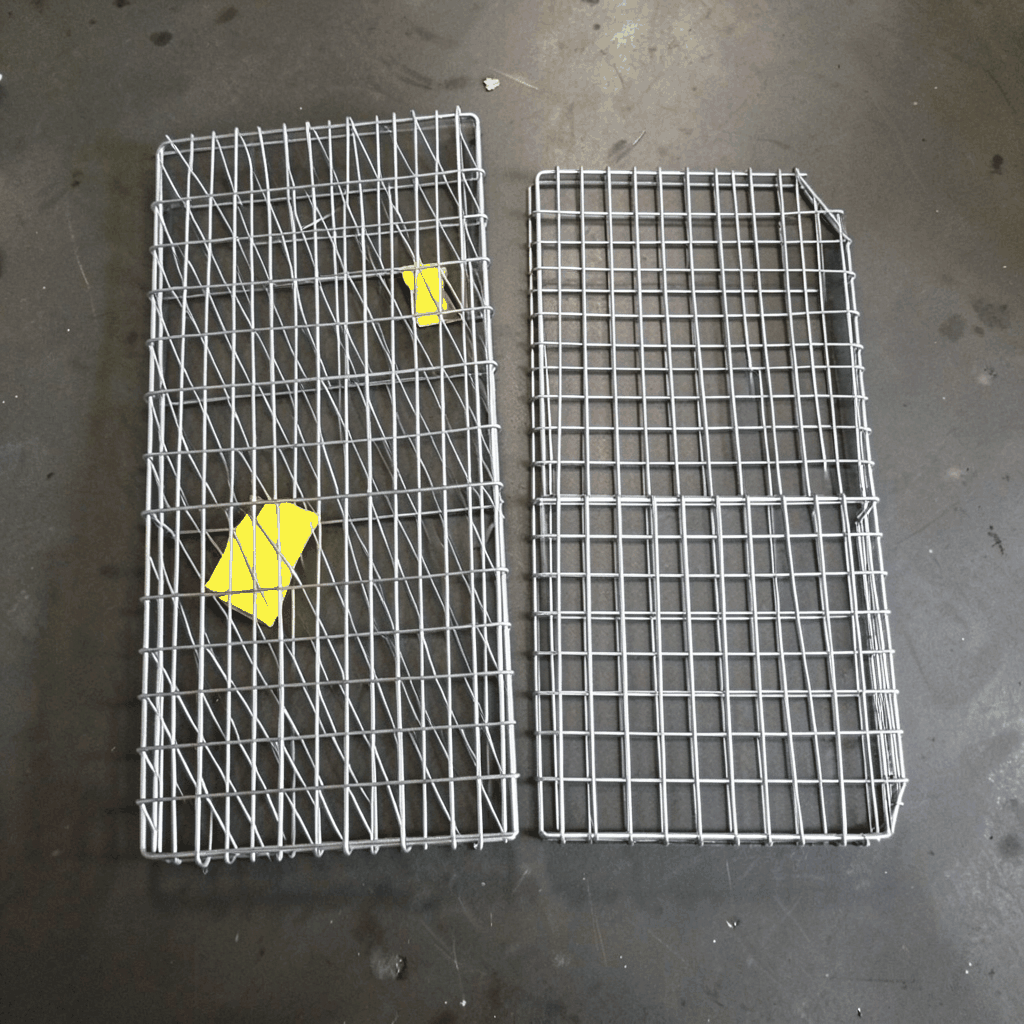
A useful technical package should include the centrifuge model, working and maximum speed, basket dimensions, feed composition, target particle retention, operating temperature, chemical exposure, cleaning method, and expected service life. Photos of the existing basket, worn areas, and mounting interface can help clarify practical constraints that may not appear on a basic drawing.
Prototype production can be valuable when the centrifuge operates under unusual conditions or when a change in opening size is being evaluated. A trial basket can be inspected for fit, balance, drainage, cake release, and wear before a larger production order. For established designs, repeatable tooling and documented process controls support consistent replacement parts.
Shuo Ke can produce customized industrial mesh components in stainless steel and other metals for process equipment and filtration systems. Its manufacturing approach combines practical engineering with the flexibility required for tapered dimensions, specialized openings, reinforced structures, and application-specific finishes.
Recommended Specification Checks
Before approving a tapered dewatering basket, procurement and engineering teams should align the design with the centrifuge manufacturer and operating personnel. The following checks help reduce fabrication errors and improve service reliability:
- Confirm the maximum rotational speed, overspeed requirement, basket mass, and expected solids load.
- Define the particle-size range, target filtrate clarity, cake moisture, and acceptable mesh opening tolerance.
- Select the alloy and surface finish according to corrosion, abrasion, temperature, sanitation, and cleaning conditions.
- Verify cone dimensions, mounting interfaces, reinforcement positions, internal clearances, and balance requirements.
- Require dimensional inspection, weld quality checks, material certification, and balance results before shipment.
Move From Specification To Production
A tapered centrifuge basket should be designed as a rotating structural filter, not as a generic mesh accessory. Correct geometry, material, opening pattern, reinforcement, seam construction, and balance work together to determine drainage performance and operating life.
Provide Shuo Ke with the centrifuge dimensions, process data, material requirements, and existing basket details to begin a practical design review. With a controlled fabrication process and application-specific engineering, the resulting basket can support cleaner separation, dependable solids discharge, reduced vibration, and longer maintenance intervals.