Heavy-Duty Mesh for More Durable Livestock Floors
A livestock floor is working equipment rather than merely a surface beneath an animal. It carries the weight of cattle, pigs, sheep and poultry; handles concentrated impacts from movement; collects manure and urine; and survives repeated cleaning. Heavy-duty mesh used in livestock flooring and slatted-floor systems must balance all those demands while protecting feet and claws. An unsuitable opening, unsupported span or rough edge can turn an efficient housing system into a source of injury, delay and extra labour.
Australian producers face a broad range of operating conditions. Dairy farms in Gippsland and south-west Western Australia require washable surfaces and close attention to hygiene, while cattle yards in northern Queensland must cope with heat, intense sunshine and seasonal downpours. Coastal properties in New South Wales and Tasmania add salt-laden air to the corrosion risk. These environments call for practical engineering and careful material selection, not a generic panel chosen solely from its price.
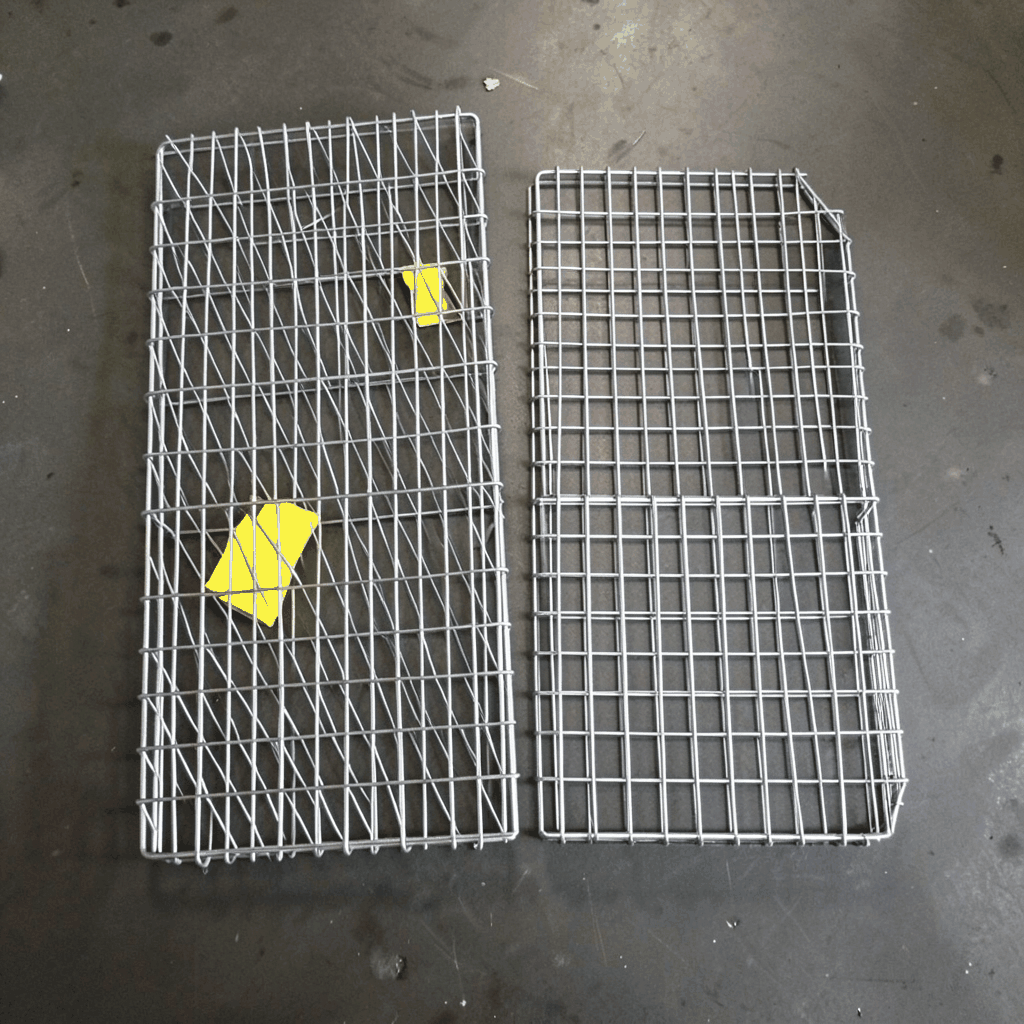
Mesh and slatted floors have different working characteristics. Welded wire decking provides a continuous walking surface with openings for liquid and fine manure to pass through. Traditional slats create longer channels that can accommodate larger manure pieces and make scraping easier. Depending on the stock, the housing system and the cleaning routine, either arrangement can work well. The right choice starts with the animals, the waste-handling method and the people responsible for daily maintenance.
Shuo Ke Wire Mesh Product Technology Co., Ltd. is a China-based manufacturer and processor of architectural and industrial metal mesh products. Its range includes decorative curtains, partitions, wall and elevator cladding, laser-cut screens, fences, gates, guardrails, filters, baskets and barbecue mesh. That wider capability is useful for projects where livestock areas share a site with visitor facilities, agricultural displays or other architectural metalwork.
Match the floor to the livestock and the workload
Begin with a pen-by-pen inventory rather than a single specification for the entire property. Adult cattle in a dairy shed, feedlot cattle, sheep, weaner pigs, sows and young poultry place different demands on a floor. Stock weight determines the expected load, while species and age influence claw anatomy, joint support and the risk of an animal catching a foot in an opening. A mesh developed for adult cattle should not automatically be transferred to a piglet pen or a heavily udder-loaded dairy cow area.
The manure system is equally important. Some sheds use liquid channels, some use slatted manure storage, and others rely on mechanical scrapers or a combination of belts and flushing equipment. Mesh openings must complement the system rather than block it or allow waste to accumulate underneath. Fine welded openings may suit liquid manure handling, but they can retain small bedding particles and slurry. Larger openings improve passage while increasing the risk of hoof or claw entrapment.
Cleaning practices should also influence the selection. A high-pressure hose, a mechanical scraper and chemical disinfectants act differently on wire, concrete and coated surfaces. On dairy farms, cleanliness directly affects udder health and milk quality, so the deck must allow complete drainage and support the washdown routine. In poultry housing, the floor must remain dry, carry bird traffic and resist the accumulation of litter. In cattle yards, broken edges and trapped debris can create more problems than the nominal load rating suggests.
Control gaps, spans and trip hazards
Opening size and wire strength must be considered together. The aim is to support the hoof across enough of the surface that it cannot slip into a slot, without trapping the claw or catching a joint. This balance varies with animal size, floor loading and traffic patterns. Sheep generally require different clearances from cattle, while very young pigs need a surface that does not strain their claws or abrade their legs. Veterinary and livestock-flooring specialists can help confirm the appropriate arrangement for each class of stock.
The panel’s capacity is not determined by wire diameter alone. Support spacing, cross wires, frame sections, weld quality, deflection and the way a panel is fixed all affect performance. Moving animals create dynamic loads that can be greater and more repetitive than the static weight on the floor. A product that looks substantial on a bench may deflect or vibrate when unsupported across a long span. For an installed system, a competent engineer should verify the load path, connections and support spacing rather than relying on a general mesh rating.
Edges deserve close attention. Cut wire ends, exposed welds and raised intersections may become sharp through wear, corrosion or repeated stock movement. Smooth or deburred edges, reinforced perimeter frames and secure fasteners reduce these risks. The surface should also remain predictable under wet conditions. A slight texture can improve grip, but an uneven or excessively coarse finish may catch claws or impede manure removal. Raised profiles should not create abrupt changes in level between adjoining panels.
Select materials that suit Australian conditions
Galvanized steel is a common choice for cattle yards, manure platforms and other demanding agricultural structures. It combines useful structural capacity with a protective zinc coating and is widely available in forms suited to drainage and livestock use. The specification should still identify the required coating, panel dimensions and edge treatment. Damage to galvanized surfaces during handling or installation can expose steel at vulnerable points, and cut areas may need additional protection in harsh or wet environments.
Stainless steel offers another route where hygiene, cleanability or corrosion resistance justifies the higher material cost. It is particularly relevant to coastal properties, washdown areas and facilities handling sensitive stock. Aluminium provides low weight and good corrosion resistance, but it must not be treated as a direct substitution for steel without checking stiffness, connections and fatigue performance. Engineers often need a larger aluminium section to achieve comparable structural behaviour, which can change the overall design and price.
Not every mesh material in a supplier’s range belongs beneath heavy stock. Copper and some decorative alloys can support architectural features, partitions and visible screens, but they are not automatic choices for load-bearing floors. Their mechanical properties, cost and exposure to manure cleaners need separate consideration. Shuo Ke’s ability to process iron, stainless steel, aluminium, copper and other alloys allows the material decision to follow the service conditions instead of forcing one material into every application.
Cleaning chemistry deserves attention alongside weather. Alkaline cleaners, acidic products, chloride exposure and temperature can affect coatings or base metals. Confirm that the selected finish is compatible with the chemicals used on site, and allow cut edges to be sealed where the specification calls for it. At a coastal Victorian dairy or a humid northern NSW property, corrosion protection may influence the expected service life more than any small change in wire diameter.
Weigh mesh against conventional slatted floors
Mesh decking and traditional slats both create space for manure to fall away from the animals, but they manage solids differently. Long slats allow larger dung pieces to drop into a pit or scraper channel, which can reduce the need for frequent removal from the walking surface. Mesh tends to break manure into smaller pieces, yet solid material can still remain caught between wires. Where manure consistency changes through the year, a system designed around one assumption may need adjustment.
Both systems require proper ventilation and drainage below the floor. A raised platform that traps humid air can contribute to odour and condensation, while inadequately supported sections can move under load. Mesh can be fitted to custom panel dimensions and replaced independently, which is useful in modular sheds. Slats are familiar to contractors and may integrate readily with an existing frame, although a retrofit still requires the new spacing and support arrangement to match the old structure.
The comparison should be based on installed cost and operating performance rather than the purchase price of the mesh alone. Include support steel, fasteners, edge protection, removal, delivery and installation. In the Australian market, distributors, shed builders, engineers and contractors may influence the final specification, while regional freight and lead times can materially affect the decision. Farmers also weigh downtime, animal health, labour and the cost of replacing damaged panels against the initial outlay.
A system that suits a dusty cattle yard in western New South Wales may perform differently in a humid poultry house or a dairy shed in Gippsland. Trial panels can reveal how manure, water and bedding behave under real conditions. At agricultural shows and public-facing farms, architectural mesh partitions or laser-cut screens can provide a visual link with the heavier livestock areas, provided the decorative elements are kept separate from structural floor components.
Move from specification to a testable sample
Prepare a clear technical brief before requesting quotations. Include the livestock species and ages, expected weights, pen dimensions, support spacing, preferred opening, loading conditions, local exposure, cleaning methods and any chemicals used regularly. Photographs can help describe existing frames and access points. This information allows a supplier to distinguish between a standard product and a made-to-measure panel, identify likely connection issues and flag details that require engineering review.
Samples and trial panels are valuable where manure behaviour or animal movement cannot be predicted from a drawing alone. Before ordering a full run, ask for a representative sample and compare livestock mesh options against the intended application. Check the finish, welds, edges, fasteners and fit under actual cleaning conditions. A short trial in a representative pen can expose problems that would otherwise appear only after installation.
Send your requirements to Shuo Ke Wire Mesh Product Technology Co., Ltd. for a material and fabrication discussion. The team can review the drawings, proposed dimensions, environmental conditions and installation requirements before recommending a practical mesh construction. Request a sample, a technical drawing or a quotation for a non-standard panel, and make the next purchasing decision on tested performance rather than assumptions about the installation.