How Mesh Opening Shape Affects Storefront Security Grille Visibility
Storefront security grilles must perform two jobs at the same time: deter unauthorized access and preserve a clear view of the merchandise, interior lighting, and architectural frontage. The geometry of each opening has a direct effect on how people see through the grille, how much air and light pass through it, and how visually prominent the barrier appears after installation.
Mesh opening shape also influences strength, maintenance, fabrication cost, and the overall character of a retail entrance. A square aperture may create a precise industrial pattern, while a diamond, slot, or perforated decorative design can produce different sightlines even when the open area is similar.
For retailers, architects, and security contractors, selecting a grille by material alone is rarely enough. Stainless steel, aluminum, iron, and other alloys can all provide useful performance, but the opening pattern determines how the finished screen interacts with pedestrians, display windows, cameras, lighting, and the surrounding streetscape.
Why Opening Geometry Controls Visibility
Visibility through a security grille depends on more than the percentage of open area. The direction, width, and spacing of the openings determine the angle at which an observer can see the storefront. A broad square aperture generally provides balanced visibility from several directions, while a narrow slot can restrict the view when a person approaches from an angle.
The solid bars or strands between openings create visual interruptions. These interruptions may be minor when the mesh is installed several meters behind the glass, yet they become much more noticeable when the grille sits directly over a display window. A dense pattern can make merchandise appear fragmented, especially when strong interior lighting creates reflections on the metal.
Opening orientation is also important. Diamond mesh, for example, places diagonal members across the viewing field. This can create a dynamic decorative effect, but the crossing lines may obscure small products, price signs, or graphics more than a similar square pattern. Horizontal slots can preserve a wide lateral view while limiting vertical sightlines, which may be useful for certain facade designs.
Comparing Common Storefront Mesh Patterns
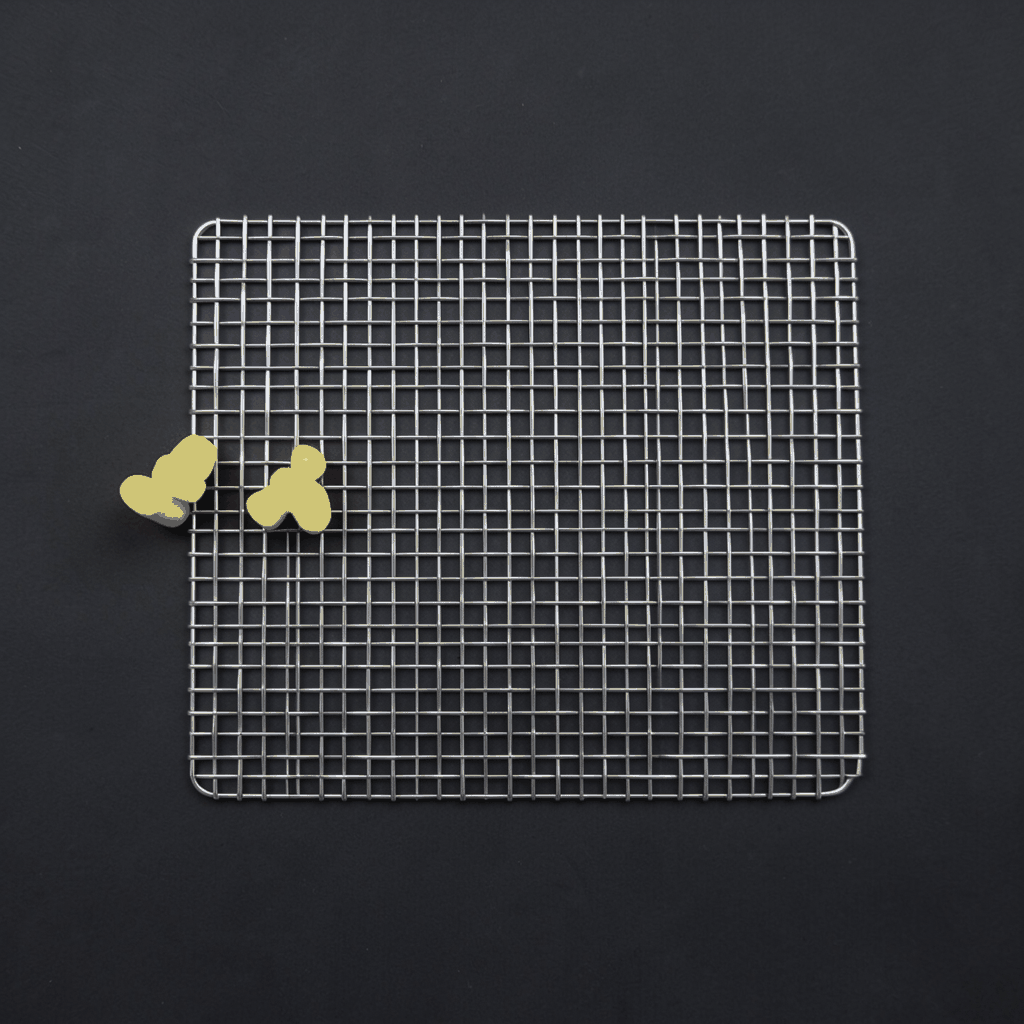
Square openings are often selected for their visual order and predictable sightlines. They suit modern commercial fronts, service counters, and security partitions where the owner wants a clean, neutral appearance. Their regular spacing also makes measurements and panel alignment relatively straightforward during fabrication and installation.
Diamond openings offer a more decorative appearance and can add movement to a closed storefront. Depending on the strand width and opening size, they may provide a reasonable balance between transparency and resistance to forced entry. The diagonal pattern can, however, make the barrier look denser than its open-area percentage suggests.
Slotted openings direct visibility along a particular axis. Long horizontal slots can allow passersby to see illuminated displays while reducing the feeling of a completely open facade. Vertical slots may emphasize the height of a narrow entrance and provide a more controlled view of the interior. Round or hexagonal apertures create softer or more distinctive visual effects, but their practical visibility depends heavily on diameter, spacing, and border thickness.
The following comparison shows how geometry commonly affects storefront performance. Actual results vary according to wire or strip thickness, panel depth, finish, lighting, viewing distance, and installation angle.
| Opening shape | Typical visual character | Visibility effect | Security and practical considerations |
|---|---|---|---|
| Square | Balanced, orderly, technical | Clear view from multiple directions when openings are large enough | Easy to align; suitable for general retail security |
| Diamond | Decorative, directional, energetic | Diagonal members can interrupt product-level views | Strong visual presence; useful for feature facades |
| Horizontal slot | Linear and streamlined | Good side-to-side visibility; reduced vertical view | Supports privacy and controlled sightlines |
| Vertical slot | Tall, architectural, refined | Emphasizes upward and downward lines | Works well on narrow entrances and tall storefronts |
| Round | Soft, patterned, contemporary | Visibility depends strongly on diameter and spacing | Can reduce sharp visual contrast; may require precise fabrication |
| Hexagonal | Geometric and distinctive | Broad visual texture with repeated angled edges | Suitable for decorative screens and branded environments |
Balancing Open Area With Visual Clarity
Open-area percentage is a useful starting point, but it should not be treated as a complete visibility measurement. Two grilles can have the same open area and look very different because one uses wide openings with thin members and the other uses small openings with heavier strands. The second option may feel substantially more opaque from a pedestrian viewpoint.
The scale of the merchandise should guide the selection. Large furniture, mannequins, and illuminated brand displays can remain visible behind a relatively dense pattern. Small electronics, jewelry, cosmetics, and printed promotions usually need larger or more open apertures so that the mesh does not compete with the items on display.
Lighting changes the perceived transparency of a storefront grille. Bright interior light can make open areas appear darker by contrast, while exterior lighting can highlight the metal members and make the screen more noticeable. A sample panel should be tested in both daytime and nighttime conditions, particularly when the grille is intended for a premium retail environment.
For projects requiring a refined appearance, architectural mesh specialists such as Shuo Ke Wire Mesh can develop customized combinations of opening size, strand profile, alloy, and finish. A physical sample helps stakeholders judge visibility more accurately than a drawing or product photograph.
Materials, Finishes, And Edge Profiles
The material affects how sharply the opening shape is perceived. Bright stainless steel reflects surrounding light and can make a fine pattern appear more prominent. Brushed or satin stainless steel reduces glare and often creates a calmer visual surface. Powder-coated aluminum or iron can match a brand color, but dark finishes may increase contrast between the open areas and the interior.
Aluminum is useful when low weight is important, especially for folding, sliding, or retractable grille assemblies. Stainless steel is favored where corrosion resistance, long service life, and a polished architectural appearance are priorities. Iron and carbon steel can provide robust security solutions, though the protective coating and maintenance plan become especially important in humid or exposed locations.
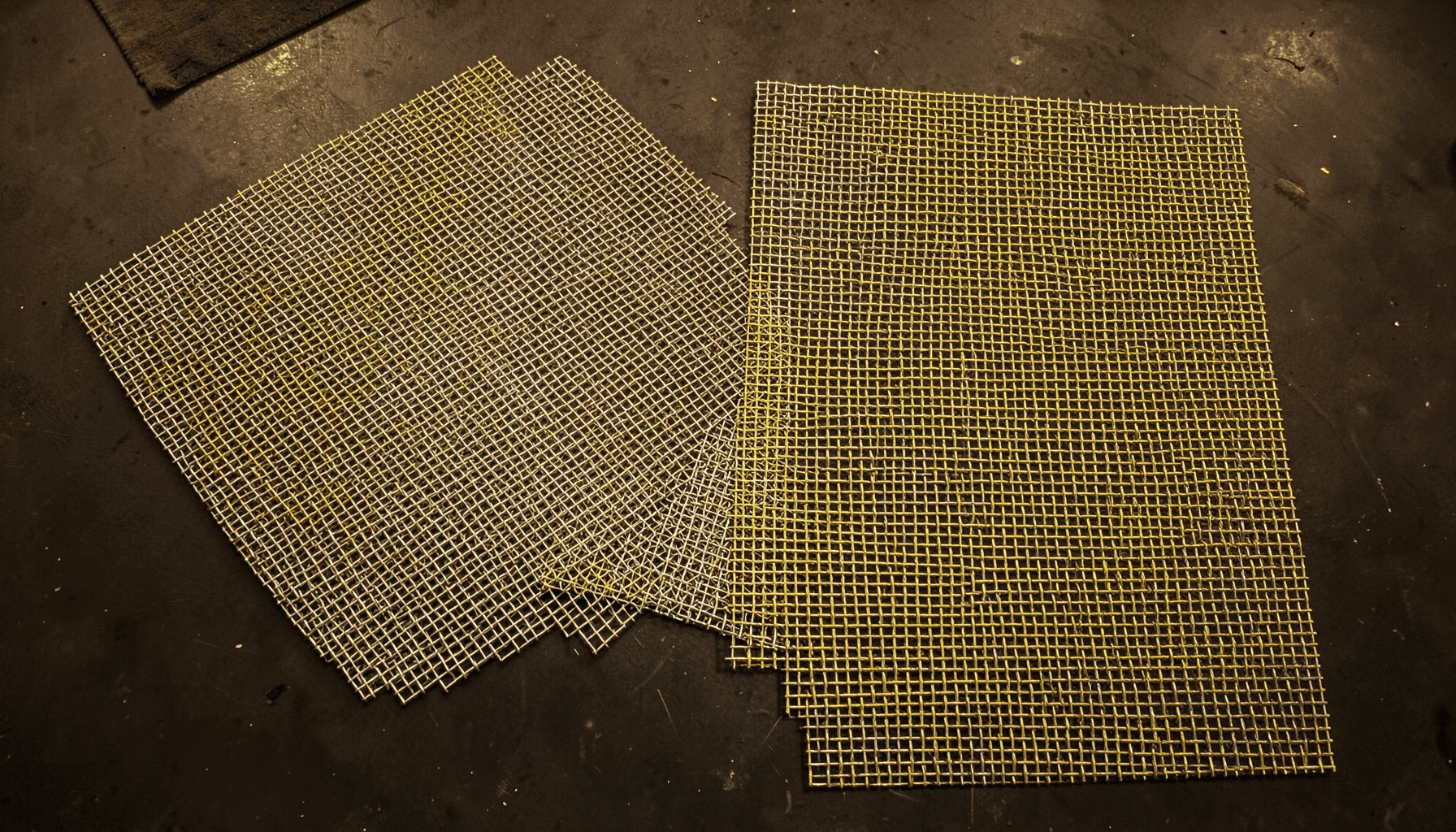
The profile of the material between openings also changes apparent opacity. Flat strips can create a broad, graphic pattern, while round wire produces finer lines and more points of reflected light. Expanded metal, woven wire cloth, perforated sheet, and welded mesh each interpret “opening shape” differently. A woven screen may offer a softer visual texture, whereas laser-cut sheet can produce highly controlled motifs and branded patterns.
Edges and frames should receive the same attention as the central mesh. Oversized borders, mounting channels, hinges, and locking rails can block more of the storefront than the selected aperture pattern. A well-designed grille coordinates the perimeter with the mesh so that the security components look intentional rather than added as an afterthought.
Viewing Angles And Storefront Layout
A grille that looks transparent from directly in front may appear much denser from the sidewalk edge. Retail sites often have angled approaches, corner entrances, nearby transit paths, or elevated viewpoints. Designers should evaluate the screen from the positions where customers, security staff, and cameras will actually observe it.
The distance between the grille and the glass also affects visibility. When the mesh is mounted close to the window, its members sit directly in the viewer’s line of sight and can interrupt the display. A modest offset can create visual depth and make the barrier less dominant. It may also allow lighting to illuminate the merchandise without producing severe reflections on the grille.
Storefront width and mullion placement can influence the best opening orientation. Horizontal slots may visually connect several display bays, while vertical openings can reinforce tall mullions and entrance columns. On a corner shop, a pattern with balanced visibility from multiple directions may be preferable to a strongly directional slot design.
Security cameras require a separate review. Narrow or angled openings can create blind areas for cameras positioned behind the grille, particularly near corners and door hardware. Camera lenses, lighting fixtures, signage, and access controls should be tested with the proposed sample panel before the fabrication drawing is finalized.
Choosing The Right Pattern For The Application
A security grille for a luxury boutique may prioritize display visibility, a quiet finish, and a pattern that complements the facade. A convenience store or pharmacy may place greater emphasis on robust construction, easy cleaning, and broad visibility for staff and external surveillance. A shopping center may require a coordinated design across several tenants, with different opening shapes adapted to one architectural language.
Decorative metal mesh can be especially effective where a closed shop must still contribute to the public appearance of a building. Laser-cut screens, woven curtains, and custom partitions can use repeated motifs, logos, or geometric arrangements while maintaining a protective barrier. The pattern must remain sufficiently open for the intended level of transparency and should not create edges or gaps that compromise safe operation.
For entrances that open and close frequently, the mesh must be matched to the hardware. Heavy panels may require reinforced tracks, reliable rollers, and carefully designed locking points. Folding or sliding systems can use lighter aluminum components, while fixed security screens may accommodate denser stainless steel or steel mesh. The opening pattern should never be selected without considering panel weight, span, frame stiffness, and maintenance access.
A practical selection process includes these checks:
- Compare full-size samples from normal pedestrian viewing distances and side angles.
- Review daytime and nighttime visibility with the actual display lighting.
- Match opening scale to the size of merchandise, signs, and graphics behind the grille.
- Check camera coverage, emergency access, cleaning access, and hardware clearances.
- Select the alloy and finish according to corrosion exposure, weight, impact requirements, and brand appearance.
Custom Fabrication And Long-Term Performance
Standard mesh patterns can solve many storefront requirements, but custom fabrication becomes valuable when the building has unusual dimensions or a strict visual identity. Panels can be cut to fit curved walls, irregular openings, sloped soffits, and coordinated facade elements. Custom work also allows the designer to adjust open area, bar width, panel framing, and surface finish as a complete system.
The most useful specification documents identify the opening shape, nominal aperture size, material grade, wire or strip diameter, open-area target, panel dimensions, frame details, finish, and mounting method. Calling out only “decorative security mesh” leaves too much room for differences in appearance and performance. A technical drawing and approved sample should be treated as part of the quality-control process.
Maintenance is influenced by the geometry as well. Very small openings collect dust and may take longer to clean, while complex cut patterns can hold grime at internal corners. Smooth finishes and accessible panels simplify routine care. In coastal or industrial areas, corrosion-resistant materials and properly protected fasteners help preserve both the security function and the intended transparency.
A well-selected opening shape remains useful beyond its first visual impression. It controls how a storefront communicates after closing, affects the perceived quality of the facade, and supports practical requirements such as ventilation, surveillance, cleaning, and daily operation. When geometry, material, finish, and hardware are considered together, a security grille can protect the premises without turning the frontage into a visual barrier.
Share the storefront dimensions, preferred visibility level, operating method, and finish requirements with a qualified metal mesh manufacturer. A properly developed sample and fabrication drawing will make it easier to select the opening shape that delivers the right combination of security, transparency, and architectural character.