How Mesh Weave Pattern Shapes HVAC Intake Grille Airflow
HVAC intake grilles must admit sufficient air while protecting fans, coils, filters, and interior equipment from debris, moisture, and accidental contact. The metal mesh selected for the grille forms the first aerodynamic barrier in the system. Its pattern, opening size, wire diameter, thickness, and installation direction all influence how easily air can pass through.
A grille with a large geometric opening may appear highly open, yet its actual free area can be reduced by thick wires, overlapping strands, frames, louvers, or a second protective layer. These details affect pressure drop, fan energy consumption, sound levels, and the uniformity of airflow reaching downstream components.
Architectural appearance also matters in commercial buildings, transport facilities, industrial plants, and municipal installations. Stainless steel, aluminum, copper, and coated iron mesh can provide different combinations of strength, corrosion resistance, visual character, and airflow performance. Choosing the weave pattern as part of the complete HVAC design helps balance engineering requirements with the appearance of the building envelope.
Open Area And Pressure Drop
The most important airflow characteristic of an intake grille is free area, sometimes called open area or open-area ratio. This is the percentage of the grille surface that remains available for air passage. A higher free-area percentage generally reduces air velocity through the openings and lowers pressure loss at a given volume flow rate.
Pressure drop is the resistance created as air moves through the mesh. When the openings are too small or the wires are too thick, air accelerates through the restricted passages. The resulting turbulence increases static pressure loss and may require the fan to operate at a higher speed. That can raise electrical consumption and contribute to additional mechanical noise.
Open area alone does not provide a complete performance picture. Two meshes may have similar percentages of open surface but different wire arrangements and passage shapes. A woven wire mesh with smooth, regular channels may behave differently from an expanded or perforated pattern with sharp edges and changing flow directions. The grille’s depth, frame, mounting distance, and relationship to the fan also influence the final pressure drop.
How Common Weave Patterns Guide Air
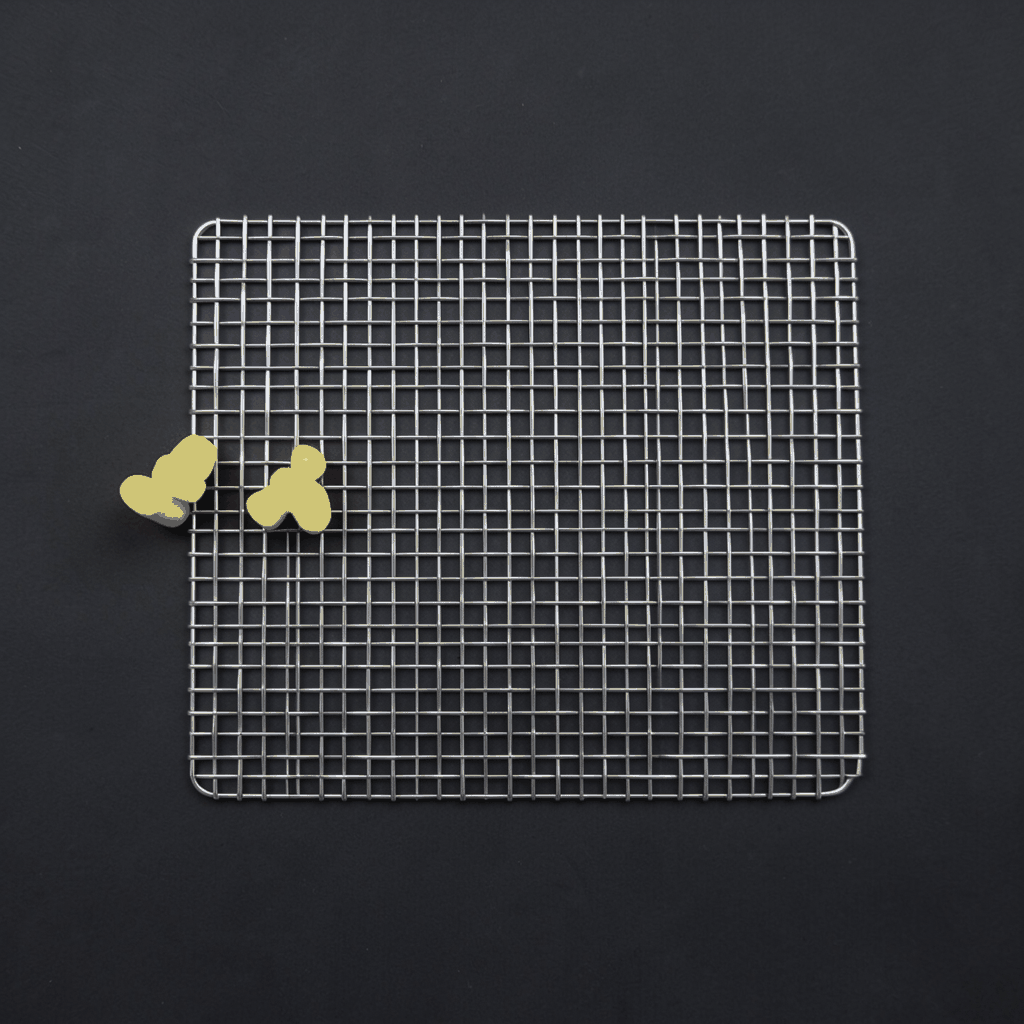
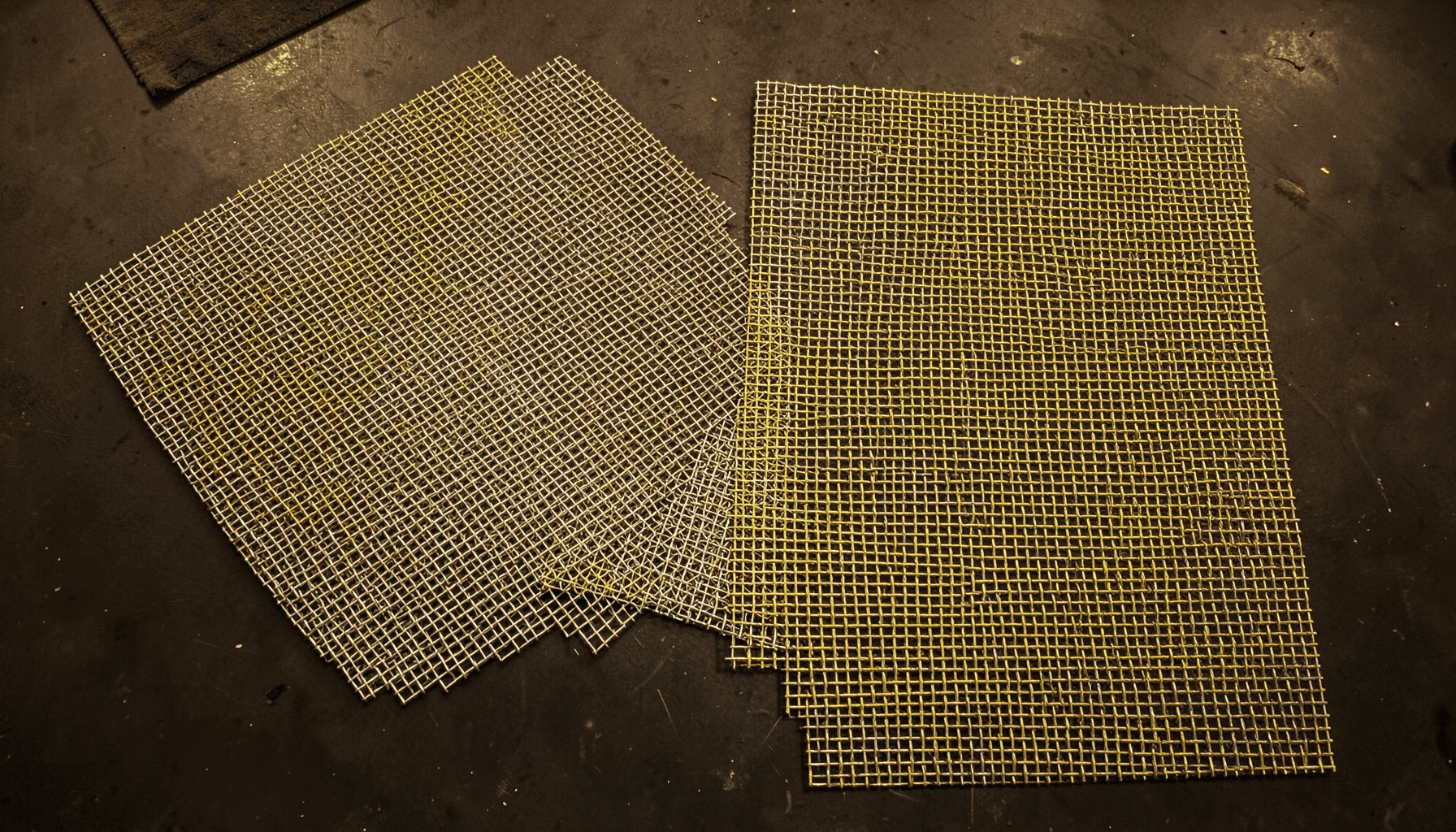
Plain weave is formed by passing each wire alternately over and under the crossing wire. It creates a stable, uniform grid with predictable openings and a clean appearance. Because the strands intersect frequently, plain weave can provide good rigidity and protection, although its pressure loss may increase when fine wire and small openings are used.
Dutch weave uses different wire diameters or a tighter arrangement to create stronger filtration characteristics. It is useful when the grille must retain fine particles, but its smaller and more numerous restrictions can produce greater airflow resistance. This type of mesh is usually selected when contamination control has a higher priority than maximum air volume.
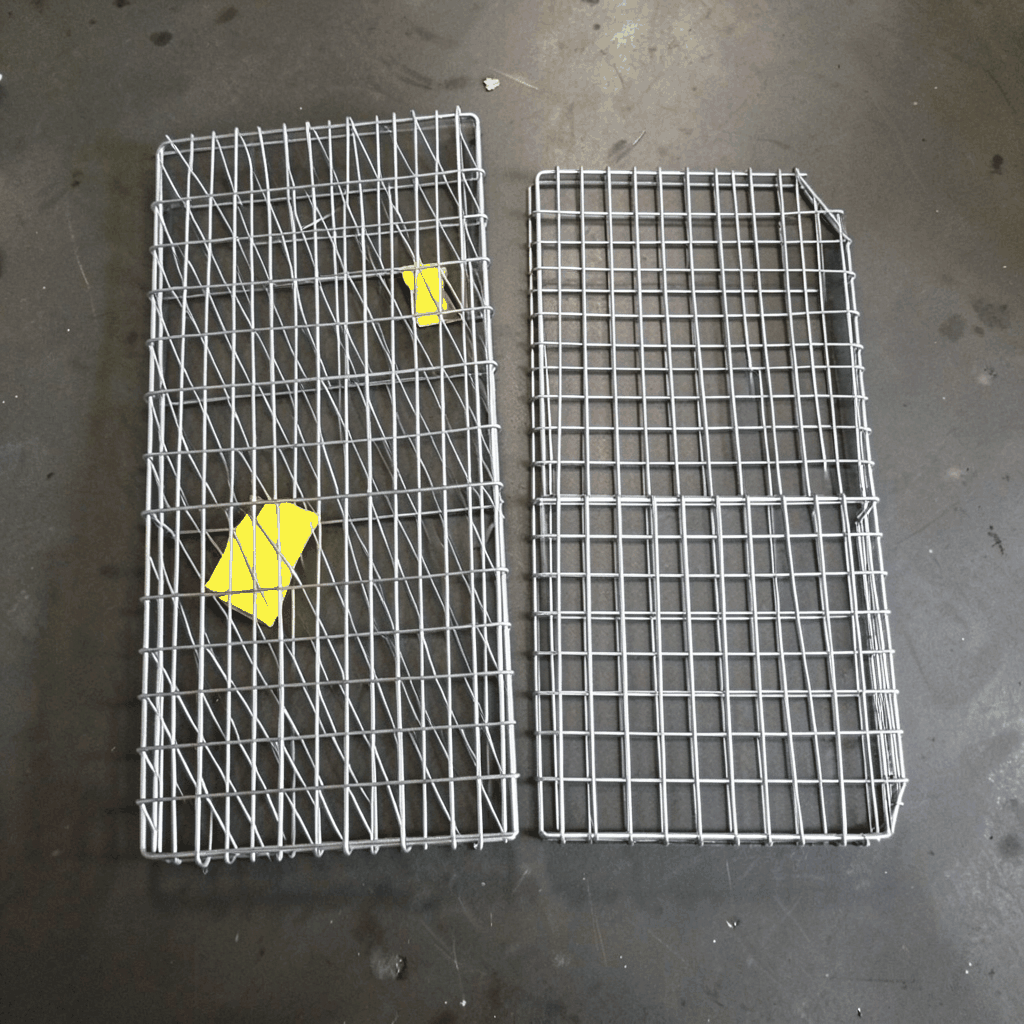
Crimped and welded mesh patterns can offer larger, more direct openings. Crimped mesh holds its shape through preformed bends, while welded mesh uses fixed intersections that support a rigid panel. These options can perform well in larger intake panels where structural strength, impact resistance, and cleaning access are important. Expanded metal and perforated sheet have their own airflow behavior: the former often creates angled passages, while the latter depends strongly on hole shape, pitch, and the direction of the punched openings.
Decorative woven mesh can be used where the HVAC grille is visible, but visual density should not be confused with aerodynamic efficiency. A layered decorative curtain or architectural screen may need a separate high-free-area backing grille to achieve reliable air performance.
Pattern Selection For Different Air Intakes
Fresh-air intakes exposed to outdoor conditions need protection from leaves, insects, wind-driven rain, and airborne debris. A coarse woven or welded mesh may be appropriate when the system includes a separate filter stage downstream. Larger openings reduce the initial pressure drop and make the screen easier to clean, while the filter handles finer particles.
Return-air grilles in offices, retail spaces, hotels, and residential buildings often place greater emphasis on appearance and sound control. A fine stainless steel or aluminum mesh can create a refined surface, but the designer should verify that the decorative pattern does not reduce the free area below the fan manufacturer’s requirements. A removable panel can simplify inspection and maintenance.
Industrial intake applications may require a stronger material and a more robust mesh construction. Stainless steel offers strong corrosion resistance in humid or chemically active locations, while aluminum provides low weight and good corrosion resistance for many exterior installations. Coated iron or carbon steel can be suitable where impact resistance and cost control are important, provided the coating system matches the exposure conditions.
The best pattern depends on the complete air-handling arrangement. A grille installed directly in front of a fan may need a low-resistance, highly uniform opening. A grille positioned several duct diameters upstream may allow greater flexibility because the airflow has more distance to redistribute. Engineers should consider airflow volume, face velocity, filter loading, weather protection, access, and expected fouling before approving the mesh.
| Mesh Pattern | Typical Airflow Character | Strengths | Main Design Consideration |
|---|---|---|---|
| Plain woven mesh | Uniform passages with moderate resistance | Predictable geometry, versatile, clean appearance | Fine wires and small openings can raise pressure drop |
| Dutch weave | Higher resistance due to tighter filtration structure | Fine particle retention and robust filtration | Usually unsuitable where maximum air volume is the priority |
| Welded mesh | Direct openings with rigid intersections | Strong panels, easy fabrication, good impact resistance | Joint size and frame area reduce effective free area |
| Crimped mesh | Open passages supported by shaped wires | Good rigidity and larger panel sizes | Crimp geometry can create turbulence at high velocity |
| Expanded metal | Angled, continuous openings | Efficient material use, stiffness, security | Orientation and strand shape affect flow direction |
| Perforated sheet | Regular punched holes | Durable, easy to clean, architectural finish | Hole pitch, thickness, and edge profile control resistance |
| Decorative woven mesh | Variable visual density and airflow | Strong design value for visible grilles and screens | May require a separate airflow-rated backing layer |
Materials, Wire Diameter, And Surface Finish
Material choice affects airflow indirectly through the way a mesh can be manufactured and maintained. Stainless steel wire can provide a durable, corrosion-resistant surface for outdoor or humid HVAC installations. Aluminum mesh is lighter and can reduce the load on a large architectural grille frame. Copper has a distinctive appearance and useful corrosion characteristics, although it is generally chosen for visual or specialist applications rather than basic cost efficiency.
Wire diameter is a critical variable. Thicker wire increases strength and impact resistance, but it occupies more of the grille face and narrows the openings. Very fine wire can provide a higher theoretical free area, yet it may be more vulnerable to deformation, clogging, or damage during cleaning. The right balance depends on the expected debris, access conditions, panel size, and required service life.
Surface treatment can also influence long-term airflow. Paint, powder coating, galvanizing, or other finishes add a thin layer over the strands and edges. The effect may be small on a coarse grille, but it becomes more relevant on fine mesh with narrow openings. Corrosion, dust accumulation, and paint deterioration can create additional roughness and blockage over time.
For this reason, the clean pressure drop and the maintained pressure drop should be considered separately. A grille that performs well when new may become restrictive after months of exposure to dust, pollen, grease, salt, or industrial particles. Material and finish should be selected with the cleaning schedule and environment in mind.
Airflow Uniformity, Noise, And Fan Efficiency
A grille does more than determine the total amount of air entering the system. Its pattern also affects how evenly air is distributed across the intake face. Uneven openings, partial blockage, or a nearby wall can produce jets and dead zones. These nonuniform conditions may reduce filter life, create localized coil loading, and place extra stress on fan components.
Sharp-edged openings and abrupt changes in direction can increase turbulence. Turbulence consumes energy and may generate broadband airflow noise, especially when face velocity is high. A smooth, consistent pattern with adequate free area generally supports quieter operation, although the final acoustic result also depends on duct geometry, fan selection, louvers, dampers, and vibration isolation.
Fan efficiency is closely linked to grille resistance. If a restrictive screen causes the system to operate away from its intended design point, the fan may deliver less air or consume more power. In a large commercial or industrial installation, a small pressure-loss difference can produce significant operating costs over the equipment’s service life.
A practical design should therefore evaluate grille performance at the expected operating airflow, not simply select the pattern with the largest advertised opening percentage. Product testing, supplier data, or project-specific airflow calculations can help establish whether the selected mesh meets the required velocity and pressure-drop limits.
Practical Design Recommendations
Mesh selection works best when aerodynamic performance is reviewed together with fabrication and site conditions. The grille frame, support bars, fasteners, insect screens, rain hoods, filters, and access panels all occupy space that may reduce the net open area. The calculation should use the complete assembly rather than the mesh sheet alone.
Before placing an order, the project team should define the target airflow, available grille dimensions, maximum face velocity, allowable pressure drop, environmental exposure, and cleaning method. A manufacturer experienced in architectural and industrial mesh processing can then recommend a suitable pattern, material, thickness, edge treatment, and panel configuration.
- Calculate net free area after deducting frames, supports, overlapping layers, and mounting details.
- Compare pressure drop at the actual design airflow instead of relying only on visual openness.
- Select wire diameter and opening size according to debris load, impact risk, and cleaning access.
- Use corrosion-resistant stainless steel or aluminum where humidity, salt, or chemical exposure may shorten service life.
- Request a sample or technical drawing when appearance, airflow direction, and pattern alignment are important.
Custom fabrication is particularly valuable for large intake grilles, irregular openings, curved screens, and projects where the mesh must align with an architectural façade. Laser-cut panels, perforated sheets, woven mesh, welded panels, and decorative metal screens can be combined when the visible finish and airflow function require different solutions.
Designing A Grille That Performs Over Time
The most reliable HVAC intake grille is designed for its full service life rather than its initial appearance. Mesh should remain sufficiently open after dust buildup, seasonal debris, and routine coating wear. Removable sections, accessible fasteners, and washable surfaces can make regular maintenance more practical and preserve airflow capacity.
Installation details deserve equal attention. A mesh panel that is compressed, warped, poorly supported, or installed too close to a fan may behave differently from the same panel tested in isolation. Adequate clearance, correct tension, secure framing, and consistent panel orientation help maintain the intended flow pattern.
Shuo Ke Wire Mesh Product Technology Co., Ltd. manufactures and processes mesh products for architectural, industrial, residential, commercial, and municipal applications. Its capabilities include stainless steel, aluminum, copper, iron, and other alloy solutions, with options for decorative screens, filters, grilles, guards, baskets, and customized metal mesh assemblies.
Share the required airflow, grille dimensions, material preference, environmental conditions, and appearance goals with Shuo Ke to develop a mesh solution that supports efficient air intake and dependable service. A properly matched weave pattern can protect HVAC equipment, control pressure loss, and integrate cleanly with the surrounding architecture.