How to Choose the Right Mesh Size for Outdoor Privacy Screens
Outdoor privacy screens must balance several demands at once. They should limit unwanted views, allow enough airflow, suit the building’s appearance, and remain stable in changing weather. The ideal mesh size depends on how much visual separation is required, where the screen will be installed, and how the material will interact with sunlight and wind.
The term “mesh size” can refer to more than the opening between wires. Wire diameter, panel thickness, open-area percentage, weave pattern, and screen height all affect privacy and performance. A small opening may provide stronger visual shielding, while a larger opening can preserve daylight and ventilation.
Architectural metal mesh makes it possible to customize these factors instead of choosing a standard fence panel. Stainless steel, aluminum, copper, iron, and other alloys can be produced as woven mesh, welded mesh, perforated panels, decorative screens, or rigid partitions. A well-defined specification helps ensure the finished screen performs as intended and complements the surrounding space.
Define The Privacy Goal
Begin by deciding what the screen needs to conceal. A balcony may require protection from direct views at eye level, while a pool enclosure, patio divider, or boundary fence may need privacy across a wider range of viewing angles. The correct aperture is therefore related to the observer’s distance, height, and likely movement.
For close-range screening, openings that appear modest on a product sample can still reveal shapes and activity. A tighter weave or smaller perforation is usually more effective where neighboring windows, walkways, or seating areas are nearby. When the viewing distance is greater, a medium aperture may provide sufficient privacy while preserving a lighter, more open appearance.
Privacy can also be partial rather than complete. Decorative metal mesh screens often work well when the goal is to soften views, define a zone, or obscure unattractive equipment without creating a solid wall. In these cases, visual permeability becomes part of the design rather than a defect.
Match Aperture To Sightlines
Aperture size is the clearest starting point for selecting outdoor screening mesh. Small openings reduce direct visibility and create a denser visual barrier. Medium openings balance concealment with airflow and daylight. Larger openings produce a more transparent effect and are appropriate when the screen is primarily decorative or used for spatial definition.
The wire or strip profile changes how an opening is perceived. A flat aluminum strip may block views differently from round stainless steel wire, even when the nominal opening is similar. Weave direction, panel depth, surface reflectivity, and the angle of incoming light can also affect the screen’s apparent density.
Use a physical sample whenever possible. Digital images and technical drawings rarely show how a mesh privacy screen looks from several meters away, from an elevated window, or against a bright sky. Review the sample during daytime and evening conditions, because backlighting can make a screen appear more transparent than expected.
Account For Wind, Light, And Drainage
A dense privacy panel catches more wind than an open fence. This increases pressure on posts, frames, brackets, foundations, and surrounding structures. For exposed roofs, balconies, terraces, and coastal sites, the selected mesh should be evaluated with the complete support system rather than as an isolated material.
Open-area percentage is especially important in windy locations. A slightly more open mesh may reduce wind load while still limiting direct views. If a tight screen is necessary, the design may require stronger posts, closer supports, reinforced edges, or engineered anchoring. Screen height and orientation can be as influential as the opening size.
Light and water behavior also deserve attention. A dark, dense mesh can create shade and reduce glare, while a reflective finish may brighten a narrow outdoor space. Properly spaced openings allow rain to pass through and reduce water accumulation. A well-designed frame should include drainage paths so moisture does not remain trapped around fasteners or panel edges.
Choose Material And Surface Finish
Stainless steel is a dependable choice for outdoor privacy panels exposed to moisture, pollution, or frequent cleaning. It offers strength, corrosion resistance, and a modern appearance. Aluminum is lighter and easier to handle, making it useful for balconies, rooftop screens, movable partitions, and projects where the supporting structure has limited capacity.
Copper provides a distinctive architectural finish that can change naturally over time, while painted or powder-coated iron can support a broad range of colors and patterns. The selected material should reflect the site’s climate, maintenance expectations, structural requirements, and desired visual character. Coastal or industrial environments may call for more careful alloy and coating selection.
Surface treatment changes both appearance and service life. Brushed, polished, powder-coated, anodized, and colored finishes respond differently to sunlight, fingerprints, salt, and cleaning chemicals. Edges should also be protected from premature corrosion, especially when panels are cut, drilled, welded, or assembled with dissimilar metals.
Where outdoor screens form part of a larger architectural safety system, material behavior must be considered alongside fire performance and code requirements. For related enclosed circulation areas, fire-rated mesh curtains may be more suitable than a standard decorative screen.
Compare Mesh Types And Typical Uses
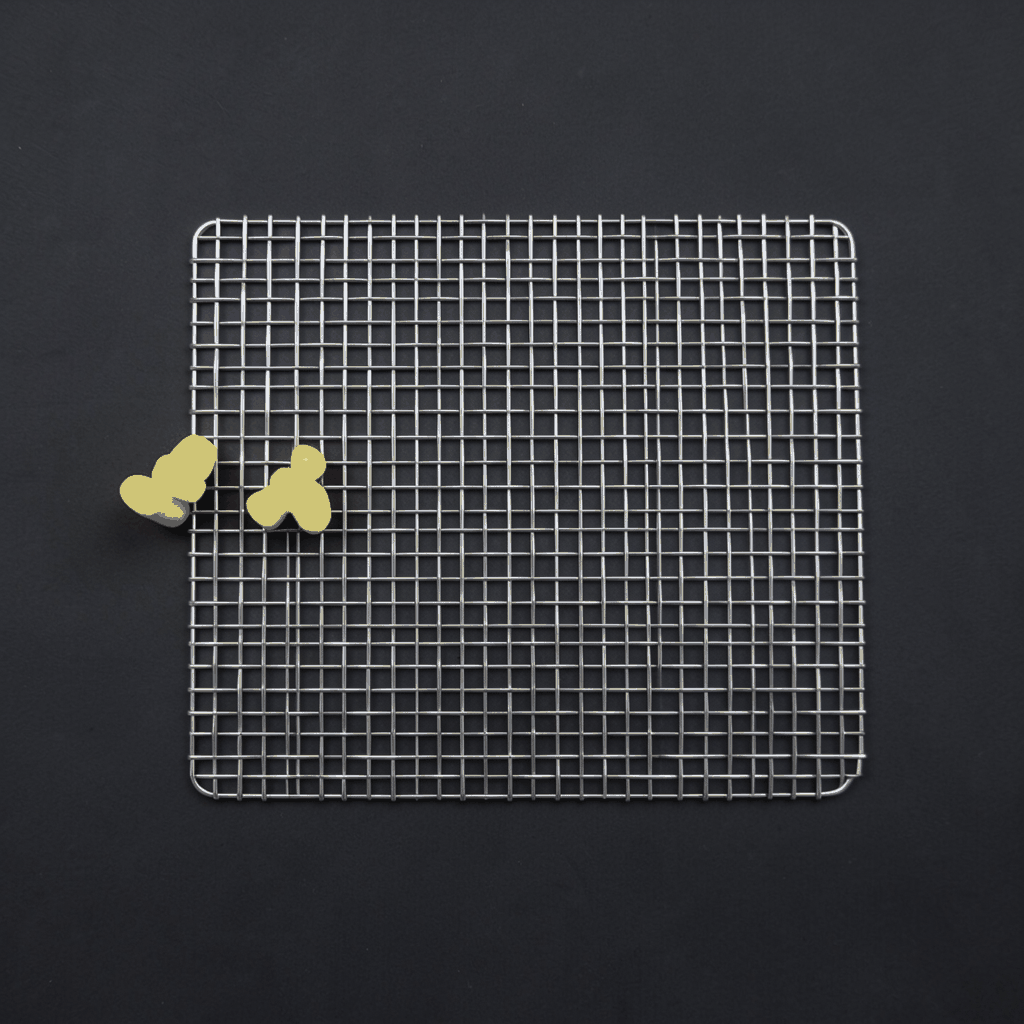
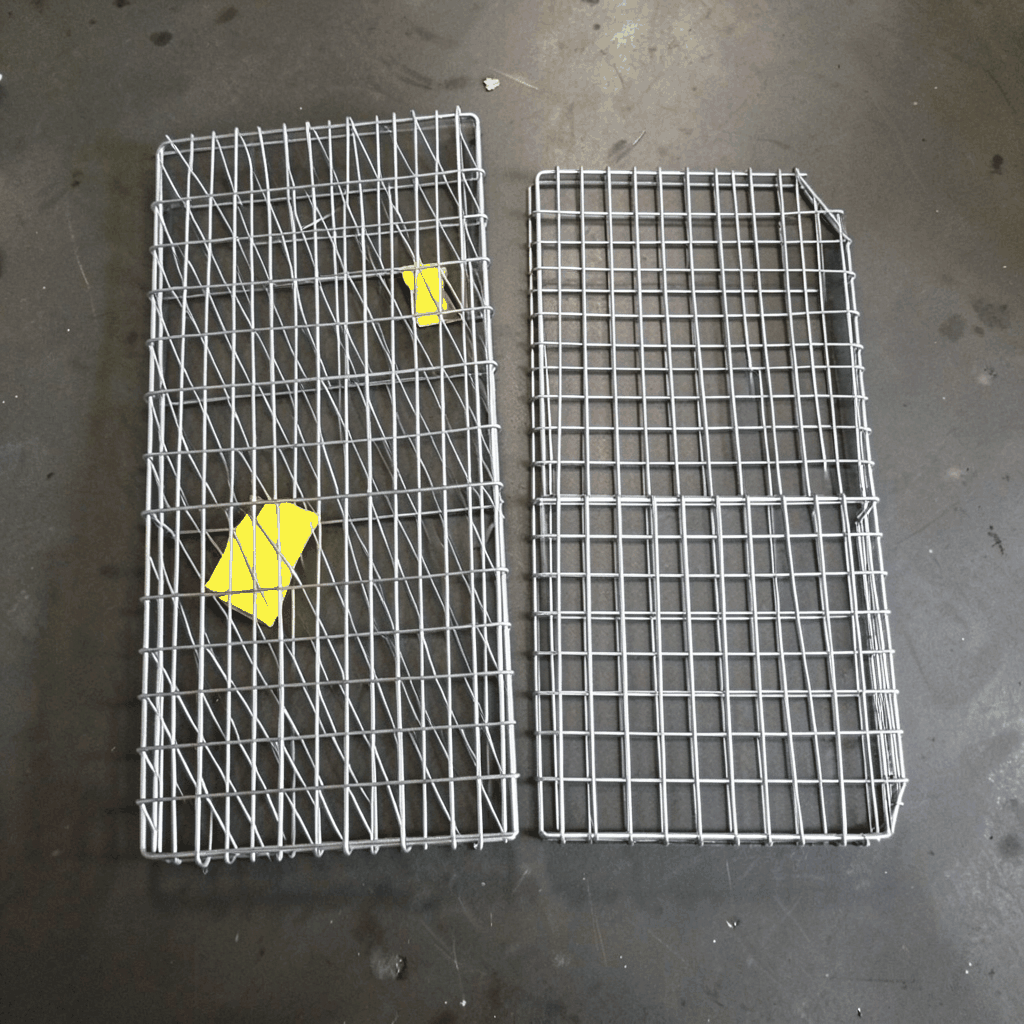
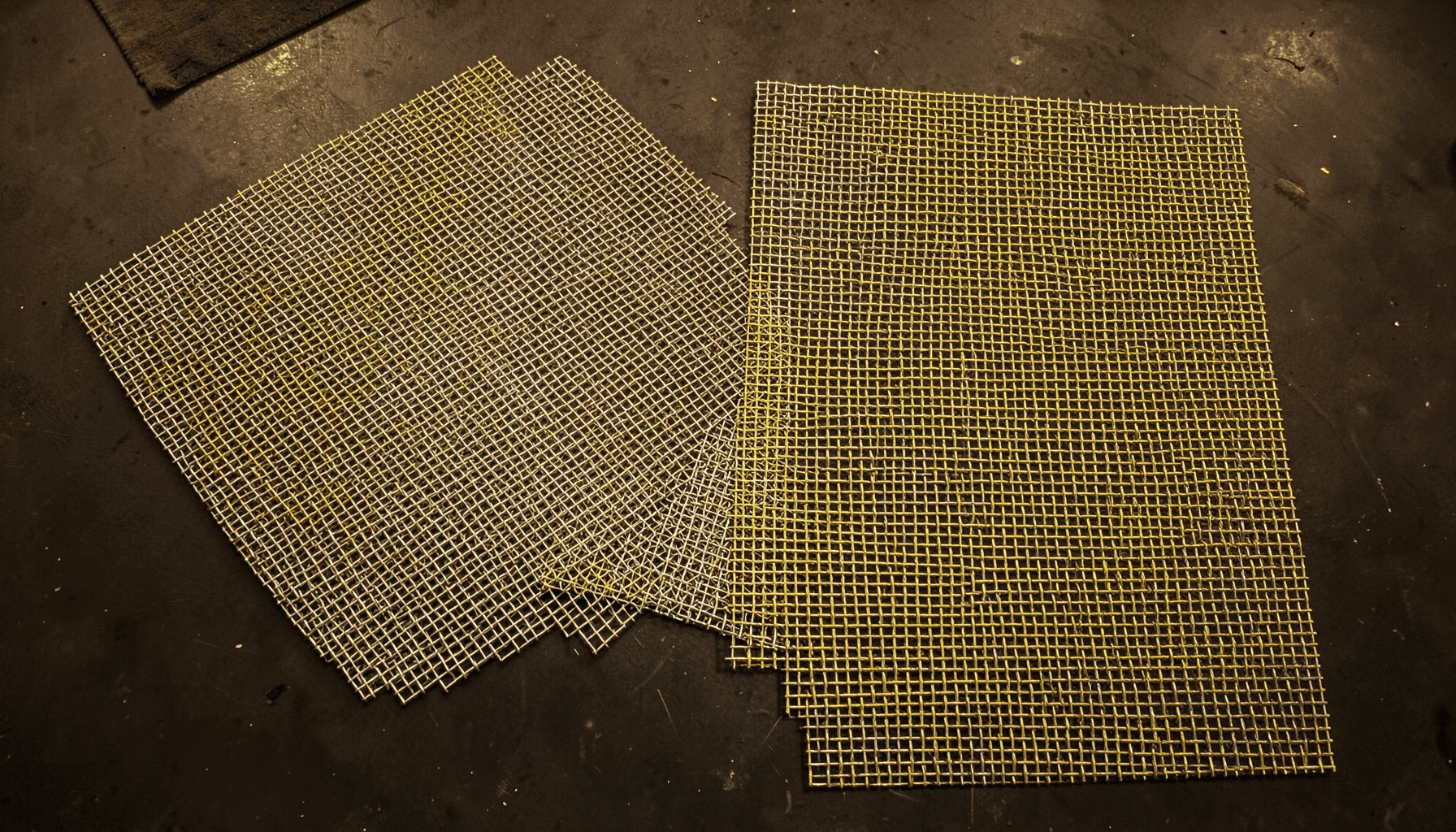
Different manufacturing methods create different combinations of flexibility, rigidity, visibility, and cost. Woven wire mesh has a refined, textured appearance and can be specified in many aperture patterns. Welded mesh offers a more rigid grid and is useful for fence panels, cages, equipment areas, and robust landscape applications.
Perforated metal sheets provide a clean architectural surface with precisely repeated holes. Laser-cut screens can use custom motifs, geometric patterns, logos, or organic designs, giving a privacy fence a strong decorative identity. These panels may provide less open area than woven mesh, so structural and wind considerations should be checked early.
| Mesh style | Privacy effect | Airflow and light | Suitable applications | Key consideration |
|---|---|---|---|---|
| Fine woven wire mesh | High concealment at close range | Lower openness | Balconies, patios, outdoor lounges | May increase wind pressure |
| Medium woven mesh | Balanced screening | Moderate airflow and daylight | Courtyards, terraces, partitions | Sample viewing is important |
| Welded wire mesh | Moderate, structured screening | Usually good airflow | Boundary fences, service areas, gardens | Rigid frames and accurate alignment help |
| Perforated metal panel | Depends on hole pattern and spacing | Controlled light and ventilation | Facades, equipment screens, rooftops | Panel weight and thermal movement matter |
| Laser-cut decorative screen | Pattern-dependent privacy | Varies by design | Entrances, gardens, hospitality spaces | Custom pattern affects strength and cost |
| Expanded metal mesh | Textured partial privacy | Good airflow with strong visual texture | Fences, enclosures, industrial sites | Orientation changes the viewing effect |
The table provides a starting point rather than a final specification. Two products with the same nominal aperture may perform differently because of wire diameter, surface color, panel depth, or installation angle. For demanding applications, request technical data covering open area, weight, tensile strength, corrosion resistance, and recommended support spacing.
Plan The Frame And Installation
A privacy screen is a system made of mesh, frame, posts, fixings, and foundations. Selecting the opening size without coordinating these components can lead to vibration, sagging, rattling, or excessive deflection. Rigid panels may need perimeter frames, while flexible woven mesh may require tensioning bars, cables, or carefully spaced attachment points.
Measure the complete installation area before ordering. Record the required height, panel width, corner conditions, gate locations, changes in level, and clearances from doors or walkways. Allow for expansion and contraction where large metal panels receive strong sun exposure. Correctly positioned seams can make the finished screen look intentional rather than improvised.
Fasteners should be compatible with the screen material and the outdoor environment. Isolating dissimilar metals can help prevent galvanic corrosion, while sealed connections reduce water entry. In public or high-traffic areas, rounded edges, tamper-resistant fasteners, and smooth transitions can improve safety and long-term appearance.
Custom metal mesh manufacturers can often adjust aperture, wire diameter, panel dimensions, finish, edge treatment, and mounting details. Early coordination is especially valuable when screens must integrate with guardrails, gates, wall cladding, planters, lighting, or existing architectural structures.
Use These Specification Checks
A short project brief can prevent many selection errors. Include the privacy objective, viewing distances, screen height, exposure to wind and moisture, preferred material, finish, support method, and any local code requirements. If the screen borders a road, public path, or elevated structure, include safety and impact considerations as well.
Review a physical sample and, for larger projects, request a prototype panel or mock-up. Check the screen from the locations where people will stand, sit, walk, or look down from above. This practical review can reveal unexpected transparency, glare, shadows, or pattern distortion before production begins.
Use the following checks when comparing outdoor mesh privacy solutions:
- Select the aperture according to actual sightlines, not a product photograph alone.
- Compare open-area percentage, wire diameter, panel thickness, and total screen weight.
- Confirm wind-load assumptions and the strength of posts, frames, anchors, and foundations.
- Choose an alloy and surface finish suited to humidity, salt, pollution, sunlight, and cleaning.
- Verify edge protection, drainage, fastener compatibility, and access for future maintenance.
Move From Selection To Supply
The right privacy screen should feel proportionate to its setting. A dense stainless steel panel may suit an exposed balcony that needs strong concealment, while a patterned aluminum screen may be better for a garden boundary where daylight and decorative character matter. The best result comes from treating mesh size, material, finish, and support structure as one coordinated decision.
Shuo Ke Wire Mesh Product Technology Co., Ltd. can support customized architectural and industrial mesh requirements, including woven screens, welded panels, laser-cut designs, fences, gates, guardrails, and related metal products. Share the intended dimensions, privacy target, material preference, site conditions, and finish requirements to develop a practical specification ready for fabrication.