How to Measure Mesh Count and Wire Gauge for Replacement Screens
Measuring the mesh count and wire gauge on existing screens is often the first task Australian property owners face when a window flyscreen tears, a pool barrier needs upgrading, or a balustrade panel has rusted through. Doing it right saves money, prevents compliance headaches, and helps the new panel perform the way the old one did. Whether the screen sits in a Victorian terrace in Melbourne, a Queenslander in Brisbane, or a coastal unit in Perth, the measurement principles are identical, but the choice of replacement needs to reflect local conditions.
Many people confuse mesh count with aperture, and wire gauge with the size of the opening. These terms describe different things, and each influences how a screen looks, filters insects, supports a child-safe barrier, or resists corrosion. Taking a few minutes to understand what you are measuring makes the conversation with a fabricator far more productive. In Australia, where salt-laden coastal breezes, intense UV, and strict pool safety laws all place specific demands on metal mesh, getting these numbers right is especially worthwhile.
Understanding mesh count and aperture size
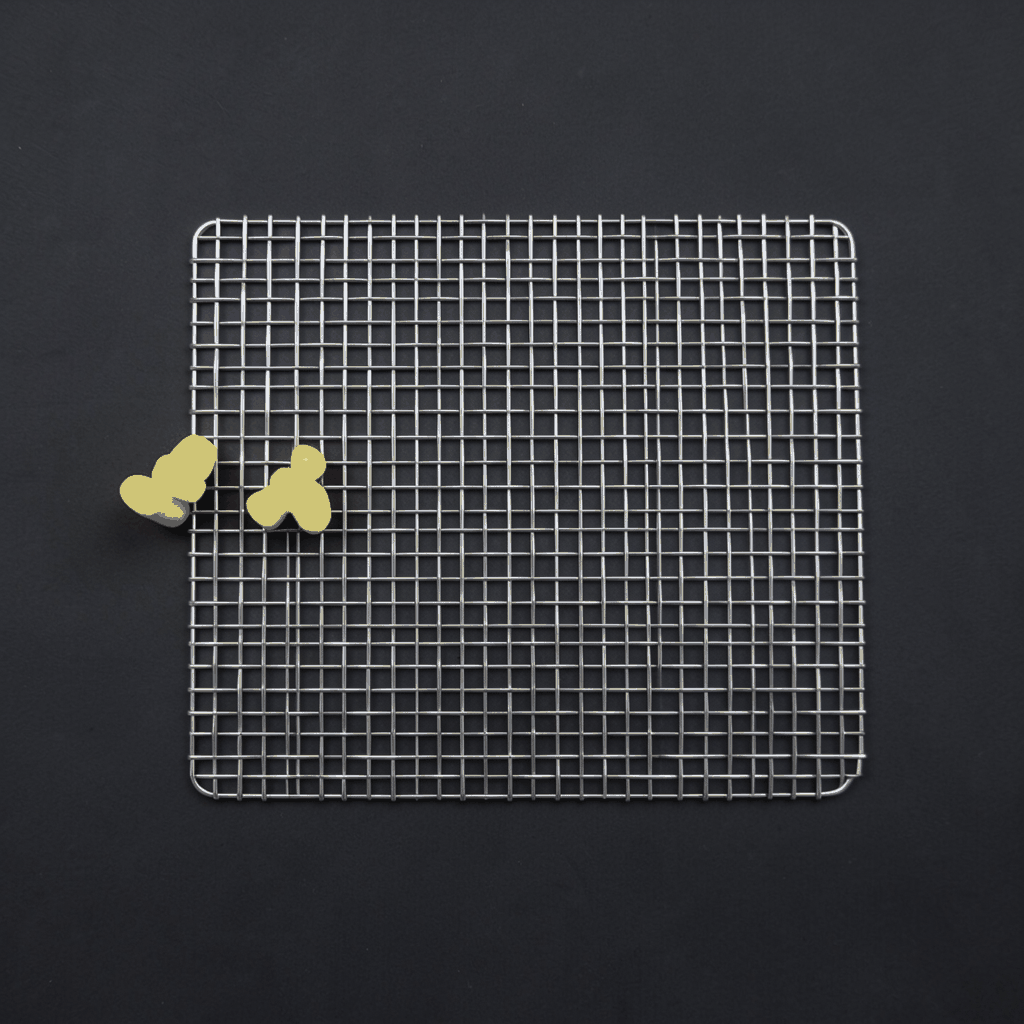
Mesh count refers to the number of openings contained within one linear inch of mesh, or within a 25 mm square. It is a count, not a measurement of a single hole. A 16-mesh screen has 16 openings across one inch measured from the inside edge of one wire to the inside edge of the next. The higher the count, the smaller each opening tends to be. The lower the number, the larger the aperture and the heavier the wire usually is.
Aperture size, by contrast, is the clear space between wires. It is the gap that lets air and light through while keeping insects out, or that determines whether a small child could gain a foothold on a pool barrier. Australian Standard AS 1926.1 for pool fencing and AS 5041 for insect screens both reference aperture limits rather than mesh count, which is why experienced fabricators speak in both languages.
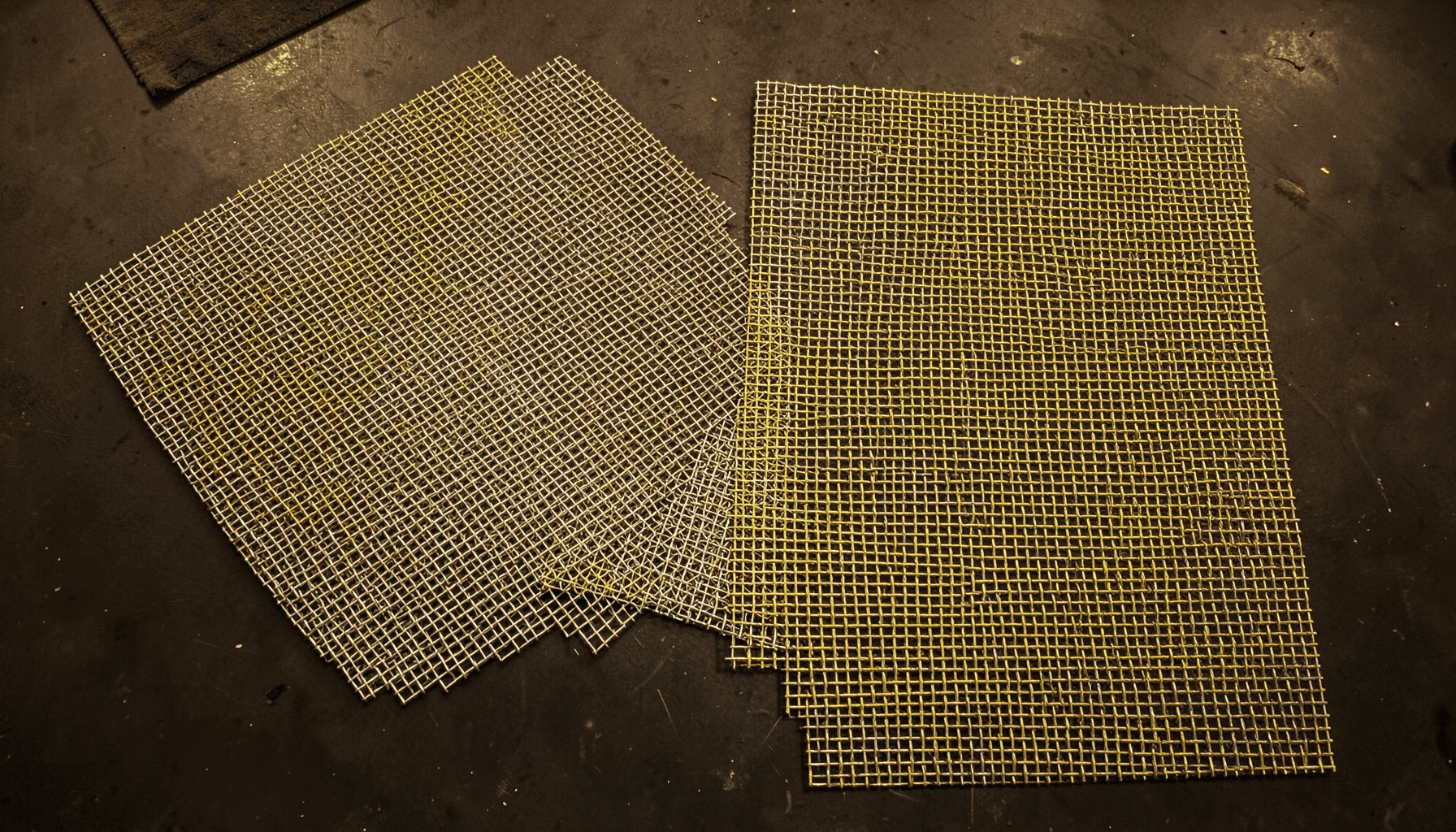
Two screens with the same mesh count can have different apertures if the wires differ in thickness. A 14-mesh woven from 0.7 mm wire has a larger aperture than a 14-mesh woven from 1.0 mm wire. When ordering a replacement, always note both the mesh count and the wire thickness.
Tools and preparation before you start
A handful of inexpensive tools make the job accurate. A steel rule marked in millimetres, a fine digital calliper, a magnifier, and a notepad with a pencil are enough for most domestic screens. For finer architectural mesh, a laboratory-grade micrometer measuring to 0.01 mm gives a much more reliable reading. Major Australian hardware chains stock digital callipers in their measuring tool ranges for under twenty dollars.
Before you measure, lay the screen on a flat, well-lit surface and brush off any dust, cobwebs, or salt residue. Wear thin gloves if the edges are frayed, since old galvanised wires can snap and leave a sharp tip. Cut a small sample of at least 50 mm by 50 mm from a less visible corner if the screen is partly detached, because a generous sample gives a more reliable count than a single square centimetre.
What you need for accurate field measurements
- Steel rule with clear mm markings
- Digital calliper reading to at least 0.1 mm
- Magnifier or jeweller's loupe
- Notepad, pencil, and a small torch
These items are usually enough for window flyscreens, security doors, and pool fence panels. For finer woven mesh used in decorative partitions or balustrade infill, add a micrometer and a flat glass plate to keep the sample flat during measurement.
Counting mesh openings step by step
To find the mesh count, lay the steel rule along the warp and count how many full openings fall inside exactly one inch, or 25.4 mm. Start the count from the inside edge of the first wire and finish at the inside edge of the last wire. Repeat this across three or four separate locations on the sample, because weaving tension can vary slightly from one side of the panel to the other. Average the numbers to get a representative mesh count.
A common mistake is to count the wires instead of the openings. Each visible wire sits between two openings, so a 14-mesh has 15 wires per inch, not 14. If the weave is a Dutch or twill pattern, the count differs between warp and weft, so measure both directions and record each separately. Dutch weaves, common in filtration mesh, may show 30 openings per inch one way and 200 the other.
For screens in service for many years, wires near the edge can stretch while the centre holds its original tension. Always measure in a flat, undamaged area away from the frame, ideally in the middle third of the panel. If the sample is too small to give a full inch of weave, count over the longest run available, divide by the length in millimetres, and multiply by 25.4 to convert.
Wire gauge standards and how to measure thickness
Wire gauge is a system for describing wire thickness, and different countries have used different scales over the centuries. In Australia, the most common systems encountered on replacement screens are Birmingham Wire Gauge (BWG), Standard Wire Gauge (SWG), and the American Wire Gauge (AWG). All three assign lower numbers to thicker wires, which can be confusing. A 10 BWG wire is 3.40 mm thick, while a 10 AWG wire is 2.59 mm thick. The same gauge name does not mean the same thickness across systems, so always confirm which standard your supplier is quoting.
The safest way to identify wire thickness is to measure it directly with a digital calliper. Place the jaws across a single straight section of wire, not across a knuckle or weld point, and close them gently until they contact the metal without crushing it. Take three readings at different points along the same wire, because wire diameter often varies slightly across a weave. Average the readings and round to the nearest 0.05 mm for ordering purposes.
For stainless steel and aluminium architectural screens, wire diameters commonly range from 0.5 mm to 3.0 mm. Decorative partitions and elevator cladding often use thicker 2.0 mm to 3.0 mm wires, while standard flyscreens use finer 0.25 mm to 0.45 mm wire. Knowing where your existing screen sits on that spectrum helps you match both the appearance and the strength of the original installation.
Matching replacements to Australian conditions
Once you have the mesh count and the wire diameter written down, the final step is to choose a replacement suited to local conditions. Coastal suburbs such as those along Sydney's Northern Beaches, the Mornington Peninsula south of Melbourne, or Cairns in far north Queensland expose metal mesh to salt spray that attacks plain steel and even some lower grades of stainless. Marine-grade 316 stainless is a common upgrade in these areas, while powder-coated aluminium is popular for pool fencing and balustrades in suburban Brisbane and Perth.
Bushfire-prone regions across Victoria, New South Wales, South Australia, and Western Australia impose additional requirements under the Building Code of Australia. In Bushfire Attack Level zones of BAL-29 or higher, screens forming part of the building envelope need to meet specific aperture and material rules to keep embers out. Stainless steel or aluminium mesh with appropriate aperture limits is often specified, and a knowledgeable supplier can confirm whether your replacement meets the relevant BAL rating for your address.
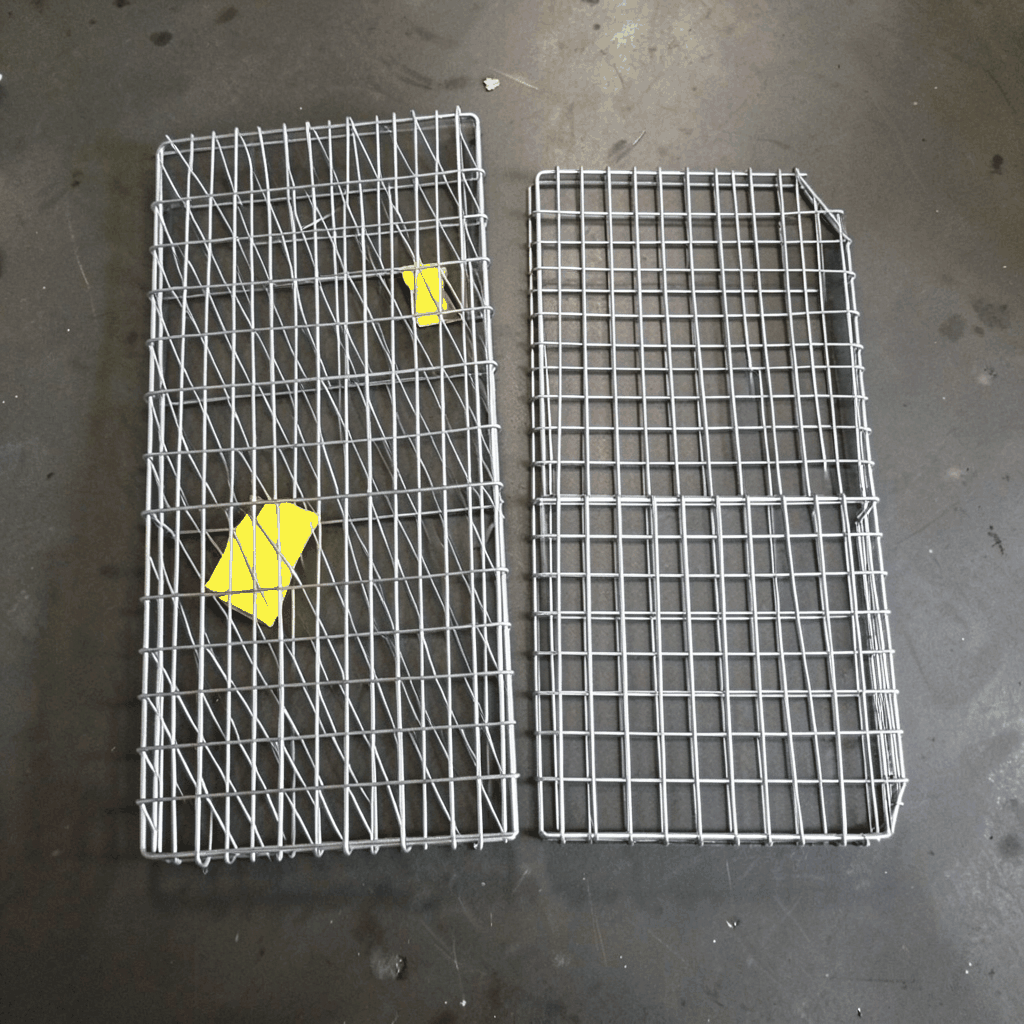
Pool compliance is its own consideration. The maximum allowable aperture in pool barrier mesh is 13 mm, and any horizontal climbable surface between 900 mm and 1800 mm above ground level must not have openings that allow a toe or finger hold. If your existing pool fence mesh is corroded or stretched, replacing with a freshly woven panel in 316 stainless or powder-coated aluminium restores both the safety margin and the appearance. The same approach applies to barbecue mesh, where a heavier gauge stainless panel outlasts galvanised steel in the typical Australian backyard.
Common replacement choices for Australian homes
- 16-mesh fibreglass flyscreen for general window use
- 12-mesh aluminium for security doors in suburban areas
- 11-mesh 316 stainless pool fence infill in coastal regions
- Heavy 4 mm welded mesh for driveway gates and rural fencing
For larger projects such as commercial facades and architectural screening, custom fabrication opens up possibilities beyond off-the-shelf rolls. Designers working on apartment lobbies, hotel balustrades, and retail frontages often specify woven facades in brass, bronze, or anodised aluminium, where the mesh count, wire profile, and pattern are all chosen to match a particular design intent. A practical guide to specifying these systems for commercial exteriors is worth reading before committing to a large order, and the article on designing-custom-wire-mesh-facades-for-commercial-building-exteriors walks through the relevant decisions.
When the measurements are ready and the conditions have been considered, the next move is to send those numbers to a fabricator who can supply a replacement panel that matches the original or upgrades it to suit local conditions. Shuo Ke Wire Mesh Product Technology works with stainless steel, aluminium, copper, iron, and a range of alloys, producing decorative mesh curtains, partitions, elevator cladding, laser-cut screens, fences, gates, guardrails, filters, baskets, and barbecue mesh for projects across Australia and beyond. A short email with the mesh count, wire diameter, panel dimensions, and preferred alloy is usually enough to receive a quotation, a sample, and a lead time. Getting these details right at the start is the simplest way to keep an Australian property looking sharp and performing the way it should.