How Wire Mesh Aperture Controls Debris Flow in Stormwater Catch Basins
Stormwater catch basins protect drainage networks by intercepting leaves, sediment, plastic, gravel, and other solids before they enter underground pipes. The grate or wire mesh installed at the inlet has a direct influence on how effectively this separation occurs. Its aperture size, shape, open area, and arrangement determine what can pass through, what remains on the surface, and how quickly the basin becomes obstructed.
A mesh opening that is too large may allow damaging debris into the drainage system. An opening that is too small can restrict inflow, create upstream ponding, and require frequent cleaning. Effective catch basin design therefore depends on balancing hydraulic capacity with debris retention, structural strength, maintenance access, and local environmental conditions.
For municipal engineers, contractors, property developers, and fabricators, aperture selection is a practical engineering decision rather than a purely visual one. Stainless steel wire mesh, welded mesh, expanded metal, perforated sheet, and custom metal screens can all provide different combinations of filtration, drainage, durability, and appearance.
The Hydraulic Role Of Catch Basin Mesh
Water approaching a catch basin carries both dissolved material and suspended solids. Large debris tends to move along the surface, while sediment and fine particles remain in suspension during periods of high flow. The inlet mesh must admit enough water to prevent flooding while interrupting the movement of solids that could block pipes, damage pumps, or settle inside downstream structures.
The total open area of the screen is as important as the nominal aperture. A panel with small openings can still provide strong flow if it has a high percentage of open surface. Conversely, a thick or tightly spaced mesh may have reasonable individual openings but insufficient free area because of its wire diameter or support frame.
As debris accumulates, the effective open area declines. Leaves can form a mat across the grate, while plastic film and fibrous waste may cover several openings at once. A design that performs well when clean may lose much of its hydraulic capacity during a storm. Engineers should therefore consider partially blocked conditions, not just initial flow performance.
Aperture Size And Debris Retention
The clear aperture is the unobstructed distance between adjacent wires, bars, or perforation edges. This dimension controls the minimum approximate size of solid material that can pass through the screen. However, debris does not always approach an opening in a perfectly aligned position. Flexible material can fold through gaps, while elongated objects may pass diagonally.
Small apertures provide better protection against leaves, twigs, gravel, and urban litter. They are useful near pedestrian areas, landscaped developments, parking structures, and sites where downstream pipes have limited diameter. Fine mesh may also reduce the movement of insects and small animals into drainage chambers, depending on local requirements.
Large apertures offer lower resistance to incoming water and are less likely to clog rapidly. They are often appropriate for high-runoff areas where the primary concern is moving large volumes of water quickly. The correct selection depends on the expected debris profile, rainfall intensity, basin size, pipe capacity, and maintenance schedule.
Aperture geometry also changes flow behavior. Square openings are easy to measure and manufacture, while rectangular slots can be oriented to favor water movement or retain longer debris. Diamond openings in expanded metal provide a large open area and directional visual effect, but their effective passage size should be evaluated based on the diamond’s short and long dimensions.
How Shape, Open Area, And Layout Affect Performance
Mesh orientation influences how debris settles on the inlet. A horizontal grid with narrow parallel slots may catch twigs across the surface, while a welded wire pattern can distribute blockage among many individual openings. The arrangement of cross wires, support ribs, and border frames also affects local turbulence and the way sediment is deposited.
The screen should be evaluated together with the catch basin throat and sump. If the inlet is highly restrictive but the chamber is large, water may remain above the grate during intense rainfall. If the inlet is very open but the downstream outlet is narrow, debris may move deeper into the system without improving total drainage performance.
Free-area calculations provide a useful first comparison, but they do not replace testing or field judgment. Edges, fasteners, frame members, reinforcing bars, and mounting clips reduce the actual unobstructed area. Designers should use the net open area of the complete assembly and account for expected fouling.
| Mesh or screen type | Typical flow behavior | Debris control | Main design consideration |
|---|---|---|---|
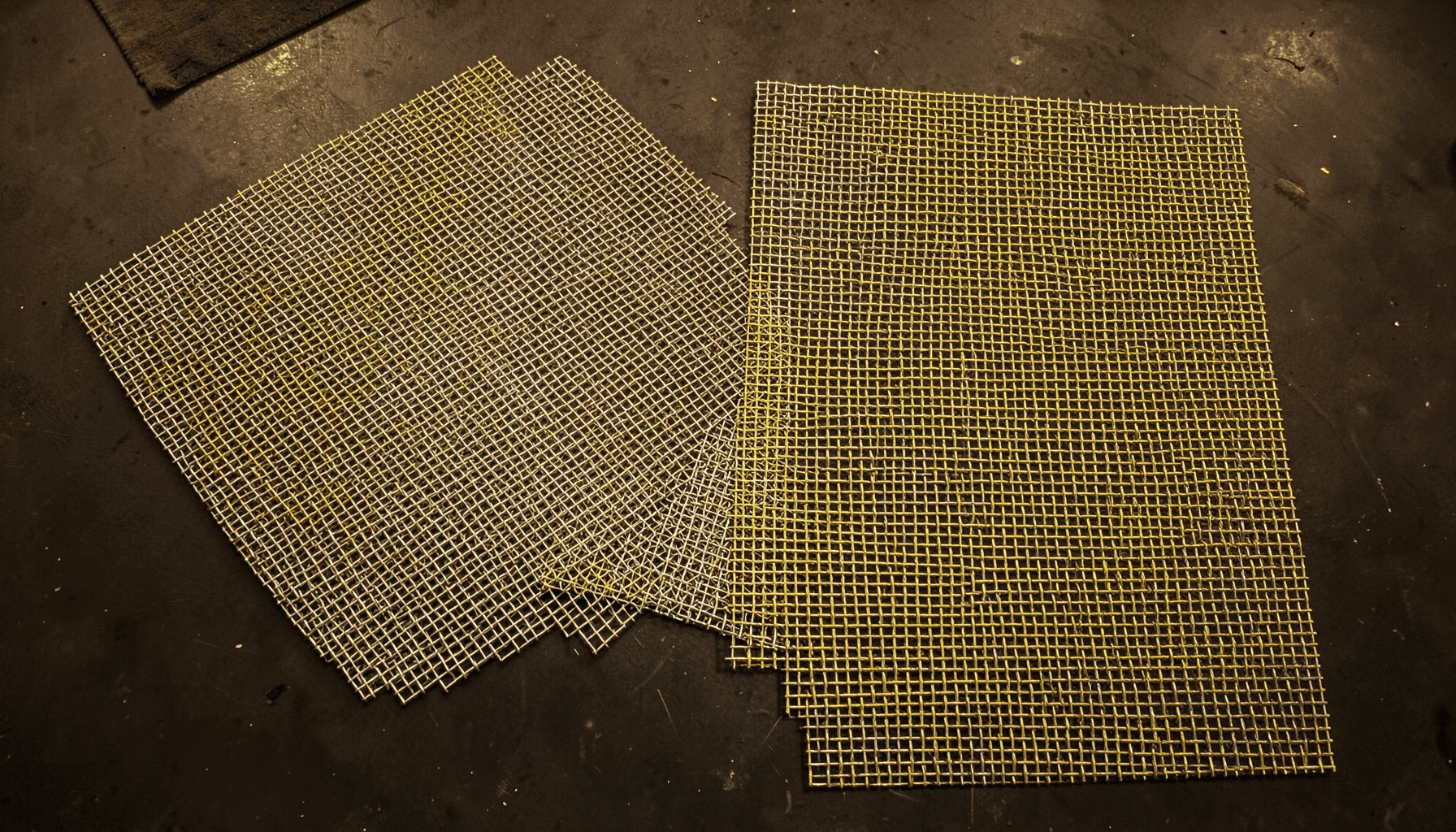
| Fine woven wire mesh | Distributes flow through many small openings | Strong control of small debris and insects | Can blind quickly when covered by leaves or silt |
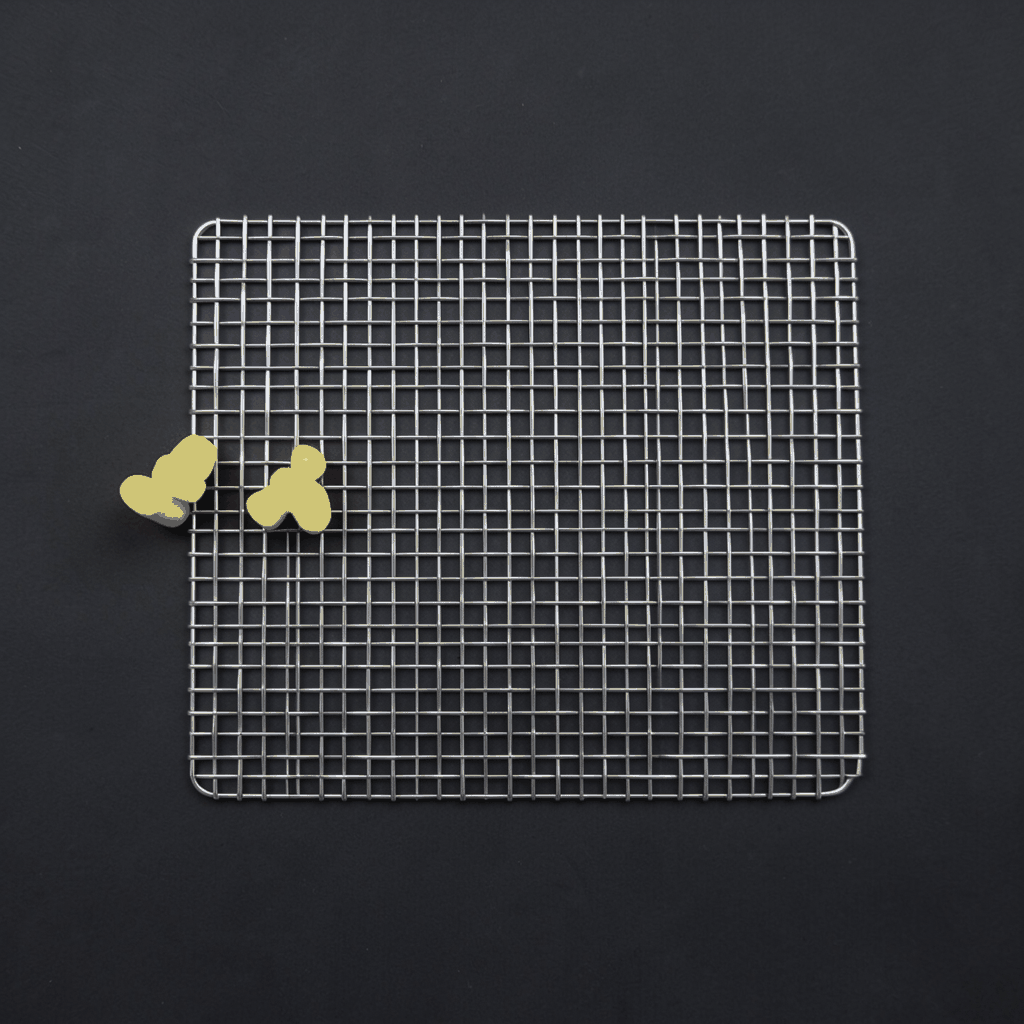
| Welded wire mesh | Rigid, consistent aperture pattern | Good general-purpose retention | Welded intersections and frame members reduce free area |
| Expanded metal | High open area with directional diamond openings | Moderate control of larger debris | Short-way opening governs passage and cleaning behavior |
| Perforated metal sheet | Predictable hole size and smooth surface | Effective for uniform particle screening | Often requires more sheet area to achieve high free area |
| Bar or slot grate | Very high flow capacity | Retains large objects only | Long debris may pass or lodge across the opening |
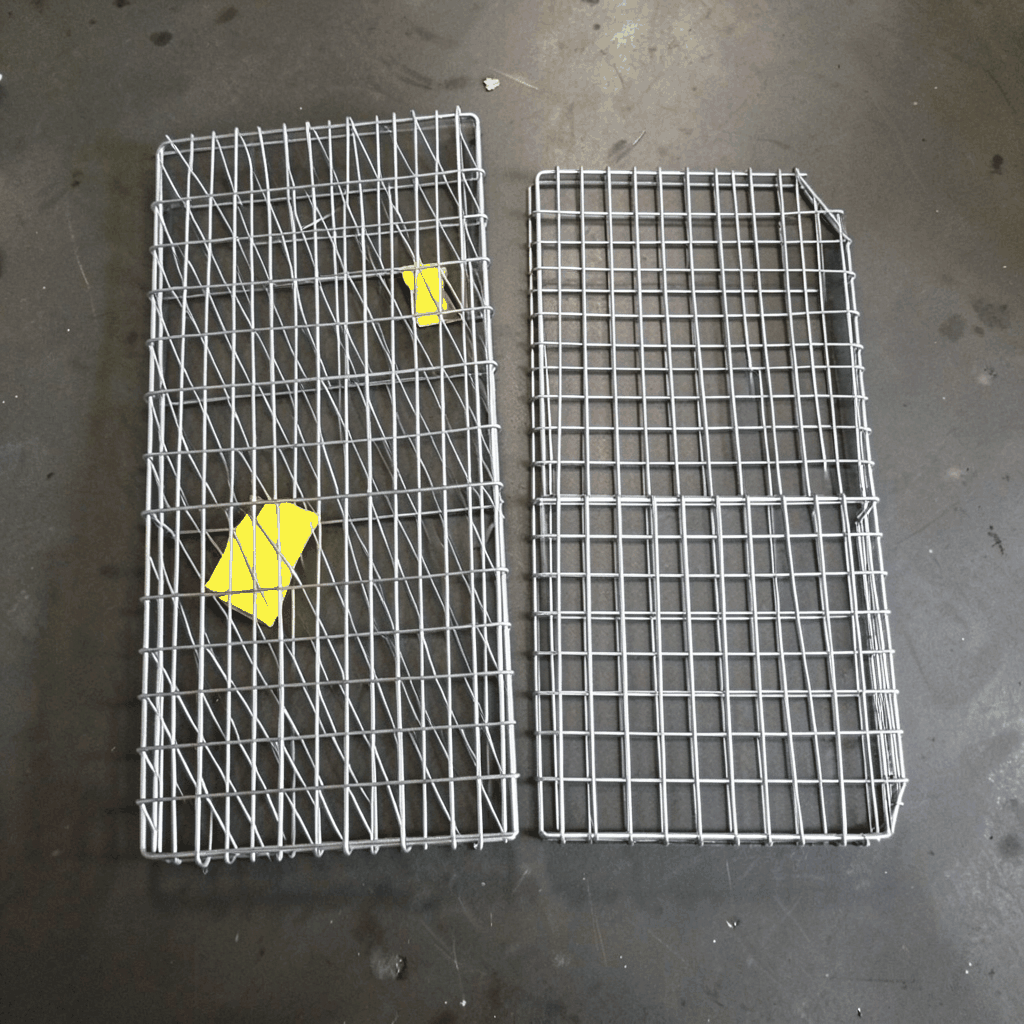
A removable basket beneath the grate can add a second stage of debris capture. This arrangement allows a relatively open surface inlet to maintain inflow while the basket collects solids inside the chamber. The basket must have adequate volume, lifting points, corrosion resistance, and access for routine emptying.
Material Selection For Outdoor Drainage
Stormwater screens are exposed to rain, standing water, road salt, fertilizer, cleaning chemicals, ultraviolet radiation, and repeated wet-dry cycles. Material choice affects service life, appearance, weight, and maintenance requirements. Stainless steel is frequently selected for its corrosion resistance and clean architectural finish, particularly in public spaces, commercial developments, and coastal environments.
Aluminum provides low weight and good corrosion resistance, which can simplify installation and removal. It is suitable where large removable panels or baskets must be handled regularly. Copper and weathering finishes may be considered when visual integration with architectural features is important, although compatibility with adjacent metals and runoff staining should be reviewed.
Iron and carbon steel can provide high strength and cost efficiency when protected with galvanizing, powder coating, paint, or another suitable finish. The coating system should match the exposure level and anticipated abrasion. Damage at cut edges, welds, and fastener locations can become an early source of corrosion if it is not treated properly.
Fabrication quality is equally significant. Accurate aperture dimensions, smooth edges, secure welds, reinforced corners, and properly finished mounting holes help the mesh remain stable under hydraulic forces and maintenance handling. Custom bending, framing, laser cutting, and surface treatment can produce an inlet assembly that fits the catch basin without creating bypass gaps.
Recommendations For Selecting A Practical Aperture
A sound specification begins with the debris that the basin must retain and the water volume it must admit. Engineers should review site conditions rather than selecting a mesh pattern solely from a catalog image. Areas under trees may need a different opening arrangement from exposed industrial yards or road intersections.
The following recommendations support a balanced design:
- Define the target debris size, including leaves, twigs, plastic waste, gravel, sediment, and maintenance materials.
- Calculate net open area after subtracting wires, support bars, frames, hinges, clips, and other structural components.
- Check hydraulic performance under clean, partially blocked, and severe fouling conditions.
- Match mesh strength and thickness to pedestrian loads, vehicle traffic, impact risk, and basket removal requirements.
- Specify corrosion-resistant material and finish according to humidity, salinity, chemical exposure, and expected service life.
A maintenance plan should be included with the aperture specification. Fine openings may deliver excellent debris separation but require frequent inspection. Wider openings may reduce cleaning frequency while allowing more solids into the sump. In either case, the basin should remain accessible, and the grate should be removable without damaging the surrounding pavement or frame.
Custom Mesh Solutions For Catch Basin Assemblies
Standard wire mesh can be effective for simple drainage applications, but complex projects often require a complete engineered assembly. Custom fabrication can combine a selected aperture with a perimeter frame, lifting handles, hinges, locking hardware, support ribs, and a collection basket. This approach helps align the screen with the basin dimensions and the site’s loading conditions.
Laser-cut screens and perforated panels may be useful when a project requires precise openings, a distinctive pattern, or integration with architectural metalwork. Welded stainless steel mesh is well suited to rigid panels and baskets, while expanded metal can provide lightweight coverage with a relatively high open area. The final choice should reflect drainage performance as well as appearance.
Shuo Ke Wire Mesh Product Technology Co., Ltd. manufactures and processes architectural and industrial metal mesh products in stainless steel, aluminum, copper, iron, and other alloys. Its capabilities support customized screens, filters, baskets, protective panels, and related metal components for residential, commercial, municipal, and industrial projects.
A project package should identify aperture dimensions, wire or sheet thickness, open-area target, panel size, edge treatment, frame details, finish, load requirements, and installation method. Sharing drawings, photographs, basin measurements, and environmental information allows the manufacturer to recommend a practical configuration instead of supplying an unsuitable generic grate.
Maintenance, Inspection, And Long-Term Flow Control
Even a properly sized mesh will lose performance if debris is allowed to build up. Inspection frequency should reflect seasonal leaf fall, storm intensity, nearby construction, traffic, and the type of waste found at the site. A visual check before forecast storms can prevent a partially blocked inlet from becoming a serious drainage restriction.
Cleaning methods should protect the screen and finish. Soft tools, controlled water pressure, and appropriate detergents are generally preferable to aggressive scraping that can deform fine wire or remove protective coatings. Damaged mesh, loose welds, bent frames, and corroded fasteners should be repaired before they create a bypass path or become a safety hazard.
The best catch basin screen is a balanced system: its apertures control debris flow, its open area supports rapid drainage, and its construction withstands the site environment. Contact Shuo Ke Wire Mesh Product Technology Co., Ltd. with your basin dimensions, target debris size, flow requirements, material preference, and finish needs to develop a durable custom mesh solution for the project.