How Wire Mesh Infill Enhances Aluminum and Steel Gates
A gate does more than mark the entrance to a property. It establishes the first impression of a home, commercial site, public facility, or industrial compound while supporting security, privacy, ventilation, and controlled access. Aluminum and steel provide the structural frame, but the infill often determines how the finished gate looks and performs.
Wire mesh infill gives designers a flexible way to add texture, depth, and visual refinement without making a gate feel excessively solid. Depending on the material, weave, opening size, and finish, mesh can create a light contemporary appearance, a robust industrial character, or an elegant architectural detail.
For manufacturers such as Shuo Ke Wire Mesh Product Technology Co., Ltd., the value of mesh lies in combining practical engineering with decorative possibilities. Stainless steel, aluminum, iron, copper, and other alloys can be processed into custom panels for residential entrances, commercial boundaries, municipal projects, and security installations.
A stronger visual foundation
A plain metal gate can appear functional but visually unfinished, especially when its large frame leaves broad open areas. Wire mesh fills those spaces with an orderly pattern that makes the gate look complete while allowing the supporting structure to remain visible. The result is a balanced combination of solid framing and detailed surface treatment.
Mesh also introduces scale. A large steel gate may otherwise look heavy and imposing, while a fine woven panel breaks up the mass and gives the entrance a more refined proportion. On an aluminum gate, a geometric mesh pattern can add substance and contrast to the material’s smooth, lightweight appearance.
The transparency of mesh contributes to this effect. Openings allow light and partial views to pass through, helping a boundary feel connected to its surroundings. This quality is especially useful for modern homes, landscaped commercial properties, restaurants, offices, and public spaces where complete visual obstruction is unnecessary.
Matching mesh with aluminum and steel
Aluminum gates are valued for their low weight, corrosion resistance, and clean appearance. Aluminum mesh infill creates a coordinated, lightweight assembly that works well for pedestrian gates, garden entrances, residential driveways, and contemporary commercial applications. Powder coating can match the frame or provide a contrasting color for added definition.
Stainless steel mesh is a strong choice for steel gates exposed to weather, frequent handling, or demanding commercial conditions. Its bright metallic surface supports a modern architectural style, while brushed, satin, or colored finishes can soften the appearance. Stainless steel also offers dependable corrosion resistance when the correct grade and surface treatment are selected for the environment.
Mild steel and iron mesh can produce a more traditional or industrial character. These materials are suitable when the gate requires visual weight, impact resistance, or a finish such as powder coating, paint, or galvanizing. Copper mesh offers a distinctive decorative option that develops a natural patina over time, making it suitable for projects seeking warmth and an aged architectural presence.
The frame and infill do not need to use identical materials in every application. A steel perimeter frame with stainless steel woven mesh can combine strength with corrosion resistance, while an aluminum frame with a compatible expanded or welded mesh can keep the assembly light. Material compatibility should be considered carefully to reduce the risk of galvanic corrosion where dissimilar metals meet.
Creating character through pattern and finish
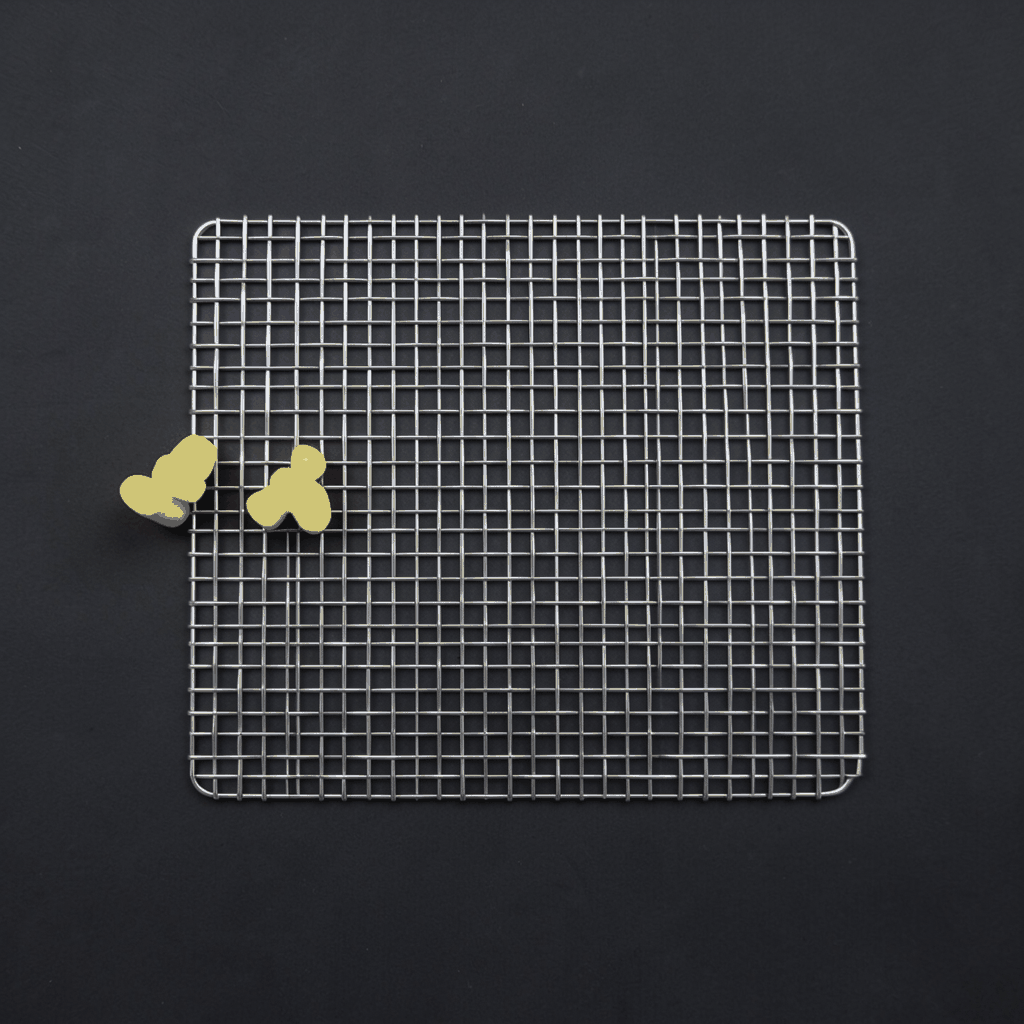
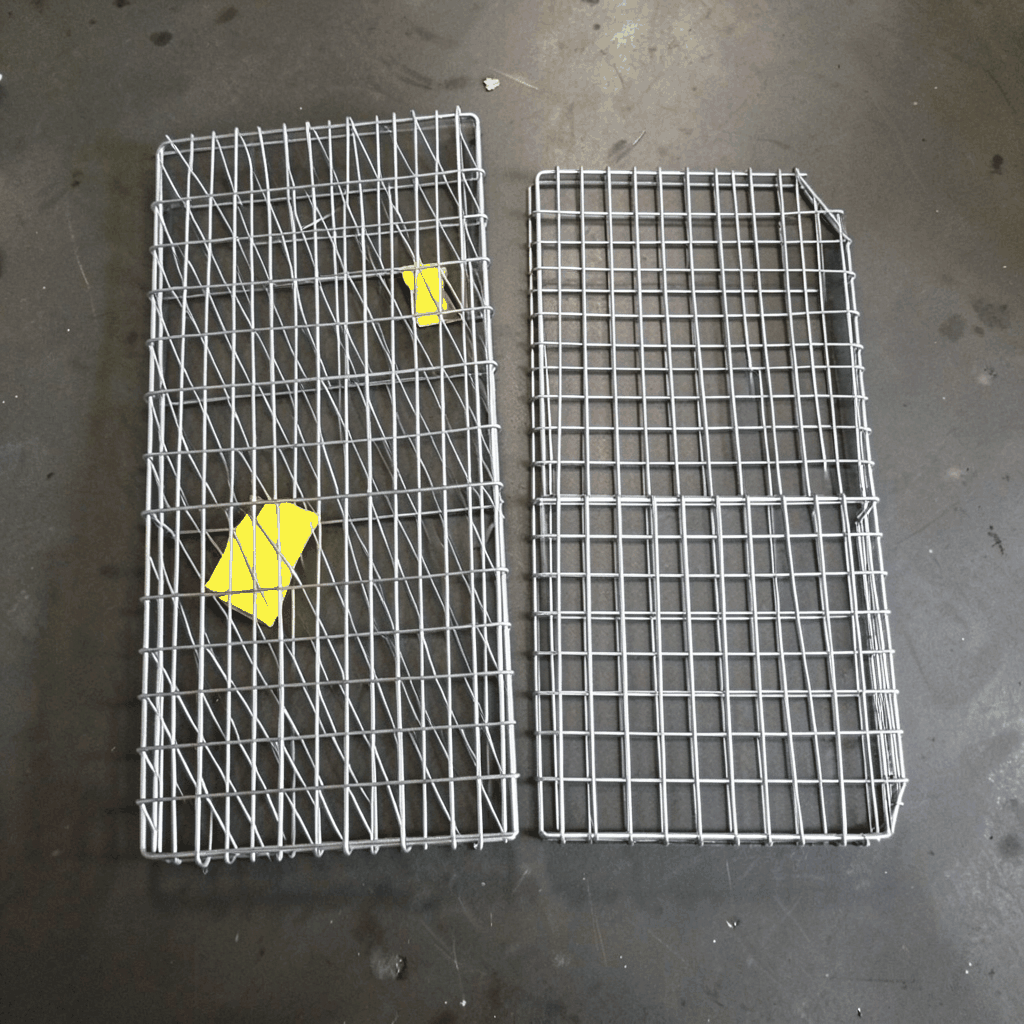
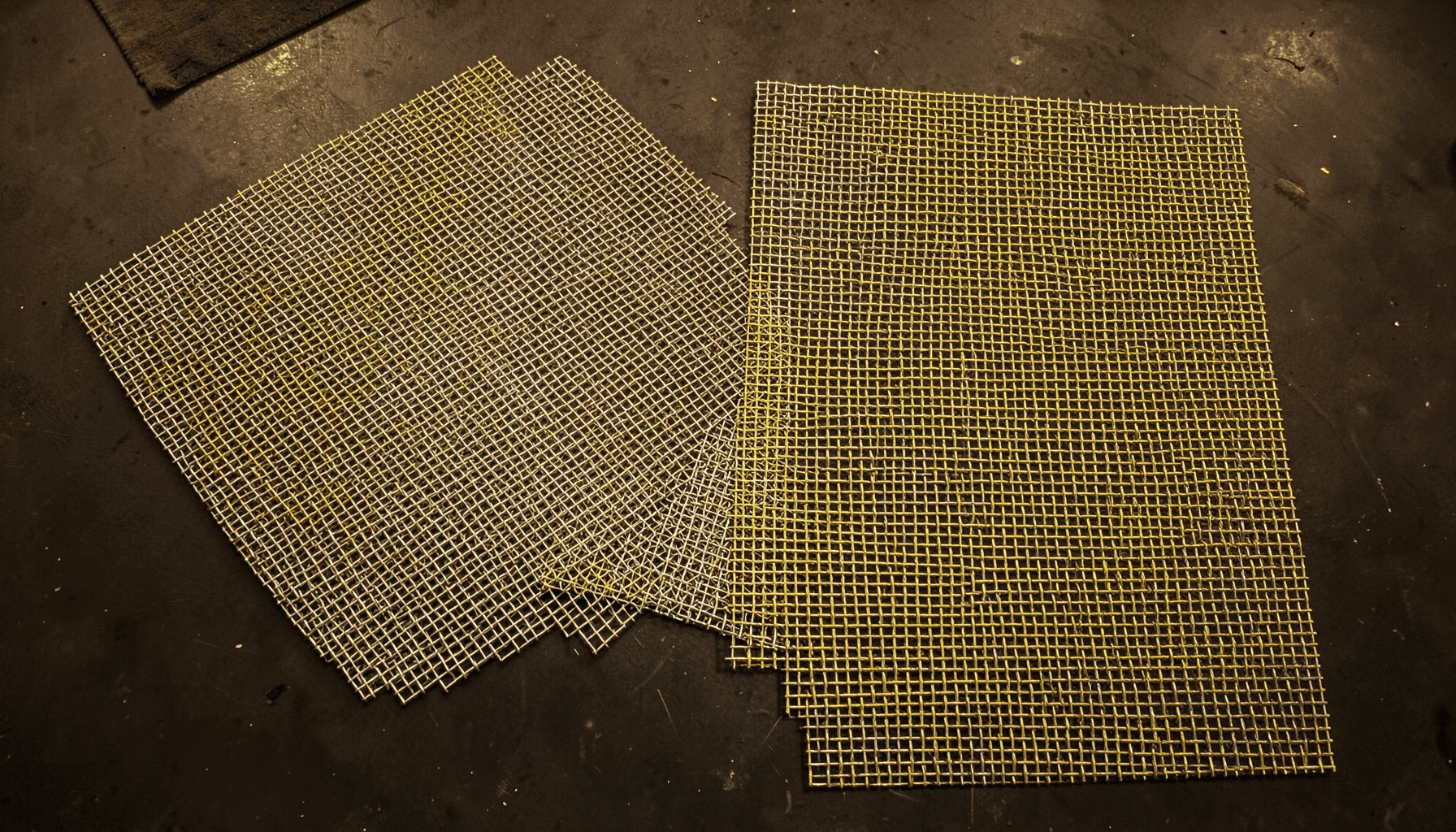
Wire mesh is available in many configurations, including woven mesh, welded mesh, expanded metal, perforated sheet, and decorative architectural mesh. Each construction method changes the rhythm, transparency, shadow, and tactile quality of the gate. A square welded pattern appears orderly and robust, while woven wire creates a softer, more intricate surface.
Opening size has a direct effect on the gate’s visual personality. Fine mesh produces subtle texture and greater screening, while larger openings make the gate feel more open and lightweight. Designers can select a pattern that supports the property’s architecture rather than treating the infill as a purely technical component.
Color adds another layer of control. Black and dark gray finishes emphasize clean lines and suit minimalist architecture. Bronze, copper, and warm metallic tones can complement brick, stone, timber, and traditional façades. Light gray, white, or silver finishes help aluminum gates maintain an airy appearance and can reflect surrounding daylight.
A contrast between the frame and mesh often creates a strong visual edge. For example, a matte black steel frame surrounding a stainless steel panel highlights the woven pattern, while a matching frame and infill produce a quieter, integrated design. Laser-cut details, decorative borders, or custom geometric inserts can further personalize a gate without compromising its basic structure.
Balancing privacy, airflow, and security
Gate infill must perform as well as it looks. Mesh provides varying degrees of privacy according to its openness, wire diameter, weave, and viewing angle. A tightly woven panel can obscure direct views while still admitting air and filtered daylight. This can be useful around residences, service yards, rooftop facilities, and commercial properties.
Ventilation is a key advantage over solid metal panels. Air can pass through the openings, reducing wind pressure and helping prevent a large gate from acting like a sail. This consideration is particularly important for wide driveway gates, coastal locations, exposed sites, and automated systems where excessive wind load can affect hinges, motors, and posts.
Security requirements determine the appropriate mesh construction. Welded or heavy-gauge mesh can resist deformation and provide a durable barrier, while compact openings can make climbing or reaching through the gate more difficult. For higher-risk environments, the mesh should be integrated with reinforced frames, secure fasteners, reliable hinges, and suitable access-control hardware.
The right balance depends on the purpose of the entrance. A residential garden gate may prioritize openness and decorative appeal, while a warehouse perimeter gate may require heavier wire, smaller apertures, and a more impact-resistant frame. Custom fabrication allows the infill to be selected according to the site rather than forcing every project into the same specification.
| Infill option | Visual effect | Typical strengths | Suitable applications |
|---|---|---|---|
| Stainless steel woven mesh | Refined, textured, contemporary | Corrosion resistance, light transmission, flexible appearance | Modern homes, offices, hotels, public buildings |
| Welded steel mesh | Structured, robust, industrial | Rigidity, security, economical fabrication | Industrial sites, utility areas, service gates |
| Aluminum mesh | Light, clean, coordinated | Low weight, corrosion resistance, easy color matching | Residential gates, pedestrian entrances, landscaped sites |
| Expanded metal | Bold geometric pattern | Ventilation, strength, distinctive shadow lines | Commercial buildings, parking areas, architectural boundaries |
| Copper mesh | Warm, evolving metallic character | Decorative appeal, natural patina | Heritage-inspired designs, premium architectural projects |
| Perforated metal infill | Precise and graphic | Controlled openings, custom patterns, screening | Contemporary façades, privacy gates, design-led entrances |
Supporting architectural styles
Wire mesh can make an aluminum or steel gate feel appropriate to many different design languages. In a minimalist project, a fine stainless steel panel with a narrow frame can create a clean, almost weightless entrance. The repeating pattern adds interest without competing with the building’s geometry.
For industrial and commercial architecture, expanded metal or welded mesh reinforces a practical visual identity. Its regular openings communicate durability and function while maintaining a finished appearance. This style works well with exposed concrete, dark cladding, structural steel, and large-scale landscaping.
Traditional properties can also benefit from mesh infill when the pattern and finish are carefully chosen. A bronze-toned panel, black iron mesh, or subtly textured woven surface can complement masonry, timber, and ornamental metalwork. The mesh does not have to look futuristic; its character can be adjusted through color, aperture, edge detailing, and frame design.
Gates are frequently part of a wider exterior system. Matching the infill to balcony panels, fencing, railings, elevator cladding, screens, or façade elements creates visual continuity across a property. A manufacturer able to process multiple architectural mesh products can help maintain consistent materials, finishes, and pattern language throughout the project.
Improving durability and maintenance
The appearance of a gate remains attractive when the infill is specified for the actual environment. Stainless steel is generally appropriate for humid, coastal, and heavily used settings, although the grade and finish still need to match exposure conditions. Aluminum performs well where weight reduction and corrosion resistance are priorities, especially with a durable powder-coated surface.
Steel mesh can provide excellent service life when protected with galvanizing, powder coating, paint systems, or a combination of treatments. Edges, welds, fasteners, and connection points deserve particular attention because they can be more vulnerable than the broad face of the panel. Proper drainage and avoidance of trapped moisture also support long-term performance.
Mesh is usually easy to clean because its open structure does not retain as much water as a solid sheet. Routine washing can remove dust, salt, and airborne pollutants, while soft brushes or low-pressure cleaning help protect decorative finishes. In industrial environments, maintenance intervals should account for chemical exposure, abrasive dust, and mechanical contact.
The infill should be fabricated with accurate dimensions and securely attached to the frame. Poorly fitted panels can rattle, distort, or place unnecessary stress on hinges and hardware. Custom processing, including cutting, bending, welding, edging, and surface finishing, helps create a gate assembly that looks precise and operates reliably.
Selecting a practical custom specification
A successful gate begins with a clear understanding of site conditions and design goals. The mesh pattern should be selected alongside the frame profile, gate dimensions, opening direction, hinge arrangement, and access-control equipment. Considering these elements together prevents attractive infill from becoming a source of structural or operational problems.
Useful decisions include:
- Choose the mesh material according to climate, corrosion exposure, weight limits, and desired service life.
- Select aperture size and wire diameter based on privacy, airflow, security, and visibility requirements.
- Coordinate the surface finish with the gate frame, nearby fencing, façades, railings, and landscape materials.
- Confirm panel attachment, edge treatment, drainage, and tolerance requirements before production.
- Request samples or finish references to evaluate color, texture, transparency, and pattern scale in natural light.
Custom wire mesh processing is especially valuable when a gate includes unusual dimensions, curved sections, angled frames, decorative motifs, or multiple material transitions. A capable manufacturer can adapt the mesh to the design while maintaining consistent quality across panels and related architectural products.
Shuo Ke Wire Mesh Product Technology Co., Ltd. supports this type of project with metal mesh solutions for decorative and industrial use. Its product range includes architectural mesh, fences, gates, guardrails, screens, filters, baskets, and other fabricated components in stainless steel, aluminum, copper, iron, and related alloys. This broad capability helps clients develop a coordinated specification rather than sourcing every metal element separately.
Wire mesh infill gives aluminum and steel gates a useful combination of visual detail, controlled openness, and dependable performance. With the right pattern, material, finish, and fabrication method, it can turn a basic entrance into a distinctive architectural feature while supporting the practical demands of security and daily use.
For a gate designed around your site, style, and performance requirements, contact Shuo Ke Wire Mesh Product Technology Co., Ltd. to discuss mesh material, opening pattern, finish, dimensions, and custom fabrication options. A well-matched infill can provide the refined appearance and reliable function your entrance requires.