How Wire Mesh Specifications Shape Industrial Filter Flow
Industrial filter performance depends on more than the nominal mesh count printed on a specification sheet. Wire diameter, aperture size, open-area percentage, weave pattern, material, thickness, and surface condition all influence how easily air, water, oil, gas, or slurry can pass through a screen. A small change in any of these variables can alter pressure drop, throughput, filtration precision, and service life.
Flow rate is usually evaluated alongside particle retention. A filter that allows fluid to pass quickly may fail to capture the required contaminants, while a very fine screen can create excessive resistance and increase pumping or fan energy. The correct specification balances permeability with separation efficiency for the operating conditions.
For manufacturers and processors working with stainless steel, aluminum, copper, iron, and specialized alloys, wire mesh can be engineered for many industrial duties. The most reliable selection process begins with the relationship between mesh geometry and the fluid being filtered.
Open Area Sets The Starting Point
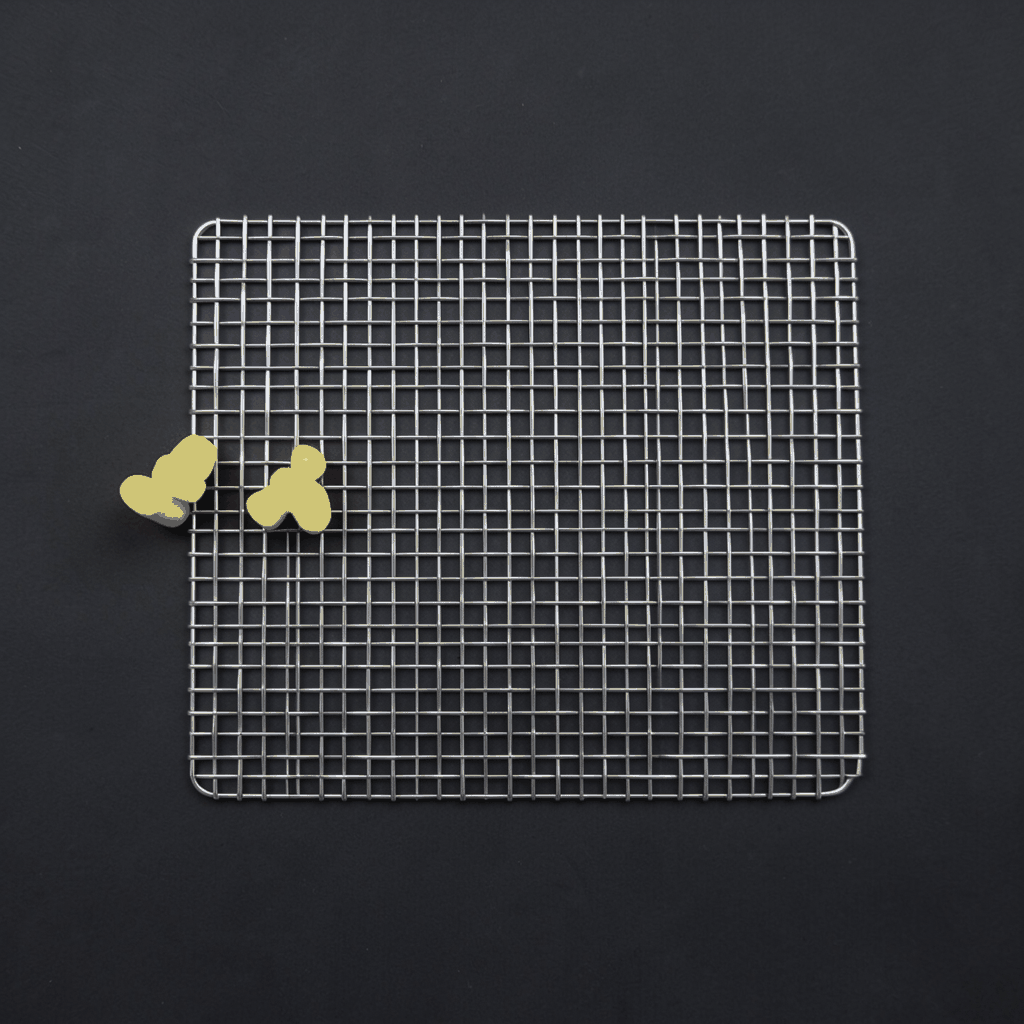
Open area is the percentage of a mesh sheet occupied by clear openings rather than metal wire. It provides a useful first indication of potential flow capacity because a higher open area generally gives fluid more available passage. For plain square woven wire mesh, open area can be estimated from the mesh count and wire diameter:
Open area (%) = [a / (a + d)]² × 100
In this formula, a is the aperture width and d is the wire diameter, using the same unit for both values. Mesh count refers to the number of openings per linear inch, but it does not identify the complete flow behavior by itself. Two screens with the same mesh count can have different apertures and open areas when their wire diameters vary.
A larger opening often lowers pressure loss and raises clean-filter flow, although it also permits larger particles to pass. A thicker wire may improve mechanical strength, abrasion resistance, and durability under vibration, but it reduces the free area available for fluid movement. Engineers therefore need to compare aperture, wire diameter, and open area together rather than selecting by mesh count alone.
Aperture And Wire Diameter Change Resistance
Aperture size determines the approximate maximum particle dimension that can pass through a woven screen. It also affects the length and shape of the flow path. When openings become smaller, the fluid encounters more solid surface and greater friction as it travels through the filter media. This raises the clean pressure drop at a given flow rate.
Wire diameter has a similar effect, but it also changes the internal profile of each opening. Fine wire can provide a relatively high open area for a given filtration rating, while heavy wire creates stronger strands and a more robust screen. The choice is especially important in industrial filters exposed to high differential pressure, repeated cleaning, or abrasive solids.
The relationship between flow and pressure drop is often nonlinear. In many liquid and gas applications, increasing the flow rate causes pressure loss to rise rapidly because of friction and local turbulence around the wires. A filter may therefore operate acceptably at its design capacity but become inefficient when a pump, compressor, or process line is pushed above the planned rate.
Weave Pattern Directs Fluid Through The Screen
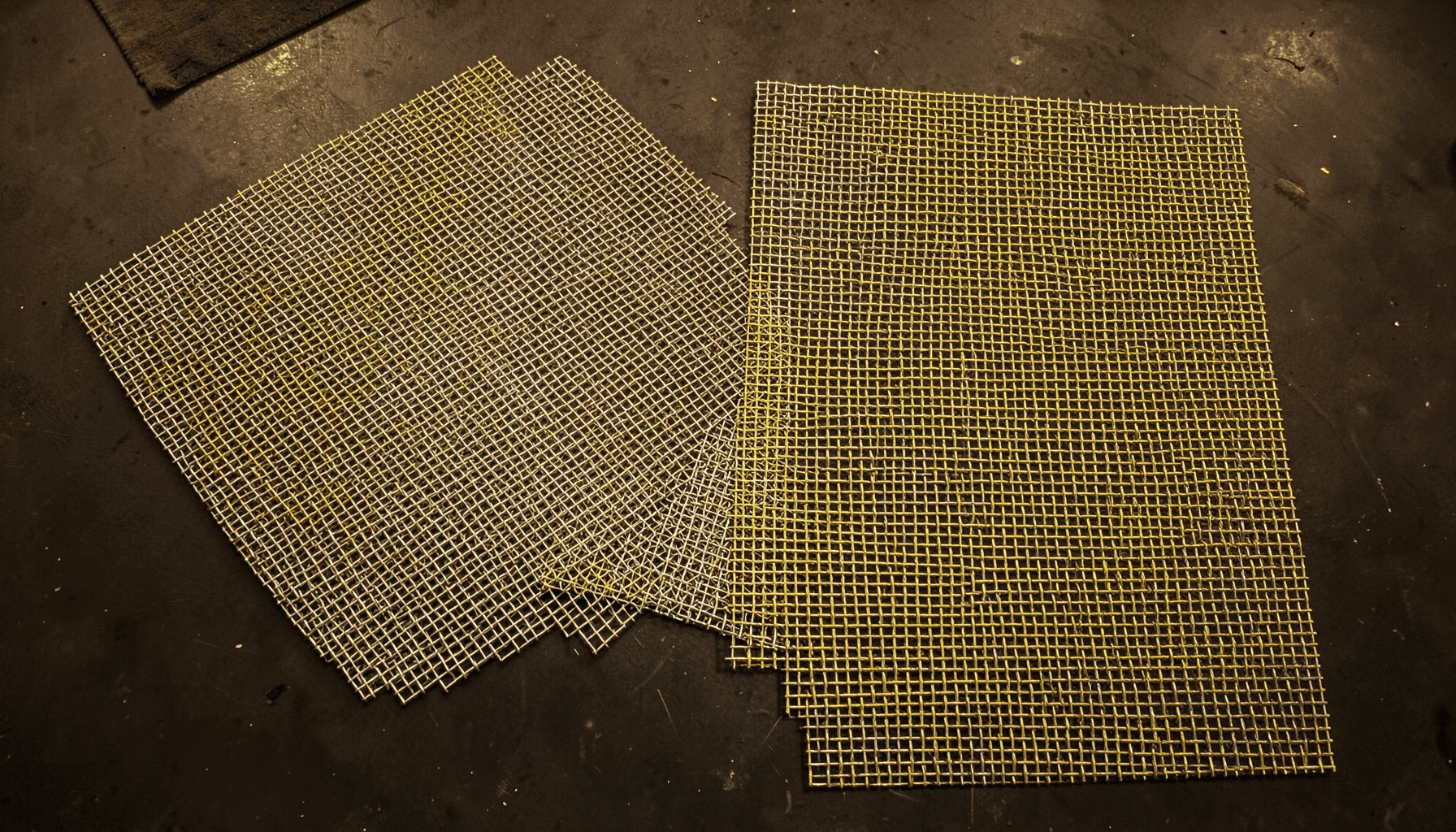
Plain weave is widely used because it provides a regular opening pattern, predictable filtration behavior, and good dimensional stability. Each warp wire passes over and under the fill wire in a consistent sequence. This structure is suitable for many liquid and air filtration duties where moderate strength and straightforward cleaning are required.
Dutch weave uses fewer, heavier warp wires and finer fill wires. It can produce very small retention openings with strong support, making it valuable for high-pressure filtration and applications requiring fine particle control. Its effective flow path differs from that of square mesh, so the nominal mesh count should not be used as the only basis for calculating permeability.
Twilled and reverse Dutch weaves can provide increased wire support, improved flexibility, or specialized retention characteristics. The orientation of the wires, depth of the channels, and shape of the openings influence how easily fluid enters and exits the media. For this reason, published flow data from the actual weave is more dependable than a calculation based only on theoretical open area.
Mesh geometry also affects cleaning. A screen with an accessible, regular surface may be easier to backwash or brush, while a fine, deep weave can retain particles within its channels. If the filter will be cleaned repeatedly, the selected construction should be evaluated for both initial flow and restored flow after cleaning.
Comparing Mesh Specifications And Flow Behavior
The following values illustrate typical design tendencies rather than guaranteed performance. Actual flow depends on fluid properties, filter dimensions, temperature, pressure, contamination, and the support structure beneath the mesh.
| Specification Change | Effect On Clean-Filter Flow | Effect On Filtration | Main Engineering Trade-Off |
|---|---|---|---|
| Larger aperture | Usually increases flow and lowers pressure drop | Allows larger particles through | Higher capacity with lower retention |
| Smaller aperture | Usually lowers flow and raises pressure drop | Captures finer particles | Better separation with higher energy demand |
| Thicker wire | Reduces open area and may increase resistance | Improves strength and wear resistance | Longer service life with lower permeability |
| Higher open area | Increases potential permeability | May reduce available filtering surface | Higher throughput with less metal support |
| Dutch or fine weave | Can create greater flow resistance | Supports fine particle retention | High precision with more difficult cleaning |
| Greater filter area | Reduces face velocity at the same flow | Maintains rated separation | Larger equipment footprint and cost |
| Fouled or blinded surface | Severely reduces flow | May improve initial capture temporarily | Rising pressure drop and maintenance need |
A useful design comparison is face velocity, which is the volumetric flow divided by the effective filter area. Increasing the screen area lowers face velocity and can reduce pressure drop without changing the mesh specification. This is often more practical than selecting a coarser mesh when particle retention must remain unchanged.
Support layers also matter. A thin wire mesh mounted over a perforated plate, wedge-wire support, or coarser backing screen can resist deformation and maintain its designed openings. If the support is too restrictive, however, the assembly may have a higher pressure drop than the filter cloth or mesh alone.
Fluid Properties Determine Actual Flow Rate
Water, hydraulic oil, solvents, compressed air, steam, and process gases do not move through mesh in the same way. Viscosity is one of the most influential variables. A high-viscosity liquid creates greater friction inside the openings, so the same mesh will pass less volume at the same pressure difference than it would with water.
Density affects inertial forces, especially in gas filtration and high-velocity liquid systems. Temperature can change both viscosity and material dimensions. A heated oil may flow more easily, while a cold process fluid can cause a sudden rise in differential pressure. Filter specifications should therefore identify the operating temperature and fluid condition used for performance calculations.
The pressure available to drive flow is equally important. For a simple filter assembly, the approximate relationship can be expressed as:
Flow rate = pressure difference ÷ flow resistance
Flow resistance includes the mesh, support layers, housing, seals, upstream piping, and any accumulated contaminant layer. In practice, manufacturers may provide pressure-drop curves at specific flow rates and fluid viscosities. These curves are preferable to applying a single universal permeability value.
Reynolds number can help indicate whether the flow through the openings is dominated by viscous or inertial effects. Low-Reynolds-number flow is strongly controlled by viscosity, while higher values increase the importance of turbulence and local eddies. Industrial filter sizing should use test data or validated models when the process involves high velocity, non-Newtonian fluids, or multiphase flow.
Fouling Changes Performance During Operation
A clean filter specification describes the starting condition, not the full operating cycle. Dust, fibers, rust, oil residue, biological matter, and process solids gradually cover or block the openings. As the effective open area falls, the pressure drop rises and the flow rate decreases unless the pump or fan increases its output.
Some deposits form a filter cake. This layer may improve fine-particle capture, but it also adds resistance. In certain processes, a controlled cake is useful and predictable. In others, rapid blinding causes unstable flow, frequent shutdowns, or excessive energy consumption. The filter should be selected according to the expected contaminant load and cleaning interval.
A practical specification includes an allowable terminal pressure drop. When the differential pressure reaches that limit, the element should be cleaned, replaced, or regenerated. Monitoring pressure before and after the mesh is one of the simplest ways to identify declining permeability before production is seriously affected.
Surface finish can influence fouling as well. Smooth stainless steel wire may release deposits more readily than a rough or damaged surface. Correct welding, cutting, and forming are also important because burrs or distorted openings can trap particles and create local restrictions. Precision processing protects the flow characteristics established by the original mesh design.
Material Selection Protects Permeability And Service Life
Stainless steel is frequently selected for industrial filters because it combines corrosion resistance, strength, temperature capability, and cleanability. Different grades suit different chemical environments, chloride exposure levels, and sanitation requirements. A material that resists corrosion helps preserve wire diameter and opening geometry over time.
Aluminum offers low weight and useful corrosion resistance in suitable environments, while copper and copper alloys may provide conductivity or specialized chemical properties. Iron and coated steel can be economical for less corrosive applications, including certain guards, screens, and industrial separation systems. The material must match the fluid, temperature, pressure, cleaning chemicals, and expected mechanical loading.
Material choice can influence flow indirectly. Corrosion, swelling of deposits, surface scaling, and chemical attack can reduce open area or roughen the passage walls. A filter that has the correct initial flow rate may perform poorly after prolonged exposure if the alloy or surface treatment is unsuitable.
Mesh is also used in architectural and non-filtration applications, where appearance and spatial separation are primary concerns. For example, decorative mesh partitions are evaluated for visual openness, flexibility, and finish rather than fluid permeability. Keeping these design objectives distinct prevents decorative specifications from being mistakenly applied to industrial filter sizing.
Recommendations For Selecting Filter Mesh
- Define the required particle retention, target flow rate, fluid viscosity, temperature, and maximum allowable pressure drop before choosing mesh count.
- Compare aperture size, wire diameter, open area, weave type, and support construction on the same specification sheet.
- Use manufacturer pressure-drop curves or test results for the actual fluid instead of relying solely on theoretical open-area calculations.
- Size enough filter area to control face velocity and allow for expected fouling between cleaning cycles.
- Confirm material compatibility with process chemicals, cleaning methods, temperature, corrosion exposure, and mechanical loading.
A complete filter specification should also state tolerances. Variations in aperture, wire diameter, sheet flatness, and effective area can produce measurable differences in flow, especially in fine mesh. For critical systems, testing a representative sample under operating conditions provides stronger evidence than comparing catalog descriptions.
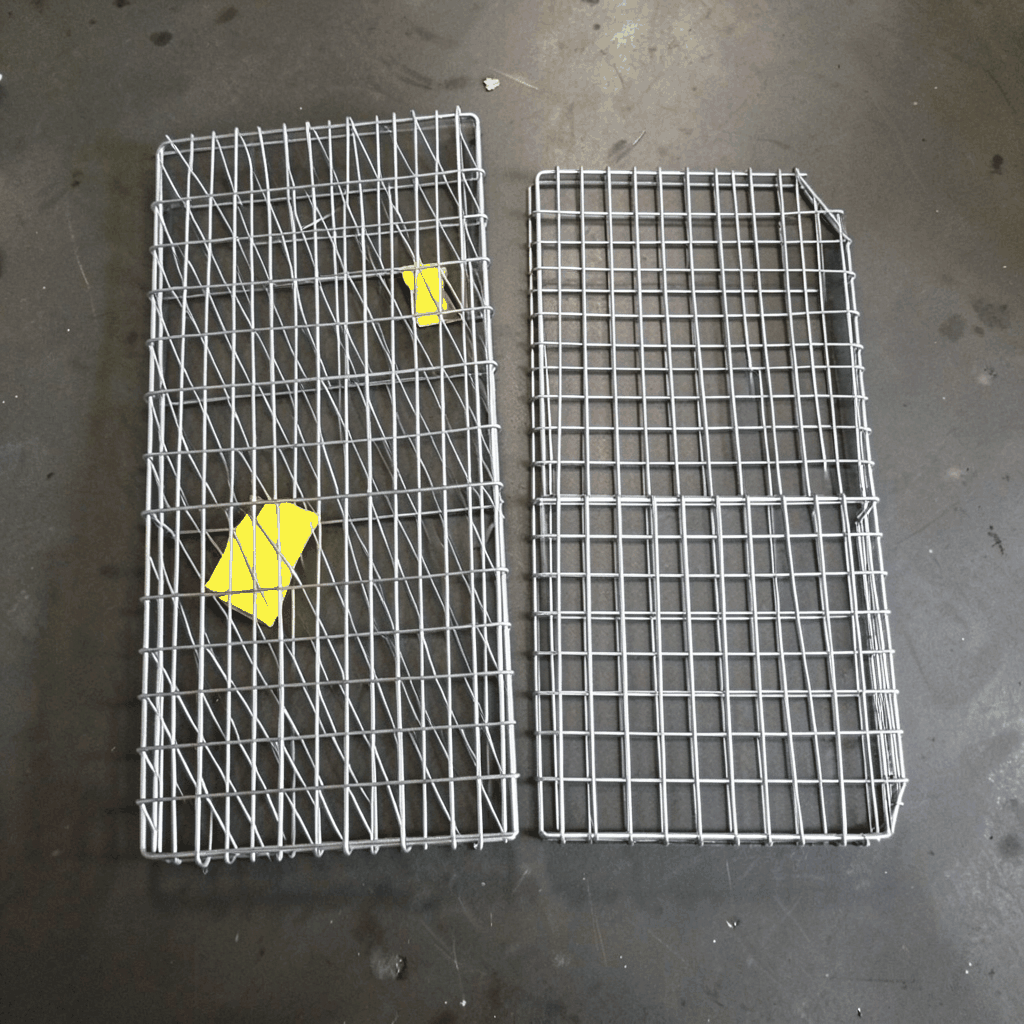
Custom fabrication may be appropriate when standard mesh cannot meet both retention and capacity targets. A manufacturer can combine different mesh layers, add a perforated support, form the screen into a cartridge or basket, or produce a welded frame that fits the existing housing. These changes can improve structural stability while preserving the required filtering area.
Convert Filter Requirements Into Reliable Mesh Design
Wire mesh specifications influence flow rates through a connected chain of effects: geometry sets the available passage, weave controls the flow path, material preserves the opening, and contamination changes the resistance during service. Treating these factors as a complete system leads to more reliable filter performance than selecting a nominal mesh count in isolation.
Shuo Ke Wire Mesh Product Technology Co., Ltd. produces and processes metal mesh products for industrial and customized applications, including filters, baskets, screens, and other fabricated components. Share the target fluid, flow rate, filtration rating, operating pressure, temperature, and installation dimensions with its engineering team to develop a mesh solution suited to both process performance and service conditions.