How Wire Mesh Thickness Impacts Security Window Grille Strength
Security window grilles protect openings against forced entry, accidental impact, and unauthorized access. Their performance depends heavily on wire thickness, yet thickness alone does not determine whether a grille will be reliable. Mesh opening size, material grade, panel dimensions, welding quality, frame construction, and anchoring all influence the finished barrier.
A thicker wire generally resists bending, cutting, and deformation more effectively than a thin wire. It can also provide a stronger connection at welded intersections. However, selecting the heaviest available wire may increase cost, weight, and installation difficulty without producing a proportionate security benefit.
The most effective specification balances wire diameter with the required security level, visibility, ventilation, corrosion resistance, and appearance. For residential windows, commercial buildings, industrial facilities, and municipal projects, a properly engineered wire mesh grille should be treated as a complete system rather than a sheet of metal with a single thickness rating.
How Wire Thickness Affects Mechanical Strength
Wire diameter has a direct effect on a grille’s resistance to bending. As the wire becomes thicker, its cross-sectional area increases, giving it greater ability to carry load before yielding. A thick wire also has a larger section through which an attacker must cut, which increases cutting time and may require more substantial tools.
The relationship between thickness and bending resistance is especially important. For a round wire, resistance to bending increases rapidly as diameter increases because the material is distributed farther from the neutral axis. In practical terms, a modest increase in diameter can produce a noticeable improvement in stiffness. This helps the mesh retain its shape when pressure is applied to the center of a panel.
Thickness also affects impact behavior. A heavy wire mesh panel is less likely to flex significantly when struck, although the surrounding frame and anchors must be strong enough to absorb and transfer that force. If the wire is strong but the frame is weak, the grille can still fail at the perimeter.
Gauge, Diameter, and Material Selection
Wire mesh may be described by gauge, millimeters, or fractions of an inch. Gauge systems are not fully consistent across all materials and product categories, so a project specification should state the actual wire diameter whenever possible. A lower gauge number often indicates a thicker wire, but relying on gauge alone can create confusion during purchasing and fabrication.
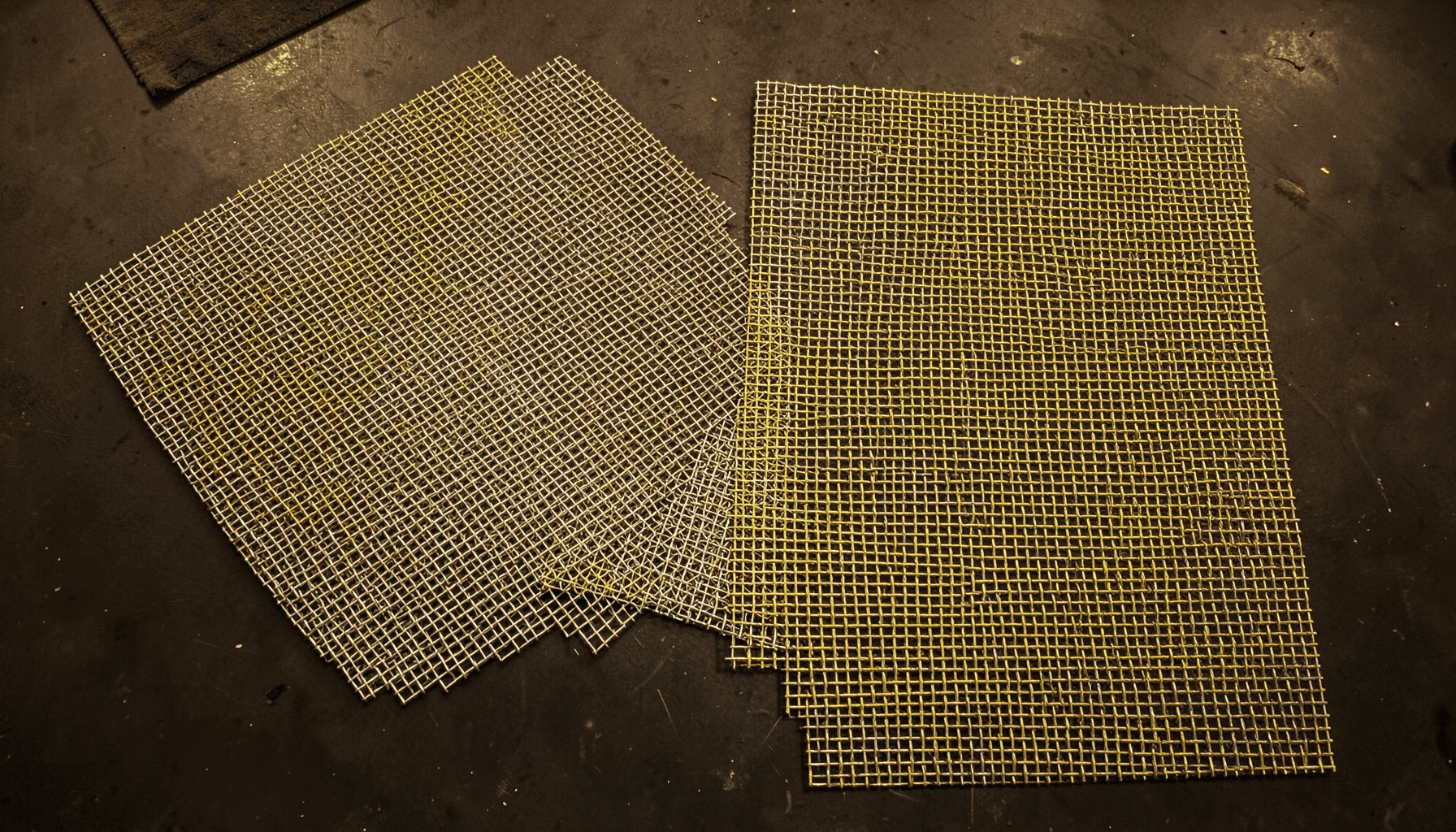
Material selection changes the practical effect of thickness. Stainless steel mesh provides strong corrosion resistance and reliable mechanical performance in humid, coastal, and demanding environments. Aluminum is lighter and naturally resistant to corrosion, but it generally has lower hardness and strength than stainless steel at a similar diameter. Low-carbon steel may offer high structural value at an economical price, especially when protected with galvanizing or powder coating.
Copper and specialty alloys may be selected for decorative or specific environmental requirements. Their appearance can support architectural design, but their mechanical properties and cost should be assessed before they are used for high-security window protection. A thicker wire made from a softer alloy may not deliver the same resistance to cutting or deformation as a thinner wire made from a harder, stronger material.
| Wire Diameter | General Strength Effect | Typical Design Advantage | Important Consideration |
|---|---|---|---|
| Light wire | Flexible and easier to shape | Lower weight, fine appearance, economical fabrication | More vulnerable to bending and cutting |
| Medium wire | Balanced stiffness and weight | Suitable for many residential and commercial grilles | Requires proper frame and welded joints |
| Heavy wire | High resistance to deformation | Stronger security barrier and longer service life | Greater weight, cost, and installation demand |
| Heavy wire in stainless steel | Strong with high corrosion resistance | Exterior, coastal, and high-use applications | Higher material and fabrication cost |
| Heavy wire in aluminum | Improved rigidity with low weight | Lightweight architectural panels | Lower hardness than many steel grades |
Mesh Opening Size Changes the Security Result
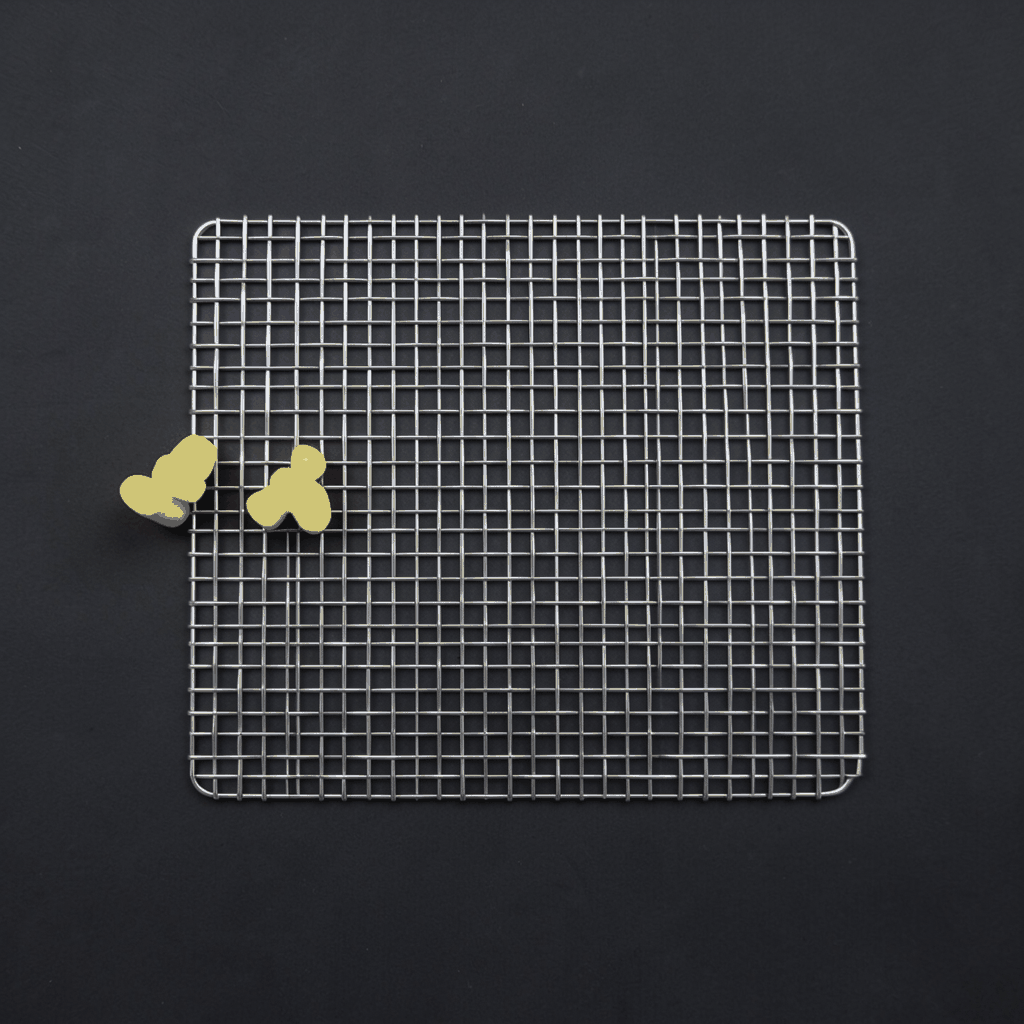
Wire thickness must be considered together with mesh aperture. A grille made with thick wire and large openings may have excellent stiffness but still allow tools, hands, or other objects to pass through. A smaller opening can reduce access and improve containment, even when the wire diameter remains moderate.
The spacing between wires also affects the amount of material in a panel. A close-grid mesh has more wire intersections per unit area, which can increase resistance to localized deformation. It may also be more difficult to cut repeatedly because an intruder encounters more material along a potential access path.
Openings influence visibility and ventilation as well. Security window grilles for homes, offices, schools, and public buildings often need to preserve daylight and airflow. Industrial enclosures may prioritize containment and impact resistance. A custom mesh manufacturer can adjust wire diameter and aperture dimensions together to achieve a more suitable balance than a standard product selected by thickness alone.
The shape of the opening matters too. Square welded mesh offers predictable spacing and a clean architectural appearance. Expanded metal, perforated metal, woven mesh, and laser-cut screens provide different combinations of stiffness, visual screening, and fabrication flexibility. Each construction type transfers force differently, so specifications should identify the mesh process as well as the wire or sheet thickness.
Frame, Welds, and Anchors Complete the Barrier
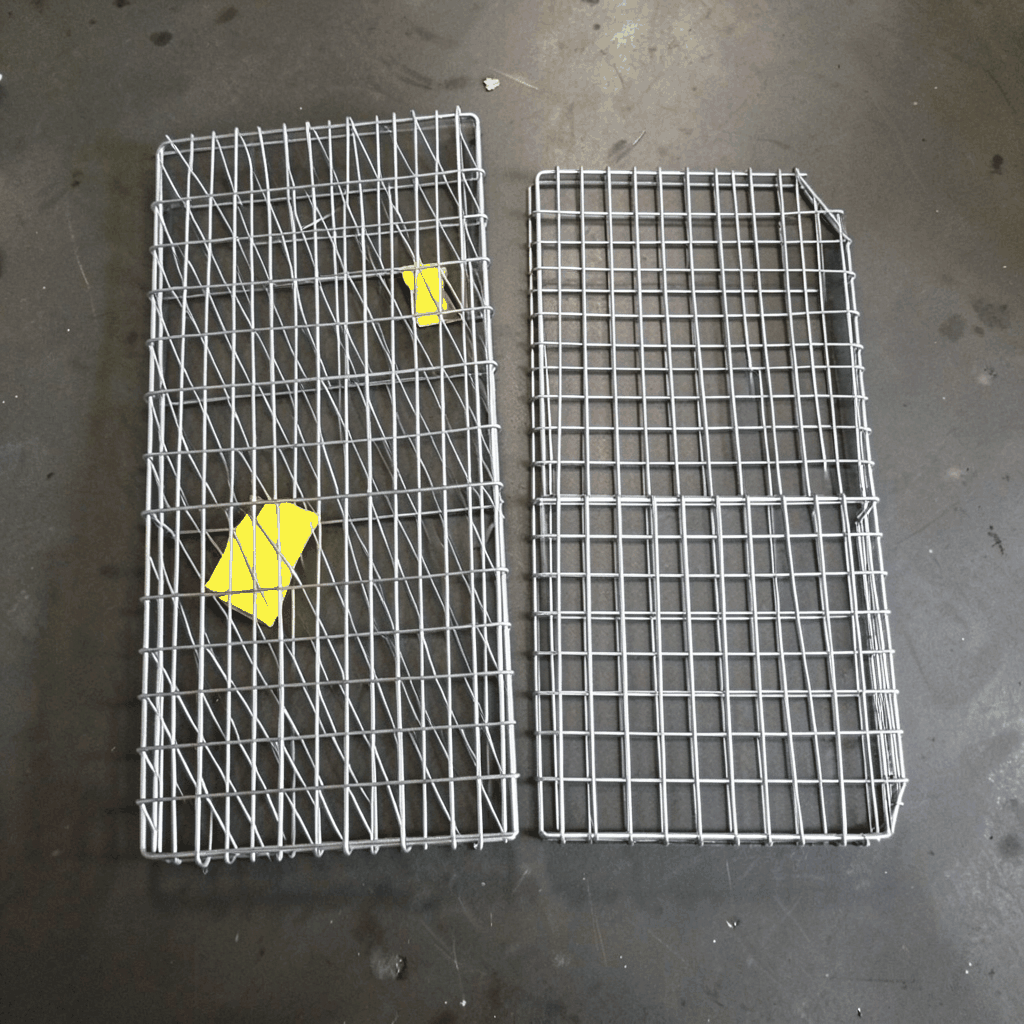
A grille panel is only as strong as its perimeter. If a thick mesh is installed in a light frame, pressure may cause the frame to twist, pull away from the wall, or separate from the welded joints. Frames should be sized to match the panel dimensions, expected loads, and anchor arrangement.
Weld quality is another critical factor. Consistent welds at wire intersections help distribute force across the panel and prevent individual wires from shifting. Poorly fused joints, excessive heat damage, or incomplete welding can create weak points that are not visible during a quick inspection. For architectural and security applications, fabrication controls should include accurate alignment, secure joints, and suitable finishing.
Anchors transfer the load into the building structure. Fasteners placed only in weak masonry, thin cladding, or deteriorated substrate may fail before the mesh itself shows damage. The installation design should consider anchor spacing, edge distance, wall construction, and the possibility of tamper-resistant fasteners.
Large windows often require intermediate supports or divided panels. Increasing panel size without strengthening the frame can reduce effective stiffness because the center of the grille has a longer span. A slightly lighter mesh with well-spaced supports may perform better than a very thick mesh installed as a large unsupported panel.
Thickness and Resistance to Cutting or Impact
Wire thickness contributes to security by increasing the amount of material that must be cut. It also reduces the speed at which a cut can progress through the panel. Stainless steel, hardened steel, and other durable alloys can further improve resistance to hand tools and environmental wear.
Cut resistance is not determined by diameter alone. A small number of thick wires may leave clear cutting paths, while a close mesh pattern can force an intruder to make several cuts. Welded intersections can slow the removal of a section, particularly when the panel is supported by a rigid frame.
Impact resistance depends on the force, direction, support conditions, and shape of the striking object. Thick wire helps reduce local bending, but a rigid grille can transfer impact energy into its frame and anchors. This is why testing or engineering review should consider the entire assembly rather than rating a wire in isolation.
For high-security facilities, the design may require a defined performance standard or project-specific test. Residential and commercial projects may focus on deterrence, delay, and resistance to common tools. Stating the intended threat level helps the manufacturer recommend a practical wire diameter, mesh size, material, and support configuration.
Environmental Durability Protects Long-Term Strength
Corrosion gradually reduces effective wire thickness. Rust pitting can create localized weak points, while repeated moisture exposure may damage welds and frame connections. A grille that begins with suitable mechanical strength can lose performance if the finish and material do not match the environment.
Stainless steel is often appropriate for exterior windows, coastal properties, kitchens, transit facilities, and areas exposed to cleaning chemicals. Galvanized steel and powder-coated steel can provide economical protection when the coating is properly applied and maintained. Aluminum may be useful where low weight and corrosion resistance are important, though contact with dissimilar metals should be managed to reduce galvanic corrosion.
Surface finish also affects appearance and maintenance. Brushed stainless steel, polished surfaces, painted steel, and powder-coated aluminum can support different architectural goals. Finishing should take place after fabrication when the process requires complete coverage of welds and edges, or according to the manufacturer’s established production method.
Practical Specification Recommendations
- State the actual wire diameter in millimeters or inches instead of relying only on gauge.
- Specify the material grade, surface treatment, and required corrosion resistance for the installation environment.
- Select mesh aperture together with wire thickness to control tool access, visibility, ventilation, and daylight.
- Require a rigid frame, compatible weld construction, and anchors designed for the wall or window substrate.
- Ask for samples, drawings, and fabrication details when the grille is part of a large or high-security project.
Matching Thickness to Real Project Requirements
Residential window grilles often need a balanced design that provides deterrence without making rooms feel enclosed. Medium wire with a relatively close aperture may provide sufficient strength for many ground-floor windows, especially when installed in a robust frame. Decorative patterns or powder-coated finishes can help the grille complement the building instead of appearing purely utilitarian.
Commercial buildings may require greater resistance to repeated contact, vandalism, and high traffic. Schools, retail properties, warehouses, and office buildings can benefit from welded steel or stainless steel mesh with reinforced perimeter frames. Window size, accessibility, and the value of the protected contents should guide the thickness decision.
Industrial sites and municipal facilities may face harsher conditions and higher security demands. Thick stainless steel mesh, heavy steel mesh, or custom-fabricated panels can be combined with tamper-resistant anchors and intermediate supports. The correct design should account for weather, cleaning, vibration, equipment movement, and maintenance access.
Customization is valuable when standard mesh dimensions do not fit the opening or when the grille must coordinate with other architectural metalwork. A manufacturer experienced in stainless steel, aluminum, iron, copper, and alloy mesh can compare material performance and fabrication methods before production. Drawings should confirm wire diameter, opening size, panel dimensions, frame profile, finish, mounting details, and acceptable tolerances.
Choosing thickness by appearance alone can produce an attractive but underperforming grille. Choosing the heaviest wire without considering weight and installation can create unnecessary expense. A balanced engineering approach gives the project a stronger, more durable, and more useful result.
Shuo Ke Wire Mesh Product Technology Co., Ltd. can support customized security window grille requirements with material selection, mesh processing, frame fabrication, finishing, and application-focused design. Share the opening dimensions, location, security objective, preferred appearance, and environmental conditions to develop a wire mesh solution suited to the building.