Mesh Baskets for Dip Coating and Electroplating in Australia
Metal finishing depends on repeatable immersion, drainage and handling. A poorly selected wire mesh basket can trap solution, restrict rinsing, cause coating marks or interfere with current distribution. The right process basket helps operators suspend small components or structural parts efficiently while protecting the bath from contamination and reducing damage during transfer.
The best design depends on the coating chemistry, component shape, immersion depth and handling method. Stainless steel, aluminum, copper, iron and other alloys each provide different combinations of strength, corrosion resistance and cost. Shuo Ke Wire Mesh Product Technology Co., Ltd. develops customized mesh baskets for architectural, industrial and metal-finishing applications, with specifications shaped around actual production requirements rather than a standard catalogue.
Choosing the Right Basket for Each Bath
A dip coating basket and an electroplating basket perform different functions, even when they use similar woven or welded mesh. Dip coating generally requires a rigid basket that holds parts through a liquid coating bath and allows excess material to drain as the load is lifted. The basket should prevent contact marks, tangled parts and excessive drag-out without allowing small components to escape.
Plating baskets serve as workpiece holders, cathode baskets or containers for soluble anodes. A cathode basket carries parts into an electrolytic cell and must provide a dependable electrical path. Anode baskets hold plating metal and permit controlled dissolution into the solution. These are separate applications: using a workpiece basket where an anode basket is required would produce incorrect plating chemistry and poor control of the deposited metal.
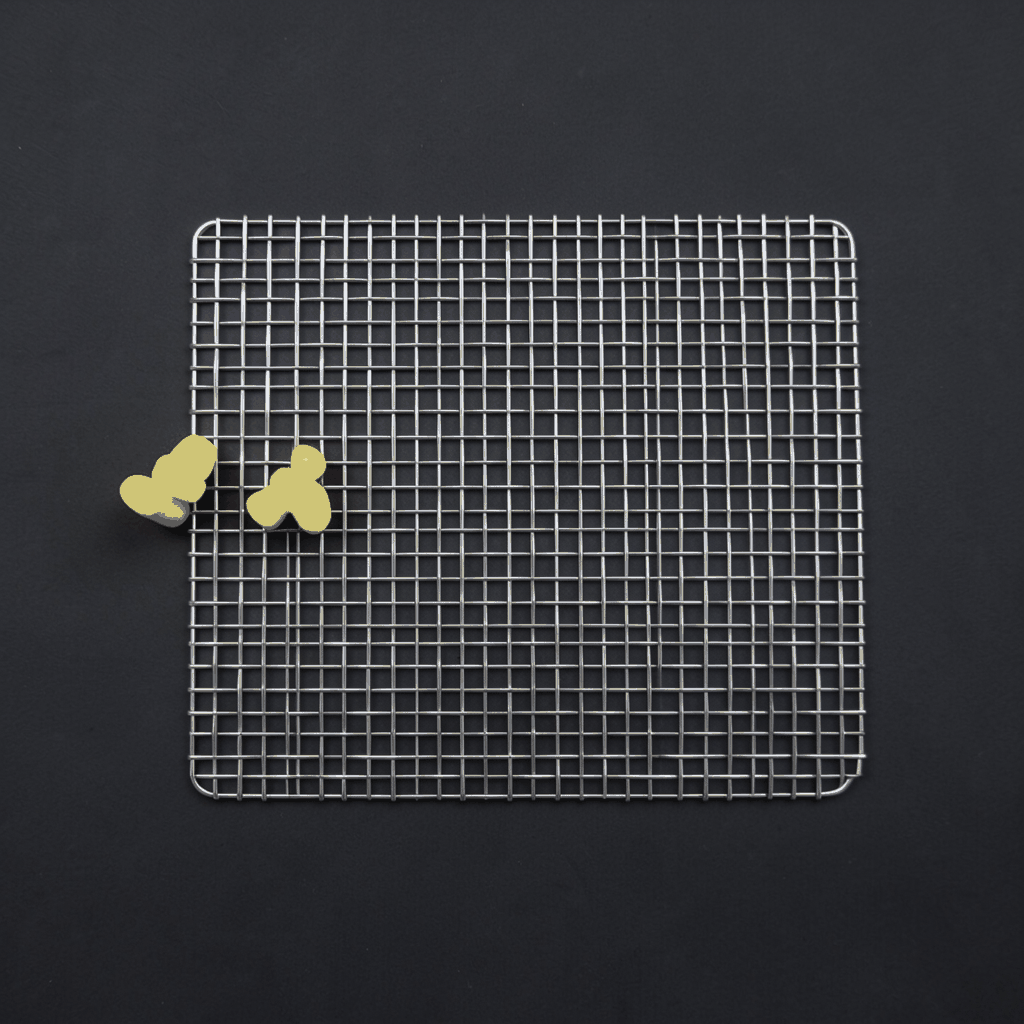
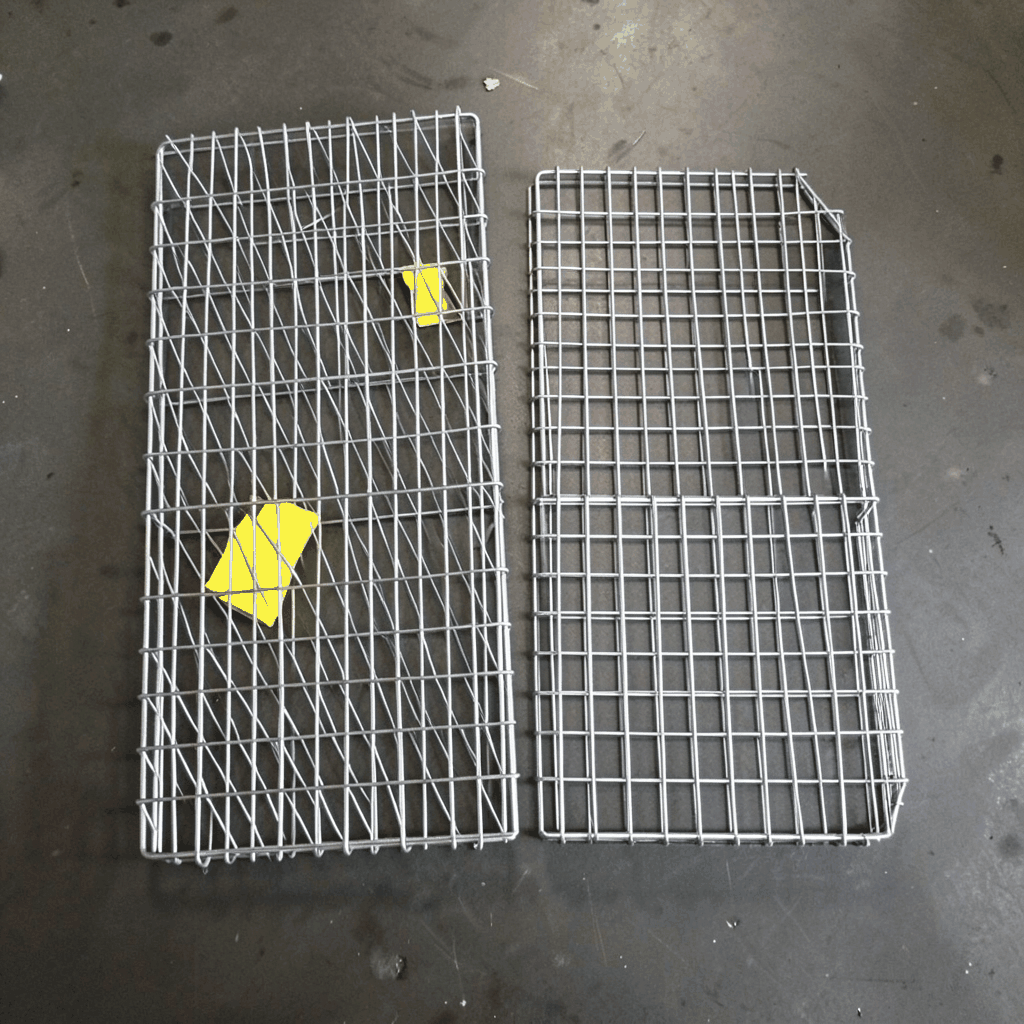
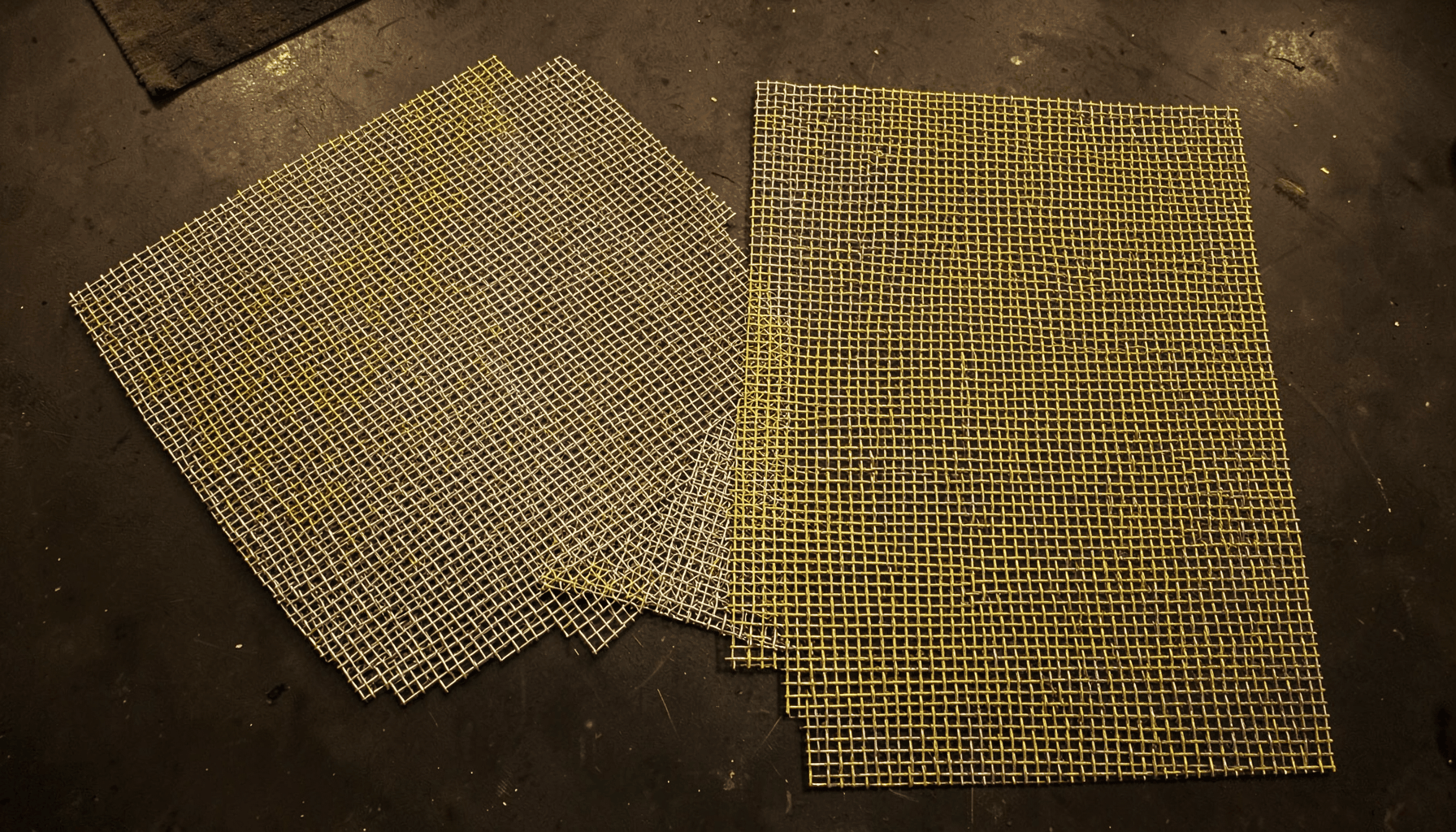
Component geometry determines whether a woven mesh, welded wire panel, perforated sheet basket or reinforced combination is most suitable. Fine woven mesh retains washers, bushings and small fittings, while heavier welded mesh supports brackets, frames and larger fabricated items. Open mesh construction also reduces bath drag and improves circulation around the workpiece. Clear dimensions, maximum working load and expected immersion cycle frequency should be confirmed before a basket is fabricated.
Matching Metal and Mesh to Chemical Exposure
316 stainless steel is often selected for its balance of mechanical strength and corrosion resistance. It can perform well in many degreasing, pickling, passivation and plating solutions, but it is not universally suitable for every chemical bath. Chloride-rich acids, strong caustic solutions, oxidising environments and elevated temperatures can reduce its service life. Grade selection must reflect the actual formulation, concentration and temperature rather than a general assumption that stainless steel will never be attacked.
Aluminum offers low weight and good formability but may react with acidic or alkaline coatings. Copper and brass can be appropriate in selected cyanide or precious-metal processes, although they can contaminate other baths if residues remain on a shared basket. Iron is useful for sacrificial applications in certain plating solutions, yet exposed iron can discolour products or create unwanted deposits. Titanium provides excellent resistance in many aggressive solutions, but its cost, galvanic interaction with connected metals and suitability as an anode or cathode should be reviewed carefully.
Surface condition is as important as the base alloy. Pickled or passivated stainless steel reduces the chance of tea staining, contaminant transfer and premature corrosion. Welded areas should be inspected for incomplete cleaning, trapped flux, sharp edges and undercut surfaces. A basket used around aluminium parts should never retain copper or iron contamination from a previous operation. Compatible materials, cleaning methods and isolation requirements should therefore be documented together.
Engineering Drainage, Support and Current Flow
Mesh aperture, wire diameter and open area work together to control fluid movement and part retention. A very fine basket may slow drainage and retain solution in its structure, increasing bath carryover and chemical consumption. A coarse basket drains faster but can lose small parts or allow delicate components to move. The selected geometry should retain the workpiece without creating excessive shadowing during electroplating.
The frame must distribute the load without forming weak points around the base, corners and handle connections. Reinforcing ribs, welded gussets and radiused corners improve rigidity, while removable hooks or hinged sections can make loading easier. Drainage openings should allow coating or rinse liquid to escape rapidly. Smooth welds and accessible joints also simplify cleaning, inspection and routine maintenance, particularly when baskets move between hot and chemically aggressive baths.
Electrical design becomes critical for electroplating. The suspension point, contact wire and basket surface must support consistent current transfer without arcing or poor contact. Position within the tank influences coating uniformity, so baskets should be spaced to preserve solution flow and avoid interference from adjacent loads. Fine mesh can shield parts from the plating current and create low-current areas. A trial using representative components is the most reliable way to confirm that the basket geometry supports an even deposit.
Operating Safely Across Australian Workplaces
Australian finishers in Sydney, Melbourne, Brisbane, Perth and regional industrial areas must balance process control with limited floor space and strict handling discipline. Coastal humidity and salt-laden air can affect baskets during storage or transport, even when they are designed for immersion. After each cycle, baskets should be rinsed as required, inspected for corrosion and stored clean and dry. Temperature changes between a heated bath and the workshop can also create condensation and thermal shock.
Safe Work Australia’s harmonised GHS classification system makes it necessary to review the safety data sheet for every bath chemical. Operators should know the consequences of acid or alkali exposure, hydrogen generation and hazardous fumes. A site-specific safe work method, suitable gloves, eye protection, ventilation and emergency procedures should cover basket cleaning, chemical transfer and maintenance. Lifting hot or heavy process baskets requires suitable mechanical assistance rather than unsupported manual handling.
Environmental controls vary by state and territory. NSW EPA, EPA Victoria, Queensland’s Department of Environment and Science and other regulators set requirements for industrial discharges, while sewer authorities may impose additional trade-waste conditions. Acidic rinse water, dissolved metals and coating residues must be collected or treated as required; they should not be assumed to disappear through ordinary basket drainage. The basket design should support segregation and controlled rinsing without creating uncontrolled loss of process solution.
The Australian market also includes mining equipment manufacturers, automotive suppliers, water-infrastructure contractors and local engineering workshops. These operations may need replacement baskets quickly but often work with imported production equipment. Clear drawings, material certificates and defined interfaces can reduce commissioning delays. For remote projects, a robust, repairable design with replaceable hooks or lifting components may be more valuable than a lower-cost basket with a short service life.
Specify, Test and Order the Right Basket
A useful procurement specification should state the component dimensions and weight, basket dimensions, mesh aperture, wire diameter, alloy grade, maximum immersion temperature, chemical exposure, expected cycle frequency and required load capacity. It should also identify whether the basket is a workpiece holder, cathode basket or anode basket. Handle type, drainage requirements, electrical contact arrangement, welding standard, surface finish and inspection records should be included rather than left to interpretation.
Prototype testing is particularly valuable for electroplating because current distribution cannot be judged from appearance alone. Trial panels can reveal shielding, contact-point issues, uneven deposits or areas where solution stagnates. Dip coating trials should examine drainage, coating continuity, drip-back, marks caused by part contact and whether the basket retains every workpiece. These results can then be translated into a production design with an appropriate safety margin.
Shuo Ke can customise mesh size, frame dimensions, alloy selection and handling features from project drawings or operating requirements. Ask for a material recommendation and process review, then request a sample or prototype where coating uniformity or load performance needs validation. Contact Shuo Ke Wire Mesh Product Technology Co., Ltd. with your bath details and component drawings to obtain a clear specification, production quotation and a mesh basket built for dependable use in Australian finishing operations.