
Mesh baskets for hot dip galvanizing and parts washing
Mesh baskets for hot dip galvanizing and parts washing are process carriers, not simply general-purpose storage containers. In a galvanising line, they hold components clear of one another while allowing zinc circulation and drainage. In a wash plant, they retain small parts while liquid passes through. Their design directly affects coating quality, drainage, handling time and operator safety.
A reliable galvanising basket is exposed to a zinc bath operating at roughly 450°C, then lifted, drained and returned for reuse. It must tolerate the mass of the load without deforming, release trapped solution and avoid creating air pockets around coated parts. A washing basket faces a different set of demands: chemical compatibility, secure retention, convenient draining and the ability to survive repeated cleaning cycles.
For Australian workshops and contract manufacturers, the basket should be selected alongside the galvaniser or parts washer that will use it. Approving a design early avoids expensive delays after parts have been processed. Local fabrication capacity, replacement schedules, shipping distances and coastal exposure can matter as much as the catalogue dimensions, while WHS duties apply throughout handling and maintenance.
Basket construction that matches the job
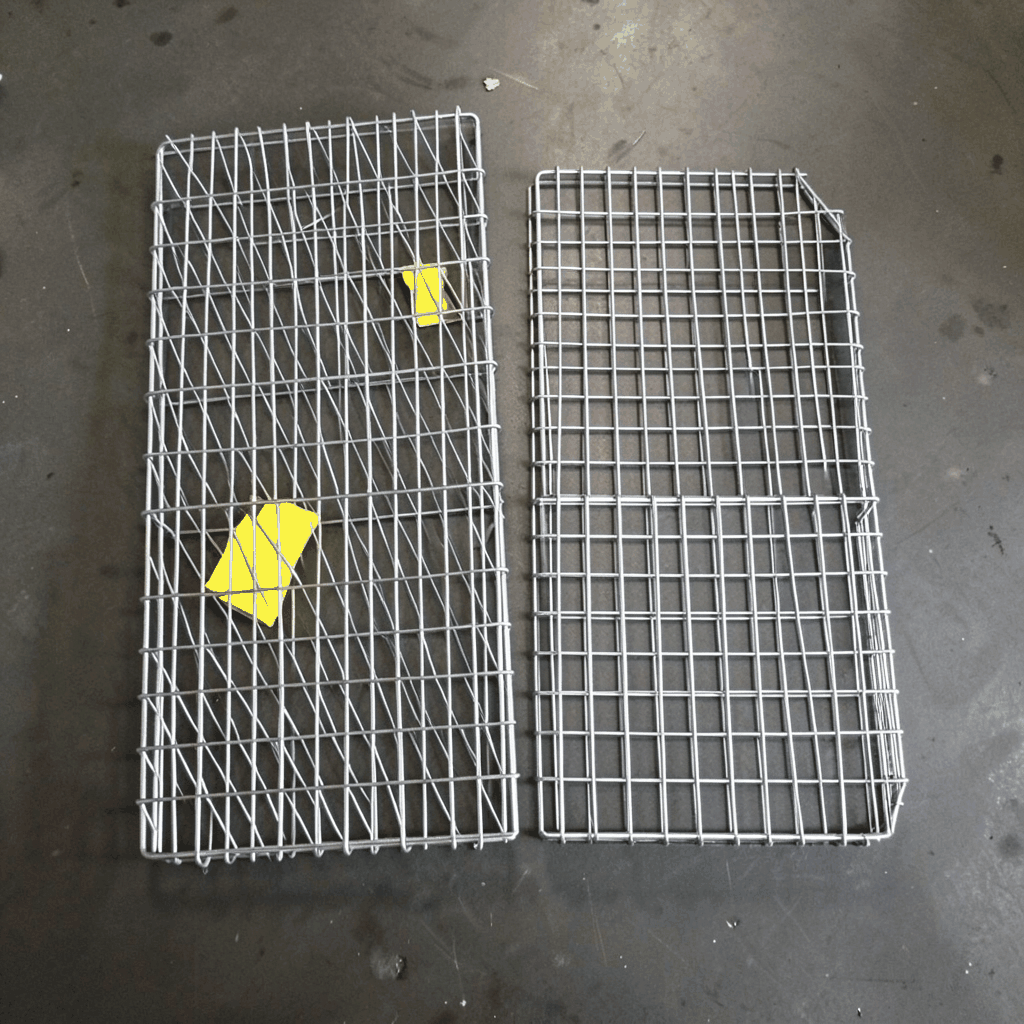
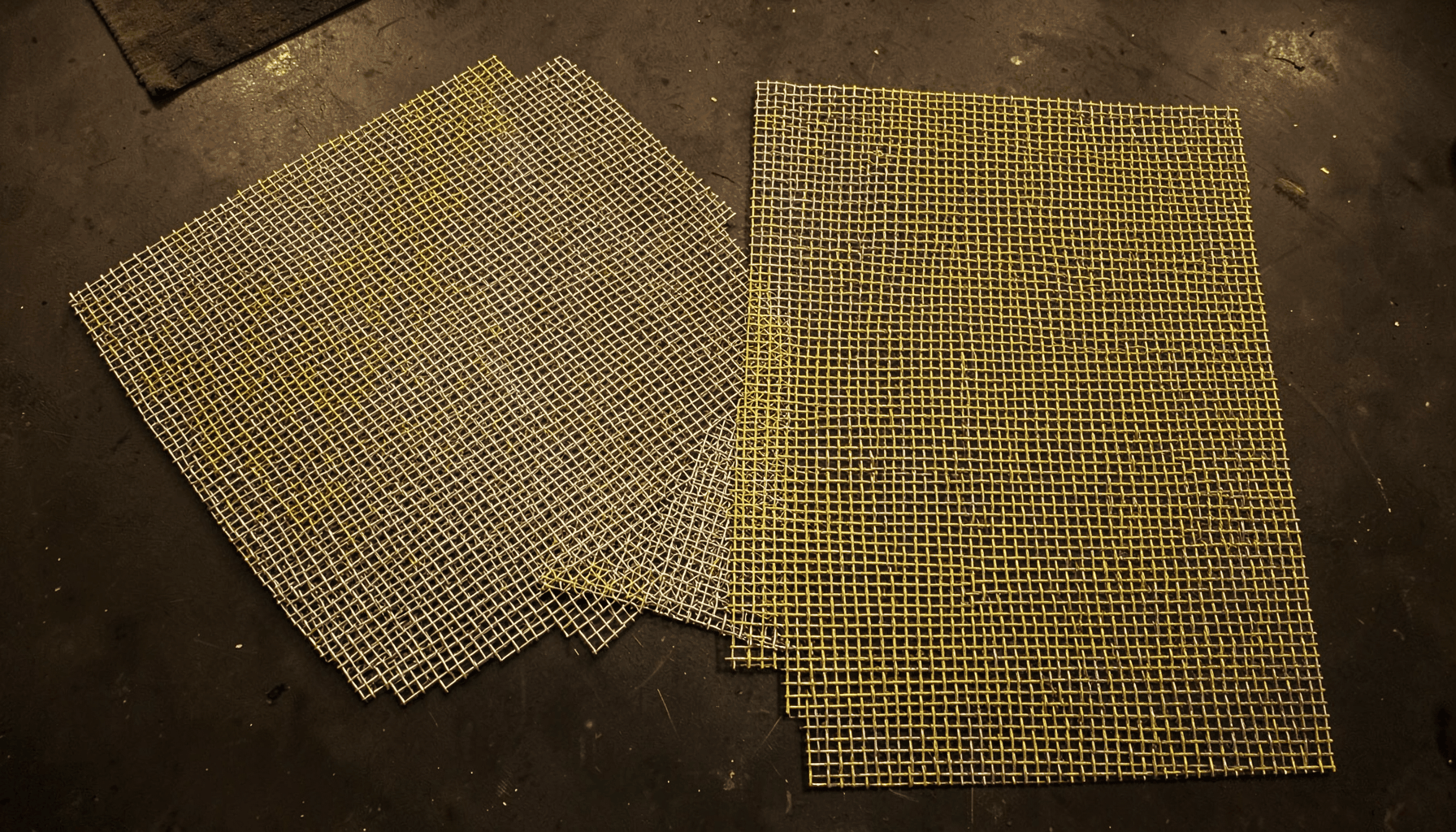
Welded wire mesh provides consistent apertures and rigid intersections, making it a practical choice for load-carrying galvanising baskets. Woven mesh offers finer control of the opening and greater flexibility, while perforated sheet provides a stronger base where parts must not fall through. The right construction depends on the size, shape and weight of the components rather than on one universally superior product.
Open mesh walls usually drain well and let zinc reach the parts. Perforated or woven floors give more support but need enough openings to prevent solution from pooling. Fine mesh can slow drainage and retain wash liquid; large openings can let small components escape. Where both drainage and retention are essential, a combination of mesh walls, a perforated floor and a close-fitting removable lid can offer a practical balance.
Available mesh basket options can be compared for framing, mesh size, handle arrangements and base construction. Rather than selecting by appearance, buyers should match the internal dimensions to the actual parts and the handling system above the bath. Modular baskets can suit mixed batches, but sacrificial and returnable designs should remain clearly separated at the galvanising facility.
Materials for heat, chemicals and repeat use
Low-carbon steel is widely used for hot dip galvanising baskets because it is economical and compatible with the zinc bath. These baskets are often sacrificial, with a finite service life set by immersion time, load and wear. A robust frame, protected contact points and easily replaced mesh panels can extend that life without attempting to preserve a consumable beyond its useful condition.
Stainless steel offers a more durable option for reusable equipment, but grade and surface condition need careful review. Grade 304 is common in general washing environments, while grade 316 gives greater resistance to chloride exposure. Neither grade should be assumed suitable for molten zinc without the galvaniser’s approval. Aluminium, brass and copper should not be used for baskets that contact the bath.
Chemical washing also affects material choice. Alkaline cleaners, degreasers and sanitising agents may attack weaker metals or attack a coating at a damaged spot. The basket should therefore be specified for the detergent, temperature and exposure cycle, with the stainless grade checked against workshop conditions. Galvanised workpieces and stainless washing equipment also need clearly defined separation to prevent cross-contamination.
Engineering details that prevent process failures
A galvanising basket needs unobstructed routes for liquid and zinc to leave the parts. Solid corners, closed seams and closely packed components can trap solution, producing drips, stains or coating defects after the basket is lifted. An open top, adequate clearances and a draining floor help liquid escape. The galvaniser should confirm the geometry for the particular load, especially where a complex component creates an internal pocket.
Structural strength is tested by the combination of wet component weight and handling stresses. Thin wire may stretch when heavily loaded, distorting the basket and allowing parts to touch. Reinforced rims, welded cross members and load-spreading supports can control deflection. Small threaded or delicate parts need suitable holders or separation, because a basket alone cannot prevent movement if the components are poorly restrained.
Lifting features deserve the same attention as the mesh. Handles and hooks must match the plant’s equipment, remain easy to inspect and avoid sharp projections that could damage nearby components. Hot working at the galvaniser creates burn and handling risks, so exclusion zones, protective equipment and documented procedures remain essential. A design that is safe to lift empty is not necessarily safe with its maximum rated load.
Parts washing baskets in everyday industrial use
Parts washing baskets are used in vehicle workshops, machinery repair depots, food-equipment maintenance and council workshops. Fine mesh retains fasteners and small mechanisms, while a perforated base supports larger castings during immersion. The cleaning solution must reach every surface, so tightly packed loads can leave oily areas behind. Stable stacks and partitions help operators build repeatable batches without trapping chemicals.
Capacity should reflect the basket’s practical load, not just its volume. Overloading can bow the base, strain handles and make the basket unstable in a wash tank. Removable dividers can control movement, but they should not block drainage. For degreasing, drainability and easy transfer to a rinse tank are valuable; for a final rinse, clean handling and a lid that keeps parts contained may be more important.
Cleaning agents and rinse water should be considered together. A basket that performs well in an alkaline wash may be unsuitable for a solvent or acidic process. Manufacturers can recommend mesh, grade and surface finish, but the operator still needs a compatible chemistry and a safe dilution. Separate baskets for pre-cleaning, galvanising preparation and final washing also reduce the risk of carrying grease or abrasive residue into later stages.
Australian applications and compliance requirements
Australian demand varies sharply by region. Sydney’s transport, port and waterfront infrastructure require durable steelwork in a salt-prone environment. Newcastle combines heavy industry, port logistics and mining supply chains. Melbourne’s engineering and manufacturing base produces mixed batches for local galvanisers. Brisbane’s farms, machinery workshops and council maintenance crews value parts that can be repaired rather than replaced. Perth’s mining and energy customers also face long transport routes.
These conditions influence basket specification. Coastal users need corrosion-resistant components and sensible replacement intervals, while remote operations benefit from robust baskets that minimise return freight. Heat can reduce the strength of coatings during storage, and dry inland conditions can make fine dust harder to remove from mesh. Standardising a basket across several sites can simplify purchasing, but it should still suit each service environment.
Coating requirements for the components should be stated against AS 4680 or ISO 1461, which cover hot dip galvanized coatings on fabricated iron and steel articles. Those standards do not approve a basket design, but they establish the service outcome the basket must support. Work health and safety laws in each state and territory also govern safe lifting, hazardous chemicals and maintenance, with Safe Work Australia codes explaining practical ways to meet those duties.
Selecting and testing a supplier
Shuo Ke Wire Mesh Product Technology Co., Ltd. presents its broader production and processing capabilities through its custom mesh manufacturing website. The portfolio covers architectural mesh, partitions, screens, guardrails, filters and baskets in materials such as stainless steel, aluminium, copper and iron. For buyers comparing an international manufacturer with a local fabricator, the useful comparison is engineering support, drawing accuracy and the proposed service life of the basket.
A drawing review should confirm mesh size, wire diameter, frame sections, rated load, lifting points and drainage arrangements. Material certificates and weld quality records add confidence, particularly where baskets will carry multiple operators or critical components. A first sample can reveal awkward clearances, unstable stacking or handles that do not match local lifting equipment. Samples should be assessed under the expected load before a production batch is accepted.
Commercial terms should reflect the real duty cycle. A reusable stainless basket may justify a higher purchase price when it survives many wash or galvanising cycles; a sacrificial steel basket may be more economical where zinc attack is rapid. Local galvanisers often set their own basket rules, so written approval is more valuable than a generic compliance claim. Delivery schedules, spare mesh panels and replacement handles should be agreed before ordering.
Specify the parts, the processing chemistry, the required service life and the handling equipment before ordering a basket. Include an accurate drawing and a photograph of the loaded container, then ask the supplier to demonstrate drainage, spacing and lifting arrangements. Obtain approval from the galvaniser or wash-plant operator so the carrier fits the actual process rather than relying on nominal dimensions alone.
The next step is a documented sample trial followed by clear production criteria for dimensions, welds, material, load capacity and finish. Record inspection intervals and replace consumable mesh before it loses shape or permits parts to contact one another. A controlled approval process gives maintenance, procurement and processing teams a basket that supports dependable quality in Australian conditions.