
Engineered baskets for quenching and tempering
Mesh baskets for quenching and tempering metal parts sit at a point where furnace handling, process control and worker safety meet. They carry hot components into a quench medium, hold them in the required position and then allow controlled drainage before transfer to a tempering furnace. Their construction can influence cooling rate, distortion and the risk of cracking, so they should be specified as process equipment rather than treated as simple wire containers.
A reliable basket does more than survive immersion. Its open area, surface area and drainage pattern affect how quench oil, polymer or water moves around the load. A well-designed basket promotes repeatable heat transfer, limits trapped air and prevents small components from escaping. It also has to withstand thermal cycling, reaction to the medium, mechanical shock during handling and routine cleaning without shedding particles or contaminating the workpiece.
For Australian buyers, that means matching the basket to the alloy, quenchant and heat-treatment cycle rather than choosing by mesh size alone. Local specifications normally use Celsius and metric measurements, and a supplier should be able to answer questions about load, temperature, throughput and safe lifting in plain terms. The best results come from combining a clear heat-treatment procedure with a purpose-built basket and disciplined inspection.
What a quench basket actually does
During quenching, the basket’s immediate job is controlled submersion and withdrawal. It must keep the workpiece secure while still allowing vigorous circulation through and around the part. Fast, uniform heat removal can limit the formation of undesirable microstructures, but an uneven basket or poorly balanced load can create local cooling differences that contribute to warping or tensile stress. For a critical component, cooling uniformity may need to be verified against the approved process.
The basket also carries hot mass. Its wires, welds, seams and attachment points lose strength as temperature rises, while thermal expansion can alter clearances and twist the frame. Preheating can reduce thermal shock, yet an overly hot basket may contaminate the quenchant or extend the cycle. This is why a drawing should identify the maximum basket temperature, hot load, lifting method, residence time and whether the equipment will be quenched as a complete assembly.
Materials and mesh specifications
Stainless steel is a common starting point because it combines corrosion resistance, strength and cleanability. Grade 304 may suit many oil and polymer applications, while 316 offers additional chloride resistance for wash-down areas or coastal service. Neither grade is automatically correct for every quench medium, and some process temperatures or contaminants require specialist alloys. Carbon steel can be economical for less corrosive duties but needs careful protection against oxidation, media attack and scale.
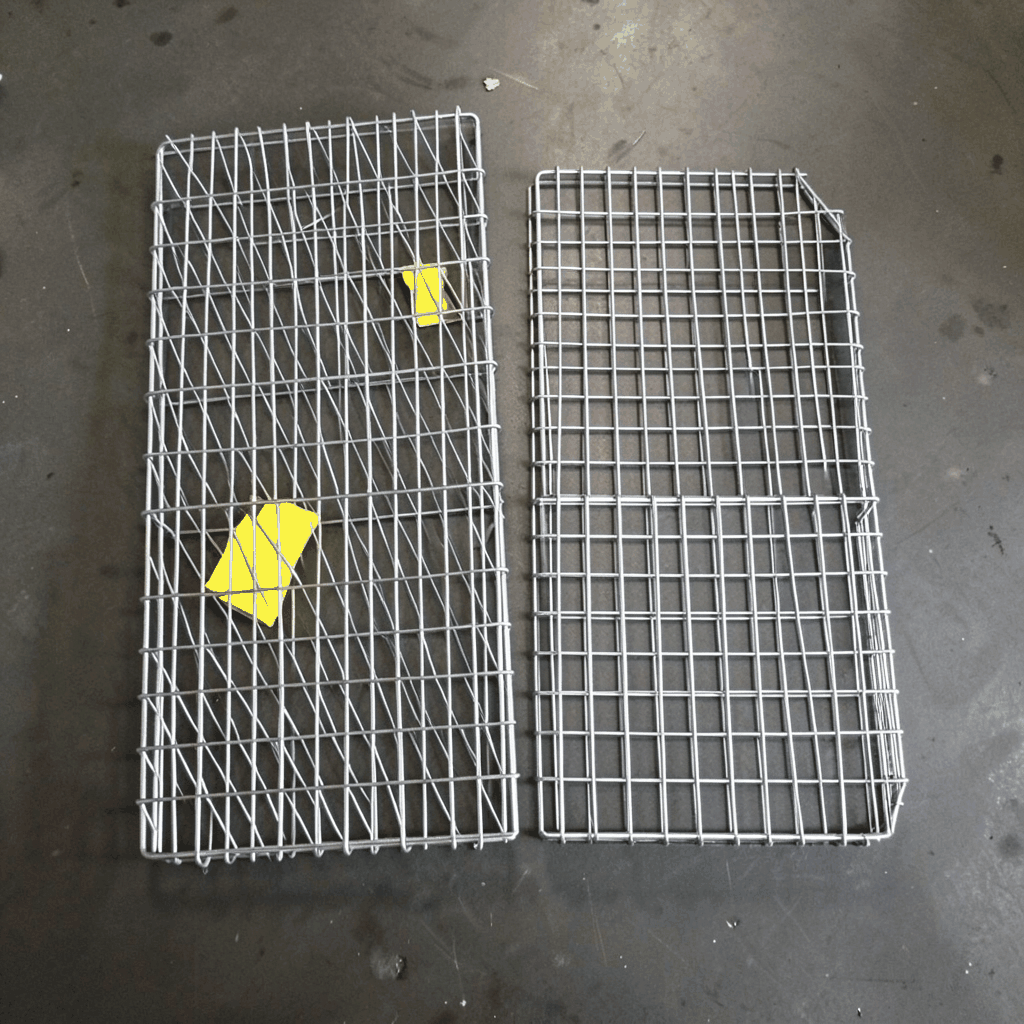
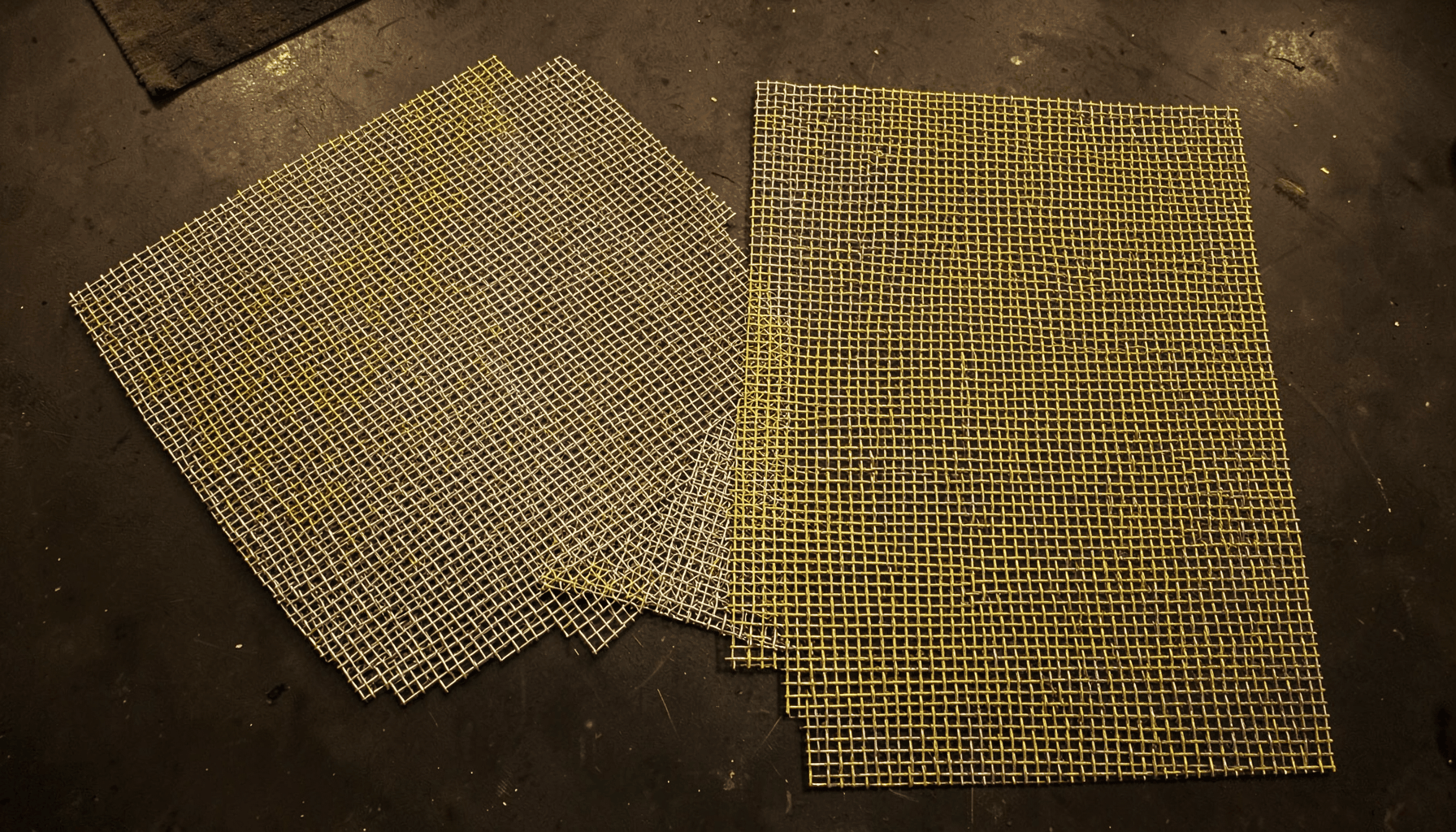
Woven mesh gives a flexible panel that can be formed around unusual shapes; welded mesh provides accurate apertures, flatness and predictable load paths. The aperture must retain the smallest part without blocking circulation, and the wire diameter must support the hot weight without excessive deflection. Fine mesh can capture debris but may slow drainage and hold heat-treatment salts or oil above the load, so the balance between open area, service life and cleanout matters.
For unusual loads or apertures, a China-based producer such as Shuo Ke Wire Mesh can be approached through its custom mesh fabrication service, with the enquiry supported by drawings rather than a generic standard-basket request. Useful information includes the part envelope, mass, required clearance, load pattern, medium, maximum temperature and lifting arrangement. A supplier should also state tolerances, joining methods, finish and any coating limits.
Matching baskets to quench media
The quench medium sets the thermal and chemical conditions around the basket. Oil requires good drainage and controlled carry-over because excess fuel increases smoke and fire risk. Water-based polymers demand attention to concentration, agitation and deposit control. Brine or molten-salt systems place especially high demands on corrosion resistance and cleanout, and some salts are incompatible with copper, aluminium or plated components. The immersion material must therefore be approved for both the quenchant and the actual operating temperature.
Process settings cannot compensate for poor basket geometry. Quench concentration, bath temperature, agitation, load spacing and transfer speed should remain within the approved range, while the basket permits media to reach hidden surfaces and releases fluid promptly on withdrawal. Part orientation and the amount of metal in each basket also influence consistency. In a production cell, operators can use a repeatable loading pattern, a calibrated timer and a clear drainage position to make each cycle easier to audit.
Engineering safe handling and transfer
Geometry starts with the component envelope. The basket should provide enough clearance for circulation, avoid hard contact points and prevent parts from shifting during immersion or transport. A reinforced base may be needed for heavy shafts, rings or tooling, but unnecessary mass increases heat-up time and consumes quenchant. Drainage holes, lifting bail or lugs and any hinged sections should be positioned so a loaded basket hangs evenly and remains stable at the extraction point.
When one basket serves both operations, tempering imposes a different duty from quenching. The treatment temperature is usually lower, but airflow and spacing still matter so every section receives the specified soak and reaches the required stress-relief condition. Parts should not be packed tightly together or stacked in a way that creates cold shadows and uneven properties.
The hot load and transfer method determine the structural design. Engineers should check the weakest wire, weld, handle, fastener and lifting attachment at operating temperature, then apply suitable safety factors without creating sharp stress risers. Moving parts should have positive retention, and electrical bonding or earthing should be considered where applicable. Coatings can extend life, but they must not peel in the medium or introduce elements such as zinc that are forbidden by the heat-treatment specification.
Australian worksites commonly treat lifting and hot-fluid handling as formal safety risks. A risk assessment, the chemical safety data sheet, the site’s work health and safety procedures and AS/NZS 2550 crane safety requirements may all be relevant. During a toolbox talk, operators need to know the maximum permitted load, the approved lifting points, what to do if the basket snags and how to handle oil carry-over. Guards on agitation equipment and a clear exclusion zone are part of the control, not optional extras.
Supply and service across Australia
Supply arrangements vary sharply across Australia. Melbourne fabricators and automotive suppliers often need short-turnaround baskets for tooling and component testing, while Newcastle’s steel and mining industries create demand for robust handling equipment. Queensland workshops serving agriculture and mining may face abrasive dust, humidity and wash-down conditions. These environments reward a basket that local fitters can inspect and repair without specialist equipment.
Distance can matter as much as price. Pilbara and other remote operations may wait longer for replacement baskets and consumables, making local spares, simple construction and predictable lead times valuable. Coastal sites also need an honest corrosion assessment; specifying 316 because a project is near the coast does not replace testing against the chosen medium and cleaning regime. Australian purchasing teams commonly compare direct engineering supply, local fabricators and distributors, so quotations should separate mesh, fabrication, coating, tooling, freight and ongoing inspection.
Inspection, testing and lifetime
Inspection should be routine, because wire damage can progress quietly under repeated heating. Before each shift, check for broken strands, loose welds, distorted frames, blocked apertures, damaged lifting points and contamination. After a cycle, allow the basket to cool in the approved location and clean deposits before they become hard scale. Record the basket identity against furnace and quench batch records so unusual behaviour can be linked to a specific tool.
Qualification normally combines drawing review, dimensional inspection and a representative load trial. Operators should verify that parts are retained, drainage is prompt, the lift is balanced and the basket returns to service without permanent distortion. Critical applications may justify sample coupons, material certificates and documented weld procedures. A jammed basket should never be forced: controlled movement under an abnormal load is the same engineering concern addressed in a hydraulic cone crusher’s tramp release operation guide, where a designed valve path relieves pressure predictably rather than allowing sudden failure. A heat-treatment basket should likewise have defined safe responses to snagging, excess load and hot-fluid carry-over.
Specify the process, not just the mesh. Provide the component drawings, hot weight, maximum basket temperature, quench medium, cycle time, required throughput, lifting capacity and site access details, then request a fabrication review, material specification and sample or trial plan. Shuo Ke’s technical team can use those inputs to develop a durable mesh basket around the actual duty, while the buyer retains clear inspection points and acceptance criteria. Start with a documented trial in production conditions and release the basket only after retention, drainage, heat exposure and safe handling have all been checked.