Secure mesh fencing for dog kennels and pet enclosures
Mesh fencing for dog kennels and pet enclosures must contain a determined dog while providing daylight, airflow and a clean place to rest. In Australia, a kennel yard or dog run is a familiar backyard feature, especially on compact suburban blocks in Melbourne, Sydney and Perth. The best result comes from coordinating mesh, posts, gates and ground anchors rather than choosing wire thickness alone.
Welded wire panels, chain link and woven wire each have a place, but performance depends on aperture size, tension, connections and installation. A cheap panel can fail if a dog pushes through a seam, hooks a paw into loose mesh or digs under the bottom rail. Heavy-duty fencing also loses value if it traps runoff, creates sharp projections or leaves an animal exposed to full sun.
A useful brief identifies the dog's age, size, temperament and digging habits, then records enclosure dimensions, soil type, prevailing wind and local council requirements. From those details, a supplier can determine panel sizes, post spacing, gate hardware, corrosion protection and whether standard panels or a custom run are more practical.
Match mesh strength to the dog
A kennel should give the dog enough room to stand naturally, turn, lie down and move away from another animal. Height and panel strength should follow the least predictable dog, not the average breed size. Common residential heights range from about 1.2 m for smaller, calm dogs to 1.5–1.8 m for athletic or escape-prone animals, subject to site conditions.
Aperture matters as much as wire diameter. A 50 x 50 mm aperture in welded mesh may suit many medium dogs, while puppies, small breeds and animals that push against the fence may need finer openings. The mesh must prevent the dog's muzzle, head, paws and body from passing through, and openings should not catch claws or teeth. Check the individual dog rather than relying on a breed chart.
Match the frame to the loading too. Thin posts can bow when a dog jumps or presses against them, and a light top rail can become a climbing aid. Corner bracing, secure fixings and close-spaced posts control movement; a rigid panel is generally better for a high-energy kennel than decorative mesh intended mainly for visual screening.
Compare the main mesh formats
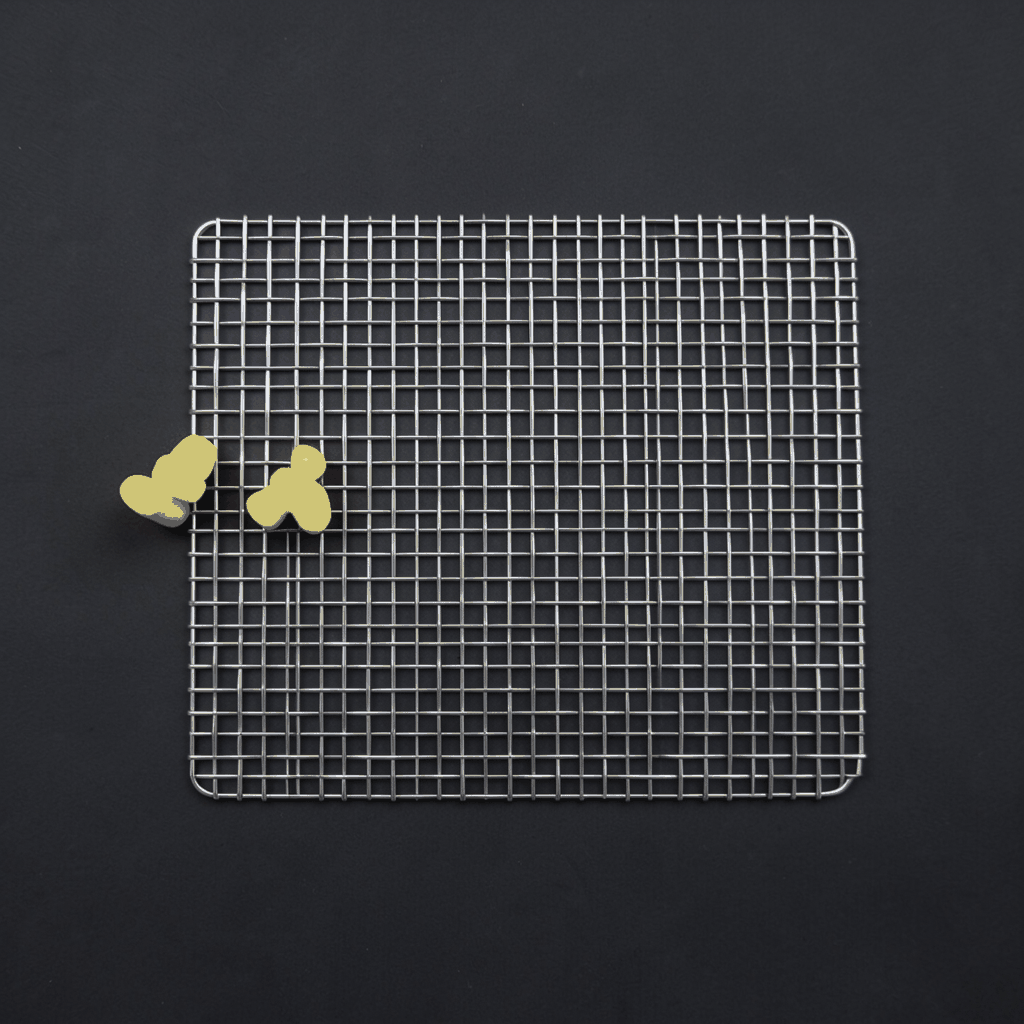
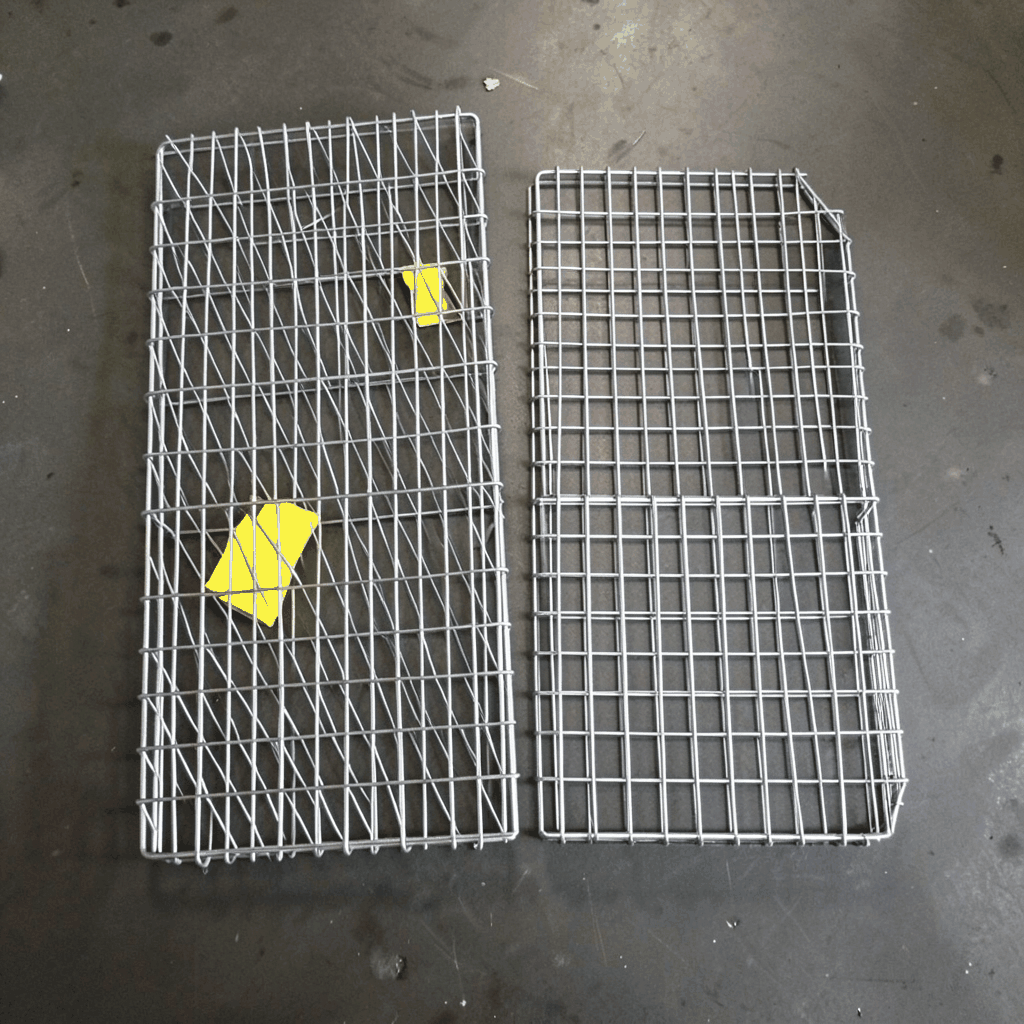
Welded wire mesh offers straight lines, consistent apertures and rigid panels, making it practical for permanent dog runs. Welds should be fully joined, with no cracked joints, sharp wire ends or gaps where panels meet. It accepts powder coating, stainless steel and custom sizes, so it can serve utilitarian and attractive installations.
Chain link remains economical and quick to install for a contained yard. Its diamond pattern gives the dog visual contact with the street, but the fabric must be tightly tensioned and correctly fixed to the posts. Loose chain link can rub a dog's nose, deform under pressure or create loops that catch a collar.
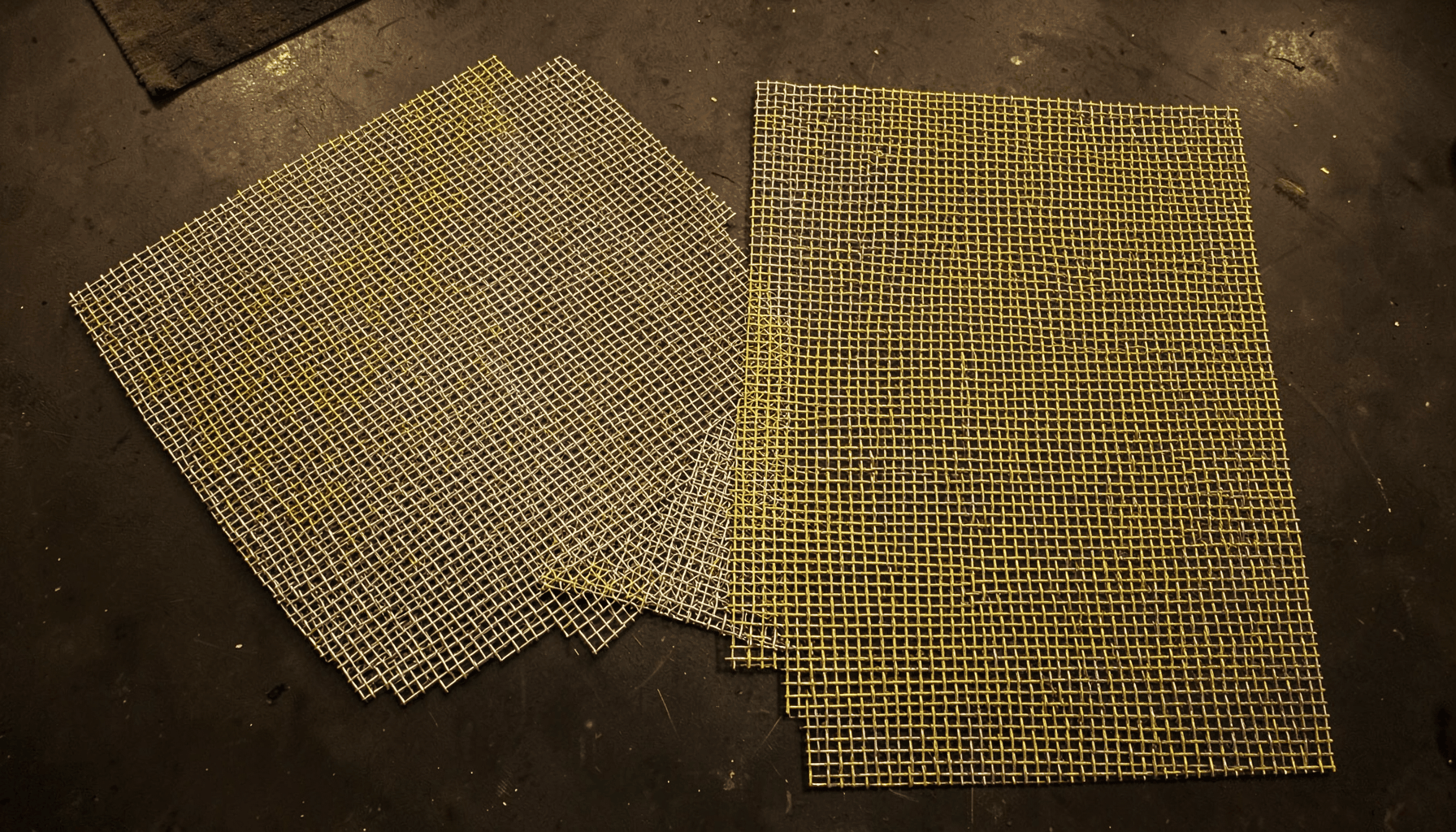
Woven wire and hardware cloth can handle light-duty separation or a backed barrier, but they are less rigid under repeated jumping. Expanded metal, perforated sheet and laser-cut screens can provide decorative finishes, but need smooth edges, secure fixings and openings small enough to be safe around the animal. Test a sample before ordering the full enclosure.
Prepare panels for Australian conditions
Corrosion protection starts with location. Powder-coated and galvanized steel work well across many Australian sites, while 304 or 316 stainless steel is more appropriate for exposed coastal positions, with 316 generally favoured for severe marine exposure. Humid summers, irrigation spray and wet soil can attack fasteners as quickly as panels, so compatible fixings and protected post bases deserve equal attention.
Heat, ultraviolet exposure and wind affect more than the wire. Dark metal can become very hot in direct summer sun, and wind can pull a tall, lightly braced fence away from its footings. Northern Queensland properties may need a more rigorous wind design, while shaded courtyards still need ventilation. Confirm coating durability, drainage and footing requirements before installation.
Site preparation determines whether panels sit true. For a timber-framed surround, cordless power tools can square the frame and secure supports; complete cutting and drilling before animals enter the area. Angle the panel base or mesh slightly outward where it meets the ground, leave no sharp offcuts nearby and cover exposed ends with suitable caps.
Prevent digging and escape routes
Mesh above ground does little against a dog that excavates along the fence line. A common anti-dig detail is a 300–450 mm apron of mesh laid flat and secured under the soil, or an L-shaped return at the base. On loose sandy ground, a concrete footing and deeper return can be more reliable than weight alone. Keep the buried section connected without creating a trip edge inside the kennel.
Every opening needs as much attention as the fence. Use full-height gate leaves with robust hinges, a self-closing action and a secure latch beyond the dog's reach. Hasp-and-padlock arrangements can suit high-security yards, but hardware should not rattle or shift when pushed. A dog should not be able to lift the gate, nose under the latch or squeeze between the leaf and frame.
At the top, corners and joins, eliminate footholds and gaps. Avoid exposed horizontal rails that work like a ladder, and bridge any separation between new kennel mesh and an existing fence. Check that decorative inserts cannot be twisted out, and inspect welds, bolts and anchors as movement and corrosion can loosen solid connections.
Create a comfortable dog run
A secure enclosure still needs shelter and enrichment. Shade cloth or a roof prevents heat stress, while a dry, non-slip floor supports joints and paws. Drainage should carry water away from the kennel rather than toward the house, and the surface should be easy to hose down. Separate sleeping areas from active runs so a calm dog can rest without being disturbed.
Space and stimulation influence behaviour as much as fencing strength. Stable platforms, visual barriers, chew-safe enrichment and regular exercise reduce frustration that can appear as climbing or digging. In townhouses and apartments, a compact dog run may be the only option, but balcony and courtyard enclosures need checks of load capacity, escape routes and neighbours' concerns.
Privacy screening can reduce visual stress, yet it should be fixed without leaving loose fabric a dog can chew or pull down. The finished enclosure should still feel like a purpose-built kennel yard rather than a neglected corner. Decorative colour, clean welds and consistent panel spacing soften the appearance without compromising security.
Checklist for ordering kennel mesh in Australia
Australian buyers commonly compare quotes from a fencing contractor, local supplier or direct manufacturer, and many quotes separate panels, posts, gates and installation into different line items. Metric sizing is standard, but panel thickness, aperture, coating and post sections are not always equivalent between offers. Freight, customs, site access and offcuts can change the true cost.
Before ordering, use these practical checks:
- Measure every opening and the tallest point before choosing a panel format, then confirm delivered dimensions rather than relying on nominal sheet size.
- Match aperture, wire thickness and post spacing to the smallest and most determined dog expected to use the enclosure.
- Request a finish sample and written details of welds, coating, fasteners, caps and panel connections.
- Compare the installed budget by including freight, gates, latches, footings, anti-dig aprons and labour.
- Ask for a drawing, product specification, coating information, warranty, production lead time and documents needed for the Australian project.
Local council rules also belong in the brief. Kennel placement, boundary setbacks, drainage and animal welfare requirements can vary between councils, and a permit may be needed for a structure visible from a street. Confirm the rules for the actual property rather than assuming another Australian city has identical conditions.
Build a custom package with confidence
Shuo Ke Wire Mesh Product Technology Co., Ltd. is a China-based manufacturer and processor of architectural and industrial metal mesh products. Its range includes decorative curtains and partitions, wall and elevator cladding, laser-cut screens, fences, gates, guardrails, filters, baskets and barbecue mesh, with stainless steel, aluminium, copper, iron and other alloys available for different project requirements.
For a kennel application, that wider manufacturing capability can be applied to welded mesh panels, framed screens, gates and enclosure accessories. Specify the dog profile, panel sizes, aperture, wire diameter, material, finish, edge treatment, post arrangement and gate type. If appearance matters, include the site's colours and any architectural references so the mesh functions as part of the property rather than looking like an isolated wire box.
Quality checks should cover panel squareness, weld continuity, coating consistency, hole dimensions and hardware operation before shipment. Request production photographs or a sample for larger runs, and confirm packing, freight times, installation guidance and after-sales support. Local compliance and certification needs should be verified separately by the Australian supplier or installer.
Contact Shuo Ke with your drawings, site photographs and operating requirements, and request a sample plus a quotation for a complete dog-kennel and pet-enclosure package. A precise brief gives the factory a better basis for producing durable, decorative metal mesh suited to Australian homes, kennels and municipal facilities.