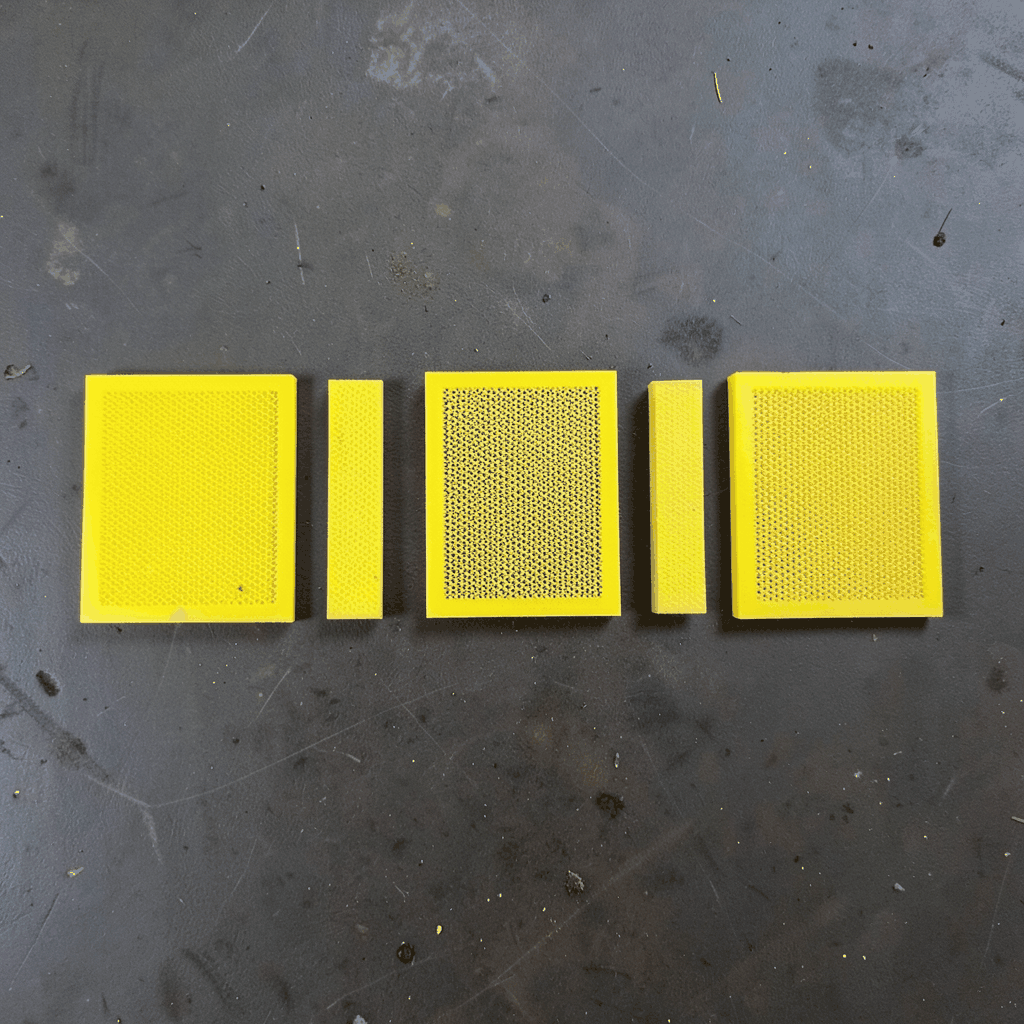
Mesh for Fireplace Ember Screens and Spark Guards
When winter settles across southern parts of the continent, families in cities like Melbourne, Canberra, Hobart and Adelaide reach for the same trusted source of warmth they have used for generations. Wood heaters and open fireplaces are deeply embedded in the heating culture of Australian homes, particularly in Tasmania where solid-fuel heating penetration is among the highest in the country. Behind the comforting glow of a real fire sits a quiet piece of engineering that often goes unnoticed: the woven metal panel that holds back embers and stops stray sparks from wandering where they should not be.
Shuo Ke Wire Mesh Product Technology Co., Ltd. manufactures metal mesh products for residential, commercial, architectural and municipal applications. The company's range includes decorative mesh curtains, partition screens, laser-cut panels, fences, gates, guardrails, filters and baskets, alongside functional items such as ember screens and spark guards used inside and around domestic fireplaces. By drawing on its weaving, cutting and finishing capabilities, the manufacturer is able to supply both off-the-shelf sheets and fully tailored components for Australian installers and homeowners.
An ember screen does two jobs at once. Inside a wood heater or open fireplace, it lets the fire breathe while preventing live coals from spilling into the room. Outside, in regions prone to bushfire, a spark guard fitted to a chimney, flue termination or external hearth can help reduce the chance of a stray ember igniting dry leaf litter on a verandah roof or a timber deck. The Australian Standard AS/NZS 2918 governs the installation of domestic solid-fuel burning appliances, and builders in bushfire-prone zones also work to AS 3959, which sets Bushfire Attack Level (BAL) requirements. Choosing the right mesh is a small but important part of meeting those obligations.
The right mesh for the job depends on several technical and practical variables: the temperature it must tolerate, the size of the embers or sparks it must hold back, the available airflow, and the way it will be mounted in the heater or chimney. Australian homes vary widely in their fireplace styles, from modern slow-combustion units in a Brunswick renovation to heritage open grates in a Hobart colonial. A single mesh specification rarely suits every project, which is why deep customisation usually pays off over the life of the installation.
The role of ember screens in Australian fireplaces
Across the cooler parts of the country, wood-fired heating is more than a lifestyle choice. In the suburbs of Melbourne, in regional towns across the Victorian high country, and in Canberra's older housing stock, slow-combustion wood heaters are a primary source of warmth through the long winter months. Tasmania leads the nation in solid-fuel heating, with a high proportion of homes relying on a wood heater as the main heating appliance. In those settings, an ember screen inside the firebox is not optional trim. It is a working part of the unit, regulating airflow while catching coals that would otherwise fall onto the hearth.
Open fireplaces behave differently. Many older Australian homes still feature a traditional open grate, often converted over the years into a slow-combustion unit. These conversions typically call for a front screen or door set that combines a glass panel with a mesh section. The mesh keeps embers inside the combustion chamber when the door is cracked open for refuelling, while still allowing air to circulate. Without it, glowing coals can roll forward each time the door opens, creating a real hazard on a timber floor or carpet.
Beyond the room itself, Australian conditions create a second reason to think carefully about mesh. In BAL-rated areas, including parts of the Adelaide Hills, the Blue Mountains, the Southern Tablelands of NSW and outer Melbourne fringe suburbs, ember attack during bushfire is a documented cause of property loss. A spark arrestor on a flue termination, built from a corrosion-resistant metal mesh with a small aperture, is one of the simpler additions that can reduce the risk of ignited debris landing on roofing or accumulated leaves. Local installers often recommend it as a low-cost upgrade on new and existing chimneys.
Material selection for long service life
The metal used in an ember screen must hold its shape, resist oxidation, and survive repeated thermal cycling without warping. Stainless steel is the most common answer, and for good reason. Grade 304 stainless steel performs well in the dry heat of an enclosed firebox and tolerates the soot-laden environment inside a slow-combustion heater. For coastal properties, or for installations near a salt-laden sea breeze, grade 316 offers noticeably better corrosion resistance thanks to its higher nickel and molybdenum content.
Mild steel is occasionally offered in budget screens, but it carries a clear trade-off. Once the protective coating burns through, the underlying metal begins to scale and rust, and the panel may distort as it expands and contracts with each fire. Aluminium mesh is light and visually unobtrusive, but its lower melting point limits its use to cool-side applications such as a decorative outer guard rather than a panel mounted directly inside the firebox.
Copper and brass meshes are used less often in working fireplace components but are popular in heritage restorations where the warm colour of the metal suits a period interior. A copper mesh screen mounted in front of an open fireplace in a Victorian terrace in East Melbourne can read as an original detail while still doing its job. These softer alloys are typically reserved for screens that sit outside the hottest zone, with a stainless steel panel doing the heavy lifting inside the combustion chamber.
Aperture size, weave geometry and airflow
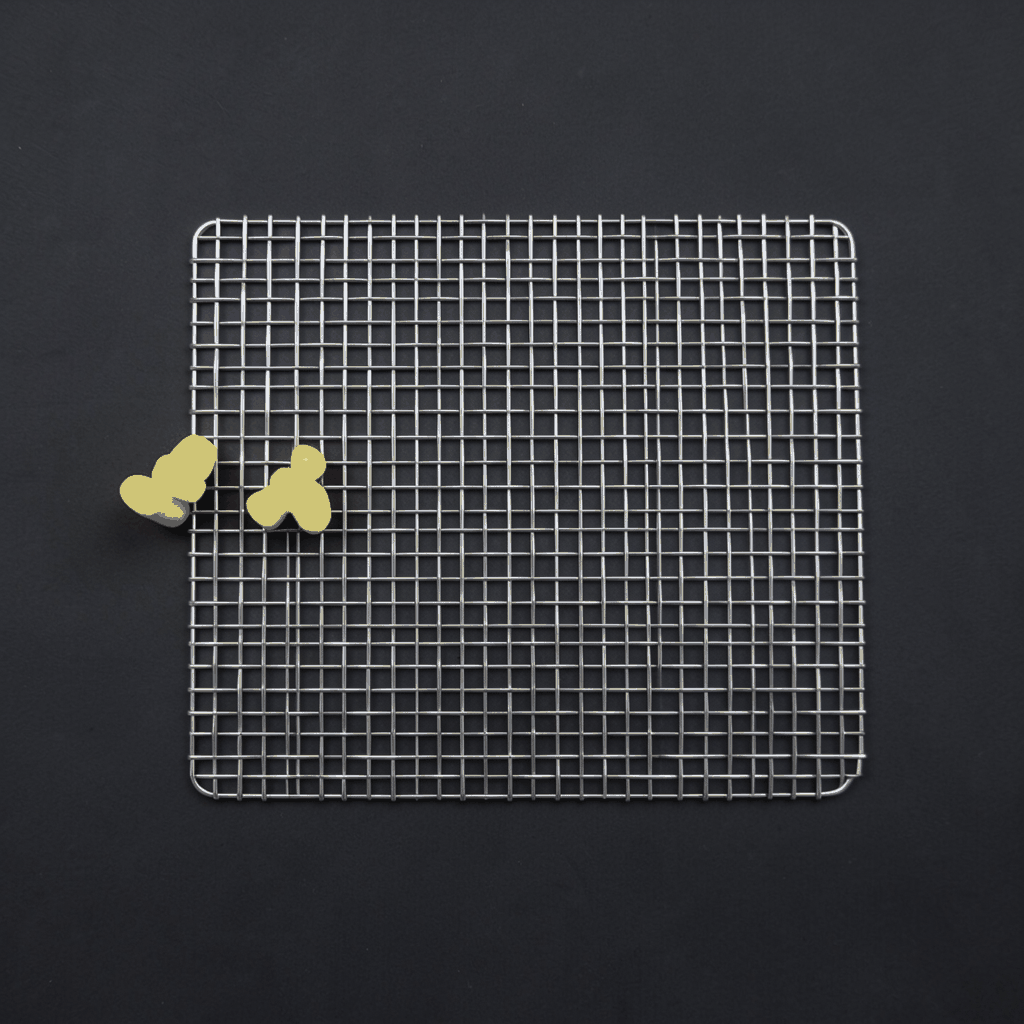
Mesh is defined as much by what is left out as by what is woven in. The opening size, or aperture, determines whether a glowing coal will sit safely behind the screen or roll through to the hearth. For an in-firebox ember screen, a common specification is an aperture around 4 to 8 millimetres, small enough to catch coals but large enough to keep the fire breathing well. External spark guards and chimney arrestors usually run finer, often in the 2 to 4 millimetre range, to catch the lighter sparks carried up the flue.
Weave style is the next decision. A plain weave, where each weft wire crosses over and under a single warp wire, is the most common format and gives a tidy, balanced pattern suited to most residential screens. A twill weave allows slightly thicker wires for the same aperture, adding strength where a screen will see heavy use. Dutch weave, with its dense warp and coarser weft, suits fine filtration tasks rather than ember retention, so it is rarely the first choice for fireplace work.
Airflow matters as much as ember retention. A screen that blocks too much air will smother the fire, create excessive soot, and force the heater to work harder. Specifiers look for an open area percentage, calculated from the wire diameter and aperture, that keeps the fire well-ventilated. For slow-combustion units running long overnight burns, experienced installers in Victoria and Tasmania often recommend a slightly more open mesh than what a quick, hot fire would tolerate. Getting this balance right is one of the reasons a custom-woven panel is worth specifying rather than choosing an arbitrary sheet from a hardware shelf.
Custom fabrication for wood heaters and open fireplaces
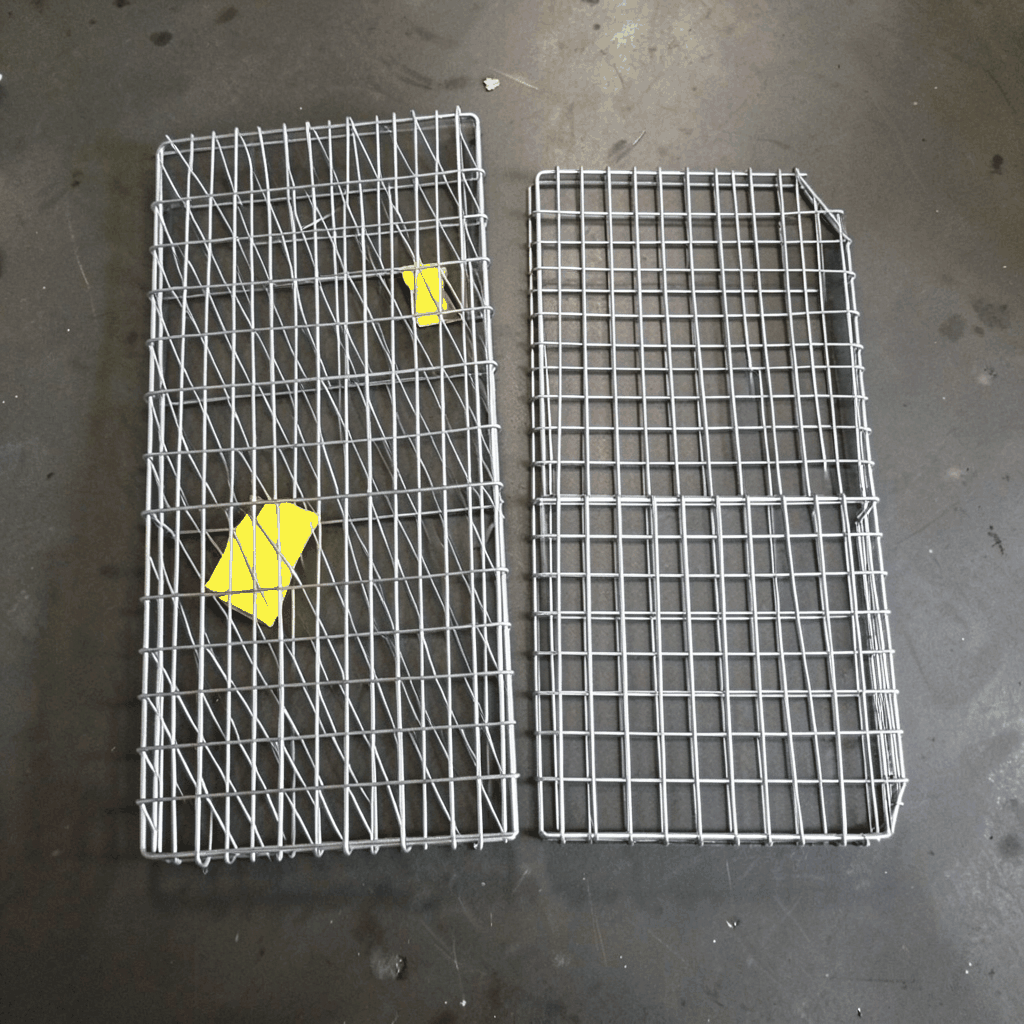
Few fireplaces share exactly the same dimensions. Modern slow-combustion units use proprietary door sizes, older open fireplaces were built to imperial inches, and arched openings in heritage homes call for curved or shaped screens. A manufacturer that cuts, forms and finishes mesh in-house can deliver panels ready to drop into the frame, with folded edges, mounting flanges and pre-drilled holes where required.
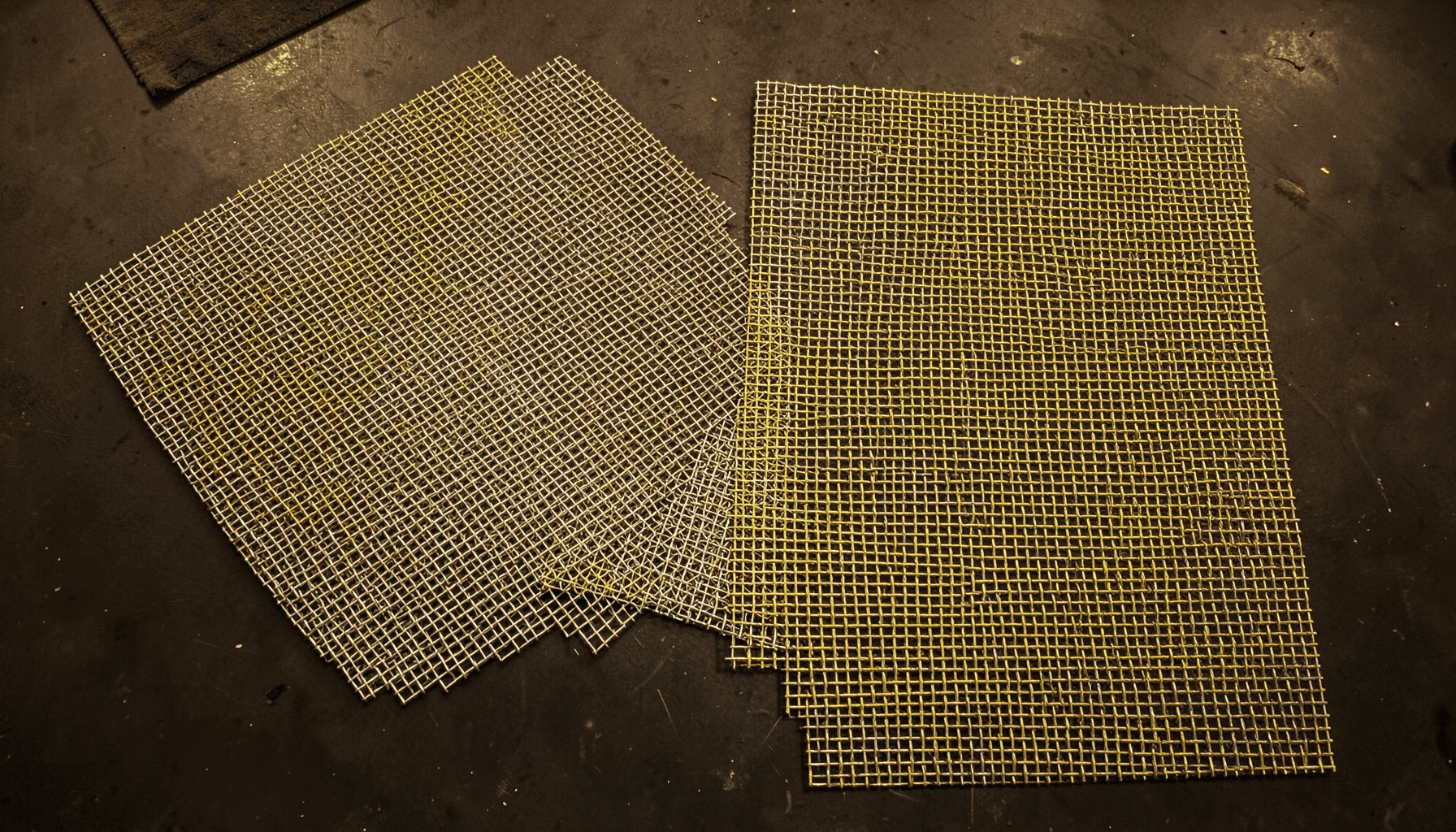
Shuo Ke produces mesh in stainless steel, aluminium, copper, iron and other alloys, and finishes components through processes including polishing, brushing and powder coating. For a contemporary renovation in inner Sydney, a brushed stainless panel can disappear into the door surround and emphasise the glass. For a heritage project in Adelaide's parklands or a Victorian cottage in Fitzroy, a black powder-coated frame around a fine mesh screen offers a more traditional look while keeping the technical performance intact.
Frames and surrounds can be matched to the heater itself. Mild steel frames are common for the structural surround, stainless steel frames for the working mesh, and aluminium trim where weight is a concern. Decorative laser-cut panels from the same manufacturer can extend the design language beyond the fireplace, tying the hearth to a stair balustrade, a kitchen splashback or an outdoor screen in the same home.
Sizing, installation and ongoing care
Accurate measurement is the first step. For a heater door, the installer should record the clear opening width and height, the frame depth, and the type of fixing used. Where an existing screen has warped or stretched, the frame may have moved slightly, so a fresh measurement before ordering prevents a costly mismatch. A manufacturer accustomed to Australian installations will usually build in a small tolerance on each side so the new screen seats firmly without bowing.
Installation is generally straightforward. Many modern heaters use a simple drop-in screen held by clips or a top retainer, while older units may call for screws or a small bracket. External chimney arrestors typically clamp around the flue and are held by a strap or bolted collar. For bushfire-rated installations in BAL-12.5 to BAL-40 zones, the spark guard should be sized so it cannot blow off in high winds and made from a grade of stainless steel that will survive several bushfire seasons without significant corrosion.
Routine care keeps the mesh doing its job. Ash and soot should be brushed off when cold, and a soft brush works better than water, which can leave mineral deposits that block apertures. A yearly inspection before the first winter fire is a useful habit, particularly in regional areas where the heater may have sat unused through a humid summer. Any panel that shows scaling, deep pitting or wire breakage should be replaced rather than repaired, since a failed screen can let an ember through at the worst possible moment.
For Australian homeowners, builders and fireplace installers looking for a tailored ember screen or spark guard, Shuo Ke Wire Mesh Product Technology Co., Ltd. offers custom mesh fabrication in stainless steel, copper, aluminium and other alloys, with frames and finishes suited to everything from a heritage Hobart cottage to a new-build home in the Adelaide Hills. Quotes can be requested with a sketch, a photo and the key dimensions, and production samples can be arranged for larger projects before full manufacture begins.