Architectural mesh panels reshaping public sculpture in Australia
In recent years, councils, developers, and artistic collectives across Australia have turned to architectural mesh as a primary medium for ambitious outdoor artworks. Its balance of visual lightness and structural strength makes it equally attractive for large civic commissions and intimate neighbourhood gestures. When specified correctly, mesh becomes more than cladding or screening — it behaves like a luminous second skin, holding pattern, shadow, and reflection in continuous interplay.
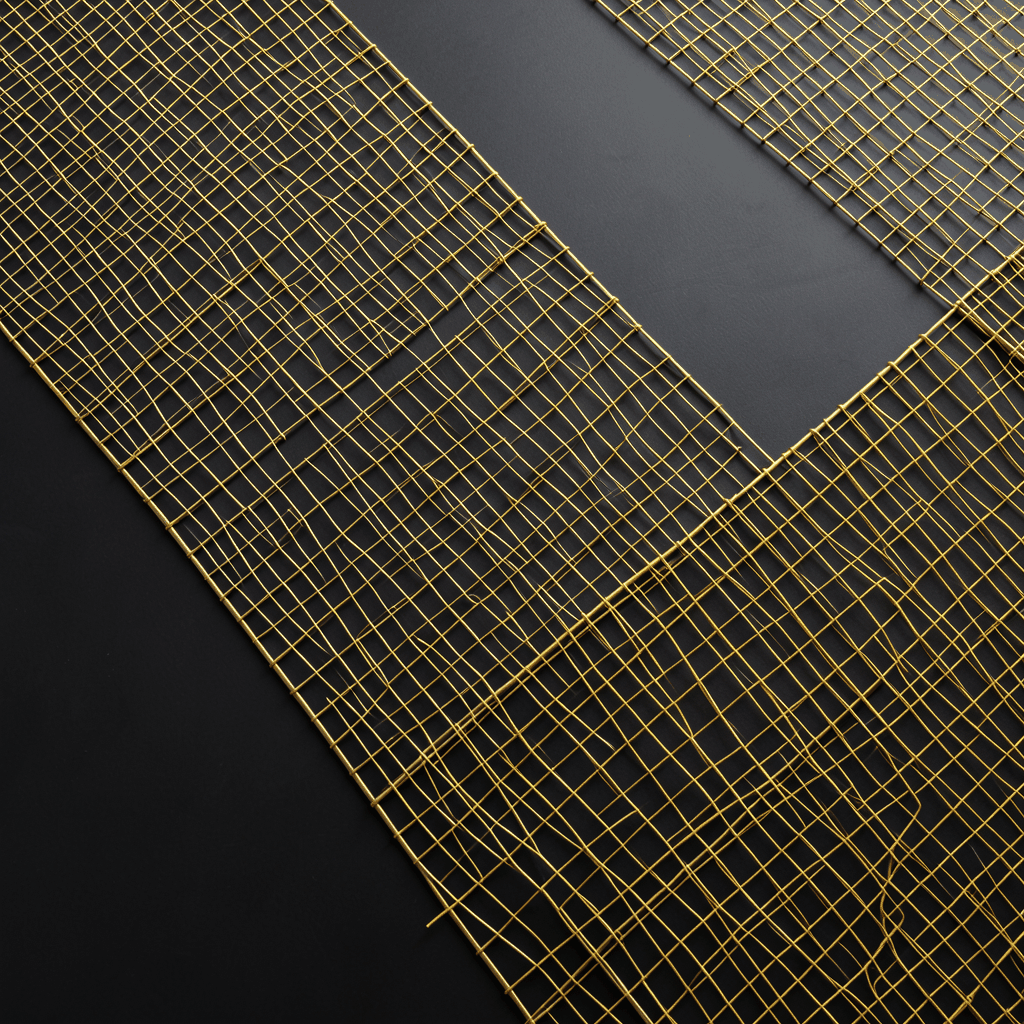
Wire mesh fabricators now produce panels that carry the precision of an engineered product while offering the visual depth sculptors have long sought. From coastal promenades in Sydney to inner-city laneways in Melbourne, woven and laser-cut panels are being treated as three-dimensional canvases. They carry imagery, fold into volumetric forms, and respond to daylight in ways paint and traditional metalwork rarely achieve.
Choosing materials that survive Australian conditions
Specifying mesh panels for outdoor sculpture begins with the conversation about material. Stainless steel remains the workhorse across most councils because of its corrosion resistance and predictable long-term behaviour. Marine-grade alloys, particularly 316 and 316L, are widely specified in Sydney Harbour precincts such as Barangaroo, the Rocks, and along the coastal walk from Bondi to Coogee, where salt-laden air accelerates pitting in lesser grades.
Where projects sit inland or in temperate microclimates like central Melbourne or Hobart's waterfront, fabricators often choose type 304 or powder-coated aluminium to control weight and cost. In subtropical Brisbane, humidity and UV exposure put a premium on coatings and surface finishes; the same RAL or PVDF coating system that performs on curtain wall cladding behaves reliably on a sculptural panel, holding colour against sustained Queensland sun.
Copper and brass retain a place when designers are after deliberate patination. A Melbourne studio recently finished a vertical weave installation in a South Yarra courtyard where the brief called for a surface that would warm gradually over five to seven years. The client understood that patina is not a defect but a design outcome — exactly the kind of conversation mesh suppliers welcome early in the process.
Fabrication methods designers can specify
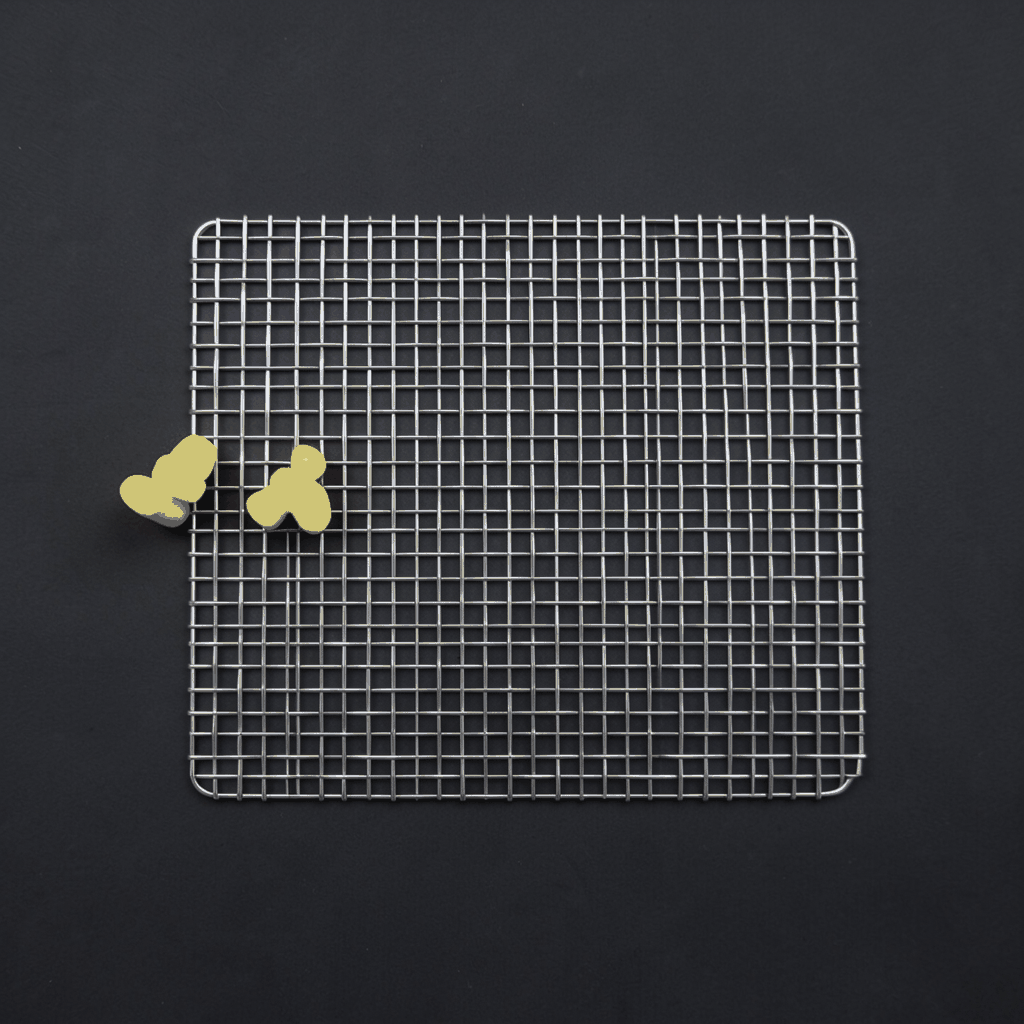
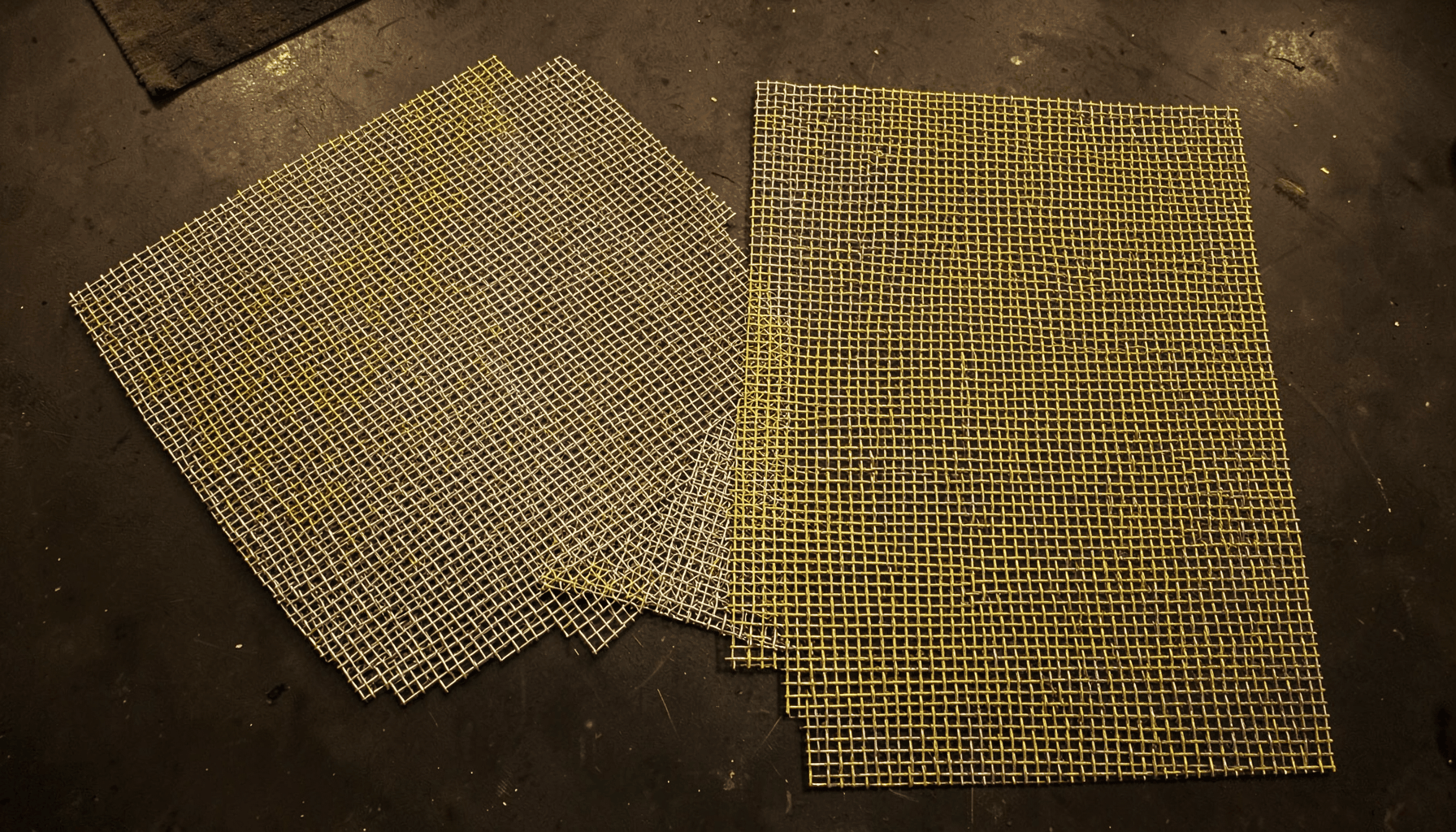
Three families of fabrication dominate the public sculpture sector today. Woven wire mesh, where interlocking warps and wefts create the panel's surface, supplies the most open, lace-like patterns. It is a familiar choice for screens and facades but reads freshly when stretched over curved armatures or pleated into undulating walls. South Australian sculpture studios working on small civic commissions prefer fine woven mesh because it bends predictably and accepts post-tensioning without losing pattern fidelity.
Perforated panels, produced by punching or laser-cutting patterns into sheet metal, allow almost any graphic on the surface — from high-resolution imagery of Country to schematic representations of native flora. Local councils commissioning works along Brisbane's riverwalk have used perforation to suggest movement of water, casting rippling shadows on the pavement beneath. The technique also reduces wind load, an important consideration for elevated or freestanding pieces in exposed coastal locations.
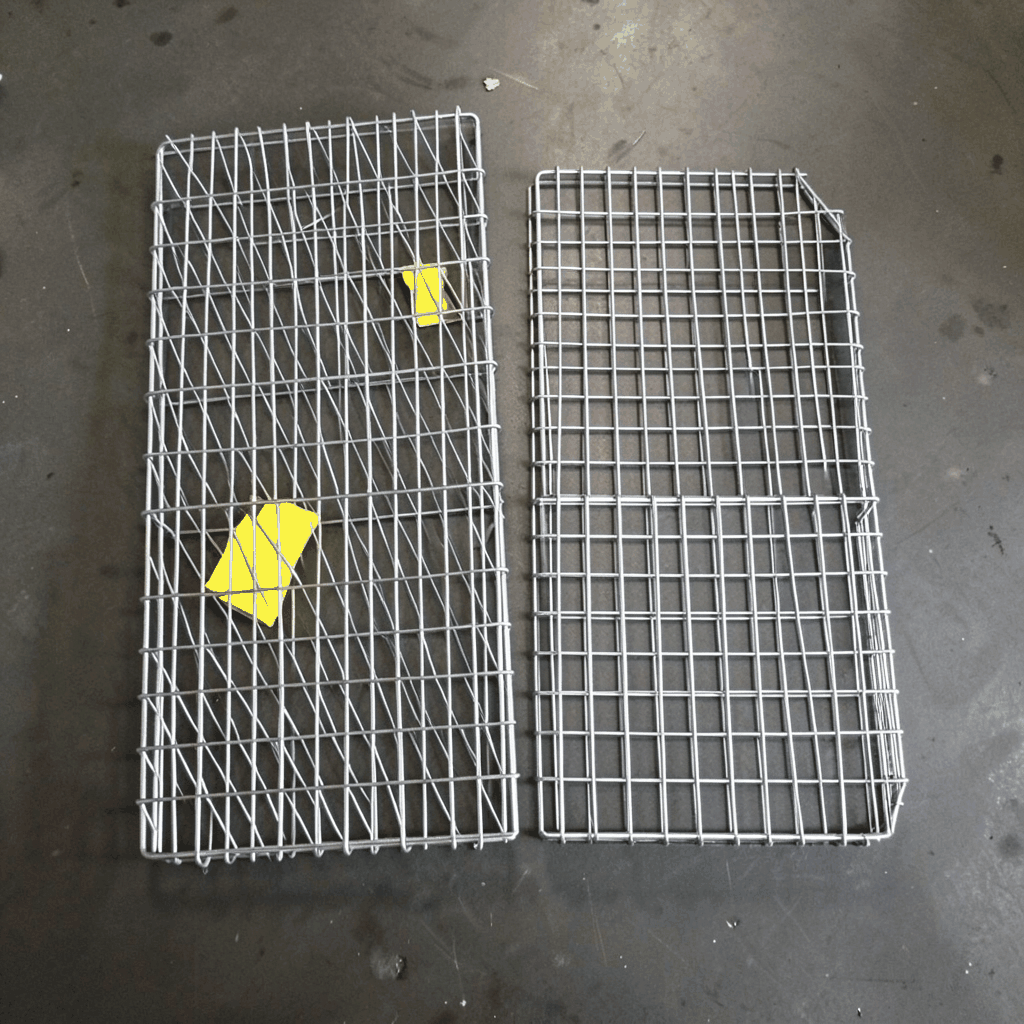
Welded wire and architectural grilles occupy the structural end of the spectrum. Their thicker wires support larger spans and heavier self-weight, allowing them to function as load-bearing sculpture as much as decorative skin. Civic commissions in regional Western Australia have used welded mesh to create large figurative forms that double as shade structures on remote town ovals, an outcome difficult to achieve with thinner weaves.
Working with councils and Australian standards
Compliance shapes every Australian public art project from the earliest sketch. Most state governments operate a percentage-for-art scheme, where a share of public infrastructure budgets is directed toward integrated artwork. In New South Wales and Victoria, this typically sits between one and two per cent of the construction value, and it sets the funding envelope that mesh fabricators often work within.
Statutory approvals route through local councils, and each has overlay requirements designers must respect. Heritage overlays in parts of inner Sydney and central Melbourne restrict materials, finishes, and forms in conservation areas, often pushing designers toward understated metallic surfaces rather than bold painted statements. Flood overlays in low-lying Brisbane suburbs and along the Yarra in Melbourne influence baseplate design and drainage detailing.
Structural performance follows Australian Standards, particularly AS 1170 for wind actions and AS 4100 for steel fabrication. A coastal artwork on an exposed headland will need higher wind region ratings than a sheltered courtyard piece in suburban Adelaide. Meanwhile, the Disability Discrimination Act 1992 shapes how sculptures meet the ground. Tactile edges, step-free viewing zones, and consistent 1500-millimetre clearance for wheelchair users are no longer optional extras; they appear in design briefs from councils as routine as material specifications.
Digital design tools have streamlined this compliance conversation. Fabricators now receive three-dimensional models from artists and return engineering drawings that quantify loads, anchor points, and panel distortion under wind. This data-led workflow keeps a sculptural mesh panel acting as an honest piece of architecture rather than an ornamental afterthought.
Cultural integration and the role of place
Public sculpture in Australia is rarely just decoration, and mesh panels lend themselves to the country's evolving conversation about place and identity. Many councils now require Acknowledgment of Country protocols at the announcement stage of a project, and artists are exploring ways to extend that acknowledgment into the artwork itself. Mesh — with its ability to filter, to layer, to let light through — has become a favourite medium for work that honours cultural storylines without constructing fixed boundaries.
Practitioners in Perth have produced woven panels referencing Western Australian coastal patterns, while collaborations in northern Australia have used perforated screens to cast silhouettes of native grasses on community pavilions. These are not literal representations; they read more like memory in a porous surface, allowing the landscape to remain the primary subject while the artwork enriches it. Brisbane City Council's public art program has featured mesh-based installations where wind movement becomes part of the piece, lifting what could be a static screen into a participatory artwork.
Equally important is durability against the longer cultural timeline. Public art is expected to last decades, not seasons, and council maintenance budgets are unforgiving when materials underperform. Fabricators with a track record in architectural cladding bring that mindset into sculpture, recommending finishes and fixings that survive the realities of Australian coastal suburbs, inland heat, and the occasional tropical downpour.
Starting a conversation with a mesh specialist
A successful public sculpture begins long before the first panel reaches site. Early engagement with a mesh manufacturer allows the artist to test scale, pattern, and material against the realities of fabrication, while the fabricator gains a clear understanding of the artist's intent. Sample panels, weave studies, and small-scale mock-ups prevent expensive revisions when a project enters its engineering phase.
Shuo Ke Wire Mesh Product Technology Co., Ltd. supports artists, designers, and councils across the lifecycle of a public artwork — from material selection through to fabrication and packaging. The team works in stainless steel, aluminium, copper, and iron alloys, and welcomes briefs that combine sculptural ambition with architectural discipline. Whether the project is a perforated screen for a Sydney ferry terminal, a woven volume for a Hobart cultural precinct, or a laser-cut installation in a new Melbourne park, the workshop treats each piece as a bespoke commission.
Bringing mesh into public sculpture is less about replacing traditional materials than about adding a vocabulary that rewards close looking, weather, and time. For Australian designers ready to explore that vocabulary, the conversation starts with a sketch, a sample, and a shared commitment to craft that lasts.