Engineering Mesh Supports For Commercial Water Filtration Systems
Commercial water filtration equipment depends on controlled flow, stable pressure, and reliable separation over long operating periods. A membrane may perform the primary filtration function, but its support structure determines how well the membrane handles hydraulic loads, cleaning cycles, vibration, and installation stresses. Metal mesh can provide the mechanical backing, drainage path, flow distribution layer, or protective barrier required by the module design.
The right support screen is selected as part of the complete filtration assembly rather than as an isolated component. Opening size, wire diameter, porosity, alloy, surface finish, weld quality, and dimensional tolerance all affect performance. A mesh that appears suitable in a dry inspection may create excessive pressure loss, retain contaminants, or damage a delicate membrane once the system is operating.
For commercial treatment plants, industrial process water, desalination pretreatment, and high-purity water systems, the support material must also tolerate the chemicals used for cleaning and disinfection. Custom-fabricated stainless steel, aluminum, copper, iron, and alloy mesh products can be adapted to flat-sheet modules, cartridge structures, screens, baskets, and other engineered filtration components.
The Mechanical Role Of A Membrane Support Layer
A membrane support prevents deformation when pressure acts across the active filtration surface. In reverse osmosis and nanofiltration systems, the membrane itself is commonly integrated into a spiral-wound element with a feed spacer and permeate carrier. In flat-sheet ultrafiltration, microfiltration, membrane bioreactor, and specialty separation equipment, a rigid or semi-rigid mesh may support the membrane directly or form part of the backing assembly.
The support must distribute loads over a broad area without creating sharp points that can puncture or crease the membrane. It also needs an open flow path for permeate or filtrate collection. If the support has insufficient rigidity, the membrane can sag into openings, reducing effective area and increasing the risk of abrasion. If it is too dense or poorly aligned, it may restrict drainage and raise transmembrane pressure.
A support screen can serve several functions at once:
- Carrying mechanical loads across the membrane surface
- Maintaining a drainage or permeate channel
- Separating the membrane from a frame or pressure plate
- Reducing local deformation around seals and fasteners
- Protecting the membrane during handling and backwashing
- Supporting a precoat, catalyst, resin, or secondary filtration layer
The design objective is a balanced structure with adequate open area, predictable flow resistance, and sufficient strength for the module’s operating pressure.
Mesh Forms Used In Filtration Assemblies
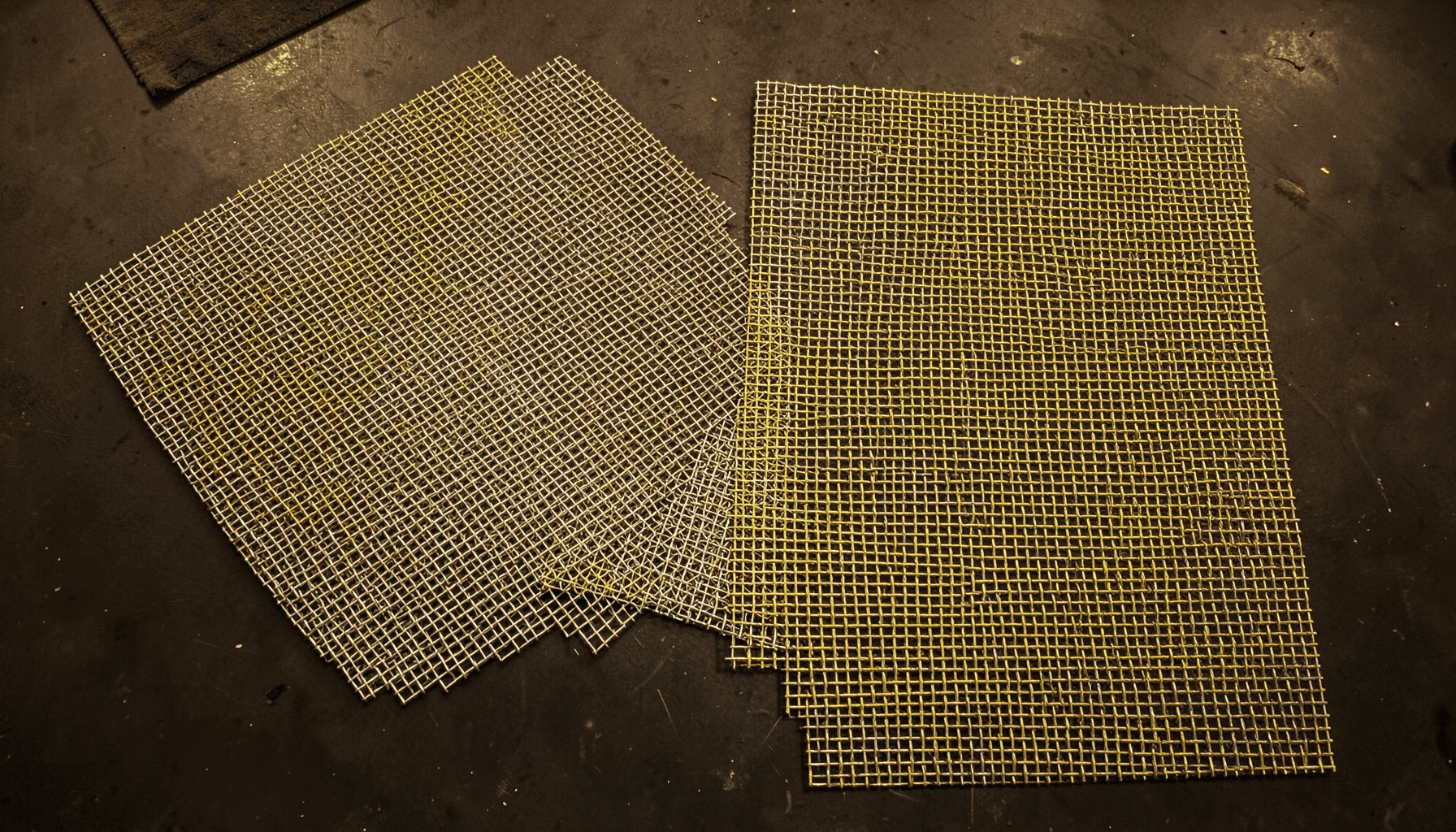
Woven wire mesh is useful when a regular opening pattern and precise filtration support are required. Plain weave, twill weave, and Dutch weave offer different combinations of aperture control, wire stability, and resistance to blinding. Fine woven mesh can support thin membranes or retain a secondary layer, while heavier wire diameters provide greater stiffness for larger panels and pressure-bearing assemblies.
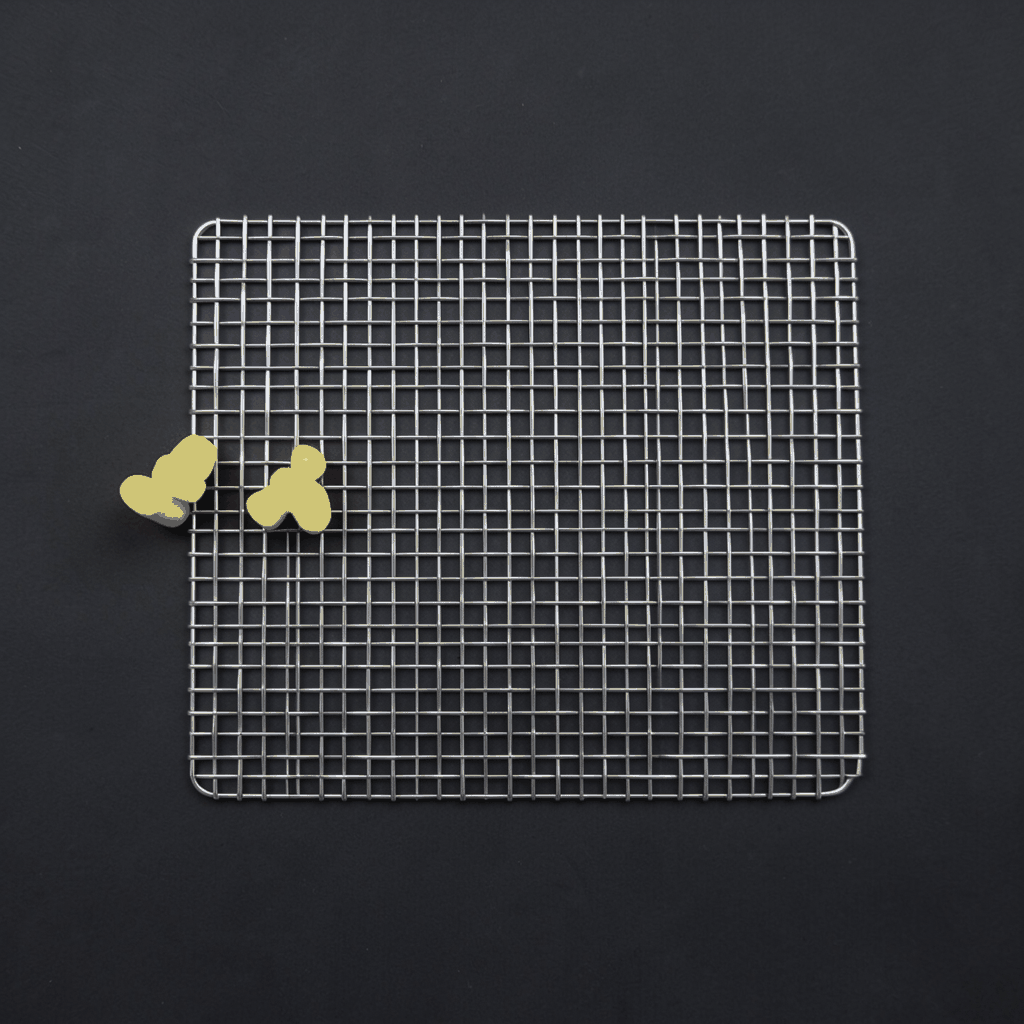
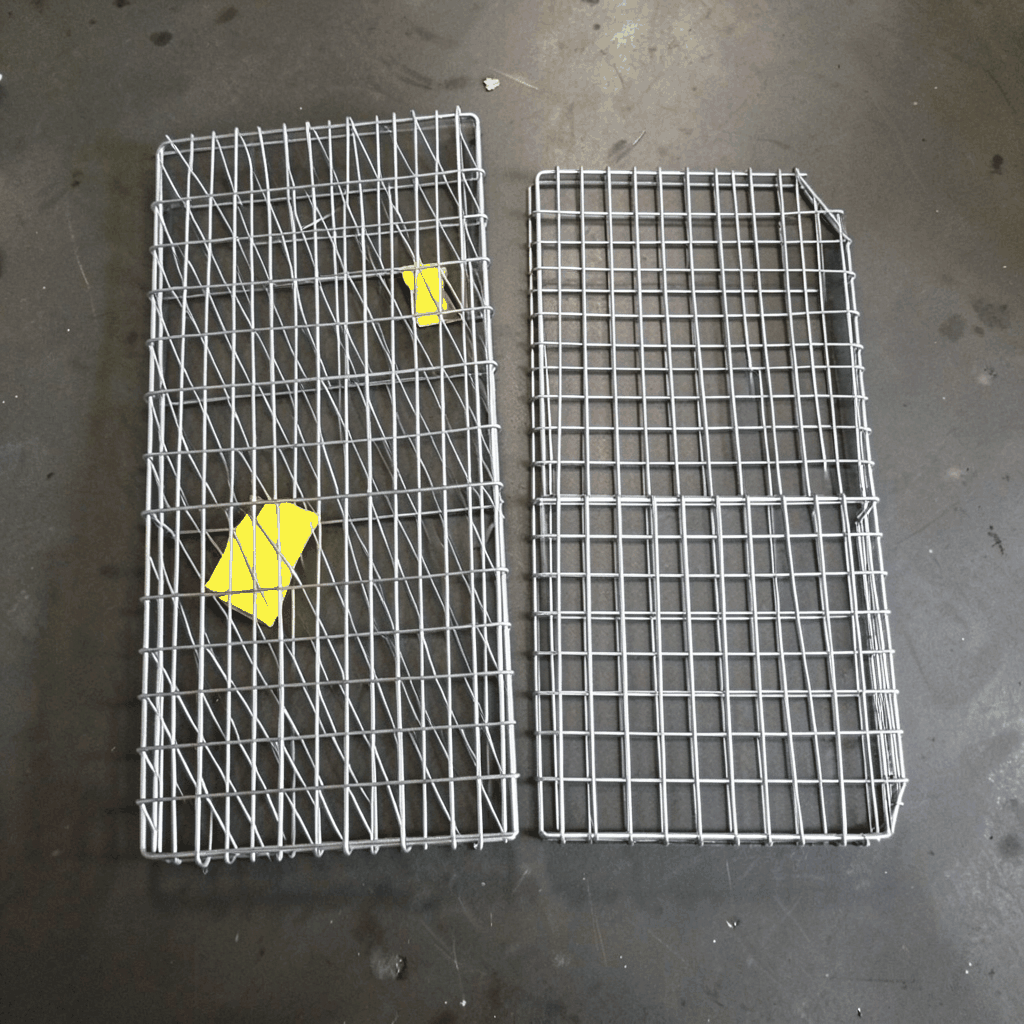
Welded wire mesh is often selected for robust support screens, cages, baskets, and protective layers. Welded intersections create a stable grid that is easy to fabricate into frames or cylindrical parts. The weld profile must be controlled carefully because raised welds, burrs, and incomplete fusion can damage the membrane or interfere with sealing surfaces.
Perforated sheet and expanded metal may be appropriate where a rigid backing plate, broad drainage path, or protective cover is needed. Perforated panels provide high structural stability and consistent hole geometry. Expanded metal offers a three-dimensional pattern with useful stiffness-to-weight performance, although its strands and edges require careful finishing where they contact sensitive filtration media.
Wedge wire screens and profile wire elements are valuable in high-flow filtration, intake systems, well screens, and support grids. Their continuous slots can reduce particle lodging and simplify cleaning. The choice among woven mesh, welded mesh, perforated sheet, expanded metal, and wedge wire should be based on membrane type, flow direction, cleaning method, pressure, and allowable particle passage.
Critical Design Parameters For Commercial Operation
Opening size is important, but it should not be considered alone. The mesh aperture must be compatible with the membrane backing, expected solids loading, and required drainage rate. A very fine opening may protect the membrane yet produce high hydraulic resistance. A large opening can improve flow but allow membrane deformation under pressure. Engineers should evaluate aperture shape, pitch, wire diameter, and open-area percentage together.
The support’s thickness and stiffness influence panel deflection. For a flat module, the unsupported span, pressure differential, edge restraint, and support contact pattern determine the required strength. A screen supported only around its perimeter may need a heavier wire or reinforcing ribs than a screen resting on a close-spaced drainage plate. Finite element analysis or pressure testing can help verify the design for large commercial modules.
Surface condition is equally significant. Smooth, rounded, and properly finished contact areas reduce the risk of pinholes, scratches, and membrane fatigue. Mesh may require degreasing, pickling, passivation, electropolishing, or another specified treatment depending on the alloy and water chemistry. Welds should be clean and continuous, with no slag, sharp projections, embedded particles, or crevices that can harbor biofilm.
| Support Type | Useful Characteristics | Typical Applications | Main Design Caution |
|---|---|---|---|
| Woven wire mesh | Precise openings, flexible specification, high open area | Membrane backing, fine support layers, permeate carriers | Prevent wire movement, fraying, and sharp cut edges |
| Welded wire mesh | Rigid grid, easy panel and cage fabrication | Protective screens, support frames, baskets | Inspect welds and remove burrs at membrane contact points |
| Perforated sheet | Strong, flat, stable drainage surface | Pressure plates, rigid backing, protective covers | Hole pattern and edge condition affect flow and stress |
| Expanded metal | Lightweight stiffness and broad openings | Guard layers, structural backing, access panels | Strand geometry may require smoothing or a separator layer |
| Wedge wire screen | Continuous slots, cleanable surface, high flow capacity | Intake screens, coarse filtration, support grids | Slot orientation and profile must match flow and solids loading |
Material Selection For Water Chemistry
Stainless steel is frequently specified for commercial filtration supports because it combines strength, corrosion resistance, and fabrication versatility. Grade 304 stainless steel may suit many general water applications, while 316 or 316L is often preferred where chlorides, cleaning chemicals, or marine exposure increase corrosion risk. The correct grade depends on concentration, temperature, pH, oxidation potential, and contact duration.
Aluminum provides low weight and can be practical for architectural or nonaggressive water equipment, but it requires careful evaluation in alkaline, chloride-rich, or electrically dissimilar environments. Copper and copper alloys can offer useful conductivity and corrosion behavior in selected systems, though copper ion release may be unacceptable for certain high-purity, biological, or potable water applications. Carbon steel and iron mesh may require coatings or isolation when exposed to moisture, oxygen, and cleaning agents.
Material compatibility should include the complete cleaning regime. Sodium hypochlorite, peracetic acid, caustic solutions, acids, ozone, and abrasive cleaning methods can affect both the metal and the membrane. Galvanic contact between dissimilar metals may accelerate localized corrosion. A specification should identify the fluid chemistry, maximum temperature, cleaning concentration, exposure time, and required surface treatment before production begins.
For drinking water, pharmaceutical water, food processing, and laboratory systems, traceability and hygiene requirements may be stricter than for general industrial wastewater. Material certificates, batch identification, weld procedures, cleaning records, and dimensional inspection may be necessary. The support should be free from oils, loose particles, manufacturing residues, and coatings that could migrate into the process stream.
Fabrication And Quality Control Requirements
A commercial filtration support should be produced to a drawing or controlled specification. Important details include overall dimensions, aperture or slot size, wire diameter, sheet thickness, frame construction, flatness, hole position, corner radius, weld location, and allowable tolerance. If the support will be bonded, gasketed, or clamped to a membrane, the sealing zone should be clearly separated from the open filtration area.
Cutting and forming operations can alter mesh geometry. Excessive tension may distort woven cloth, while aggressive bending can open welded intersections or create stress at the edge. Circular screens, cylindrical baskets, curved panels, and framed inserts need controlled forming so that the finished part fits the housing without forcing the membrane into an uneven shape.
Inspection should cover visual cleanliness, opening dimensions, flatness, weld integrity, edge sharpness, and resistance to handling damage. For critical equipment, manufacturers and system integrators may add tensile testing, pressure testing, permeability testing, chemical exposure testing, or cleanliness verification. A sample assembly test is especially useful because a mesh that passes dimensional inspection may still create membrane abrasion or poor drainage when compressed inside the module.
Packaging also matters. Finished mesh supports should be protected from impact, moisture, dust, and contact with ordinary steel particles. Separators, protective films, sealed bags, and labeled crates can prevent damage between fabrication and installation. The final documentation should identify the material, finish, inspection status, and installation orientation where direction affects performance.
Integrating The Support With The Membrane Module
The interface between metal mesh and membrane deserves detailed attention. A soft separator, polymer backing, nonwoven layer, or molded drainage mat may be placed between the metal and the membrane when direct contact is too aggressive. The separator must preserve flow capacity and remain stable under compression, temperature changes, and chemical cleaning.
Seal design can determine whether a support performs reliably. Gaskets and adhesives should be compatible with both the selected alloy and the process fluid. Clamping force must be distributed evenly, since concentrated loads can imprint the mesh pattern into the membrane. Fasteners should be positioned outside active filtration zones whenever possible, and exposed threads or corners should be shielded from the membrane surface.
Flow direction should be defined during design. In a permeate support, the open structure must guide filtered water toward collection channels without dead zones. In a feed-side screen, the geometry should limit turbulence and particle accumulation while maintaining sufficient crossflow. In backwash service, the mesh must tolerate reverse pressure and repeated flow reversal without loosening or buckling.
A pilot module or representative test panel can reveal problems before full-scale production. Useful measurements include clean-water permeability, pressure drop, membrane flux, recovery after cleaning, particle retention, and visual inspection for contact marks. Testing under realistic pressure and chemical conditions gives a more reliable result than selecting a mesh from aperture size alone.
Custom Mesh Solutions For Filtration Equipment
Commercial filtration systems often require dimensions or configurations that standard mesh products cannot provide. A manufacturer may need a specific combination of alloy, opening, thickness, frame, curvature, perforation pattern, or surface treatment. Custom fabrication can produce flat panels, circular discs, cylinders, baskets, reinforced screens, and hybrid assemblies that fit the housing and membrane layout.
Shuo Ke Wire Mesh Product Technology Co., Ltd. manufactures and processes metal mesh products for industrial and architectural applications, including stainless steel, aluminum, copper, iron, and other alloys. Its capabilities can support the development of filtration components such as protective screens, support grids, filter baskets, and custom-fabricated mesh parts. The practical value lies in coordinating material choice, mesh construction, forming, welding, finishing, and inspection around the customer’s equipment requirements.
A useful inquiry package should include the membrane type, module dimensions, pressure differential, flow rate, fluid chemistry, cleaning cycle, operating temperature, required opening, and target service life. Drawings or samples can clarify mounting details, while photographs of the existing assembly may identify abrasion, corrosion, clogging, or deformation problems. Early engineering communication helps prevent a support screen from being treated as a generic commodity item.
Recommendations For A Reliable Specification
Selecting the support as part of the entire filtration assembly improves reliability and reduces avoidable redesign. The following practices are particularly valuable for commercial projects:
- Define pressure, temperature, pH, chloride level, oxidants, and cleaning chemicals before choosing the alloy.
- Specify open area, aperture geometry, wire diameter or sheet thickness, flatness, and dimensional tolerances together.
- Require smooth edges, controlled welds, clean surfaces, and a finish suitable for direct or indirect membrane contact.
- Test flow resistance, deflection, membrane contact, and cleaning durability using a representative module section.
- Request material identification, inspection records, and packaging requirements when traceability is important.
The support should also be reviewed during maintenance planning. Operators need to know whether the screen can be removed, cleaned, inspected, and reinstalled without changing its geometry. A design that performs well in initial testing may become unreliable if solids accumulate in inaccessible spaces or if repeated disassembly damages the frame.
When a filtration project involves unusual pressure, aggressive chemistry, large dimensions, or a specialized membrane, custom engineering is usually more efficient than adapting an unsuitable standard product. Clear drawings and measured operating data allow the mesh manufacturer to recommend a construction that supports filtration performance and service life.
Send your membrane module drawings, operating conditions, and mesh requirements to Shuo Ke Wire Mesh Product Technology Co., Ltd. for a custom review. With the appropriate alloy, opening pattern, support geometry, and finishing process, a metal mesh component can provide dependable structural support while preserving the flow and cleanliness required by commercial water treatment equipment.