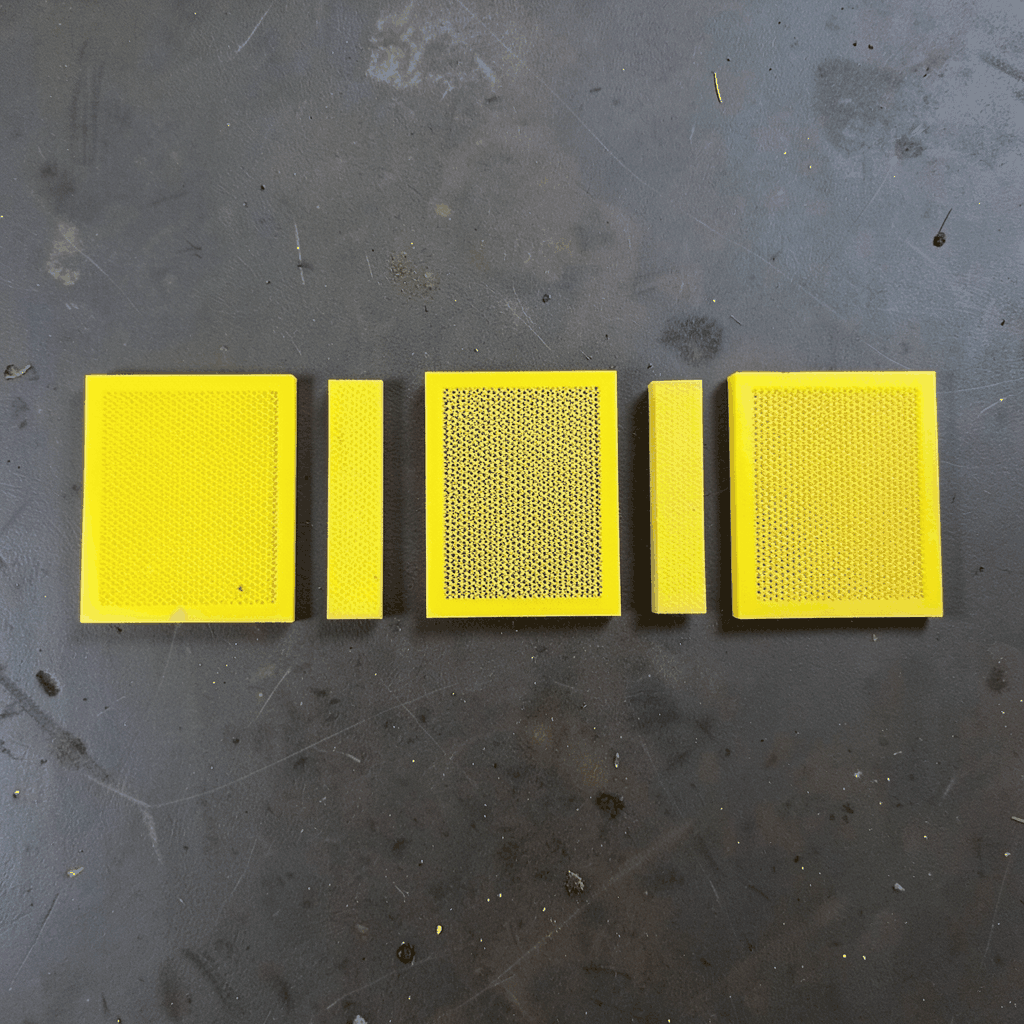
Mesh screens for oil and gas wellhead filtration
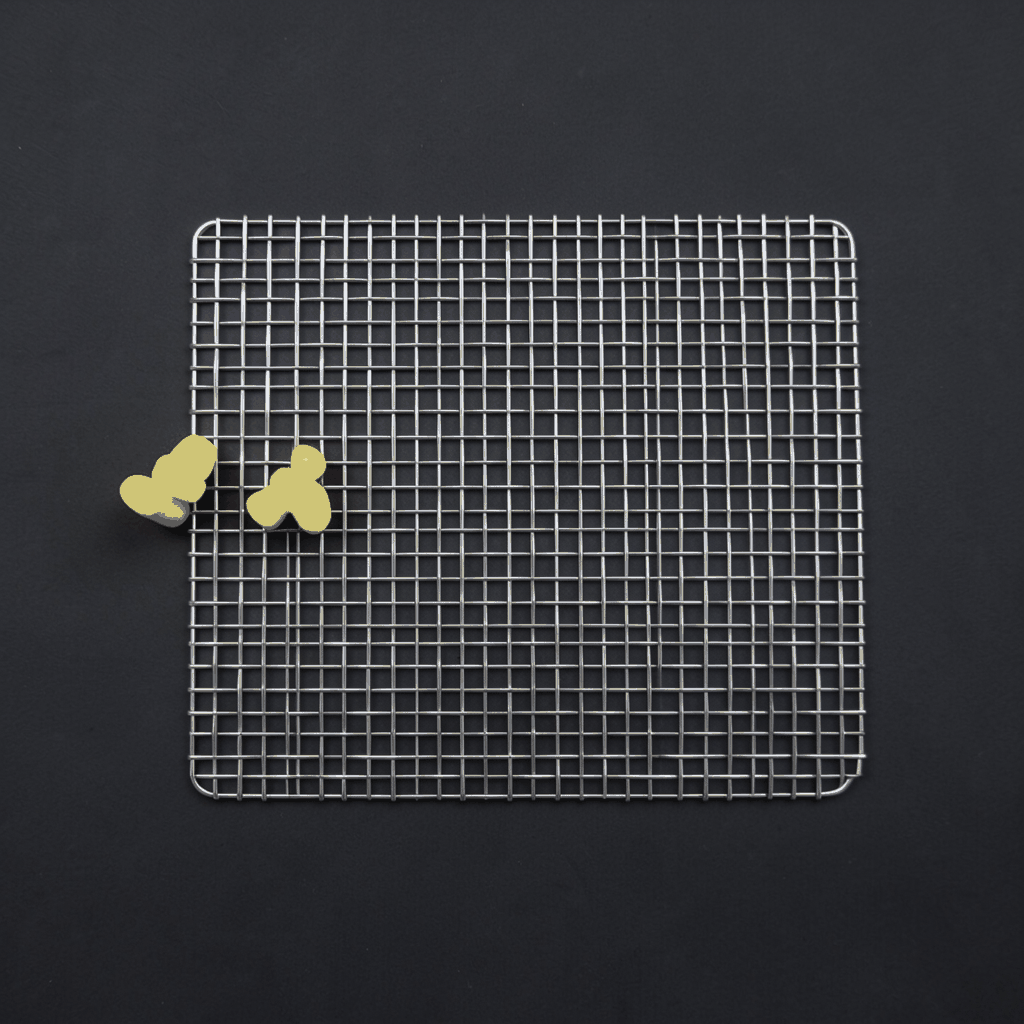
Mesh screens for oil and gas wellhead filtration provide a practical barrier against solids before they reach sensitive surface equipment. Positioned around a wellhead manifold, valve, choke or flowline connection, these screens can trap rust, scale, sand grains, weld spatter and other debris carried by produced fluids, injection water or flowback. They are surface filtration components rather than substitutes for downhole sand control, pressure vessels or properly engineered separation equipment. Learn more about Comparing Dry And Wet Grinding For Cement Raw Material Blending 6d8b.
The appropriate installation depends on the fluid, flow rate, contaminant size and operating pressure. Some systems use removable mesh cartridges, while others rely on inlet baskets, drain screens, support panels or layered elements installed behind a pressure-retaining housing. A well designed to collect large debris must not create an excessive pressure drop or become a blind spot where operators cannot see fouling.
Performance depends on more than the nominal mesh count. Wire diameter, weave geometry, open area, cleanability and the way a screen handles pressure pulsation all influence service life. Even a highly accurate woven screen can fail early if it is installed in a corrosive environment, loaded beyond its capacity or cleaned with an unsuitable method.
For Australian buyers, the procurement decision must also fit local operating conditions, documentation expectations and supply-chain realities. Shuo Ke Wire Mesh Product Technology Co., Ltd. produces custom mesh elements from stainless steel, copper, iron, aluminum and other alloys, using woven, welded, perforated or multilayer construction according to the application. The most reliable result comes from defining the service duty before selecting a material or mesh grade.
What a wellhead screen must handle
Wellhead fluids may arrive carrying several kinds of contamination at once. Produced water can contain iron oxide, mineral scale and fine sediment, while drilling or completion returns may include filter cake, formation particles and treatment chemicals. Gas-associated liquids can also carry corrosion products. The screen should therefore be assessed for the worst credible combination rather than only for clean production conditions.
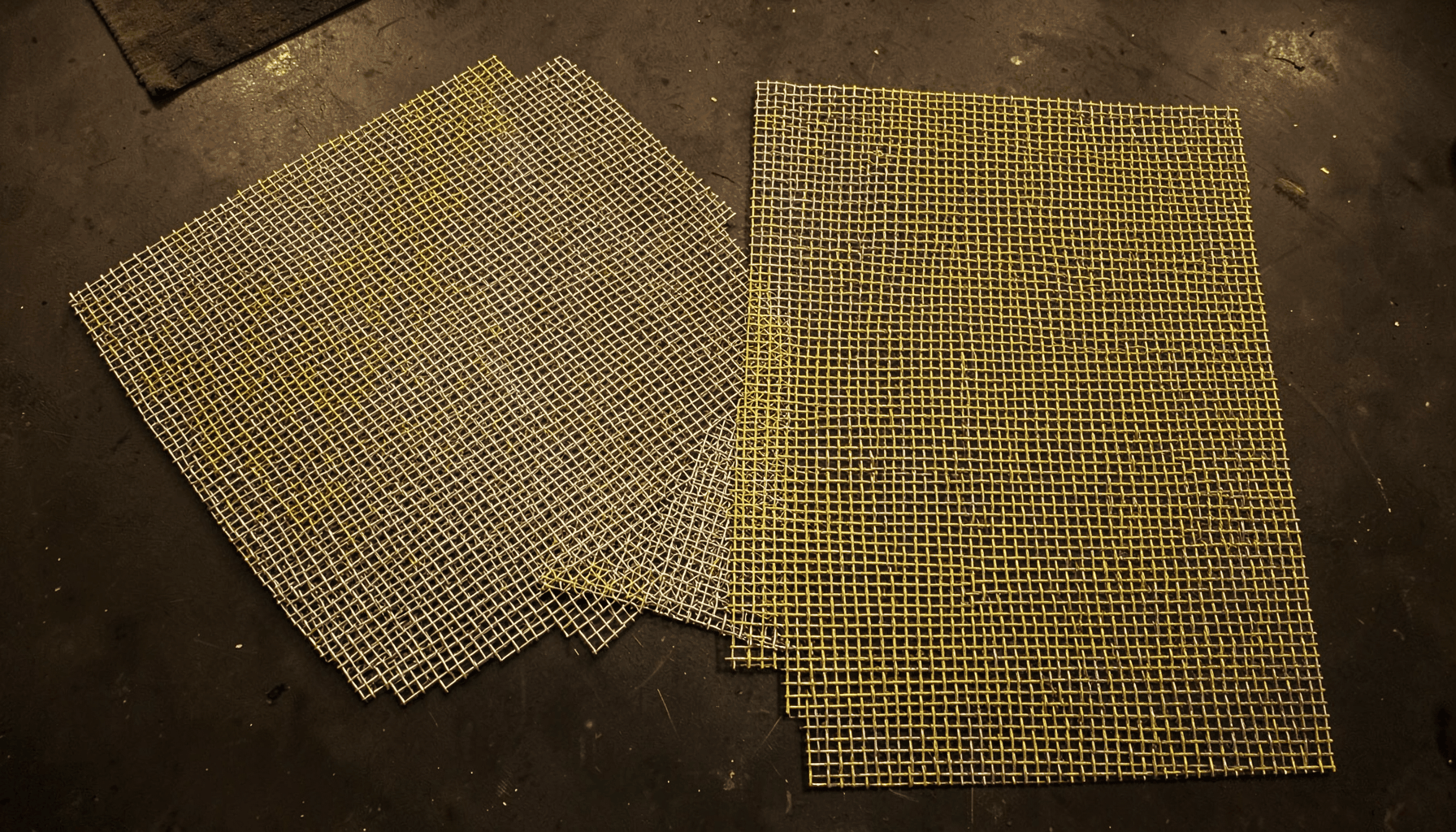
Surface screening works through several mechanisms. A coarse woven screen catches particles by direct interception, while a multilayer element distributes capture across finer and coarser layers. Dutch weave offers high particle retention at a cost in open area and cleanability. Welded or perforated media suit heavier debris and higher structural loads, but they require a separate fine screen when smaller particles must be removed.
Process engineers can also learn from dry versus wet blending, where moisture changes dust, agglomeration and material handling. The same sensitivity to fluid conditions matters at a wellhead: a change in temperature, water content or chemical treatment can alter how solids arrive and how quickly they blind a mesh.
Mesh count should not be treated as a universal particle-size rating. A 100-mesh square aperture is often described as approximately 150 micrometres, while 200 mesh is commonly associated with around 75 micrometres, but actual retention varies with weave type, wire diameter, particle shape and test conditions. Specifications should state the required capture threshold, acceptable pressure drop and test method, particularly where the duty changes between startup, normal flow and upset conditions.
Materials and manufacturing choices
Material selection begins with the fluid chemistry and temperature. Grade 304 stainless steel may perform well in relatively benign, clean service, but 316 or 316L is usually more appropriate where chlorides are present. Duplex and super duplex stainless steels can be considered for severe chloride exposure or sour service, subject to compatibility reviews and requirements such as ISO 15156. Carbon steel with a suitable coating may also be economical where corrosion risk is controlled.
The base metal, surface finish and galvanic arrangement must be considered together. Aluminium offers low weight but generally has lower strength and poorer resistance to many process chemicals than stainless steel. Copper resists corrosion in some environments but should not automatically be used where mechanical strength, erosion or contamination limits are critical. Coatings protect a carbon-steel substrate only while the coating remains intact, so they do not remove the need for compatibility checks.
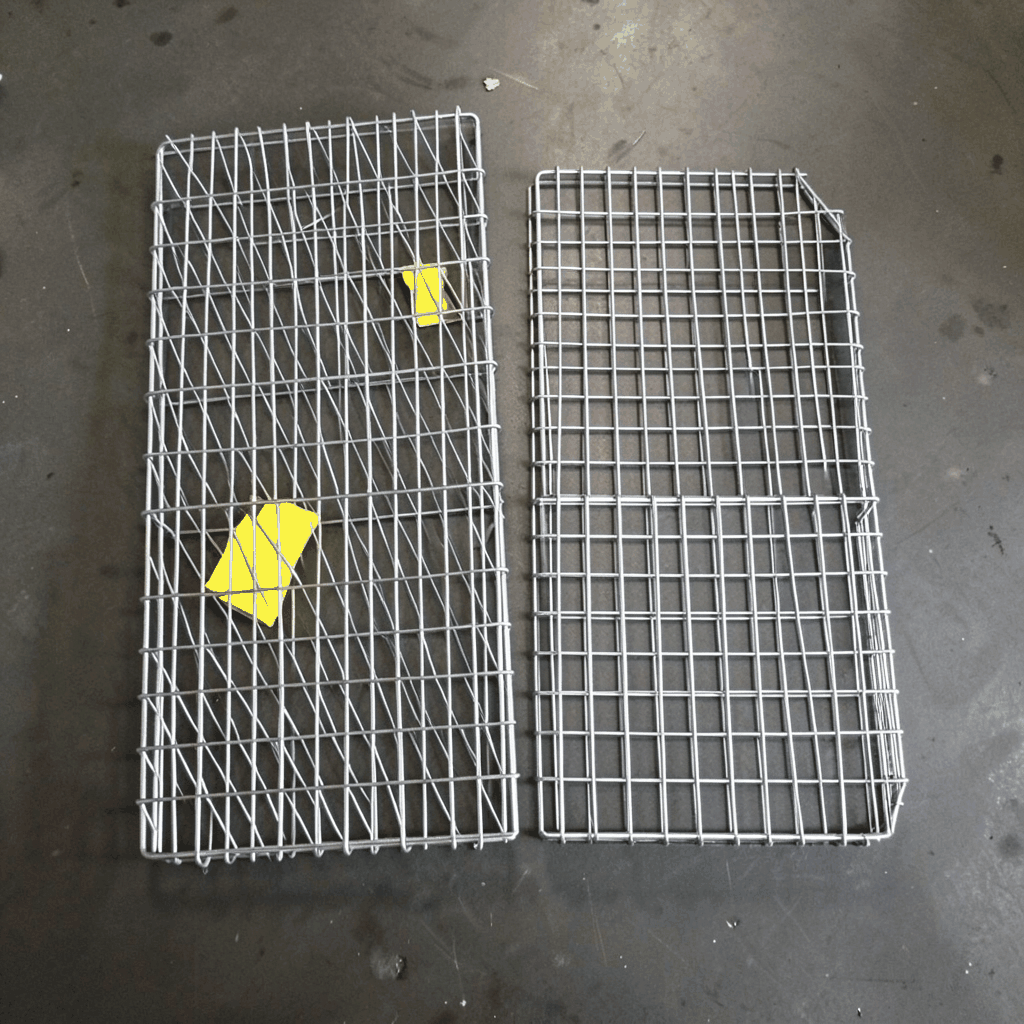
Manufacturing method depends on pressure, differential pressure and handling demands. Plain woven and Dutch weave screens provide controlled apertures, while welded screens offer greater rigidity and dimensional stability. Perforated plate can support a finer woven layer or act as a guard. Multilayer elements combine coarse support, a filtration medium and an upstream retaining mesh, with each layer assigned a defined function.
Edges, seams, frames and lifting points deserve as much attention as the aperture. A screen that deforms at its clamp or develops a sharp burr can damage the housing and create additional debris. Custom elements should have smooth cut edges, secure fastening, adequate clearances and a removal arrangement suited to the available space and lifting equipment.
Specification choices for field-ready performance
A useful custom specification sheet should settle the construction choices before machining or weaving begins:
- Define the design fluid, operating temperature, pressure range and expected flow rate.
- State the required retention level in microns or an equivalent particle-size criterion.
- Select the base material, grade, surface finish and permitted fabrication process.
- Calculate expected clean and blinded differential pressure across the full flow range.
The screen should also be reviewed as part of the complete installation. Differential-pressure instruments, vent paths, drain points and bypass arrangements affect how safely the element can be changed. An upstream coarse strainer may extend service life if the well can tolerate the added restriction. Housing dimensions, clamp access and replacement space should be checked on site rather than inferred from a general drawing.
Field handover should cover the operational checks that prevent avoidable fouling:
- Confirm the screen tag, material grade, mesh specification and pressure rating against the purchase order.
- Inspect the element and housing for damage, contamination, distortion or incorrect seating.
- Record clean differential pressure before commissioning and after normal stabilisation.
- Brief operators on inspection intervals, safe isolation and approved cleaning procedures.
The final specification should distinguish routine inspection from pressure-retaining work. Operators may clean or replace a non-critical basket under an approved procedure, but opening a pressure-bound housing may require isolation, gas testing, permit-to-work controls and competent personnel. Where a non-metallic or coated component is fitted, its temperature, chemical and electrical suitability should be documented separately from the metal frame.
Operating in Australian oil and gas conditions
The Pilbara in Western Australia presents a demanding combination of heat, dust and intense sunlight. Surface temperatures above 40 degrees Celsius are common during summer, while iron-rich dust can settle on seals, instruments and screens. A wellhead installation near a road or service yard may need additional guarding against wind-driven particles, and elastomers should be checked for heat ageing and ultraviolet exposure. Metallic elements selected for that environment need generous corrosion allowance and an accessible cleaning route.
Queensland’s LNG and petrochemical activities around Gladstone and Curtis Island add a different concern: salt-laden humidity. Marine aerosols can promote localised corrosion at edges, fasteners and weld terminations, particularly where dissimilar metals meet. Offshore and coastal flowline equipment may also experience cyclic loading, moisture retention and long periods between inspection. Smooth welds, compatible alloys and protective finishes are more valuable than a generic “marine grade” label without supporting evidence.
Remote operations in the Cooper Basin of South Australia create procurement and maintenance constraints different from those near a capital project. Replacement screens may need to travel substantial distances from a workshop or major service centre, making availability and simple handling important. At an Australian worksite, requests commonly pass through a job handover, permit-to-work system and formal isolation before work begins. These arrangements favour clearly tagged equipment, metric dimensions, English technical records and a spare strategy that does not depend on same-day delivery.
Local regulation and site standards must be incorporated into the final design. AS 1210 may apply to certain pressure equipment, while wellhead and completion systems commonly follow operator specifications based on API, ISO or other recognised international standards. State requirements, design registration and environmental controls still need to be checked for the equipment class and location. Where work affects land or access routes, cultural heritage and traditional-owner engagement requirements may also influence the work plan, particularly across Western Australia and northern Queensland.
Move from enquiry to a dependable screen
Engineering review should begin with the operating envelope and installation constraints. Useful inputs include fluid composition, solids characteristics, flow rate, pressure and temperature, available housing dimensions, cleaning method and inspection frequency. From those details, the manufacturer can recommend an appropriate construction, then confirm whether the element is a non-pressure screen or part of a pressure-retaining assembly that requires certified design and testing.
Quality records should match the service risk. Material certificates, heat or batch traceability, inspection records and dimension checks support procurement acceptance. Depending on the specification, additional verification can include pressure testing, non-destructive examination, surface inspection and documentation of welded construction. Manufacturing consistency is not cosmetic: experience with welded industrial flooring illustrates why repeatable wire alignment and weld geometry translate into predictable performance.
The commercial schedule should account for drawing approval, sample review, production, inspection and transport. Buyers in Australia should also clarify responsibility for installation, preservation, cleaning and replacement. A supplier able to provide spare elements in matching materials and dimensions can reduce shutdown risk after the original screen has been in service for several years.
To begin a custom filtration project, send Shuo Ke Wire Mesh Product Technology Co., Ltd. the fluid details, operating conditions, installation drawings and required retention criteria. The team can develop a suitable mesh specification, confirm manufacturing tolerances and prepare a practical sample or production plan for dependable wellhead protection.