Choosing Metal Mesh for Industrial Oven Filtration
Industrial ovens depend on controlled airflow, stable temperatures, and reliable removal of particles, fumes, or process residues. The metal mesh installed in a filtration assembly affects all three. A poorly selected screen can deform, clog, oxidize, or create excessive pressure drop, reducing oven performance and increasing maintenance costs.
Mesh selection for high-temperature filtration in industrial ovens requires more than choosing a fine opening size. The operating temperature, atmosphere, chemical exposure, airflow, cleaning method, mechanical loading, and expected service life must be considered together. A suitable filter may be woven wire cloth, expanded metal, perforated sheet, sintered mesh, or a fabricated basket made to fit a specific housing.
For manufacturers and operators, the goal is a filtration component that remains dimensionally stable while capturing the required contaminants. Shuo Ke Wire Mesh Product Technology Co., Ltd. supports customized metal mesh processing for industrial applications, allowing material, aperture, thickness, shape, and edge treatment to be matched with the equipment design.
Define The Oven Environment First
The temperature stated for an industrial oven is only one part of the operating environment. A filter may be exposed to continuous heat, short thermal peaks, repeated heating and cooling cycles, or localized radiant heat near burners and heating elements. These conditions produce different levels of thermal stress and may require different mesh constructions.
The surrounding atmosphere also matters. Clean, dry air is less aggressive than an environment containing water vapor, solvents, salts, sulfur compounds, chlorine, or acidic vapors. Oxidation and corrosion can accelerate at elevated temperatures, especially when contaminants settle on the wire and remain there during repeated cycles.
Air velocity and pressure are equally important. High airflow can vibrate fine wire cloth, pull particles deeper into the structure, or increase erosion at bends and support points. Before selecting a filter, engineers should establish the normal operating temperature, maximum temperature, gas composition, flow rate, target particle size, cleaning interval, and available installation space.
Match The Alloy To Heat And Chemistry
Stainless steel is often selected for oven filtration because it combines corrosion resistance, strength, and broad availability in woven wire mesh. Common grades such as 304 and 316 may suit many general industrial conditions, while higher-temperature alloys may be necessary where continuous heat, oxidation, or chemical exposure exceeds standard stainless steel capabilities.
The choice between stainless steel and other metals should reflect the actual process. Aluminum is lightweight and useful in moderate-temperature applications, but it is unsuitable for many high-heat zones. Copper offers excellent thermal and electrical conductivity, yet it can oxidize or lose mechanical strength under demanding oven conditions. Carbon steel or iron may provide economical structural support, but they require careful evaluation of oxidation and surface protection.
Heat-resistant nickel-based alloys can be considered for severe thermal service, especially when strength retention and oxidation resistance are critical. However, alloy selection should be based on the complete temperature range and atmosphere rather than a material name alone. A qualified supplier can review the process data and recommend a practical grade, wire diameter, and mesh construction.
Select The Right Filtration Structure
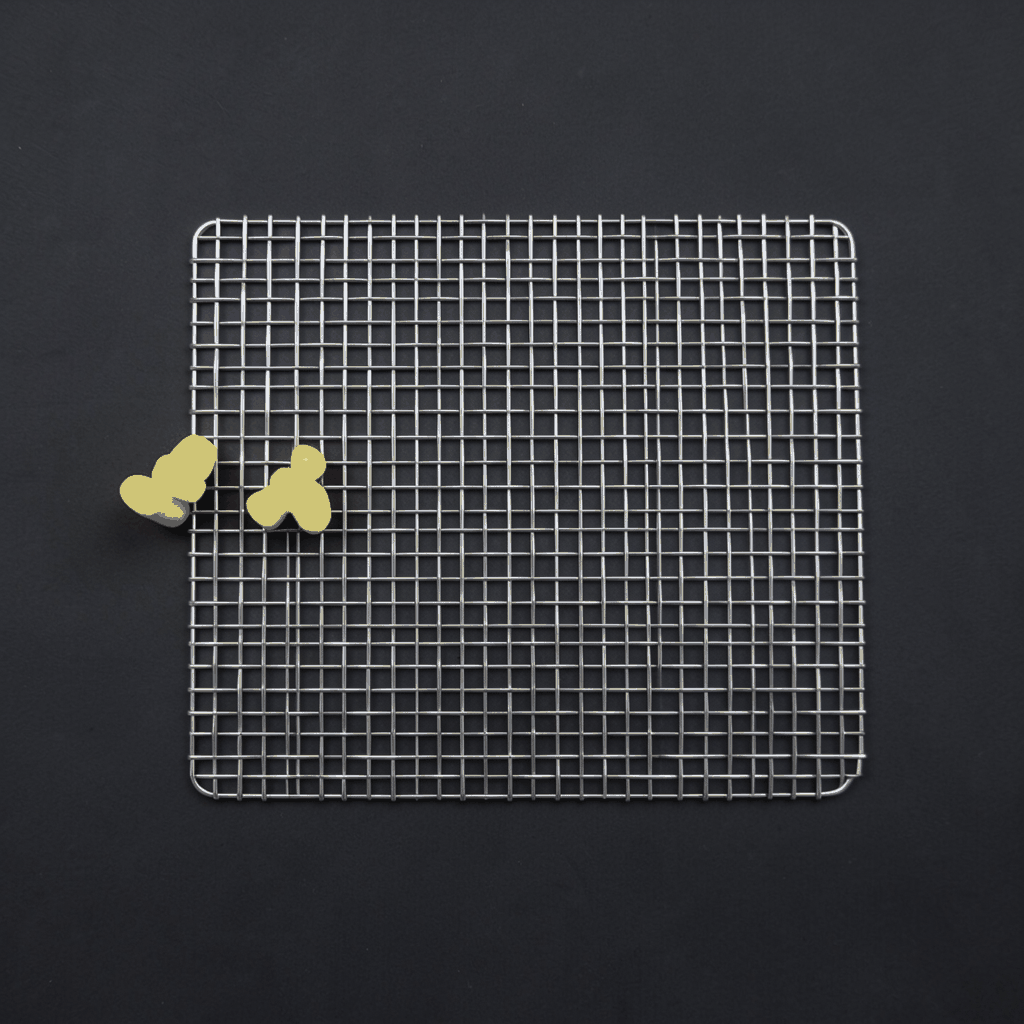
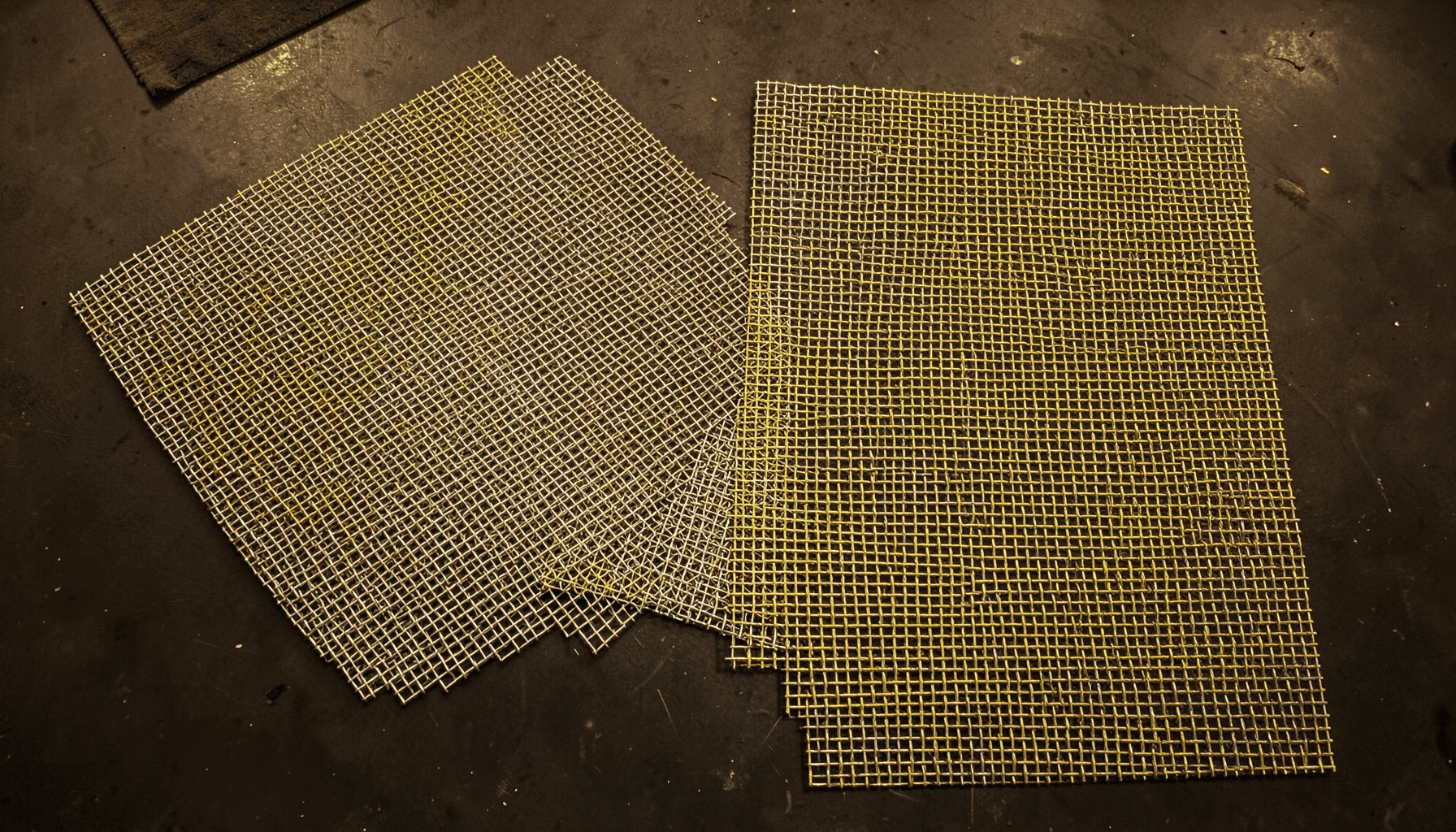
Woven wire cloth provides precise openings and is available in many mesh counts and wire diameters. Plain weave is common for general filtration, while twilled and dutch weaves can provide stronger construction or finer particle retention. Fine woven mesh is effective for small contaminants, but it may create higher pressure loss and can be more difficult to clean.
Perforated metal and expanded metal are useful when the primary requirement is coarse screening, airflow distribution, or structural support. Their openings are generally more robust than very fine woven wire, making them suitable for pre-filters, guards, trays, and support layers. They can also be fabricated into panels, cylindrical sections, or frames.
Sintered metal mesh combines multiple layers of wire cloth into a rigid, often laminated filter medium. It can offer controlled filtration, improved mechanical stability, and resistance to handling damage. For industrial ovens, layered construction may be useful when a filter must retain fine particles while tolerating vibration, pressure differences, and repeated cleaning.
| Filter construction | Suitable function | Main advantages | Points to verify |
|---|---|---|---|
| Plain woven wire mesh | General air and particle filtration | Precise openings, flexible specifications, easy fabrication | Temperature rating, wire stability, cleaning method |
| Twilled or dutch weave | Fine particle retention | Stronger support and smaller effective openings | Pressure drop and cleaning access |
| Perforated sheet | Coarse screening and airflow control | Rigid, durable, easy to clean | Open area and particle capture efficiency |
| Expanded metal | Protective screening and support | Lightweight, strong, economical | Opening geometry and edge safety |
| Sintered mesh laminate | Fine filtration under mechanical stress | Rigid, layered, consistent filtration | Cost, regeneration method, housing design |
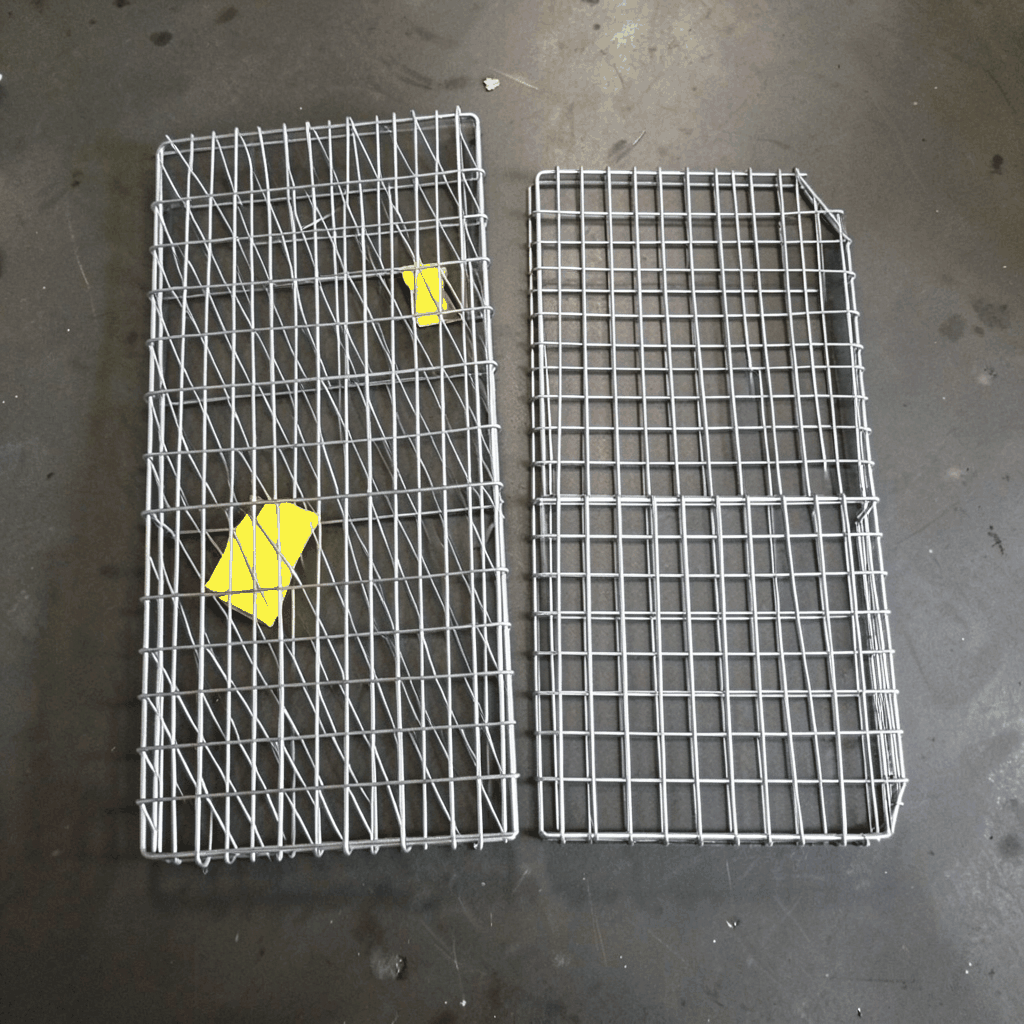
| Fabricated mesh basket or panel | Custom oven filter assemblies | Integrated shape, frame, handle, and support | Weld quality, distortion, installation tolerance |
Balance Opening Size With Airflow
Filtration efficiency and pressure drop are closely connected. Smaller openings can capture finer particles, but they also restrict airflow more readily. When resistance rises, fans consume more energy, air distribution becomes less uniform, and the oven may struggle to maintain its designed temperature profile.
Mesh count alone does not describe filter performance. Wire diameter, opening shape, open-area percentage, weave type, contamination level, and filter depth all influence airflow. Two screens with the same nominal mesh count can behave differently if their wire diameters or weave patterns are different.
A practical design should define the required particle retention range and the maximum acceptable pressure loss. In some systems, a coarse pre-screen followed by a finer filter performs better than a single extremely fine layer. The pre-screen protects the downstream media from rapid loading and can make maintenance faster.
Filter area should be generous enough to keep face velocity within an acceptable range. Increasing the surface area may reduce pressure drop and extend service life without changing the target opening size. Folded, pleated, cylindrical, or multi-panel assemblies can provide additional area where the oven housing permits them.
Design For Thermal Expansion And Cleaning
Metal components expand when heated, and a filter installed tightly in a rigid frame may buckle or develop stress during operation. The design should allow suitable clearance, flexible mounting, or controlled movement. Welded frames, retaining clips, and support bars must be chosen so they remain secure during thermal cycling without restricting necessary expansion.
Fine mesh needs adequate support when exposed to airflow, vibration, or pressure changes. A coarse backing screen or perforated support plate can prevent sagging and reduce mechanical damage. In large panels, intermediate supports may be required to maintain a consistent gap and stop the wire cloth from contacting nearby surfaces.
Cleaning conditions should be defined before fabrication. Some filters are brushed, vacuumed, blown with compressed air, washed, or cleaned during a controlled thermal regeneration cycle. High-pressure air may distort fine mesh, while liquid cleaning can leave residues or promote corrosion if the filter is not dried properly.
Edges and joints deserve the same attention as the filter face. A rolled edge, welded frame, reinforced border, or formed flange can improve handling and sealing. If the assembly will be removed frequently, lifting tabs, handles, or replaceable cartridges may reduce maintenance time and protect the mesh from accidental damage.
Account For Contamination And Service Life
The contaminant determines how quickly a filter loads and how it should be cleaned. Dust, powder, carbon residue, fibers, paint overspray, oil mist, and baked-on process material behave differently. Sticky particles may block openings rapidly, while abrasive particles can wear the wire and support structure.
High temperature can change the contaminant itself. Organic residues may harden, oxidize, or burn onto the mesh, making removal more difficult. In some processes, the filter must resist ignition or prevent glowing particles from passing downstream. The design should therefore consider both filtration efficiency and the safety consequences of retained material.
A replaceable filter element may be more economical than a permanent assembly when contamination is heavy or cleaning access is limited. For lighter loading, a durable stainless steel filter basket or panel may provide many service cycles. Tracking pressure drop and visual condition during operation helps establish a replacement or cleaning schedule based on actual performance.
Material traceability and consistent fabrication are valuable for replacement planning. Wire diameter, opening size, alloy grade, frame dimensions, welding method, and surface finish should be recorded in the specification. A customized manufacturer can produce repeatable filter components when the original drawings and performance requirements are clearly defined.
Practical Recommendations For Specification
A clear specification helps prevent a filter from being selected solely by mesh count or price. Include the operating conditions and the physical details required for fabrication so that the supplier can evaluate performance and manufacturability together.
Before ordering a high-temperature screen, filter element, or custom metal mesh basket, confirm the following:
- State the normal, peak, and cycling temperatures, including the temperature at the filter surface rather than only the oven setpoint.
- Identify the gas composition, humidity, corrosive compounds, dust type, particle size, and expected contaminant loading.
- Specify the required filtration level, allowable pressure drop, airflow rate, and available filter surface area.
- Choose the alloy, wire diameter, weave, perforation, or layered construction according to heat, strength, corrosion, and cleaning requirements.
- Provide drawings for frames, seals, supports, handles, clearances, and connection points, with tolerances for thermal expansion.
- Define inspection requirements such as opening verification, dimensions, weld quality, surface condition, and material documentation.
Work With A Custom Mesh Manufacturer
Standard rolls of wire cloth may be suitable for simple screens, but industrial oven filtration often requires formed, framed, reinforced, or layered components. Custom processing can integrate the mesh with a support plate, flange, basket, panel, cartridge, or protective enclosure. This reduces fitting problems during installation and helps the filter operate as part of the complete airflow system.
Shuo Ke Wire Mesh Product Technology Co., Ltd. manufactures and processes metal mesh products for industrial and architectural applications. Its capabilities across stainless steel, aluminum, copper, iron, and other alloys support different requirements for corrosion resistance, heat exposure, mechanical strength, and appearance. For oven filtration, the relevant discussion should focus on the process conditions, required opening, assembly geometry, and expected maintenance cycle.
A useful supplier evaluation includes more than a material catalogue. Ask whether the manufacturer can control wire diameter, mesh opening, frame dimensions, welding, edge finishing, and repeatability between batches. Samples or trial pieces can help verify fit, airflow, cleaning behavior, and resistance to thermal cycling before a larger production order.
The right filter is a balance between particle capture, airflow, heat resistance, mechanical stability, and maintenance cost. Contact Shuo Ke with the oven temperature range, atmosphere, airflow data, contaminant description, filtration target, and installation drawing to develop a metal mesh component suited to the process.