
Mesh solutions for erosion control on slopes and embankments
Slopes and embankments are exposed to runoff, wind, freeze-thaw movement, traffic vibration, and changes in soil moisture. When vegetation is sparse or the ground has been freshly cut, water can quickly form rills and gullies. Small channels may then develop into larger slips that threaten roads, drainage structures, buildings, rail corridors, and landscaped areas.
Metal mesh provides a practical layer of reinforcement for these vulnerable surfaces. Depending on the site, it can hold soil in place, support rock or vegetation, distribute surface loads, protect drainage channels, or create a stable face for retaining systems. The right solution depends on slope angle, soil type, rainfall, expected loading, and the intended appearance of the finished site.
A well-designed erosion control system combines mesh with anchors, drainage, vegetation, rock, concrete, geotextiles, or gabions. Mesh by itself is not a substitute for slope investigation or water management, but it can become a durable component within a broader soil stabilization plan.
Why slope erosion needs engineered control
Surface erosion begins when rainwater gains enough velocity to detach soil particles. Loose fill, sandy ground, silty soils, and recently graded embankments are especially vulnerable. On steep faces, runoff travels rapidly and concentrates in depressions, creating channels that remove topsoil and expose deeper layers.
Erosion may also result from seepage emerging inside a slope. Water pressure can reduce soil strength and create localized slumping. In coastal or high-wind areas, salt exposure and airborne particles add stress to exposed steel components. A mesh system must therefore address both surface movement and the environmental conditions that accelerate corrosion.
The objective is usually to keep the ground profile intact until vegetation becomes established or a permanent structural treatment is completed. Mesh can restrain loose material, prevent stones from falling, and help distribute the force of water and weather across a wider area. It also allows drainage and plant growth when the system is selected and installed correctly.
Selecting mesh for soil and site conditions
Mesh selection starts with the type of failure that must be controlled. Light surface erosion may require flexible wire netting over a biodegradable or synthetic erosion blanket. A rocky slope may need high-tensile wire mesh, rockfall drapery, or anchored panels. Deeply eroded channels and unstable embankment toes may require gabion baskets, retaining structures, or soil reinforcement behind the face.
Material choice affects service life. Stainless steel mesh offers strong resistance to moisture and many corrosive environments, making it useful around drainage works, coastal developments, and demanding architectural infrastructure. Galvanized iron or steel mesh can provide economical protection for general civil works when the coating and exposure rating are appropriate. Aluminum is lightweight and corrosion resistant, while copper is selected mainly for specialized architectural or landscape applications rather than heavy structural restraint.
Opening size, wire diameter, tensile strength, flexibility, and panel dimensions should match the ground conditions. Small openings can retain fine particles more effectively, while larger openings may suit rockfall control or systems that must accommodate vegetation. The mesh should conform to irregular terrain without creating unsupported pockets where soil or rocks can gather.
How mesh systems stabilize exposed ground
Surface reinforcement commonly uses mesh laid directly over a slope and fixed with pins, staples, anchor rods, or soil nails. The mesh holds an erosion blanket or geotextile against the soil and limits the movement of loose particles during storms. As plants grow through the openings, roots gradually add a biological form of stabilization.
For rock slopes, draped mesh is installed from the crest and secured along the upper edge, sides, and toe. It guides falling stones toward a controlled collection zone and reduces the chance that debris will reach a roadway or occupied area. Heavier systems can be anchored at multiple points to improve contact with uneven rock faces.
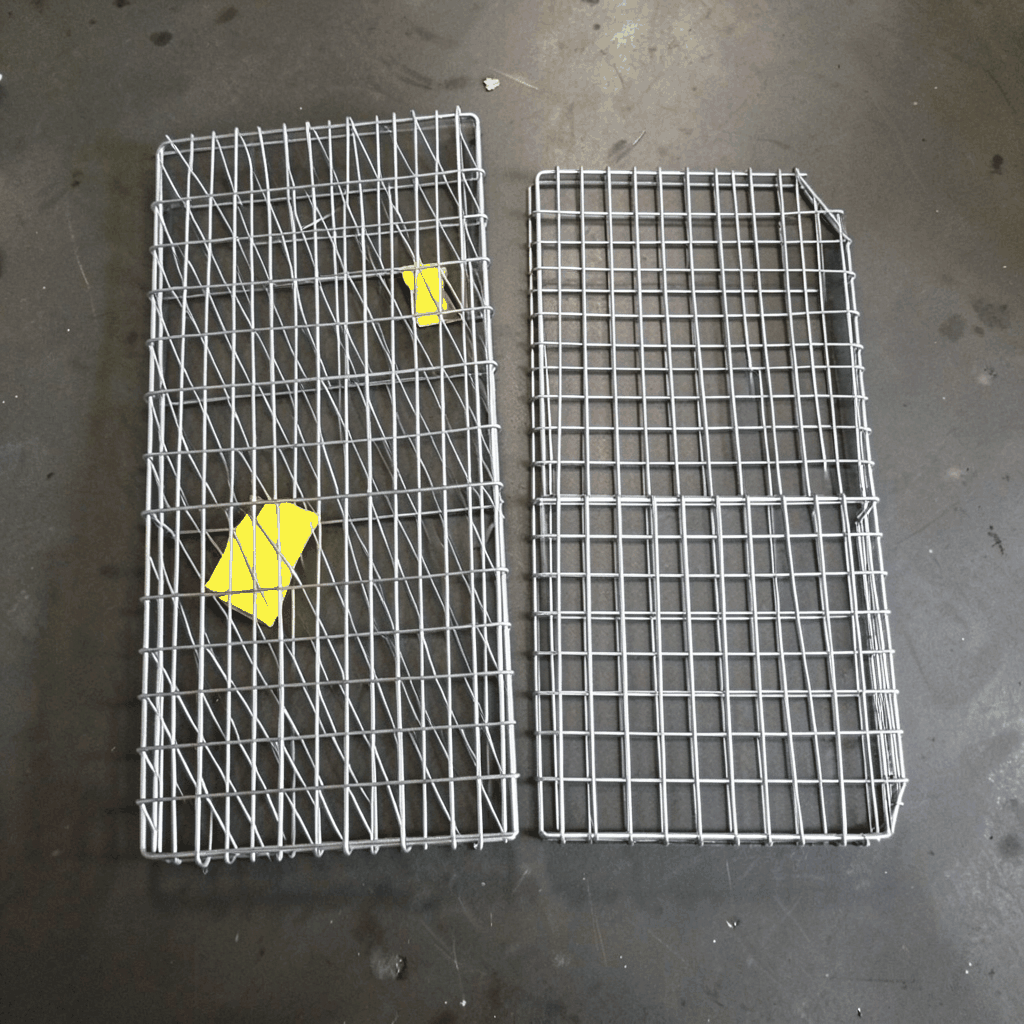
Gabion mesh provides a different form of control. Welded or woven wire baskets are filled with rock and arranged as retaining walls, check structures, channel linings, or toe protection. Their open construction allows water to pass through while the stone fill resists erosion and helps support the lower portion of an embankment. Where the design demands precise dimensions and a clean installation, a manufacturer such as Shuo Ke Wire Mesh can help develop fabricated mesh components for a defined project requirement.
Comparing materials and mesh arrangements
The most suitable system balances mechanical strength, corrosion resistance, installation speed, cost, and visual requirements. A flexible woven mesh may follow a natural slope better than rigid panels, while welded mesh can offer consistent openings and simple modular fabrication. High-tensile products reduce deformation but may require stronger anchors and more careful handling.
The surrounding environment should be considered over the full design life. Soil chemistry, road salt, industrial emissions, standing water, and marine air can shorten the service life of unprotected steel. Protective coatings, stainless grades, drainage details, and compatible fasteners should be specified together rather than treated as separate decisions.
| Mesh or system type | Main strengths | Suitable applications | Key considerations |
|---|---|---|---|
| Galvanized welded wire mesh | Regular openings, rigid form, efficient installation | Embankment facing, light soil reinforcement, gabion panels | Coating quality and cut-edge protection |
| Woven hexagonal wire mesh | Flexible, adaptable, easy to shape around uneven terrain | Gabions, channel protection, rock containment | Requires reliable lacing and anchoring |
| Stainless steel mesh | High corrosion resistance and long service potential | Coastal slopes, drainage zones, visible infrastructure | Higher material cost and grade selection |
| High-tensile slope mesh | Strong restraint with relatively low weight | Rockfall control and steep exposed faces | Anchor design and installation tension are critical |
| Expanded metal mesh | Continuous sheet with good rigidity and ventilation | Architectural retaining screens, protective cladding, selected slope details | Less suitable where close conformity to irregular ground is needed |
| Gabion baskets | Combines stone mass, drainage, and retaining action | Toe protection, check dams, retaining walls | Requires sound foundation and properly graded rock |
Installation details that affect performance
Preparation determines whether mesh remains effective after the first severe storm. Loose debris, unstable rocks, roots, and sharp protrusions should be removed or secured before placement. The slope should be graded to eliminate abrupt hollows where water can concentrate. Drainage channels, crest drains, and toe outlets need to be completed or coordinated with the mesh work.
Anchoring is equally important. Fasteners should be arranged according to slope geometry, soil strength, wind exposure, and the expected movement of the mesh. Edges, overlaps, transitions, and drainage outlets deserve additional restraint because these are common points of lifting and separation. Overlaps should be sufficient for the selected product, with lacing or clips that resist opening under load.
On a vegetated slope, mesh should maintain close contact with the soil while leaving room for seed, mulch, and root development. On a rock face, the system should be tensioned or draped according to the design intent. Gabion units need a stable base, appropriate rock fill, secure connections, and a layout that prevents bulging or sliding.
Applications across infrastructure and landscapes
Road and rail embankments often use wire mesh with erosion blankets to protect freshly formed slopes before vegetation is established. Mesh can also reinforce drainage channels beside highways, where concentrated runoff would otherwise wash away shoulders and side slopes. At bridge approaches and culvert outlets, rock-filled mesh structures help manage high-flow conditions and protect vulnerable transitions.
Municipal parks, residential developments, and commercial landscapes may use lower-profile mesh systems to preserve a natural appearance. A planted slope reinforced with discreet wire can blend into the landscape more effectively than a solid concrete face. Decorative or coated mesh may be appropriate where the stabilization work is visible from public areas and appearance is part of the project brief.
Industrial sites, quarries, reservoirs, and mining access roads often face heavier loads and harsher exposure. These projects may combine rockfall mesh, soil nails, drainage pipes, gabions, and reinforced earth layers. The mesh should be treated as part of a coordinated geotechnical system, with design responsibility clearly assigned and site conditions documented before installation.
Practical specification and maintenance
A useful specification identifies mesh material, wire diameter, opening dimensions, coating or stainless grade, panel or roll size, connection method, anchor type, and expected service life. It should also state the slope inclination, soil description, drainage arrangement, design rainfall, rock size, and any traffic or impact exposure. Clear drawings should show crest termination, toe treatment, overlaps, corners, and interfaces with structures.
Inspection is simplest when the system remains accessible. After major storms, personnel should check for detached anchors, torn mesh, exposed foundations, blocked drains, displaced rock, and new gullies. Vegetation should be maintained without damaging the mesh, and invasive roots or woody growth should be controlled where they could lift or distort the system.
Repairs should use compatible materials and connection details. A small damaged section can often be cut out and patched with matching mesh, but widespread deformation may indicate inadequate drainage, anchor spacing, or slope movement. Monitoring should focus on changes in cracks, bulges, seepage, and toe displacement rather than treating visible mesh damage as an isolated issue.
Recommendations for project planning
- Confirm whether the main risk is surface washout, rockfall, toe scour, seepage, or deeper slope instability.
- Select mesh material and protective finish according to soil chemistry, rainfall, salt exposure, and service-life expectations.
- Coordinate mesh installation with grading, drainage, anchors, vegetation, geotextiles, and rock placement.
- Detail overlaps, edges, fasteners, crest restraints, and toe connections before ordering fabricated components.
- Schedule inspections after intense rainfall and repair drainage or anchoring problems before replacing damaged mesh.
A durable erosion control solution begins with a clear understanding of how water and soil interact on the site. Correctly selected metal mesh can reinforce vulnerable ground, support vegetation, control falling debris, and extend the service life of embankments and slope protection works. For customized panels, baskets, screens, or other fabricated components, contact Shuo Ke Wire Mesh Product Technology Co., Ltd. with the site conditions, drawings, dimensions, and performance requirements so the mesh solution can be matched to the project.