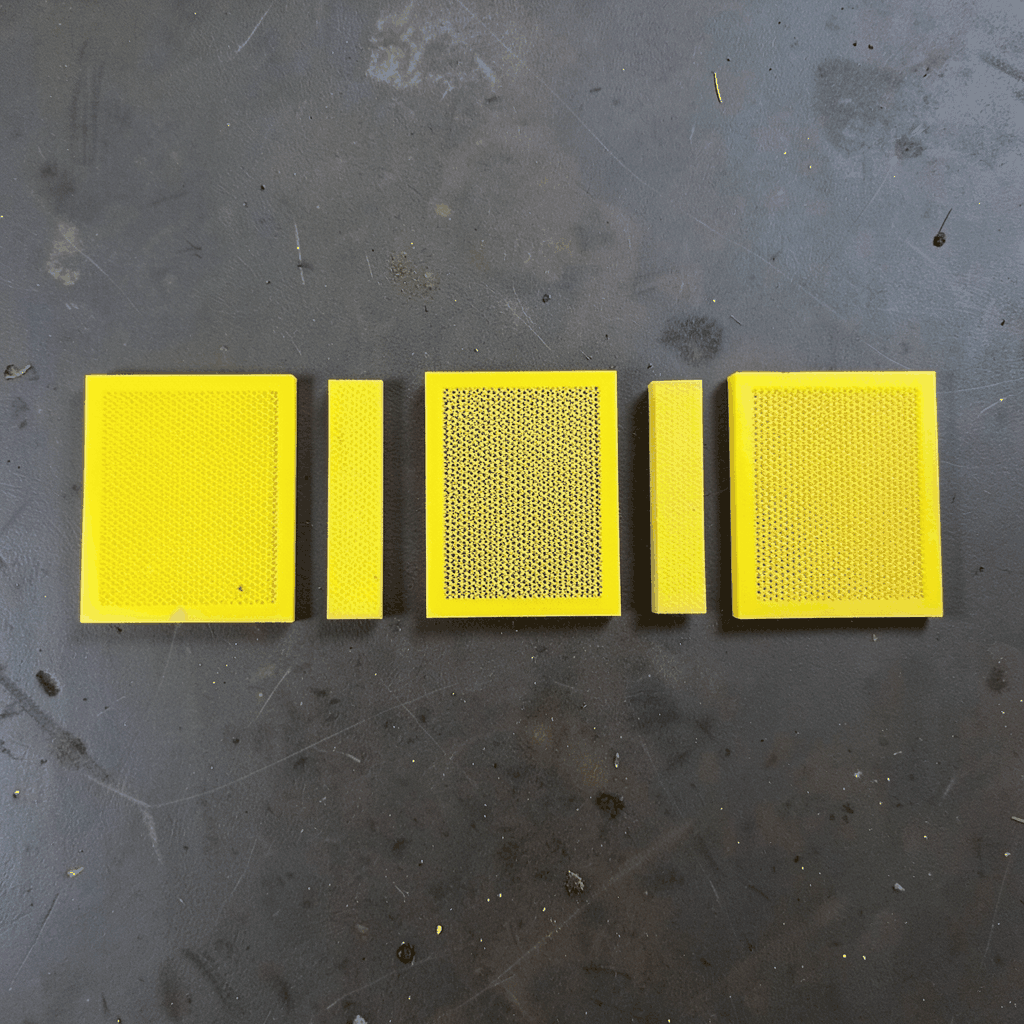
Metal mesh for fireplace screens and spark guards
A fireplace screen is often judged by its pattern, yet its more important job is controlling stray sparks and embers without disturbing the fire. A metal mesh fireplace screen can provide that barrier, while a spark guard placed on a hearth offers an extra layer of protection around a wood-burning fire. The right panel depends on the appliance, the fuel, the installation and the dimensions of the opening.
Metal mesh for fireplace screens and spark guards is available in woven wire, welded wire and other formed constructions, with options including stainless steel, aluminium, copper and iron. Selection should begin with the manufacturer’s installation instructions and the applicable Australian requirements, including AS/NZS 2918 where a solid-fuel appliance is involved. A freestanding guard is an addition to a compliant installation, not a way to bypass hearth size, clearances or a certified chimney spark arrestor.
Why a fireplace screen must do more than look good
Decorative mesh and ember-control mesh have different jobs. Architectural screens, expanded panels and perforated sheets can look excellent around a fireplace, but their openings may be much larger than the embers they need to retain. A decorative mesh curtain intended for a partition should not be treated as a fireplace barrier without checking its aperture, construction and suitability for heat.
Open wood fires are the toughest case because burning logs can release glowing fragments, airborne sparks and fine ash. A full-width guard set at the front of the firebox can intercept much of this material, while a half-height screen leaves a route for embers to pass around the side. Gas fireplaces generally present a different risk profile, so a purpose-made glass door or appliance guard may be more appropriate than heavy wire mesh.
Neither design eliminates every fire risk. Sparks may travel beyond the panel, hot ash may land on the hearth, and a combustible object may be close to the firebox. Treat the mesh as one layer in a safety system: maintain the required clearances, use a correctly specified hearth, manage firewood and fuel properly, and keep the chimney or flue maintained according to the appliance instructions.
Match the aperture to the fire and fuel
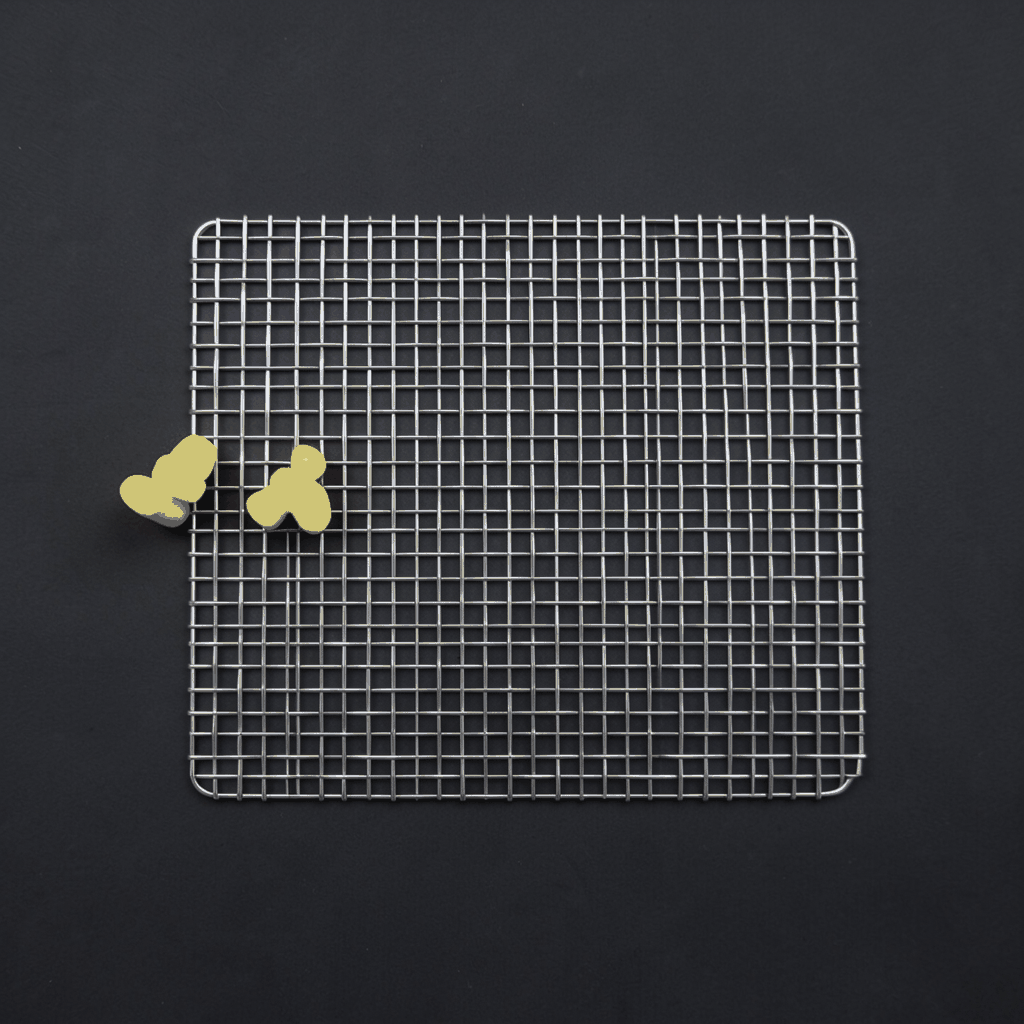
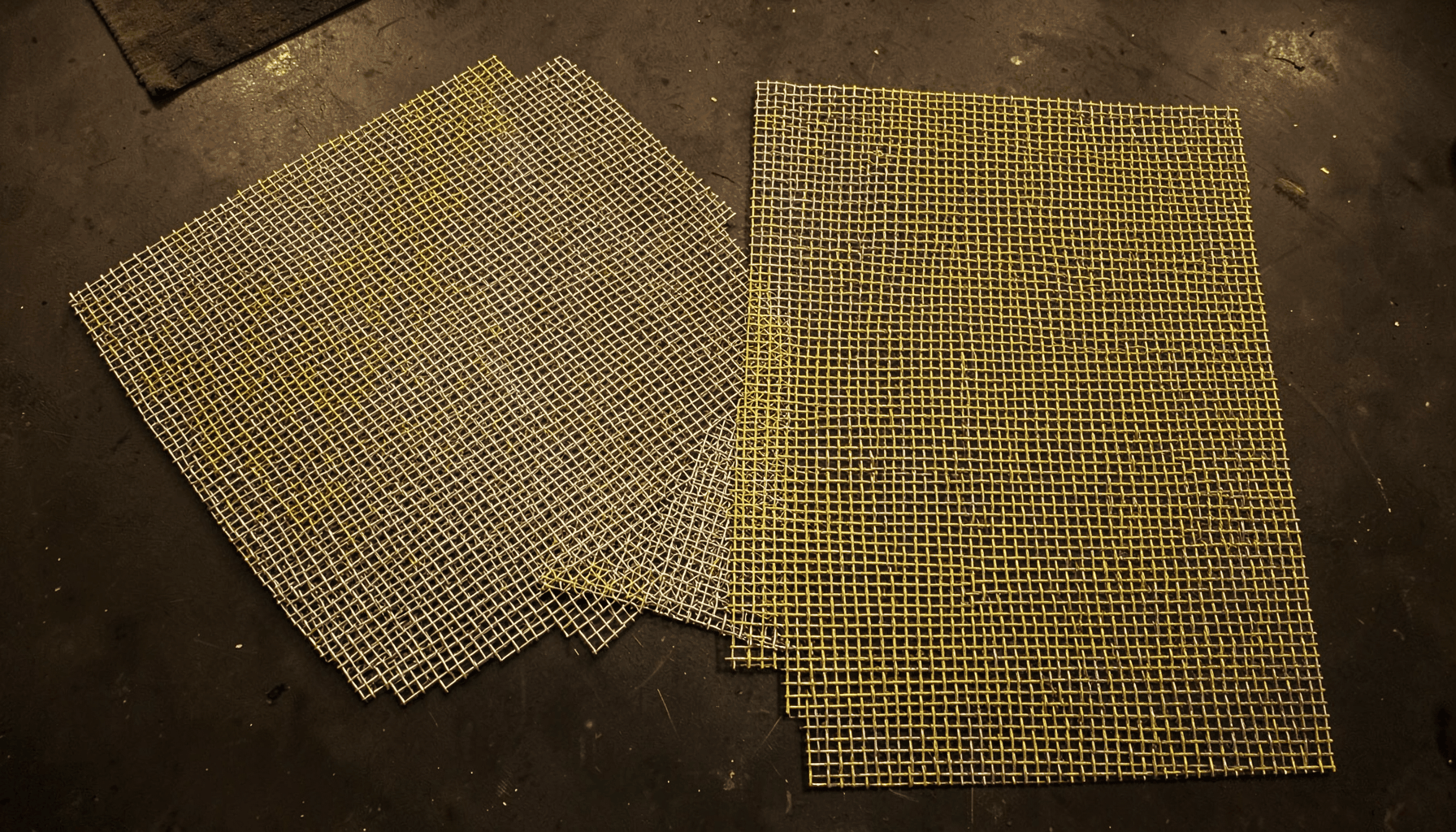
Mesh terminology can obscure what matters. Aperture is the clear opening between wires; wire diameter affects stiffness and thermal mass; open area describes how much of the panel remains unobstructed. A square aperture is not automatically a reliable boundary for an irregular ember, so fine woven wire is commonly preferred for spark containment over decorative openings.
The commonly specified 16 mm square mesh used for many Australian wood-heater chimney arrestors belongs to that flue installation, not automatically to a separate fireplace screen. For a conventional open fire, screen apertures are selected according to the expected ember size and the amount of airflow the installation needs. Too coarse may admit sparks; too fine, particularly close to a solid-fuel fire, can collect soot and interfere with combustion.
Ask the supplier for both aperture and wire diameter, not just a mesh count or a product name. Confirm whether the panel is intended for a decorative front guard, a hearth spark screen, a stove-side barrier or a certified component. If the fireplace burns gas as well as wood, specify the fuel modes and the highest temperature condition rather than choosing a panel that suits only one burner.
Choose the metal for heat and local conditions
Stainless steel is a practical default for many indoor fireplace guards. It resists corrosion, cleans readily and tolerates the radiant heat encountered outside the firebox. Grade 304 is usually adequate for dry interiors, while 316 stainless offers added resistance to salt-laden and humid environments. Neither grade, by itself, establishes suitability for a particular installation; panel spacing, support and distance from the flame still matter.
Coastal and subtropical conditions change the choice. Homes around Sydney and Perth can encounter salt-laden air, while damp basements and poorly ventilated fireplaces encourage corrosion on steel. Aluminium is light and naturally corrosion resistant, but its heat tolerance and expansion require careful spacing from flames and hot flue gases. Copper develops an attractive patina and suits decorative schemes, though cleaning and surface finish need to be considered.
Low-carbon iron and coated steel can provide economical panels for indoor use, but repeated heating, ash and moisture may damage the finish. The trade-off is less obvious in a rental with a modest fireplace or a large family hearth where a robust guard may be replaced less often. In any location, avoid direct contact with the firebox or flue, and specify ventilation clearances from the product supplier.
Measure the firebox and hearth properly
Measure the opening, not just the decorative surround. Record the firebox width, height and depth, the location of the hearth extension, the projection of any lintel and the space available in front. Photograph the fireplace straight on and include a tape measure in one image. An arched opening needs segmented panels or a shaped top; a rectangular guard can be easier to support and less prone to distortion.
The hearth itself is a separate part of the safety design. On timber floors, combustion-rated insulation, a suitable hearth slab and required air gaps may be needed beneath the appliance. A metal screen standing on an unprotected timber floor does not make that floor safe. Check the installation manual, the state or territory building code and any insurer requirements, especially for open-plan rooms where curtains, joinery or timber floors are close.
In apartments and townhouses, balconies and communal rooms may have additional controls from owners’ corporations, local councils or building managers. A freestanding guard may fit an open fireplace but be unsuitable for a gas heater, a narrow balcony hearth or a room where the manufacturer requires a particular glass or screen system. Obtain written approval before changing the installation, and have any relocation of the appliance handled by a qualified installer.
Design the screen for practical everyday use
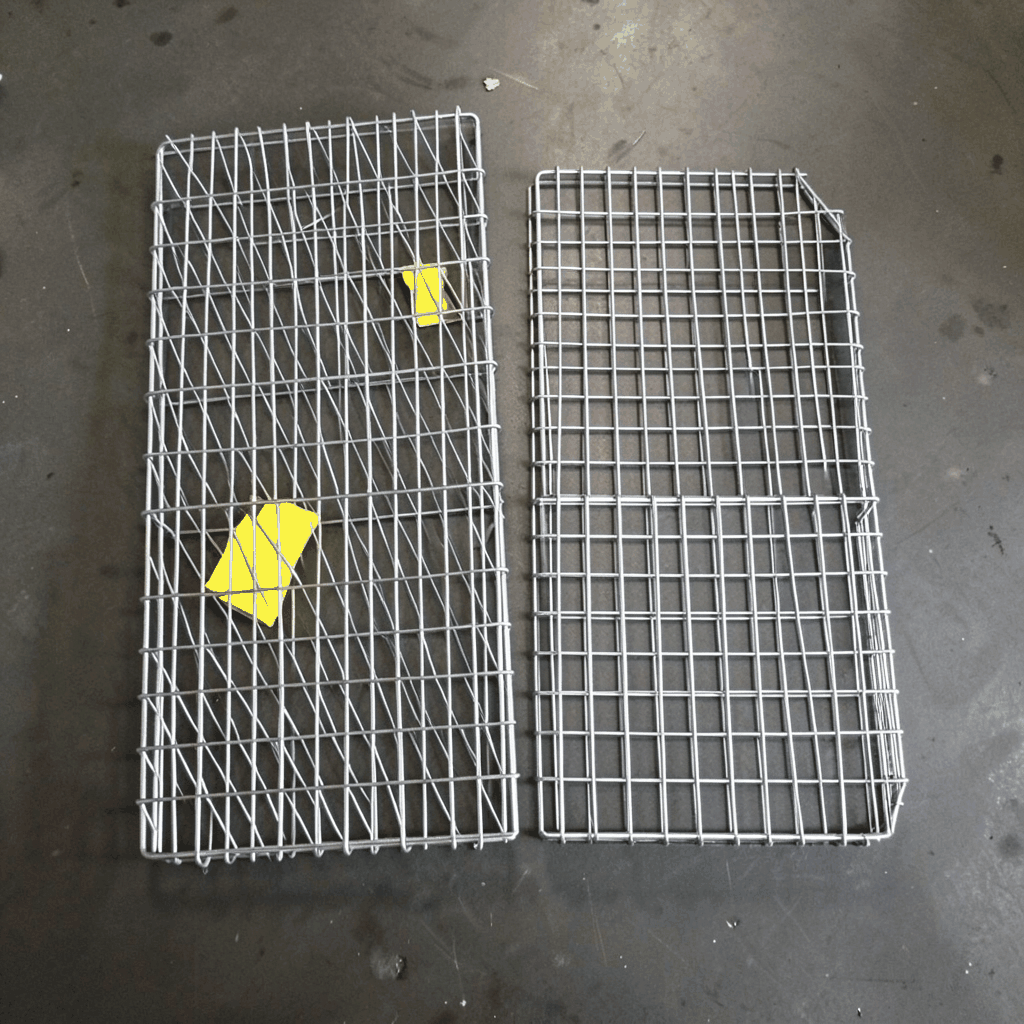
Stability is more important than elaborate trim. Look for a broad base, feet that cannot easily slip, and a frame that keeps the mesh under tension. Woven wire should be taut but not overstretched; welded wire can provide stronger rectangular panels for larger openings. Fine wire may flex when brushed or struck, so the support frame should carry loads instead of leaving every impact to the mesh.
A hinged screen or removable front panel makes cleaning easier, but the hardware must remain safely outside the hottest zone. If the fireplace is used with children or pets, consider a full enclosure or a properly latched hearth gate as well as a spark screen. A fixed decorative panel cannot control a burst of sparks that travels around its edge, and neither mesh nor a gate replaces adult supervision.
Maintenance is easier when the finish is chosen for the hearth. Let the fireplace and ash cool before brushing loose soot from the mesh, and use a method approved for the metal rather than an abrasive that scratches stainless steel or attacks a copper finish. Collect cold ash in a covered metal container on a non-combustible surface; never pour hot ash into a household bin or leave it against a timber deck.
Turn measurements into a dependable specification
Before ordering, prepare a specification that a supplier can price without guesswork. Include photographs, a dimensioned drawing, the fuel type, the required aperture, the wire diameter, the metal and finish, the maximum panel size and whether the guard must be fixed, hinged or freestanding. State whether it is for a domestic open fireplace, a wood heater, a gas unit or a commercial hearth, because the operating environment changes the design.
For made-to-measure work, a custom metal mesh enquiry should carry the same technical detail, and the supplier should be able to explain how the panel will be framed, welded or woven. Shuo Ke Wire Mesh Product Technology Co., Ltd. produces architectural and industrial metal mesh from stainless steel, aluminium, copper, iron and other alloys, including decorative panels and laser-cut screens. Ask which construction and material are appropriate for the specific fire risk, rather than assuming every decorative mesh panel is suitable.
Australian buyers should plan for local approval, shipping and installation as part of the total cost. Melbourne, Brisbane and Perth projects may involve different housing types, balcony rules and installer availability, while regional areas can have longer freight routes and limited trades. For imported goods, the importer should confirm tariff classification, GST and any applicable duty. Local fabrication of a frame or final powder coating may simplify handling and reduce panel distortion.
Ready to move from a sketch to a workable fireplace mesh screen? Send Shuo Ke your opening dimensions, fuel details and a photograph, and request a sample or a material recommendation with the required clearances in writing. That gives you a screen designed for the actual hearth, not simply a decorative panel placed in front of it.