Selecting Mesh for Industrial Sieves in Powder Coating Processes
Powder coating relies on clean, consistent material handling from the spray booth through to recovery and recycling. Industrial sieves help remove lumps, foreign particles and partially cured powder before the coating material reaches a hopper or spray system. The right woven wire mesh supports stable flow, reliable screening and fewer interruptions during production.
Mesh selection involves more than choosing an opening size. Wire diameter, alloy, weave, frame construction, surface finish, loading conditions and cleaning practices all influence service life. For Australian powder coaters working with architectural aluminium, fabricated steel, agricultural equipment or mining components, a sieve must suit both the powder and the realities of the workshop.
Match The Aperture To Powder Characteristics
The clear opening should be small enough to remove contamination but large enough to maintain a practical feed rate. Fine powders may require a tighter aperture, while coarse or recycled material can often pass through a larger opening. A screen that is too fine can slow production, increase pressure on the mesh and encourage powder build-up.
Particle size distribution is the starting point. Ask the powder supplier for the normal range, the permitted oversize fraction and any guidance on reclaim powder. Virgin powder and recovered powder may behave differently because reclaim can contain agglomerates, dust or material from another colour change. Screening specifications should account for the least favourable material likely to enter the system.
Powder flow is also affected by humidity, electrostatic attraction and storage conditions. In coastal areas such as Newcastle, Wollongong or Perth, airborne moisture and salt-laden air can make contamination control more demanding. A sieve that performs well in a dry inland plant may need a different aperture or cleaning routine in a humid workshop.
Choose The Right Weave And Wire Diameter
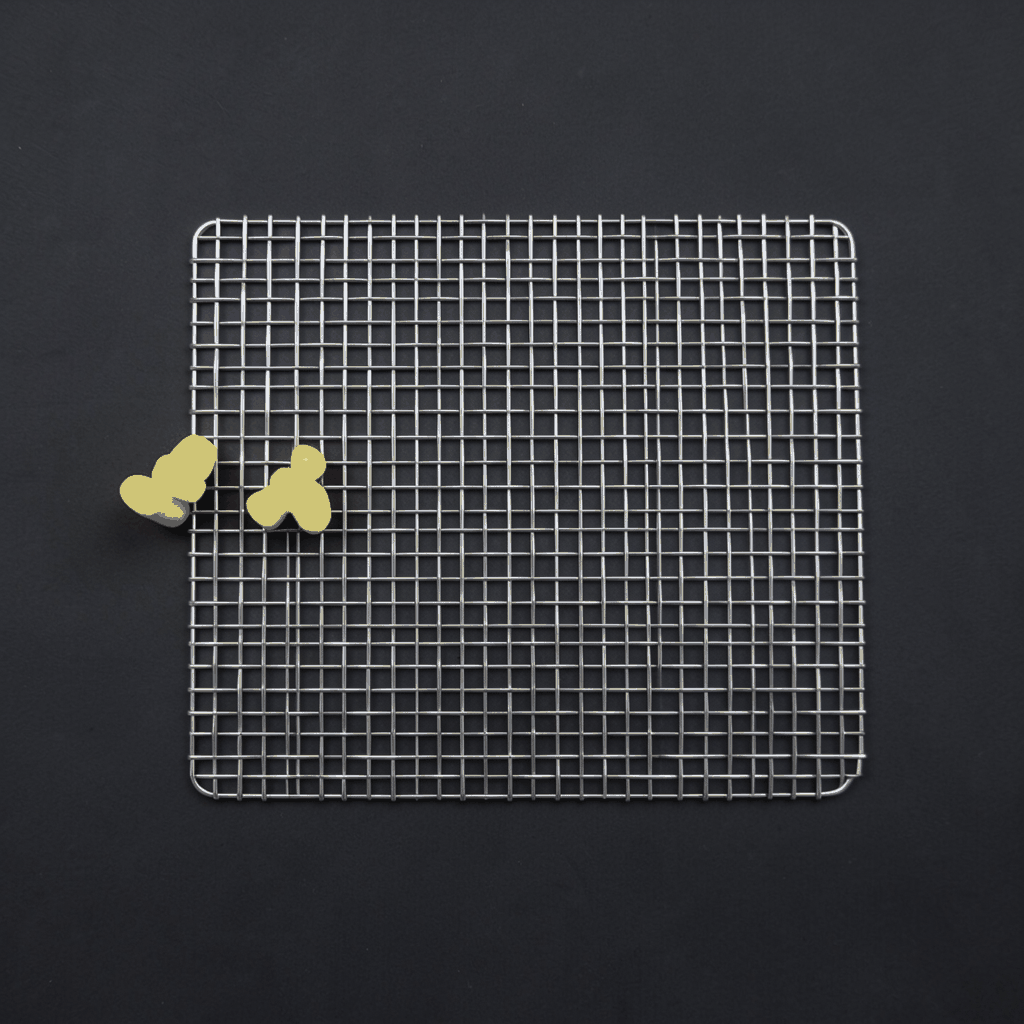
Plain weave is widely used for industrial screening because it provides a straightforward, stable structure with predictable openings. In this pattern, each wire passes alternately over and under the next wire. It suits many powder coating applications where moderate strength, easy cleaning and a balanced open area are required.
Twill weave can provide greater strength or allow a finer opening with a comparatively heavier wire. This can be useful when the sieve receives repeated loading, vibration or manual scraping. Dutch weave designs offer high filtration performance and a strong retaining surface, although their restricted open area can reduce throughput and make cleaning more specialised.
Wire diameter affects far more than durability. Heavy wire improves resistance to abrasion and deformation, yet reduces the available open area. Fine wire increases screening capacity but may be vulnerable to denting, stretching or damage from sharp agglomerates. A practical specification balances aperture, screening rate and mechanical handling rather than selecting the finest possible wire.
Select A Material For The Workshop
Stainless steel wire mesh is a common choice for powder coating sieves because it combines strength, corrosion resistance and a relatively clean surface. Grade 304 stainless steel is suitable for many general indoor applications, while 316 stainless steel may be preferable where cleaning chemicals, chloride exposure or coastal conditions are significant.
Carbon steel can be economical for dry, low-corrosion environments, particularly when the screen is protected with a suitable finish. It requires closer attention to rust prevention, since corrosion products can contaminate light-coloured powders and damage the screen. Galvanised wire may be useful in some industrial settings, but its suitability should be checked against temperature, abrasion and chemical exposure.
Synthetic mesh can serve selected low-temperature screening tasks, especially where a soft contact surface is needed. However, powder coating operations may involve solvents, heat, static control requirements and abrasive particles, so polymer mesh should be assessed carefully. Aluminium is lightweight but can be less resistant to deformation and abrasion than stainless steel.
For Australian production sites, material selection should reflect local supply and replacement lead times. A custom stainless steel sieve made for a plant in Dandenong or Western Sydney should be specified with a readily available wire grade where possible. This can reduce downtime when a screen needs replacement during a busy production run.
Consider Static And Powder Contamination
Powder coating particles are electrostatically charged during spraying, and static behaviour can influence how they move through a screening assembly. A conductive metal mesh can assist with grounding when it is correctly bonded to the frame and equipment. The mesh alone does not solve every static issue, so the full sieve, hopper and transfer path should be reviewed by a qualified technician.
Surface cleanliness is equally important. Residual powder from a previous colour can cause visible defects, especially when a white, pastel or high-gloss finish follows a dark powder. Stainless steel with a smooth, properly finished surface is generally easier to brush, vacuum or air-clean than a rough or damaged screen.
Mesh should also be selected to resist particle shedding. Broken wires, flaking coatings and poorly finished welds can introduce metal fragments into the powder stream. Where appearance is critical, use a professionally fabricated screen with secure edges, consistent tension and no exposed burrs.
Colour changes are common in Australian job shops serving building contractors and fabricators. A coater in Brisbane may move quickly between architectural bronze, white and black finishes to meet project schedules. A removable sieve with accessible edges can make cleaning faster and reduce the chance of cross-colour contamination.
Design The Frame For Service Conditions
An excellent mesh can still fail if it is fitted into a weak or poorly designed frame. The frame should maintain even support across the screening area and prevent the wire cloth from flexing excessively under load. Excessive movement can enlarge openings, fatigue the wires and produce inconsistent separation.
Welded, bolted or clamped frames may all be suitable, depending on the equipment and cleaning method. A welded frame provides rigidity, while a clamped design can simplify mesh replacement. For frequent colour changes, operators may prefer a cartridge or drawer-style sieve that can be removed without dismantling the whole feed system.
The frame material should be compatible with the mesh and the operating environment. Dissimilar metals can create corrosion concerns where moisture or cleaning chemicals are present. Edges should be rounded or protected so operators can handle the screen safely and so powder cannot collect in inaccessible crevices.
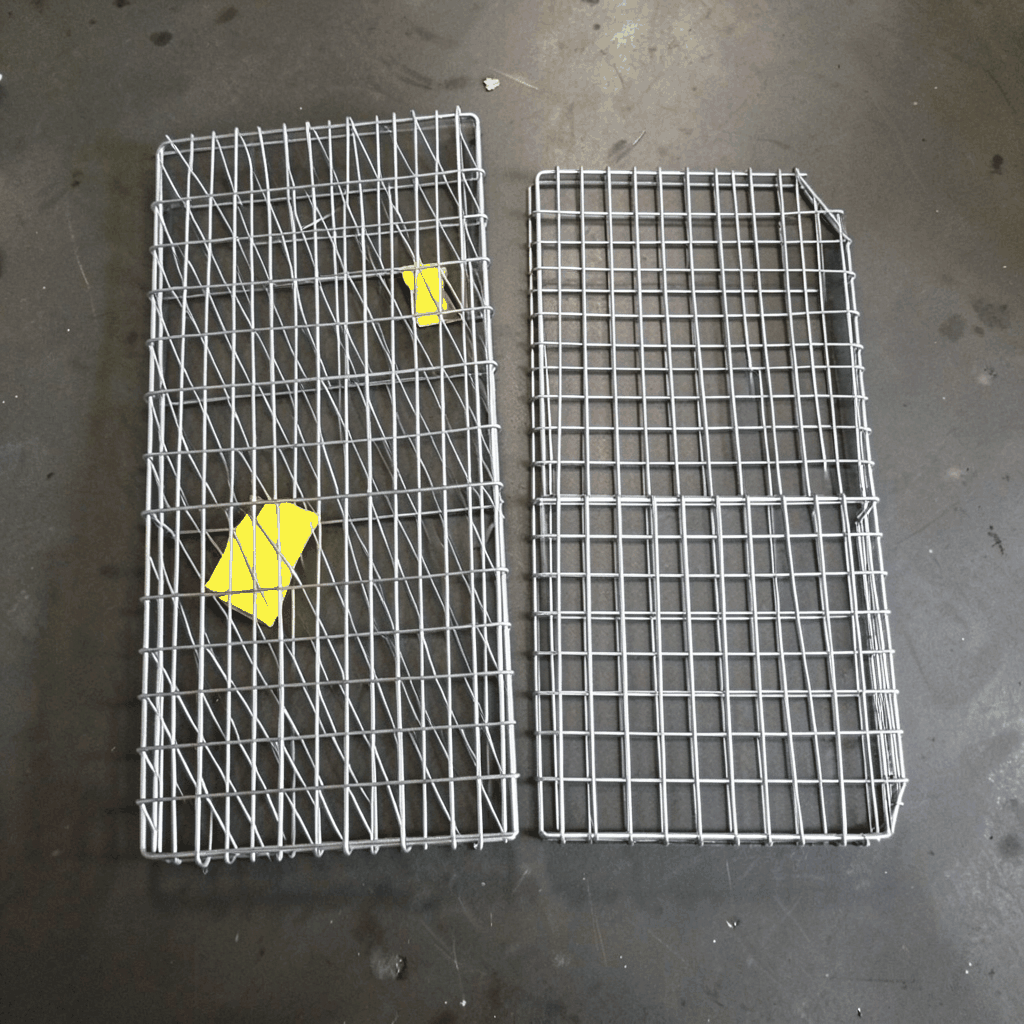
The same attention to gauge and construction applies to industrial baskets and wash-system components; this mesh gauge guidance is useful when comparing wire thickness, load support and opening size for fabricated mesh equipment.
Account For Cleaning And Maintenance
A sieve specification should include its cleaning method from the beginning. Light powder residue may be removed with a soft brush, industrial vacuum or low-pressure air, while compacted agglomerates may require careful manual work. Aggressive scraping can stretch fine mesh or create local damage that is difficult to see during routine inspection.
Compressed air must be managed safely because it can create airborne combustible dust. Powder coating plants should follow their site risk assessment, equipment instructions and applicable Australian workplace requirements. Operators may need extraction, suitable personal protective equipment and controlled cleaning zones rather than simply blowing powder into the workshop.
Inspect the screen for broken wires, loose edges, distortion, rust staining and blocked openings. A simple inspection under good lighting can reveal a gradual loss of screening efficiency before it causes a serious production problem. Keep spare screens labelled by aperture, material and application so the correct replacement is available during a colour change or urgent repair.
Cleaning frequency depends on powder type, throughput and reclaim practice. A low-volume workshop may clean after each batch, while a large automated line may use scheduled checks at shift change. Record recurring failures because they may indicate that the aperture is too small, the wire is too light or the feed system is imposing excessive impact.
Work With A Mesh Manufacturer On Customisation
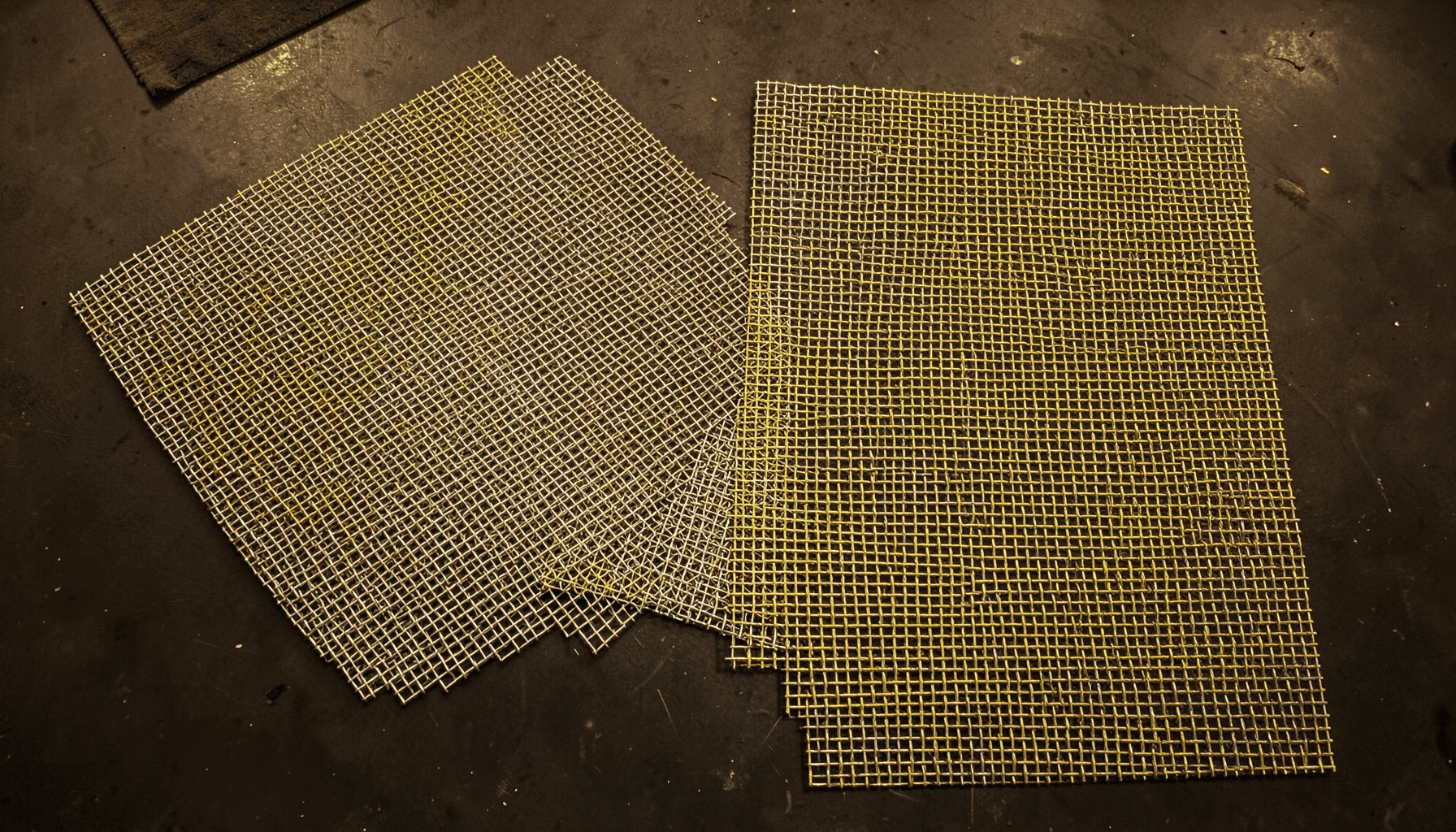
Standard mesh sizes are useful, but industrial powder coating equipment often requires a custom panel, circular screen, framed insert or perforated support. Provide the manufacturer with the required aperture, wire diameter, alloy, dimensions, frame details, operating temperature and expected load. Samples of the powder and contamination can also help with practical assessment.
Explain whether the sieve is used for virgin powder, reclaim powder, or both. Include the expected throughput, vibration level and cleaning process. These details allow a mesh processor to recommend a construction that supports real production conditions instead of relying on aperture size alone.
A supplier experienced in woven wire cloth and fabricated metal mesh can combine screening media with a durable frame, handles, clamps or mounting points. Stainless steel, aluminium, copper, iron and other alloys may be considered according to corrosion exposure, weight and mechanical requirements. Custom fabrication is especially useful where a screen must fit an existing hopper or reclaim unit.
Before approval, confirm tolerances, edge treatment, inspection standards and replacement identification. Australian manufacturers often work to project deadlines tied to construction, infrastructure and mining contracts, so clear drawings and measurable acceptance criteria help prevent delays. A trial screen can verify flow rate, retention of oversize particles and cleaning time before a larger order is placed.
Selecting a sieve for powder coating is a balance between separation performance and workshop practicality. Aperture, weave, wire diameter and material determine how well the screen handles the powder, while the frame and maintenance plan determine how reliably it performs over time.
Shuo Ke Wire Mesh Product Technology Co., Ltd. can develop woven wire screens and fabricated mesh components for industrial handling, filtration and production equipment. Share the powder characteristics, sieve dimensions, material preference and operating conditions to request a practical custom mesh solution suited to your process.