
Choosing Mesh Thickness for a Durable Residential Entrance Gate
A residential entrance gate has to perform several jobs at once. It defines the property boundary, controls access, withstands wind and weather, and contributes to the appearance of the home. Mesh thickness is central to each function, but it should never be selected in isolation from the gate’s size, frame, hinges, and installation conditions.
A thin infill may be perfectly suitable for a sheltered pedestrian gate, while the same specification could bend or vibrate on a wide driveway gate. The correct choice depends on the mesh type, metal alloy, open-area percentage, panel dimensions, and the forces expected during daily use.
Durability also involves more than resistance to impact. Corrosion, repeated opening cycles, poor drainage, and weak welds can shorten a gate’s service life even when the mesh itself is thick. A balanced specification provides enough strength without creating unnecessary weight, cost, or strain on the supporting hardware.
Start With the Gate’s Actual Load
The first consideration is the gate’s width and height. A large panel creates more leverage against the hinges and posts, particularly when wind passes through a broad mesh surface. Even a relatively open pattern can place substantial pressure on the frame if the gate is tall or installed in an exposed location.
Pedestrian gates usually need less structural capacity than driveway gates. A compact walk-through panel may perform well with a lighter mesh, while a wide double-leaf gate often benefits from heavier wire, thicker sheet, or intermediate frame members. Sliding gates distribute weight along rollers, but their infill still needs to resist flexing and impact.
The amount of open area matters as well. A tightly spaced mesh blocks more wind and behaves more like a solid panel. A larger opening reduces wind pressure, but the individual wires or bars may be more vulnerable to bending. Consider the local climate, nearby trees, vehicle movement, and the possibility of people leaning or climbing on the gate.
Understand Mesh Type and Thickness Terms
“Mesh thickness” can describe different measurements depending on the product. For woven wire mesh, it normally means the diameter of each wire. For perforated or laser-cut sheet, it refers to the sheet thickness. Expanded metal uses sheet thickness together with strand width and opening geometry. These specifications should not be compared as though they were identical.
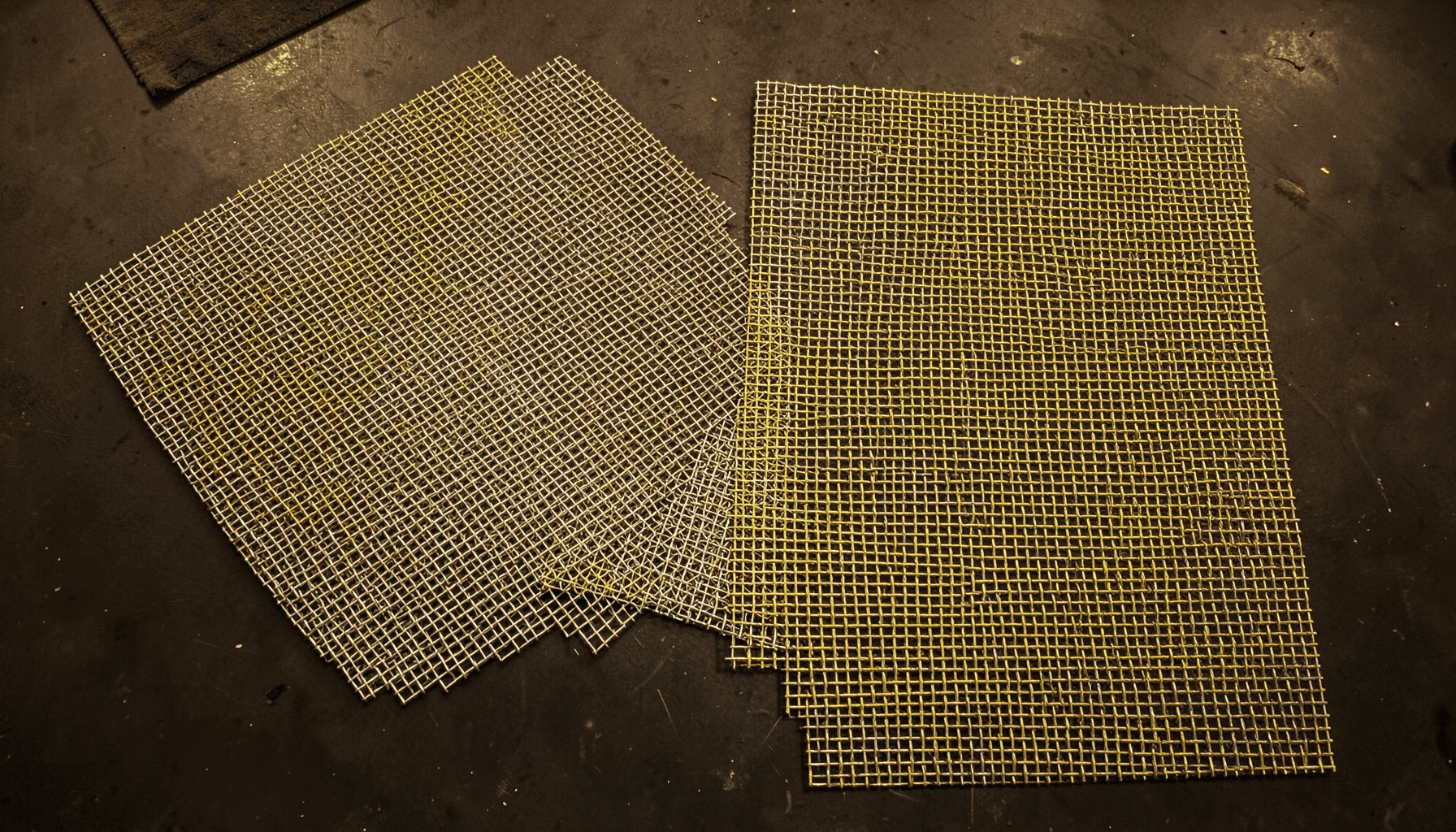
Woven stainless steel or galvanized wire mesh is flexible by design. A wire diameter around 3 to 4 mm may suit many residential gate infills when the panel is properly tensioned and supported. Heavier 4 to 6 mm wire is more appropriate where the gate is large, impact risk is higher, or a rigid architectural effect is required.
Decorative sheet panels behave differently. A 2 to 3 mm steel or stainless sheet can provide a solid, stable infill when it is welded or bolted into a suitable frame. A laser-cut pattern removes material, so the remaining bridges between openings must be wide enough to avoid distortion. Very intricate designs may require a thicker sheet to maintain stiffness.
Choose Material and Finish Together
Stainless steel is a strong option for exposed residential entrances because it offers corrosion resistance, a clean appearance, and relatively low maintenance. Grades such as 304 are common in ordinary outdoor environments, while 316 is preferable where salt spray, coastal air, or aggressive pollutants are present. The alloy and surface finish should match the site rather than being chosen from thickness alone.
Aluminum has a favorable strength-to-weight ratio and is easy to handle during installation. It can be a practical choice for wide gates where reducing hinge load is important. Since aluminum is less stiff than steel at the same thickness, a designer may compensate with deeper frame sections, folded edges, closely spaced supports, or a slightly thicker infill.
Mild steel can provide excellent rigidity at an economical price, especially when it is hot-dip galvanized and finished with a suitable exterior coating. Unprotected steel edges, welds, and drilled holes are vulnerable to rust, so the treatment must cover the complete fabricated assembly. Copper offers a distinctive architectural appearance, but its cost, patina, and compatibility with adjacent metals need careful consideration.
Manufacturers that work with several alloys can help coordinate mesh pattern, thickness, edging, and finish as one system. For projects requiring a specific visual effect and dependable outdoor performance, architectural mesh solutions can be evaluated alongside the gate’s structural requirements.
Compare Practical Thickness Ranges
The ranges below are starting points rather than universal rules. Actual sizing should account for the panel dimensions, support spacing, alloy, mesh opening, local wind exposure, and security expectations. A fabricator may recommend a different thickness when the design includes folded returns, welded stiffeners, or a heavy perimeter frame.
| Gate condition or mesh format | Common starting range | When it may be appropriate |
|---|---|---|
| Small pedestrian gate with woven wire infill | 2–3 mm wire diameter | Sheltered locations, moderate use, strong perimeter frame |
| Standard residential driveway gate with woven mesh | 3–4 mm wire diameter | Regular vehicle access, medium spans, routine outdoor exposure |
| Wide or exposed driveway gate | 4–6 mm wire diameter | High wind, larger panels, greater impact or tampering risk |
| Decorative perforated or laser-cut steel panel | 2–3 mm sheet | Moderate panel sizes with adequate frame support |
| Rigid steel security or privacy panel | 3–5 mm sheet | Heavy-duty use, limited openings, reinforced construction |
| Aluminum mesh or patterned sheet | 3–5 mm sheet | Weight-sensitive designs with engineered framing |
| Stainless steel architectural sheet | 2–4 mm sheet | Premium residential entrances requiring durability and appearance |
Thickness should be reviewed together with unsupported span. A 3 mm sheet with a narrow frame and long open edges may flex more than a thinner panel that has folded borders or intermediate rails. Similarly, a heavy wire mesh can still sag if it is installed without adequate tension or attachment points.
For many residential applications, a medium specification is more reliable than choosing the heaviest available product. Excessive thickness increases dead load, which can accelerate hinge wear, make manual operation difficult, and require stronger posts. The goal is a gate that remains aligned and easy to use after years of cycling.
Account for Frame, Hinges, and Installation
The frame carries the mesh and transfers its weight to the hinges or rollers. A robust infill cannot compensate for a narrow, poorly braced frame. Tubular steel or aluminum sections should be sized according to the gate span, while corners and latch areas may need additional reinforcement.
Perimeter fastening is equally important. Welded mesh should have continuous or strategically spaced welds that prevent local movement. Bolted panels need corrosion-resistant fasteners and properly supported edges. If a sheet is attached only at a few points, vibration can enlarge holes and create rattling or fatigue around the fixings.
Hinges should be rated above the finished gate weight, with a margin for wind load and repeated operation. A wide swing gate may need adjustable heavy-duty hinges or a three-hinge arrangement. Sliding gates require correctly sized rollers, guide systems, and stops so that the mesh does not experience shocks at the end of each movement.
Drainage and separation of dissimilar metals also affect service life. Water trapped inside box sections can cause internal corrosion, while direct contact between incompatible metals may create galvanic problems in wet conditions. Drain holes, sealed or treated cut edges, and suitable isolation washers are small details that protect the complete assembly.
Balance Security With Appearance
A gate does not need to look industrial to be durable. Mesh openings, wire profiles, and surface finishes can create a light contemporary style, a traditional decorative effect, or a more private boundary. The best thickness supports the intended pattern without making the panel appear unnecessarily heavy.
For homes where visibility is desirable, an open woven mesh or laser-cut design can provide security while preserving sightlines. Smaller openings make climbing more difficult and improve privacy, but they may increase wind resistance. A partially screened lower section with a more open upper section can combine security, airflow, and visual lightness.
Edges deserve special attention in decorative designs. Rolled, folded, or framed edges reduce sharp exposed surfaces and increase panel rigidity. A laser-cut motif with narrow connecting sections may need a heavier sheet than a simple geometric pattern with broad structural bridges. Samples should be inspected for flatness, edge quality, and consistency before approving a large fabrication run.
Color and texture also influence perceived thickness. Powder-coated steel can hide minor surface variation and coordinate with architectural elements, while brushed stainless steel emphasizes clean lines and fabrication quality. When the mesh is visible from both sides, the rear fastening method should be finished as carefully as the front face.
Build a Complete Specification
Before ordering, record the gate’s dimensions, operation type, support details, site exposure, and maintenance expectations. A clear specification helps the fabricator distinguish between a decorative infill and a component expected to resist frequent contact or demanding weather.
Useful points to define include:
- Mesh format: woven wire, welded wire, expanded metal, perforated sheet, or laser-cut panel
- Metal grade and protective finish, including treatment for cut edges and weld zones
- Wire diameter or sheet thickness, along with opening size and open-area percentage
- Gate width, height, frame section, intermediate supports, and expected operating frequency
- Hinge or roller capacity, fixing method, drainage provisions, and clearance from the ground
Samples are valuable when appearance matters. They reveal how the selected thickness affects transparency, pattern scale, surface reflection, and edge stiffness. A fabricator can also use the sample to confirm that the proposed finish bonds properly and that the mesh remains flat after cutting, welding, or coating.
For a custom residential entrance, request weight calculations and a basic fabrication drawing before production. The drawing should show the mesh orientation, frame connections, hinge positions, latch reinforcement, and any folded or capped edges. This process reduces the risk of selecting a suitable material but installing it in an unsuitable configuration.
A durable gate is the result of coordinated choices: the right mesh type, an appropriate thickness, corrosion-resistant material, a properly braced frame, and hardware rated for the finished load. Review the site conditions and operating pattern first, then ask a qualified metal mesh manufacturer or gate fabricator to verify the specification. With that preparation, the entrance can deliver dependable security and a refined appearance for many years.