Selecting the right alloy for mesh in chemical processing tanks
Metal mesh inside a chemical processing tank may serve as a filter, support grid, basket, diffuser, separator, demister or protective screen. Its open structure allows liquid, vapour or solids to move through it while retaining particles and protecting pumps, heaters, sensors and other equipment. The alloy selected for that mesh affects service life, product purity, maintenance intervals and the safety of the entire installation.
A suitable choice depends on the chemical environment rather than on strength alone. Concentration, temperature, pH, pressure, agitation, cleaning chemicals and exposure to air can change corrosion behaviour significantly. Australian facilities also need to account for coastal salt, high summer temperatures, water restrictions, local workplace safety requirements and the availability of replacement or custom-fabricated components.
Start with the tank duty and chemical exposure
Before comparing stainless steel grades, define what the mesh must do. A fine filter may require a tightly controlled aperture and smooth surface, while a support basket may need heavier wire, welded reinforcement or a perforated plate frame. A screen exposed to continuous flow can experience erosion, vibration and fatigue even when the liquid is chemically mild.
Prepare a service profile that lists each chemical, its concentration, operating temperature, cleaning cycle, exposure time and expected contaminants. Include occasional conditions such as hot-water flushing, caustic cleaning, acid descaling and shutdown periods. A material that performs well in a neutral process stream can fail quickly during a concentrated cleaning cycle.
Chlorides deserve particular attention. Seawater, brine, hydrochloric acid and some chlorinated cleaning products can trigger pitting or crevice corrosion in unsuitable stainless steel. In Sydney, Melbourne and other coastal areas, salt-laden air can also attack stored tanks, external frames and mesh assemblies before they enter service. The chemical inside the vessel is only part of the corrosion assessment.
Compare common stainless steel grades
Grade 304 and 304L are widely used for general-purpose mesh. They provide good formability, clean appearance and reasonable resistance to many organic chemicals, detergents and atmospheric conditions. The low-carbon 304L version is preferable where mesh is welded to a frame, because it reduces the risk of sensitisation near welds.
Grade 316 and 316L contain molybdenum, giving them better resistance to chloride exposure than 304 grades. They are often chosen for pharmaceutical, food, water treatment and chemical processing equipment where cleaning agents or saline solutions are present. The “L” grade is useful for fabricated baskets, filter housings and welded tank internals.
Neither 304 nor 316 should be treated as universally corrosion-proof. Warm chloride solutions, stagnant crevices, acidic process liquor and deposits trapped in fine mesh can still cause localised attack. A thicker wire diameter does not solve an alloy compatibility problem; it may only delay perforation. Material certificates and corrosion advice are worthwhile when failure would interrupt production.
Consider duplex and high-alloy materials
Duplex stainless steels, such as 2205, combine useful resistance to chloride stress corrosion cracking with higher strength than standard austenitic grades. This can allow a lighter mesh support structure or improve resistance to distortion in baskets and screens exposed to pressure, flow and repeated handling. Duplex materials require controlled forming and welding procedures, so fabrication capability matters.
For aggressive acidic, high-chloride or high-temperature service, 904L, 254 SMO and nickel-based alloys may be considered. These materials cost more and can be harder to source, weave and weld, but their performance may justify the initial investment in a critical tank. Alloy selection should be based on documented process data and, where necessary, laboratory testing rather than a general grade recommendation.
Aluminium is attractive where low weight and easy handling are priorities, particularly for removable screens or architectural elements outside the process zone. It is unsuitable for many caustic and acidic environments and can suffer galvanic corrosion when connected to stainless steel in a wet electrolyte. Copper and copper alloys provide useful thermal and electrical properties, but they may contaminate certain products and are vulnerable to several acidic or ammonia-containing solutions.
Match the alloy to mesh construction
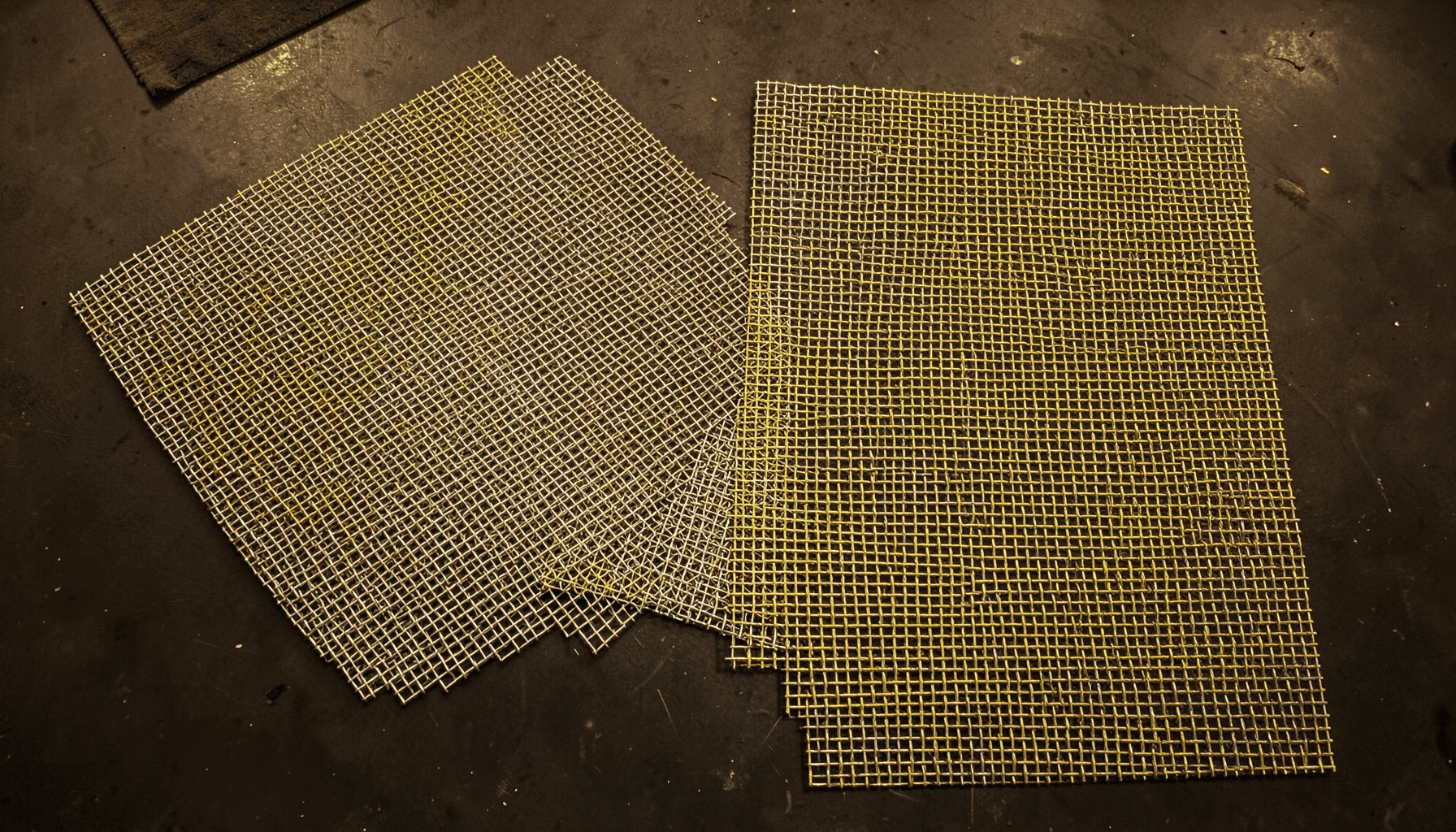
Woven wire mesh offers a broad range of openings and can be supplied in plain weave, twill weave or other patterns. It is useful for filtration and separation because the aperture can be specified precisely. Fine woven mesh, however, may retain solids, become difficult to clean and deform if it is unsupported over a large span.
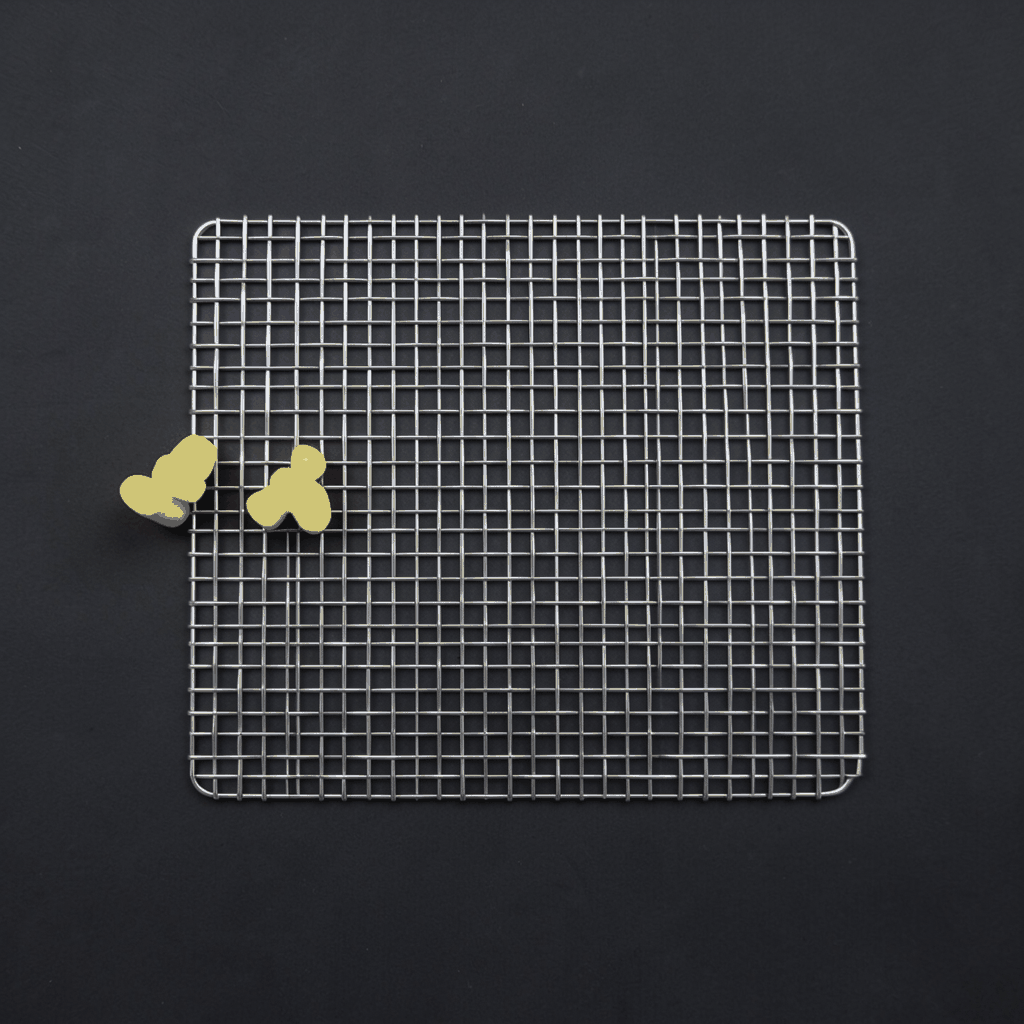
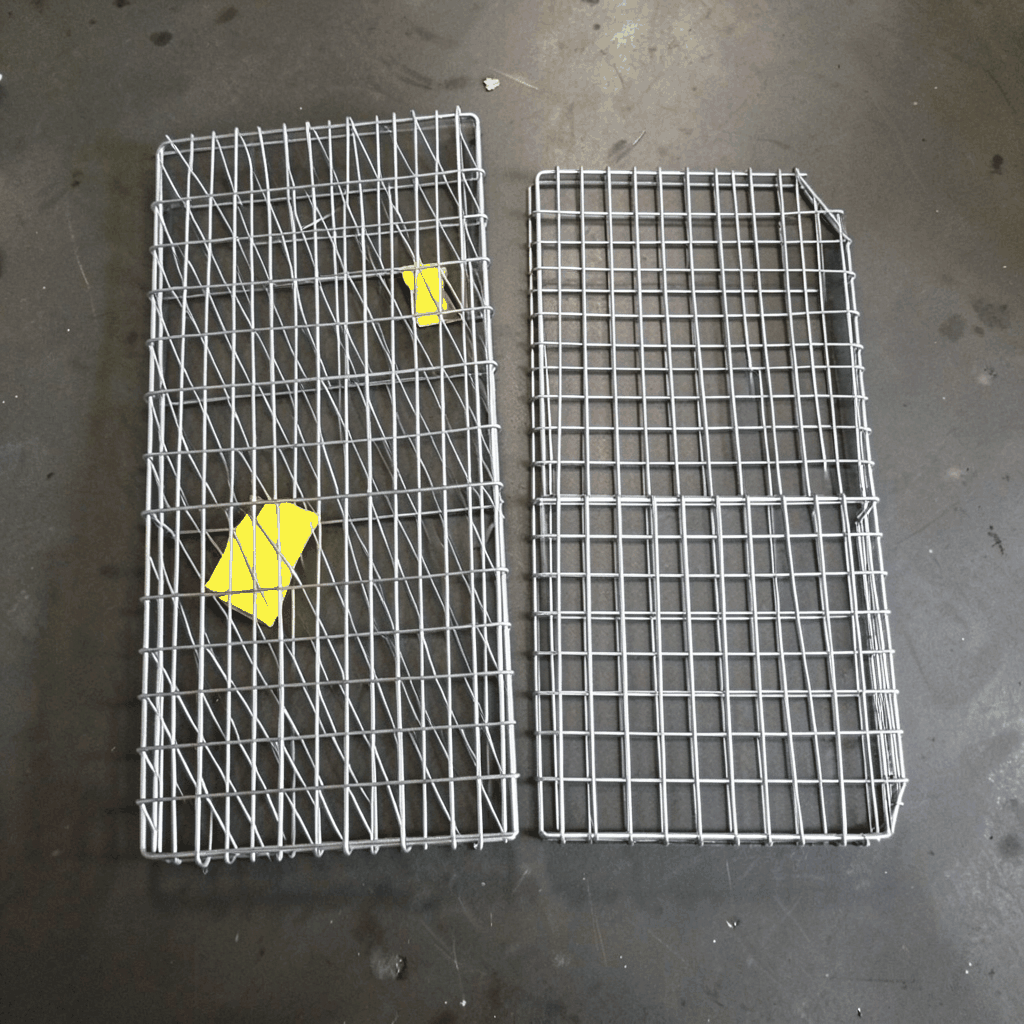
Welded wire mesh provides a more rigid grid and is often suitable for baskets, guards, walkways, screens and coarse filtration. Welding alters the local surface and heat-affected zone, so the finished component may require cleaning, pickling and passivation. Poorly finished welds can create crevices where process residue accumulates and corrosion begins.
The open-area percentage should be considered alongside wire diameter, pressure drop and cleaning access. A very fine screen can restrict flow, increase pump load and collect solids rapidly. A larger opening may protect flow capacity but allow unwanted particles into the next process stage. Edges should be folded, framed or reinforced to prevent sharp projections and handling damage.
For tanks used in food, beverage or pharmaceutical production, specify a smooth, cleanable finish and avoid unnecessary joints. Electropolishing may reduce surface roughness on selected stainless components, while passivation helps restore a stable chromium oxide surface after fabrication. The correct treatment depends on the grade, welding method and process requirements.
Prevent galvanic and crevice corrosion
Galvanic corrosion can occur when dissimilar metals are electrically connected in a conductive liquid. A stainless mesh attached to a mild-steel frame, aluminium bracket or copper fitting may create a corrosion cell, especially where the tank contains salt or acidic moisture. Insulating washers, compatible fasteners, protective coatings and careful drainage can reduce the risk.
Crevices around clamps, folded edges, welds and mesh-to-frame joints deserve special attention. Liquids trapped in narrow gaps can become more concentrated as water evaporates, producing conditions that are much harsher than the bulk tank contents. Designs that allow complete drainage and routine inspection usually outperform assemblies with sealed pockets and inaccessible overlaps.
Surface contamination is another common cause of premature failure. Carbon-steel particles from fabrication tools can embed in stainless steel and later form rust spots. Stainless components should be handled with suitable tooling, cleaned after fabrication and stored away from grinding dust. In humid Brisbane conditions or during wet-season storage, good packaging and ventilation are practical measures rather than cosmetic details.
Australian sites should document these controls within their maintenance and risk-management systems. Work health and safety obligations are administered through state and territory legislation, so a facility in Queensland may apply requirements differently from one in Victoria or Western Australia. The process owner should also review the relevant safety data sheets and chemical-storage requirements, including AS 1940 where flammable or combustible liquids are involved.
Validate performance before placing the order
Request a material certificate confirming the alloy, condition and relevant test results. For a fabricated filter basket or tank screen, also confirm wire diameter, aperture tolerance, dimensions, weld quality, surface treatment and load capacity. These details prevent a nominally correct grade from being supplied in a construction that cannot withstand service conditions.
Ask the supplier to review the complete assembly rather than the mesh cloth alone. A 316L screen may perform well while its carbon-steel frame, fasteners or lifting handle corrodes first. The review should include galvanic compatibility, thermal expansion, clean-in-place chemicals, pressure differential, lifting loads and the frequency of removal for inspection.
Pilot testing is valuable for unfamiliar chemical mixtures or severe operating conditions. A small coupon or trial basket can be exposed to the actual process temperature and cleaning regime, then examined for pitting, staining, embrittlement, loss of mass and aperture distortion. Independent corrosion specialists can help interpret results when the tank contains several chemicals or changing concentrations.
Custom fabrication is often practical for Australian plants that need a specific opening, flange, hook, reinforcement or removable frame. A manufacturer such as Shuo Ke Wire Mesh can help translate filtration, separation or protection requirements into a made-to-measure metal mesh component. Early discussion is especially useful when replacement parts must fit an existing vessel with limited access.
Balance service life, supply and maintenance
The cheapest alloy is rarely the cheapest option when a failed mesh contaminates a batch, blocks a pump or requires a tank shutdown. Compare the purchase price with expected replacement frequency, labour, cleaning time, lost production and disposal requirements. A higher-grade stainless or duplex component may offer a better whole-of-life result in a demanding application.
Local availability also influences the decision. Standard 304L and 316L mesh are generally easier to replace than specialised nickel alloys, while unusual wire diameters or large welded assemblies may require longer lead times. Confirm whether the supplier can reproduce the original aperture, frame dimensions and surface finish before selecting a material that could be difficult to source later.
Maintenance staff should have a defined inspection schedule. Look for pinholes, broken wires, stretched openings, discolouration, deposits, loose welds and contact corrosion at fasteners. Inspection frequency should increase after a chemical change, an unusual temperature excursion or a cleaning incident. In mining, water-treatment and desalination operations around Perth and regional Western Australia, abrasive solids and saline streams may require attention to both corrosion and mechanical wear.
For Australian operations, design records should identify the alloy, chemical limits, mesh specification, cleaning method and replacement criteria. Clear documentation supports procurement, contractor communication and compliance with site safety systems. It also prevents a future replacement being ordered by appearance alone when the original component was selected for a particular corrosion environment.
Selecting mesh for a chemical processing tank is an engineering decision involving alloy chemistry, construction, flow performance and maintenance. Use 304L for suitable general service, consider 316L for moderate chloride exposure, and assess duplex, high-alloy stainless or nickel materials when conditions are severe. Confirm every choice against the actual process and fabricated assembly.
For a corrosion-resistant filter, basket, screen or tank component made to the required dimensions, contact Shuo Ke Wire Mesh Product Technology Co., Ltd. with the chemical profile, operating temperature, aperture, dimensions and fabrication requirements. Early technical consultation can help create a durable mesh solution that supports safe, reliable processing in Australian conditions.