
Sourcing Custom Alloy Mesh for High-Temperature Filter Applications
High-temperature filtration depends on far more than selecting a mesh with the right opening size. The alloy must retain strength under heat, resist oxidation or chemical attack, and remain stable during repeated heating and cooling cycles. A filter that performs well at room temperature may deform, scale, crack, or lose its dimensional accuracy inside a furnace, exhaust system, catalyst unit, or industrial processing line.
Custom alloy mesh gives engineers greater control over these variables. Wire diameter, weave pattern, open area, edge treatment, and frame design can be adapted to the operating environment rather than forcing a standard screen into an unsuitable application. This flexibility is particularly useful when the filter must combine flow capacity, particle retention, mechanical support, and long service life.
A reliable sourcing process begins with a complete operating profile. Temperature, atmosphere, pressure, fluid composition, contamination level, cleaning method, and installation geometry should all be defined before requesting quotations. These details allow a metal mesh manufacturer to recommend a practical alloy and construction instead of simply matching a requested material name.
Match The Alloy To The Thermal Environment
Stainless steel is a common starting point for hot gas filtration because it combines corrosion resistance, mechanical strength, availability, and reasonable fabrication cost. Grades such as 304 and 316 may suit moderate-temperature service, while 310, 314, and selected heat-resistant stainless steels are more appropriate when oxidation resistance and elevated-temperature strength become dominant requirements. The correct grade depends on both peak temperature and exposure duration.
Nickel-based alloys are often selected for harsher conditions. Alloys such as Inconel, nickel-chromium-iron grades, and related heat-resistant materials can maintain useful strength at temperatures where conventional stainless steel becomes less reliable. They are valuable in combustion equipment, petrochemical processing, thermal treatment, and high-temperature gas filtration, although their higher material cost makes accurate specification especially important.
Aluminum mesh deserves careful separation from high-temperature filter materials. Aluminum is lightweight and useful for architectural and ventilation applications, but many aluminum grades soften at temperatures that would be routine for a furnace filter. For a clearer look at where it performs well, this aluminum cladding guidance explains its advantages in elevator and architectural applications rather than extreme thermal service.
Define Temperature And Atmosphere
The stated operating temperature should include normal, maximum, and upset conditions. A filter exposed briefly to a high-temperature spike may require a different safety margin from one held continuously at the same temperature. Thermal cycling also matters because expansion and contraction can loosen welds, distort frames, or accelerate fatigue at attachment points.
Atmosphere is equally important. Dry air, steam, hydrogen, carbon monoxide, sulfur compounds, chlorides, and combustion gases can produce very different corrosion behavior. A mesh suitable for clean hot air may fail quickly in a reducing atmosphere or in gas containing sulfur. The supplier should receive the chemical composition of the process stream whenever possible, including expected contaminants and cleaning chemicals.
Pressure drop and flow velocity should be specified alongside temperature. A dense fine mesh may capture small particles effectively but create excessive resistance, while an overly open mesh can allow contamination to pass through or fail to support a downstream filter layer. The best design balances filtration efficiency with gas or liquid throughput, available fan capacity, and acceptable energy consumption.
Choose The Right Mesh Construction
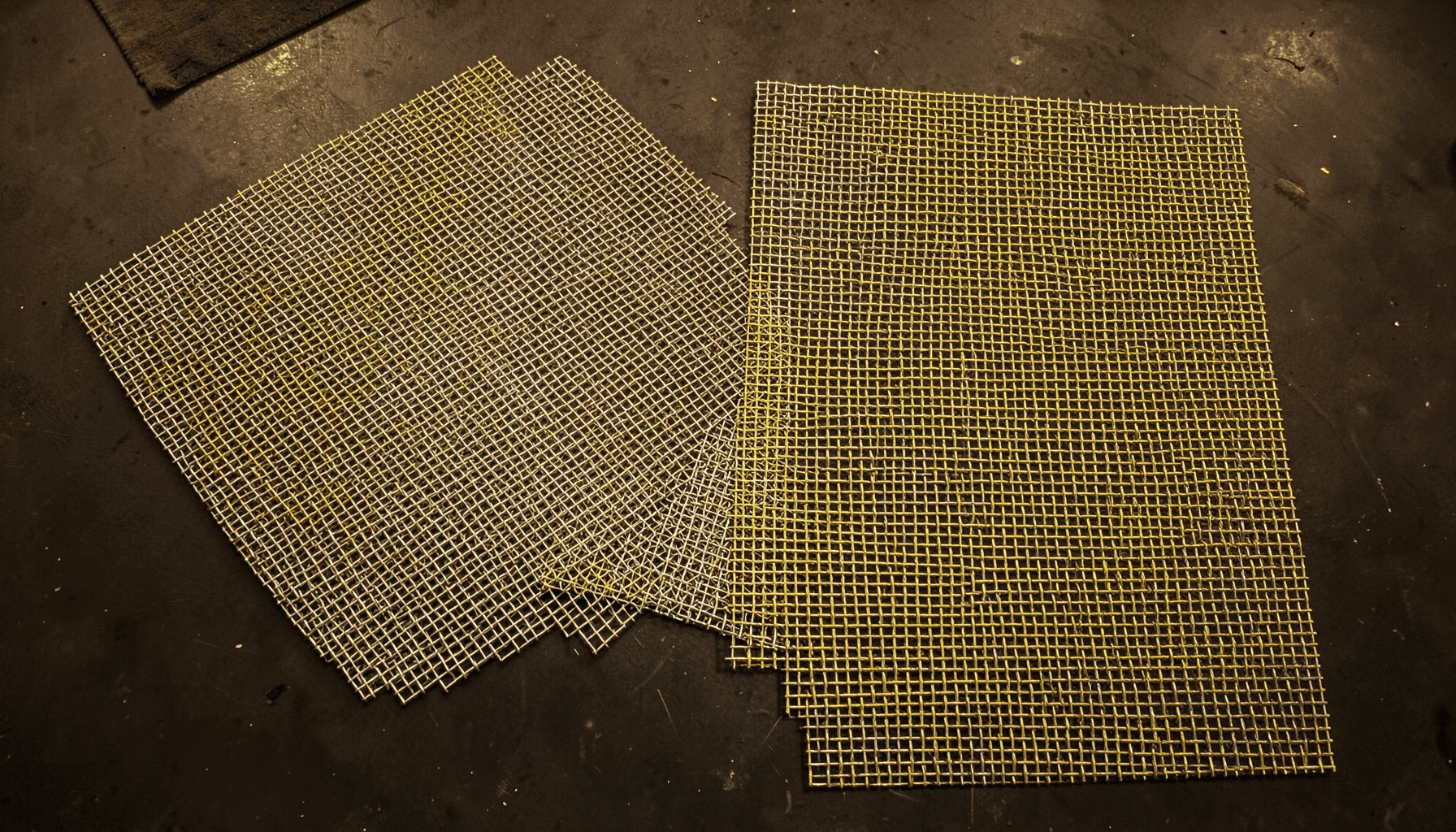
Woven wire mesh is frequently used for high-temperature filters because it provides precise openings and a wide range of weave patterns. Plain weave offers a straightforward structure for relatively coarse filtration, while twill and Dutch weaves can produce finer filtration with stronger support characteristics. Dutch weave designs are especially useful when particle retention depends on controlled openings rather than simply counting mesh per inch.
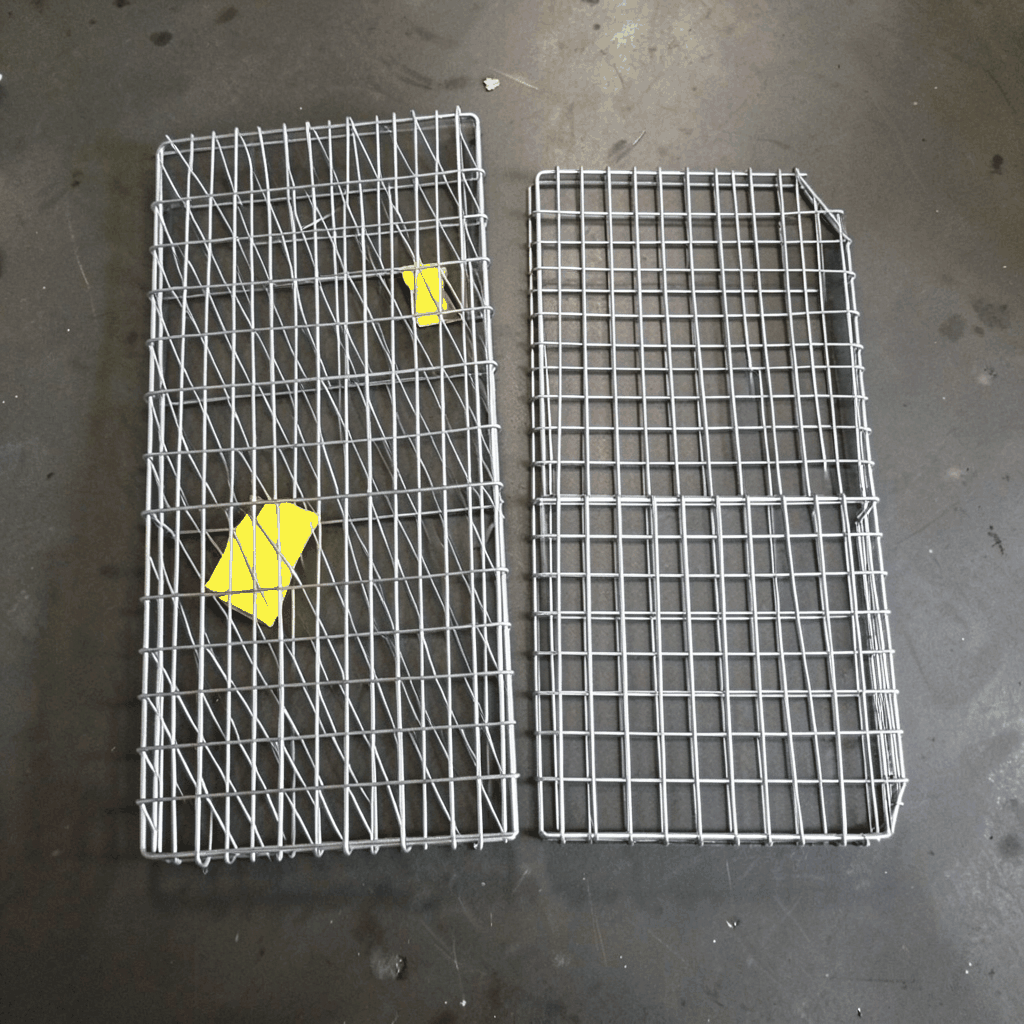
Perforated plate, expanded metal, and welded wire mesh may be better choices when the filter needs greater rigidity or resistance to impact. Perforated metal can support a finer filter layer, while expanded metal provides open-area efficiency with fewer loose intersections. Welded mesh is useful for baskets, cages, and structural screens, though weld quality and heat-affected areas must be reviewed for high-temperature service.
Wire diameter influences strength, open area, pressure drop, and resistance to handling damage. Fine wire permits more flow through a given filtration area but may be vulnerable to vibration, erosion, or thermal fatigue. Heavier wire increases durability but reduces open area and may complicate forming. A custom processor should be able to adjust the balance rather than offering only fixed catalog dimensions.
Compare Practical Material Options
The following comparison provides a preliminary direction for common high-temperature filter environments. Actual selection should be verified against the complete operating profile, alloy data, and the manufacturer’s technical recommendation.
| Material family | Useful characteristics | Typical considerations | Suitable filter roles |
|---|---|---|---|
| 304 stainless steel | General corrosion resistance, accessible cost, easy fabrication | Limited suitability for severe continuous heat or aggressive chemistry | Moderate-temperature screens, guards, and support layers |
| 316 stainless steel | Improved resistance to chlorides and many industrial fluids | May lose strength in demanding high-heat service | Hot process screens where corrosion is a larger concern than peak temperature |
| 310 or 314 stainless steel | Strong oxidation resistance and better elevated-temperature performance | Higher cost and more specialized forming requirements | Furnace screens, combustion equipment, and hot gas support mesh |
| Nickel-based alloy | Strong heat resistance, oxidation resistance, and stability in severe environments | Premium price and more difficult processing | High-temperature gas filters, catalyst supports, and thermal processing |
| Inconel-type alloy | Good strength retention during thermal cycling and harsh exposure | Material selection must match specific chemistry; machining can be demanding | Repeatedly heated filter elements and high-stress industrial assemblies |
| Iron or low-alloy steel | Economical and structurally robust in moderate conditions | Oxidizes quickly without protection and has limited heat resistance | Temporary, low-cost, or lower-temperature support components |
This comparison should not be used as a substitute for engineering review. Two alloys from the same broad family can behave differently because of composition, heat treatment, wire condition, and manufacturing history. If the filter operates close to a material’s limit, requesting test data, temperature guidance, and prior application experience is a sensible purchasing requirement.
Control Fabrication And Filter Geometry
Custom mesh fabrication involves more than cutting a roll to length. Filter elements may require discs, cylinders, cones, baskets, pleated packs, framed panels, or multi-layer assemblies. Forming operations must preserve the opening pattern and avoid excessive distortion, particularly when a fine mesh is shaped around a mandrel or joined to a rigid support.
Edges deserve specific attention because they are common points of failure. A raw cut edge can fray, shed wire, or damage adjacent components during installation. Options may include folded edges, welded frames, rolled rims, spot-welded seams, brazed joints, or reinforced perimeter strips. The best treatment depends on temperature, vibration, pressure differential, and whether the filter will be removed for cleaning.
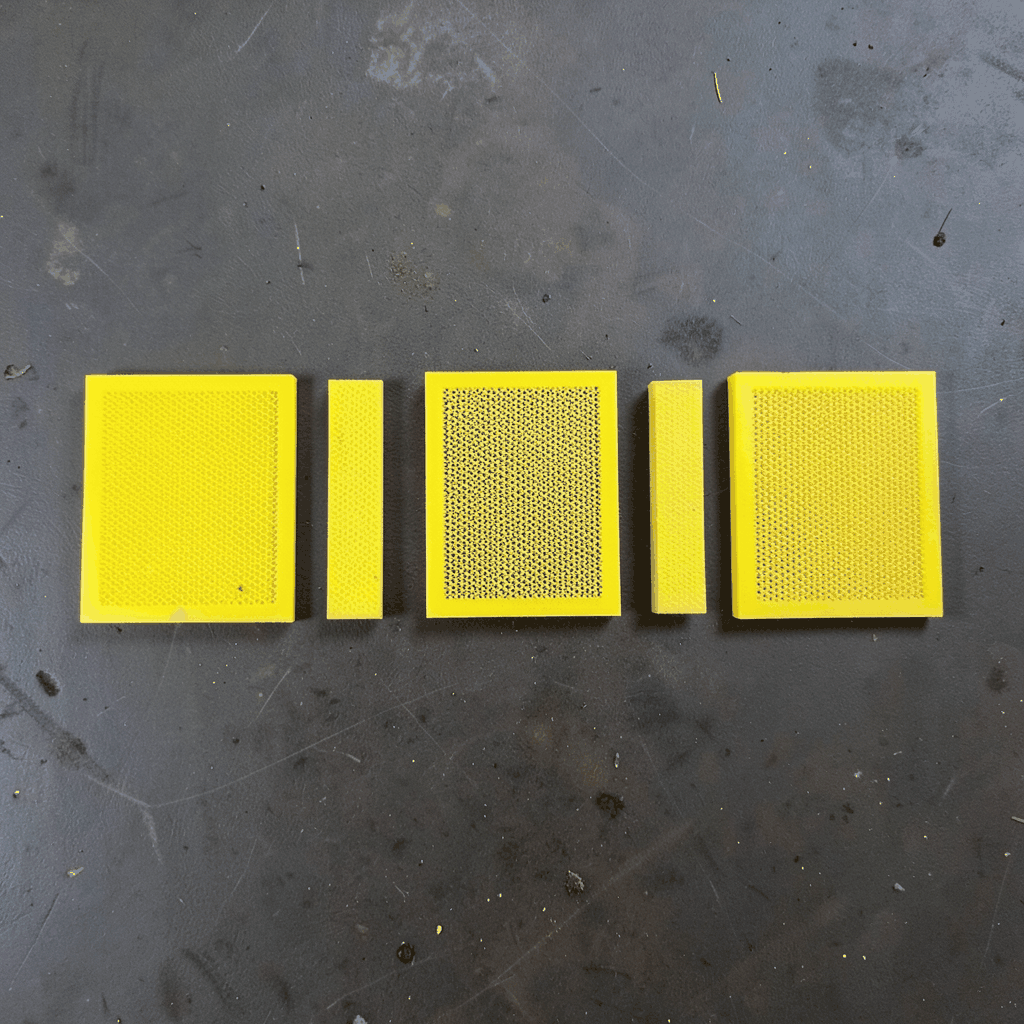
Layered construction can improve performance when one mesh must perform several functions. A coarse outer layer may protect a finer filtration layer from impact, while a perforated backing plate can prevent collapse under pressure. In some applications, a support mesh, filter cloth, and retaining frame are joined as one replaceable element. The supplier should provide a clear cross-sectional description so that the filtration surface and load-bearing components are not confused.
Verify Quality Before Shipment
A purchasing specification should state alloy designation, wire diameter, mesh count or opening size, weave type, dimensions, tolerances, edge construction, joining method, and quantity. For custom filter assemblies, include flatness, roundness, frame material, weld locations, layer order, and acceptable pressure-drop range when these affect installation or operation.
Material traceability is particularly valuable for high-temperature service. Mill certificates, heat numbers, chemical composition reports, and dimensional inspection records help confirm that the supplied mesh matches the approved specification. When a project involves safety-critical filtration or expensive process equipment, sample approval and first-article inspection can reduce the risk of ordering a large production batch with an unnoticed defect.
Quality checks may include visual inspection, opening-size measurement, wire-diameter verification, frame dimensions, weld examination, and airflow or pressure-drop testing. For severe service, buyers may also request corrosion screening, thermal cycling trials, or a small pilot run. Packaging should prevent crushing, moisture exposure, and contamination before installation, especially for fine woven mesh with delicate edges.
Recommendations For A Reliable Sourcing Process
A strong request for quotation gives qualified manufacturers enough technical information to compare alternatives accurately. Include the following points in the initial inquiry:
- State normal, maximum, and transient temperatures, along with heating and cooling cycle details.
- Describe the process atmosphere, corrosive compounds, solids, liquids, and cleaning chemicals.
- Define target particle size, filtration efficiency, flow rate, pressure drop, and available filter area.
- Specify alloy preferences, mesh opening, wire diameter, weave, dimensions, and expected service life.
- Request samples, material certificates, inspection records, packaging details, and production lead time.
It is also useful to separate essential requirements from preferences. For example, corrosion resistance and a minimum service temperature may be mandatory, while a particular weave or surface finish may be negotiable. This gives the manufacturer room to propose a lower-cost or longer-lasting configuration without weakening the performance criteria.
A capable supplier should respond with more than a unit price. The quotation should identify the proposed alloy, construction, tolerances, manufacturing route, and any assumptions made about the operating conditions. Clear technical communication at this stage prevents substitutions that look similar on paper but perform differently in service.
Move From Specification To Production
Sourcing custom alloy mesh for high-temperature filtration is a design decision involving materials, flow behavior, mechanical loading, and fabrication quality. The most dependable results come from matching the alloy to the atmosphere, selecting a construction that supports the required opening size, and treating edges, frames, and joins as part of the filter rather than secondary details.
Shuo Ke Wire Mesh Product Technology Co., Ltd. manufactures and processes metal mesh products in stainless steel, aluminum, copper, iron, and other alloys, with custom capabilities for industrial screens, filters, baskets, and formed assemblies. Share the process conditions, drawing, sample, or performance target with the company to develop a mesh filter configuration suited to your temperature, flow, and installation requirements.