Stainless Steel Mesh Belts Built for Australian Industrial Bakeries
Australia's industrial baking sector has scaled up dramatically over the past decade, driven by supermarket consolidation, the booming café culture in cities like Melbourne and Sydney, and the rise of large contract bakers supplying everything from lamingtons to Anzac biscuits across the country. With that growth has come demand for conveyor systems that can run continuously through ovens exceeding 250 °C without warping, stretching, or shedding contaminants. Stainless steel mesh has become the material of choice for these high-temp conveyor belts because it tolerates repeated thermal cycling, resists corrosion from dough moisture and cleaning chemicals, and keeps its shape under tension.
Shuo Ke Wire Mesh Product Technology Co., Ltd. supplies woven and welded mesh belts engineered specifically for high-temperature baking oven environments, with material grades, weave patterns, and edge finishes configurable to each production line. The following sections walk through how the right mesh belt is selected, what design decisions matter most under continuous heat, and what Australian operators should expect from routine maintenance and sanitation practices.
Heat-Resistant Belts and the Demands of Australian Production
Commercial ovens in Australian bakeries routinely reach 220 °C to 300 °C during the bake phase, and tunnel ovens used for biscuits, crumpets, and pita can hold 260 °C for stretches of twelve hours or more. A conveyor belt that runs through such an oven must tolerate constant radiant heat from above and below while carrying dough that can weigh anywhere from a few grams (small biscuits) to several kilograms (large loaves, par-baked rolls). The result is a demanding combination of thermal fatigue, mechanical load, and chemical exposure from dough fats and surface oils.
Production volumes across Brisbane, Adelaide, and Perth bakeries have grown alongside population, with many lines now running two or three shifts a day to keep pace with retail demand. A belt that loses tension or develops a sag after only a few months becomes a very expensive liability, particularly for operations with thin engineering staff. Stainless steel mesh addresses this because it expands and contracts predictably, retains tensile strength at oven temperatures, and does not shed fibres or coatings the way fabric belts can. The same belt must also cope with cooling tunnels immediately after the oven, where condensation creates sudden temperature drops of 150 °C or more.
Selecting Stainless Steel Grades for Bakery Heat
The first material decision is grade. 304 stainless steel is widely used for general bakery applications because it tolerates the temperature range, resists mild acids from dough fermentation, and remains cost-effective for long belts. Where cleaning regimes include stronger sanitisers, or where bakeries run close to coastal salt air in cities such as Geelong or the Gold Coast, 316 stainless steel offers a measurable improvement in pitting resistance.
For oven zones running above 280 °C, higher-nickel grades such as 310S or specialised 309 stainless are worth discussing with the supplier. These grades carry more chromium and nickel, which keeps the steel austenitic and dimensionally stable across thousands of thermal cycles. Shuo Ke's specification sheets typically break this down by application: biscuits and crackers on lighter mesh, bread and rolls on heavier belt, and high-sugar products requiring extra surface smoothness to prevent sticking.
The trade-off is cost. Higher nickel content moves the price up noticeably per square metre, so most Australian operations only specify those grades for the hottest zones of the line. Belt segments closer to the loading end, the cooling tunnel, and the packaging zone can often run on 304 without difficulty.
Weave Patterns and Their Effect on Heat Distribution
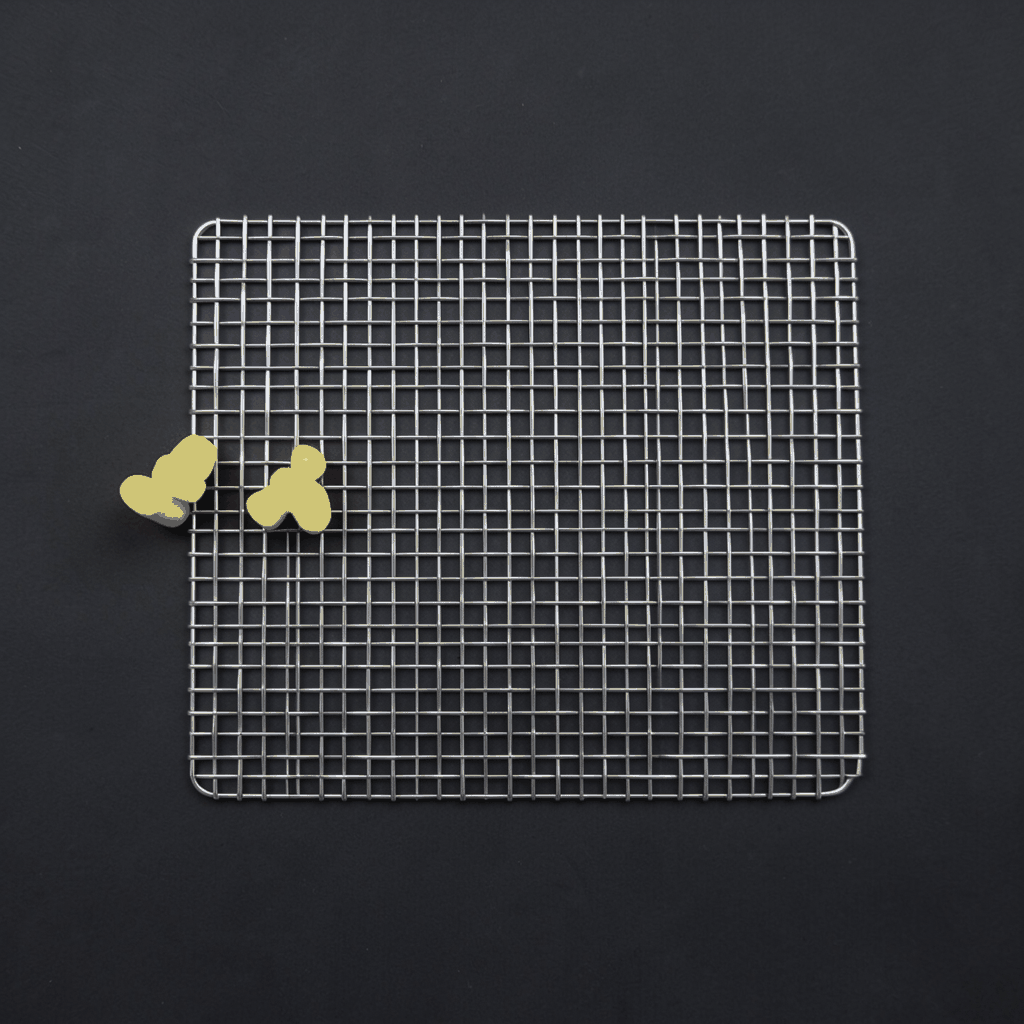
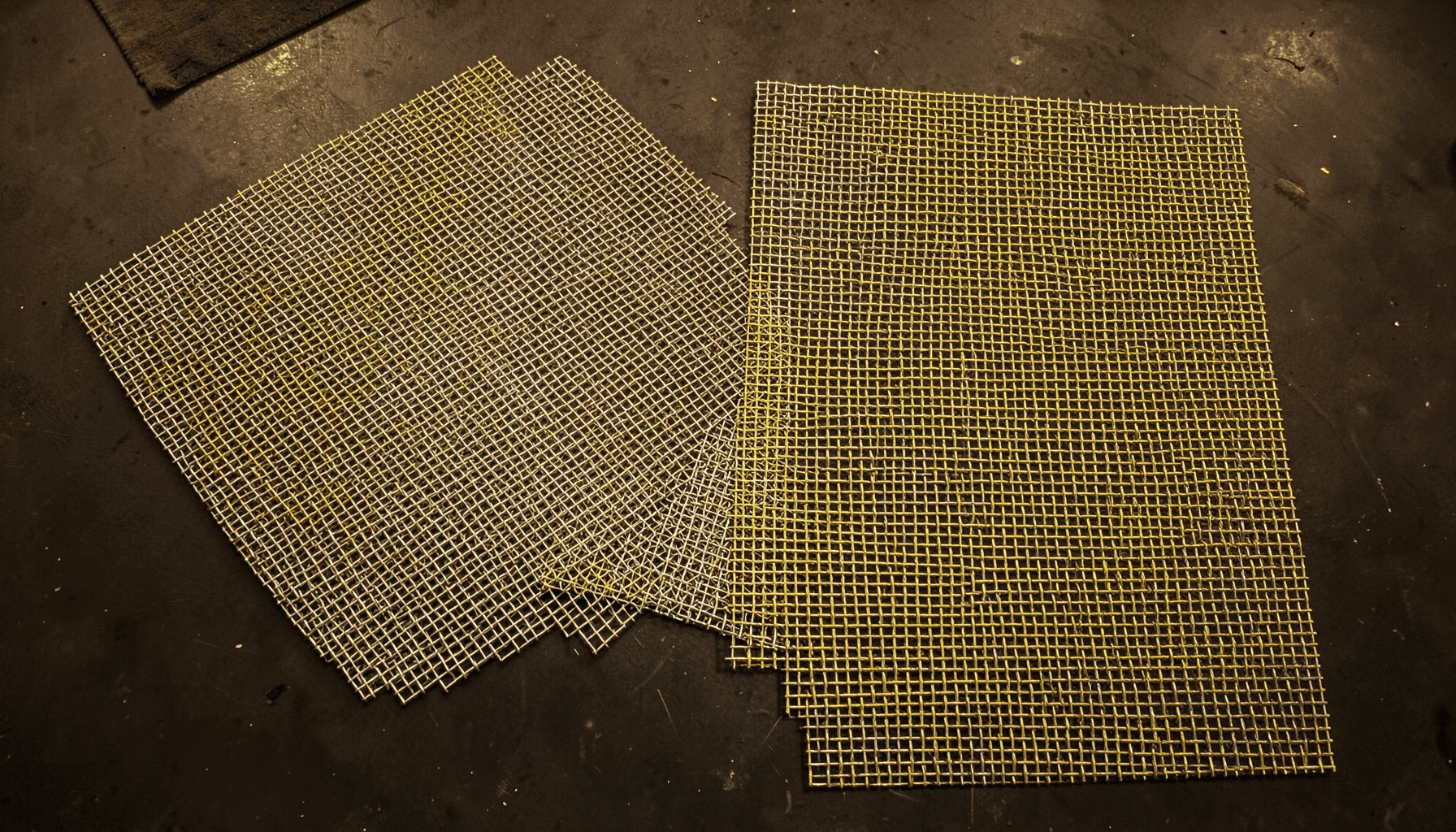
The weave of the mesh influences airflow, heat transfer, and the type of product being baked. Plain weave, where each warp wire crosses alternately over and under each weft wire, gives a stable, balanced structure with predictable open area, generally around 30 to 40 percent. It is common for cooling applications rather than direct baking zones.
Balanced spiral weaves are common on high-temp conveyor belts because they have no welded knuckles in the running surface, which means they flex rather than crack under thermal stress. Flat wire belts, where straight strips of stainless are linked by cross rods, are used in heavier applications such as baking tins, large loaves, or products that need a flatter carry surface. Dutch weaves with finer weft wires and heavier warp wires suit lines where small products might otherwise fall through, and where strength under load outweighs open area.
Open area is more important than many buyers initially think. Too tight a weave limits airflow, producing uneven bake colour across the bottom of the product. Too open a weave and thin products sag, deform, or drop through. A rule of thumb used by Australian line designers is to match open area to product thickness, with thicker products accepting more open mesh because airflow is less critical to the bake profile.
Load Capacity and Long-Run Tensioning
Belts that run thirty metres or more, common in biscuit tunnels outside Melbourne and Sydney, accumulate significant sag if the wires creep under load at high temperature. Creep is the slow, permanent deformation that occurs in metal held under sustained stress at elevated temperature, and it is the single most common cause of belt replacement in continuous tunnel ovens.
To compensate, mesh belts are often built with heavier cross rod diameters, sometimes a step up from 3 mm to 4 mm or 5 mm, for the run between drive and tail sprockets. Edge construction matters equally: folded or welded edges hold the belt's width more rigidly than simply clipped edges, which over time allow the belt to narrow and lose tracking. Spiral connections at the belt ends, where the mesh turns back on itself to form a loop, are standard for smooth-running installations.
Drive sprocket engagement is also worth sizing correctly. Sprocket pitch should match the spiral pitch or rod spacing to prevent the belt from climbing or skipping teeth under the high back-tension of a fully loaded oven. Suppliers like Shuo Ke work through these variables when quoting, asking for belt length, width, operating temperature, product weight per square metre, and drive specifications.
Cleaning, Food Safety and Australian Standards
Food safety for baked goods in Australia falls under Food Standards Australia New Zealand (FSANZ) rules, with most commercial operations also following Hazard Analysis Critical Control Point (HACCP) protocols. Stainless steel mesh scores well here because its hard, non-porous surface does not absorb fats, oils, or sugars the way fabric belts do, and it can be subjected to caustic or acidic cleaning cycles without degradation.
Daily cleaning routines typically involve hot water with a neutral detergent, followed by a sanitising rinse, and an occasional deep clean with food-grade caustic or acid solutions. The open nature of the mesh means CIP (clean-in-place) systems can be fitted where the line allows, sending cleaning solution through spray bars mounted above and below the belt. For operations that handle allergens such as sesame or nut-based fillings, the ability to fully disassemble, soak, and rinse the belt is a significant advantage.
Sanitation also extends to inspection. Visual checks during cleaning reveal wear, broken wires, or corrosion at an early stage, before any risk of wire fragments entering the product. Quality control practices developed in one industry often transfer well to another, and a quality control case study demonstrates how methodical inspection routines reduce contamination risk and downtime across different manufacturing lines.
Custom Sizing, Edging and Fabrication
No two tunnel ovens are exactly alike, which is why belt specification is rarely a catalogue exercise. Australian bakeries frequently retrofit older imported lines, requiring custom widths that fall between standard metric sizes. Mesh belts can be cut to width with welded, folded, or chain edges, depending on how the belt engages the drive and tracking system.
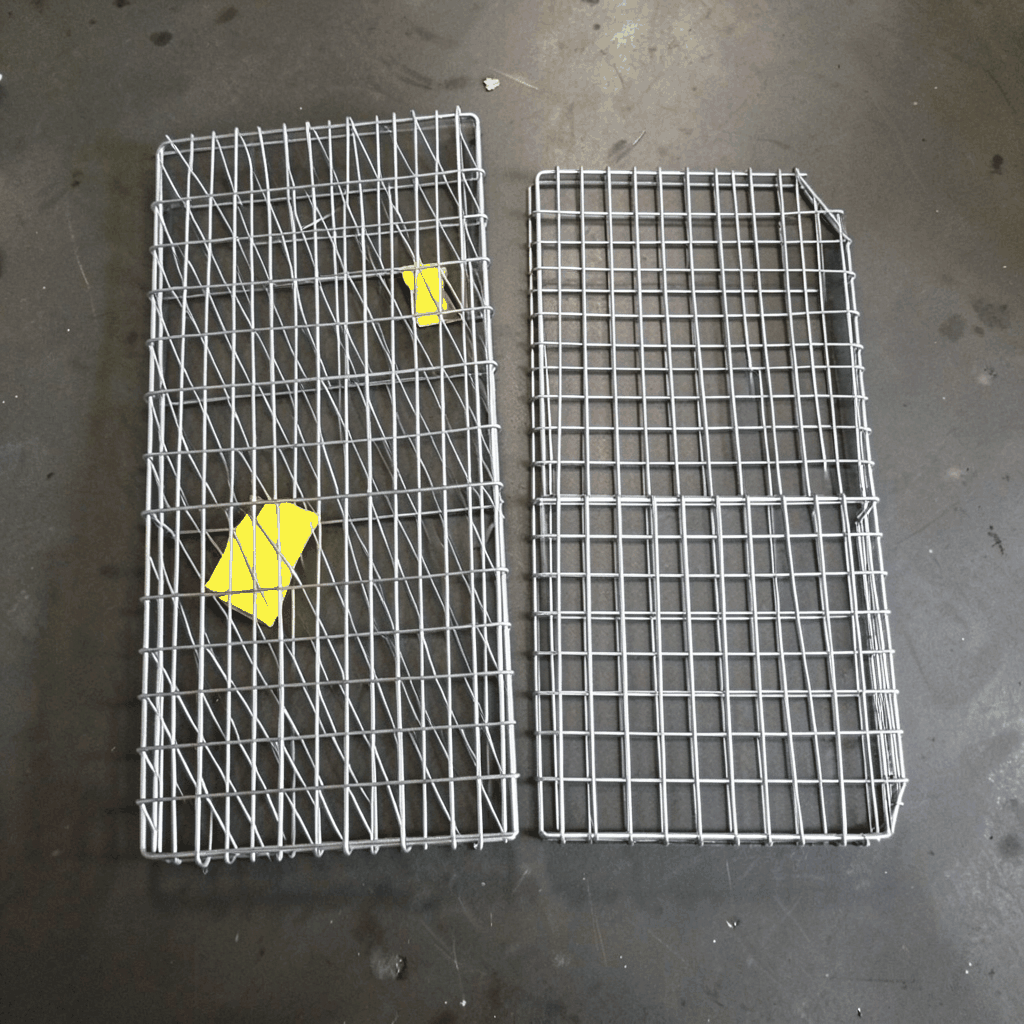
Common edge styles for oven belts include welded hooked edges for positive drive, folded edges for smooth-carry applications, chain link edges for heavier industrial bread lines, and spiral turn-up ends forming a continuous loop. Side plates, flights (cleats), and transverse dividers can also be welded to the mesh surface to carry product up inclines or sort it into rows.
Shuo Ke supplies many of its belts on a custom basis, drawing on the same fabrication capabilities used in its other architectural and industrial mesh products. Where a project requires cladding, decorative panels, or matching metal finishes in a production facility, the supplier's experience across product categories becomes useful, and the work on Custom Copper Mesh Wraps illustrates the range of finishing and structural metalwork the company handles alongside industrial mesh.
Installation, Tracking and Routine Maintenance
Correct installation is half the battle on a long oven line. The belt must be tensioned evenly across its width, with drive and tail sprockets aligned to within fractions of a millimetre. Misalignment produces wear on one edge, leading to progressive tracking problems and eventually wire fatigue.
After installation, a short commissioning run at low temperature helps identify any tracking issues before product enters the line. Operators should listen for rhythmic knocking, which suggests the belt is climbing sprocket teeth, and watch for lateral drift during oven entry and exit, where thermal gradients are steepest. Tracking sensors or guide rails can be fitted if drift is persistent.
Routine maintenance is straightforward but should not be skipped. Weekly visual inspections should look for broken or worn wires, corrosion at the edges, and any loosening of welded attachments. Monthly checks should confirm belt tension and measure any permanent stretch with a simple length marking. Annual deep inspections, ideally during a scheduled line shutdown, allow the belt to be removed, cleaned thoroughly, and examined across its full length for damage that might not be visible online. A well-maintained stainless mesh belt typically runs for several years in continuous bakery service, and replacing it becomes a planned event rather than an emergency.
For Australian industrial bakeries looking to upgrade or specify a new conveyor mesh belt for high-temperature baking oven lines, Shuo Ke Wire Mesh Product Technology Co., Ltd. offers engineering support, custom fabrication, and material recommendations tailored to each oven profile, product mix, and throughput target. Sending the technical team a few basic line details is the most reliable way to start a specification conversation and avoid mismatched equipment arriving onsite.